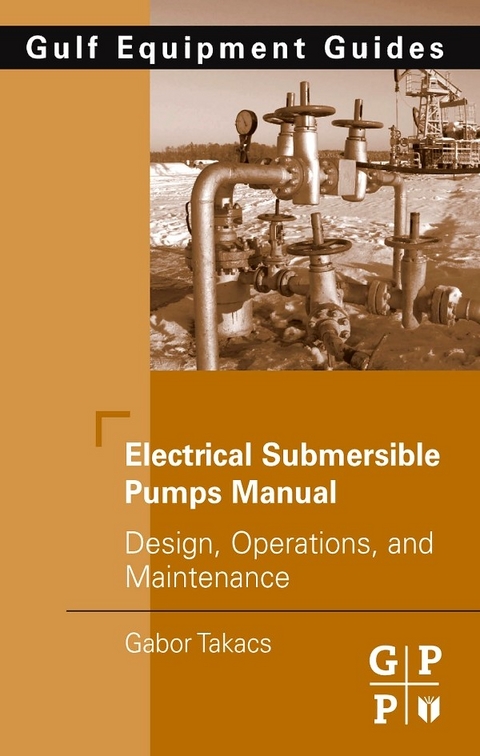
Electrical Submersible Pumps Manual (eBook)
440 Seiten
Elsevier Science (Verlag)
978-0-08-087813-3 (ISBN)
The prefect companion for new engineers who need to develop and apply their skills more efficiently or experienced engineers who wish further develop their knowledge of best practice techniques, this manual covers basic electrical engineering, hydraulics and systems analysis before addressing pump components such as centrifugal pumps, motors, seals, separators, and cables. In addition, the author includes comprehensive sections on analysis and optimization, monitoring and trouble-shooting, and installation design and installation under special conditions.
* Apply the best operating practices to optimise production
* Track and troubleshoot problems such as gas, solids and corrosion
*Prevent expensive failures such as cable burn and impeller cavitation
* Design and analyze a system using up-to-date computer programs
* Establish ESP analysis monitoring methods and strategies
* Ensure optimum operator-vendor relationship for mutual benefits
Gabor Takacs is a professor and was head of the Petroleum Engineering Department at the University of Miskolc, Hungary from 1995 to 2012. He has more than 35 years of teaching and consulting experience in the production engineering field. He was acting director of the Petroleum Engineering program at The Petroleum Institute in Abu Dhabi, UAE from 2007 to 2010, and taught at Texas Tech University from 1988 to 1989. He is also currently a technical editor for an oil and gas journal, and received the Society of Petroleum Engineers Distinguished Lecturer award for 1995-96. Gabor regularly teaches short courses internationally and is a well-known consultant and instructor on production engineering and artificial lift topics. Gabor earned an MS and PhD degree in petroleum engineering, both from the University of Miskolc.
Ideal for removing large amounts of liquids from wells, Electrical Submersible Pumps (ESP) are perhaps the most versatile and profitable pieces of equipment in a petroleum company's arsenal. However, if not properly maintained and operated, they could quickly become an expensive nightmare. The first book devoted to the design, operation, maintenance, and care, Electrical Submersible Pumps Manual delivers the tools and applicable knowledge needed to optimize ESP performance while maximizing of run life and the optimization of production. The prefect companion for new engineers who need to develop and apply their skills more efficiently or experienced engineers who wish further develop their knowledge of best practice techniques, this manual covers basic electrical engineering, hydraulics and systems analysis before addressing pump components such as centrifugal pumps, motors, seals, separators, and cables. In addition, the author includes comprehensive sections on analysis and optimization, monitoring and trouble-shooting, and installation design and installation under special conditions. - Apply the best operating practices to optimise production- Track and troubleshoot problems such as gas, solids and corrosion- Prevent expensive failures such as cable burn and impeller cavitation- Design and analyze a system using up-to-date computer programs- Establish ESP analysis monitoring methods and strategies- Ensure optimum operator-vendor relationship for mutual benefits
Front Cover 1
Electrical Submersible Pumps Manual: Design, Operations, and Maintenance 4
Copyright Page 5
Contents 6
Preface 14
Chapter 1: Introduction 16
1.1 Artificial Lifting 16
1.1.1 Gas Lifting 17
1.1.2 Pumping 17
1.1.3 Comparison of Lift Methods 19
1.2 Short History of ESP Applications 20
1.3 Basic Features of ESP Installations 21
1.3.1 Applications 21
1.3.2 Advantages, Limitations 22
References 23
Chapter 2: Review of Fundamentals 24
2.1 Well Inflow Performance 24
2.1.1 Introduction 24
2.1.2 The Productivity Index Concept 25
2.1.3 Inflow Performance Relationships 27
2.1.3.1 Introduction 27
2.1.3.2 Vogel's IPR Correlation 28
2.1.3.3 The Composite IPR Curve 30
2.2 Hydraulic Fundamentals 36
2.2.1 Tubing Flow Calculations 36
2.2.2 ESP Pumps 38
2.2.2.1 Operational Basics of Centrifugal Pumps 38
2.2.2.2 Specific Speed 41
2.2.2.3 Pump Performance 42
2.2.2.4 Cavitation 45
2.2.2.5 Axial Thrust Forces 46
2.2.2.6 Affinity Laws 49
2.3 Electrical Fundamentals 51
2.3.1 Alternating Current 51
2.3.2 AC Circuits, AC Power 52
2.3.3 Transformers 55
2.3.4 Induction Motors 56
2.3.5 Electric Cable 58
2.4 Basics of Systems Analysis 59
2.4.1 Introduction 59
2.4.2 The Production System 60
2.4.3 Basic Principles 62
References 63
Chapter 3: ESP Components and their Operational Features 66
3.1 Introduction 67
3.2 The Submersible Pump 68
3.2.1 Basic Features 68
3.2.2 Pump Performance Curves 72
3.2.3 Floating versus Fixed Impeller Pumps 76
3.2.4 Pump Temperature 77
3.3 The ESP Motor 79
3.3.1 Motor Construction 79
3.3.2 Operational Features 83
3.3.3 Motor Performance 85
3.3.3.1 Motor Testing 86
3.3.3.2 Performance Curves 87
3.3.3.3 Startup Conditions 89
3.3.4 Motor Temperature 91
3.3.4.1 Heat Transfer Calculations 92
3.3.4.2 Allowed Motor Temperature 98
3.4 The Protector or Seal Section 99
3.4.1 Main Functions 99
3.4.2 Basic Operation 101
3.4.3 Main Parts 103
3.4.3.1 The Thrust Bearing 103
3.4.3.2 Isolation Chambers 106
3.4.3.2.1 Labyrinth-type Chambers 106
3.4.3.2.2 Blocking Fluids 108
3.4.3.2.3 Bag-type Chambers 110
3.4.3.3 Shaft Seals 111
3.4.4 Other Features 112
3.5 The Gas Separator 114
3.6 The ESP Cable 116
3.6.1 Cable Materials 117
3.6.1.1 Conductors 117
3.6.1.2 Insulator Materials 117
3.6.1.3 Jackets 118
3.6.1.4 Coverings 119
3.6.1.5 Metal Armor 119
3.6.2 Cable Construction 119
3.6.3 Operational Features 121
3.7 Miscellaneous Downhole Equipment 125
3.8 Surface Equipment 128
3.8.1 Wellhead 128
3.8.2 Junction Box 129
3.8.3 Switchboard 131
3.8.4 Transformers 132
3.8.5 Miscellaneous Equipment 132
References 132
Chapter 4: Use of ESP Equipment in Special Conditions 134
4.1 Introduction 134
4.2 Pumping Viscous Liquids 135
4.2.1 Introduction 135
4.2.2 The Hydraulic Institute Model 136
4.2.3 Other Models 140
4.3 Production of Gassy Wells 143
4.3.1 Introduction 143
4.3.2 Free Gas Volume Calculations 145
4.3.3 Pump Performance Degradation 151
4.3.3.1 Gas Interference in Centrifugal Pumps 151
4.3.3.2 Performance Criteria 153
4.3.4 Possible Solutions 155
4.3.4.1 Utilization of Natural Gas Separation 155
4.3.4.1.1 Pump Set below the Perforations 155
4.3.4.1.2 Use of Motor Shrouds 156
4.3.4.2 Rotary Gas Separators 160
4.3.4.2.1 Available Types 160
4.3.4.2.2 Separation Efficiencies 163
4.3.4.3 Gas Handling 166
4.3.4.3.1 Overstaged Pumps 166
4.3.4.3.2 Tapered Pumps 166
4.3.4.3.3 Stage Recirculation 167
4.3.4.3.4 Gas Handlers 168
4.3.4.3.5 Special Pumps 169
4.3.5 Conclusions 169
4.4 Production of Abrasive Solids 170
4.4.1 Introduction 170
4.4.2 Characteristics of Abrasive Materials 171
4.4.3 Sand Problem Areas 173
4.4.3.1 Pump Erosion 173
4.4.3.2 Abrasion in Radial Bearings 174
4.4.3.3 Abrasion in Thrust Washers 174
4.4.4 Solutions 175
4.4.4.1 Reduction of Radial Wear 176
4.4.5 Conclusions 179
4.5 High Well Temperatures 181
4.6 Variable Frequency Operation 182
4.6.1 Introduction 182
4.6.2 Variable Speed Drives 185
4.6.2.1 Constructional Details 186
4.6.2.1.1 The Rectifier 186
4.6.2.1.2 The DC Control Section 187
4.6.2.1.3 The Inverter 187
4.6.2.2 Available VSD Types 188
4.6.2.2.1 “Six-step” VSD 188
4.6.2.2.2 Pulsed Width Modulation 188
4.6.2.2.3 Sine Wave Generators 190
4.6.3 Variable Frequency Generators 192
4.6.4 Interaction of VSD/VFG and ESP Units 193
4.6.5 Benefits of Using VSD/VFG Units 198
References 199
Chapter 5: Design of ESP Installations 202
5.1 Introduction 202
5.2 Data Requirements 203
5.3 Conventional Design 204
5.3.1 Well Inflow Calculations 204
5.3.2 TDH Calculations 206
5.3.3 Selection of the Pump 208
5.3.3.1 Pump Series 208
5.3.3.2 Pump Type 209
5.3.3.3 Number of Stages 209
5.3.3.4 Checking the Pump's Mechanical Strength 210
5.3.4 Selection of the Protector 211
5.3.5 Motor Selection 213
5.3.6 Selection of the Power Cable 215
5.3.6.1 Cable Length 215
5.3.6.2 Cable Type 215
5.3.6.3 Cable Size 215
5.3.6.4 Checking Motor Startup 218
5.3.7 Switchboard and Transformer Selection 218
5.3.8 Miscellaneous Equipment 219
5.3.8.1 Downhole Equipment 219
5.3.8.2 Surface Equipment 220
5.4 Conventional Design Considering Motor Slip 226
5.4.1 Interaction of the ESP Motor and the Pump 226
5.4.2 Changes in the Conventional Design 229
5.4.2.1 Finding Actual Motor Speed 229
5.4.2.2 Finding Pump Head including Motor Slip 230
5.5 Gassy Well Design 233
5.5.1 Inflow and Free Gas Calculations 234
5.5.2 Calculation of Total Dynamic Head 236
5.5.3 The Rest of the Design Procedure 237
5.6 Design of a VSD Installation 245
5.6.1 Pump Selection for VSD Service 246
5.6.1.1 Driving Frequency and the Number of Stages 247
5.6.1.2 Checking Pump Operation at the Minimum Liquid Rate 248
5.6.2 Motor Selection 248
5.6.3 Switchboard and Transformers 249
References 262
Chapter 6: Analysis and Optimization 264
6.1 Introduction 264
6.2 Nodal Analysis 265
6.2.1 Using the Q-H Coordinate System 267
6.2.1.1 Single-phase Cases 267
6.2.1.1.1 Constant Pumping Speed 269
6.2.1.1.2 Variable Pumping Speeds 272
6.2.1.1.3 Variable Wellhead Pressures 274
6.2.1.2 Multiphase Cases 276
6.2.1.2.1 Calculation Model 276
6.2.1.2.2 Applications 279
6.2.2 Using the Rate/FBHP Coordinate System 286
6.2.2.1 Single-phase Cases 286
6.2.2.2 Multiphase Cases 291
6.3 Determination of Well Inflow Performance 293
6.3.1 The Conventional Method 293
6.3.2 Use of VSD Drives 296
6.3.3 Calculation of Bottomhole Pressures 299
6.3.3.1 Introduction 299
6.3.3.2 Annular Liquid Gradients 300
6.3.3.2.1 Static Conditions 300
6.3.3.2.2 Flowing Conditions 301
6.4 Power Efficiency of ESP Installations 306
6.4.1 Power Flow in the ESP System 306
6.4.2 Energy Losses and Efficiencies 310
6.4.2.1 Hydraulic Losses 310
6.4.2.1.1 Tubing Losses 310
6.4.2.1.2 Backpressure Losses 311
6.4.2.1.3 Pump Losses 311
6.4.2.1.4 Power Loss in Gas Separator 312
6.4.2.2 Electrical Losses 312
6.4.2.2.1 Motor Losses 312
6.4.2.2.2 Cable Losses 313
6.4.2.2.3 Surface Electrical Losses 313
6.4.3 System Efficiency 314
6.5 Optimization of ESP Operations 316
6.5.1 Introduction 316
6.5.2 Basics of Economic Optimization 317
References 321
Chapter 7: Monitoring and Troubleshooting 324
7.1 Introduction 324
7.2 Monitoring of ESP Operations 325
7.2.1 Acoustic Surveys 327
7.2.2 Downhole Measurements 329
7.2.2.1 Instruments and Communications 329
7.2.2.2 Measured Parameters and their Use 330
7.3 System Failures 331
7.3.1 General Causes of Failures 332
7.3.1.1 Improper Installation Design 332
7.3.1.2 Faulty Equipment and/or Installation 332
7.3.1.3 Well Conditions 332
7.3.1.4 Electrical Problems 333
7.3.1.5 Vibrations in the ESP System 334
7.3.2 Typical Failures of System Components 335
7.3.2.1 Shafts 335
7.3.2.2 ESP Pump 336
7.3.2.3 ESP Motor 336
7.3.2.4 Protector (Seal) Section 337
7.3.2.5 Rotary Gas Separator 337
7.3.2.6 Electric Cable 337
7.4 Troubleshooting ESP Installations 338
7.4.1 Interpretation of Ammeter Charts 338
7.4.2 Novel Techniques 353
References 356
Chapter 8: Special Installations 358
8.1 Introduction 358
8.2 Tubing Deployed Installations 358
8.2.1 Producing a Single Zone 359
8.2.1.1 Shrouded and Horizontal Well Installations 359
8.2.1.2 Parallel-connected Installations 359
8.2.1.3 Series-connected Installations 360
8.2.2 Dual Zone Installations 362
8.2.2.1 Production Commingling 362
8.2.2.2 Selective Production 364
8.3 Alternative Deployed Installations 365
8.3.1 Cable Suspended Units 365
8.3.2 Coiled Tubing Installations 366
8.3.2.1 Conventional ESP Unit with Cable Led Outside the CT String 368
8.3.2.2 Conventional ESP Unit with Cable Led Inside the CT String 368
8.3.2.3 Inverted ESP Units 368
8.3.3 Conclusions 369
References 370
Appendices 372
Appendix A 374
Description 374
Example problem 374
Solution 374
Appendix B 376
Description 376
Appendix C 380
Description 380
Appendix D 386
Description 386
Appendix E 392
Description 392
Example problem 392
Solution 392
Class Problems: ESP Design and Analysis 394
Class Problem Assignment 394
Problem Statement 394
Instructions 394
Solution 395
Class Problem Assignment 396
Problem Statement 396
Instructions 396
Solution 396
Class Problem Assignment 397
Problem Statement 397
Instructions 397
Solution 397
Class Problem Assignment 399
Problem statement 399
Instructions 399
Solution 399
Class Problem Assignment 401
Problem Statement 401
Instructions 401
Solution 401
Class Problem Assignment 402
Problem Statement 402
Instructions 402
Solution 402
Class Problem Assignment 404
Problem Statement 404
Instructions 404
Solution 404
Class Problem Assignment 405
Problem Statement 405
Instructions 405
Solution 405
Class Problem Assignment 411
Problem Statement 411
Instructions 411
Solution 412
Class Problem Assignment 413
Problem Statement 413
Instructions 413
Solution 413
Class Problem Assignment 420
Problem Statement 420
Instructions 420
Solution 421
Class Problem Assignment 422
Problem Statement 422
Instructions 422
Calculations 423
Class Problem Assignment 425
Problem Statement 425
Instructions 425
Solution 426
Class Problem Assignment 428
Problem Statement 428
Instructions 428
Solution 429
Class Problem Assignment 431
Problem Statement 431
Instructions 431
Index 432
| Erscheint lt. Verlag | 20.4.2009 |
|---|---|
| Sprache | englisch |
| Themenwelt | Technik ► Bauwesen |
| Technik ► Elektrotechnik / Energietechnik | |
| Technik ► Maschinenbau | |
| Wirtschaft | |
| ISBN-10 | 0-08-087813-X / 008087813X |
| ISBN-13 | 978-0-08-087813-3 / 9780080878133 |
| Informationen gemäß Produktsicherheitsverordnung (GPSR) | |
| Haben Sie eine Frage zum Produkt? |
 EPUB (Adobe DRM)
Kopierschutz: Adobe-DRM
Adobe-DRM ist ein Kopierschutz, der das eBook vor Mißbrauch schützen soll. Dabei wird das eBook bereits beim Download auf Ihre persönliche Adobe-ID autorisiert. Lesen können Sie das eBook dann nur auf den Geräten, welche ebenfalls auf Ihre Adobe-ID registriert sind.
Details zum Adobe-DRM
Dateiformat: EPUB (Electronic Publication)
EPUB ist ein offener Standard für eBooks und eignet sich besonders zur Darstellung von Belletristik und Sachbüchern. Der Fließtext wird dynamisch an die Display- und Schriftgröße angepasst. Auch für mobile Lesegeräte ist EPUB daher gut geeignet.
Systemvoraussetzungen:
PC/Mac: Mit einem PC oder Mac können Sie dieses eBook lesen. Sie benötigen eine
eReader: Dieses eBook kann mit (fast) allen eBook-Readern gelesen werden. Mit dem amazon-Kindle ist es aber nicht kompatibel.
Smartphone/Tablet: Egal ob Apple oder Android, dieses eBook können Sie lesen. Sie benötigen eine
Geräteliste und zusätzliche Hinweise
Buying eBooks from abroad
For tax law reasons we can sell eBooks just within Germany and Switzerland. Regrettably we cannot fulfill eBook-orders from other countries.
aus dem Bereich