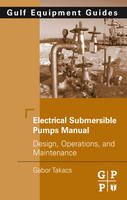
Electrical Submersible Pumps Manual
Gulf Professional Publishing (Verlag)
978-1-85617-557-9 (ISBN)
- Titel erscheint in neuer Auflage
- Artikel merken
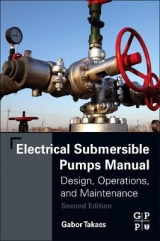
Ideal for removing large amounts of liquids from wells, Electrical Submersible Pumps (ESP) are perhaps the most versatile and profitable pieces of equipment in a petroleum company's arsenal. However, if not properly maintained and operated, they could quickly become an expensive nightmare. The first book devoted to the design, operation, maintenance, and care, Electrical Submersible Pumps Manual delivers the tools and applicable knowledge needed to optimize ESP performance while maximizing of run life and the optimization of production.
The prefect companion for new engineers who need to develop and apply their skills more efficiently or experienced engineers who wish further develop their knowledge of best practice techniques, this manual covers basic electrical engineering, hydraulics and systems analysis before addressing pump components such as centrifugal pumps, motors, seals, separators, and cables. In addition, the author includes comprehensive sections on analysis and optimization, monitoring and trouble-shooting, and installation design and installation under special conditions.
Gabor Takacs is a professor and was head of the Petroleum Engineering Department at the University of Miskolc, Hungary from 1995 to 2012. He has more than 35 years of teaching and consulting experience in the production engineering field. He was acting director of the Petroleum Engineering program at The Petroleum Institute in Abu Dhabi, UAE from 2007 to 2010, and taught at Texas Tech University from 1988 to 1989. He is also currently a technical editor for an oil and gas journal, and received the Society of Petroleum Engineers Distinguished Lecturer award for 1995-96. Gabor regularly teaches short courses internationally and is a well-known consultant and instructor on production engineering and artificial lift topics. Gabor earned an MS and PhD degree in petroleum engineering, both from the University of Miskolc.
1.Introduction1.1Artificial Lifting1.2Short History of ESP Applications1.3Basic Features of ESP Installations2.Review of Fundamentals2.1Well Inflow Performance2.2Hydraulic Fundamentals2.3Electrical Fundamentals2.4Basics of System Analysis3.ESP Components and their Operation3.1Introduction3.2The Submersible Pump3.3The ESP Motor3.4The Protector or Seal Section3.5The Gas Separator3.6The ESP Cable3.7Miscellaneous Downhole Equipment3.8Surface Equipment4.Use of ESP Equipment in Special Conditions4.1Introduction4.2Pumping Viscous Liquids4.3Production of Gassy Wells4.4Production of Abrasive Solids4.5High Well Temperatures4.6Variable Frequency Operation5.Design of ESP Installations5.1Introduction5.2Data Requirements5.3Conventional Design5.4Conventional Design Considering Motor Slip5.5Gassy Well Design5.6Design of a VSD Installation6.Analysis and Optimization6.1Introduction6.2NODALAnalysis6.3Determination of Well Inflow Performance6.4Power Efficiency of ESP Installations6.5Optimization of ESP Operations7.Monitoring and Troubleshooting7.1Introduction7.2Monitoring of ESP Operations7.3System Failures7.4Troubleshooting ESP Installations8.Special InstallationsAPPENDICES
| Erscheint lt. Verlag | 20.4.2009 |
|---|---|
| Verlagsort | Oxford |
| Sprache | englisch |
| Maße | 152 x 229 mm |
| Gewicht | 810 g |
| Themenwelt | Technik ► Bauwesen |
| ISBN-10 | 1-85617-557-X / 185617557X |
| ISBN-13 | 978-1-85617-557-9 / 9781856175579 |
| Zustand | Neuware |
| Informationen gemäß Produktsicherheitsverordnung (GPSR) | |
| Haben Sie eine Frage zum Produkt? |
aus dem Bereich