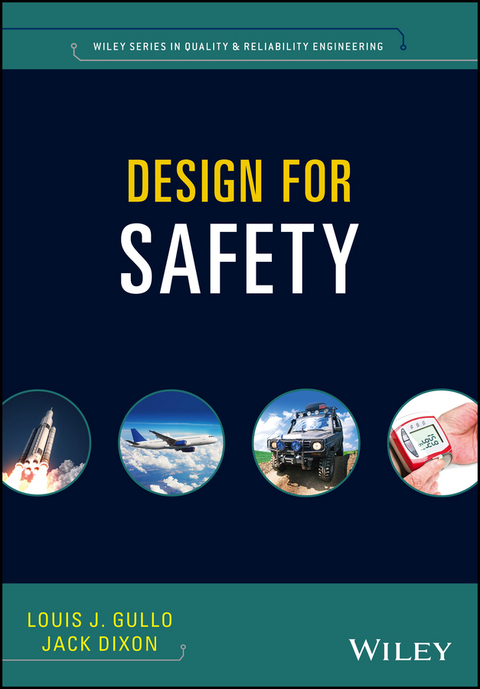
Design for Safety (eBook)
John Wiley & Sons (Verlag)
978-1-118-97430-8 (ISBN)
A one-stop reference guide to design for safety principles and applications
Design for Safety (DfSa) provides design engineers and engineering managers with a range of tools and techniques for incorporating safety into the design process for complex systems. It explains how to design for maximum safe conditions and minimum risk of accidents. The book covers safety design practices, which will result in improved safety, fewer accidents, and substantial savings in life cycle costs for producers and users. Readers who apply DfSa principles can expect to have a dramatic improvement in the ability to compete in global markets. They will also find a wealth of design practices not covered in typical engineering books-allowing them to think outside the box when developing safety requirements.
Design Safety is already a high demand field due to its importance to system design and will be even more vital for engineers in multiple design disciplines as more systems become increasingly complex and liabilities increase. Therefore, risk mitigation methods to design systems with safety features are becoming more important. Designing systems for safety has been a high priority for many safety-critical systems-especially in the aerospace and military industries. However, with the expansion of technological innovations into other market places, industries that had not previously considered safety design requirements are now using the technology in applications.
Design for Safety:
- Covers trending topics and the latest technologies
- Provides ten paradigms for managing and designing systems for safety and uses them as guiding themes throughout the book
- Logically defines the parameters and concepts, sets the safety program and requirements, covers basic methodologies, investigates lessons from history, and addresses specialty topics within the topic of Design for Safety (DfSa)
- Supplements other books in the series on Quality and Reliability Engineering
Design for Safety is an ideal book for new and experienced engineers and managers who are involved with design, testing, and maintenance of safety critical applications. It is also helpful for advanced undergraduate and postgraduate students in engineering.
Design for Safety is the second in a series of 'Design for' books. Design for Reliability was the first in the series with more planned for the future.
LOUIS J. GULLO works for Raytheon Missile Systems, Engineering Product Support Directorate (EPSD), in Tucson, AZ. He is a member of the technical staff and the technical leader for Software Reliability and Safety across Missile Systems. He has worked in the industry for 33 years. He retired as Lieutenant Colonel from the US Army Signal Corps.
JACK DIXON is President of JAMAR International, Inc., in Orlando, FL. He has worked in the defense industry for over 45 years in the areas of system safety, human factors engineering, logistics support, program management, and business development.
A one-stop reference guide to design for safety principles and applications Design for Safety (DfSa) provides design engineers and engineering managers with a range of tools and techniques for incorporating safety into the design process for complex systems. It explains how to design for maximum safe conditions and minimum risk of accidents. The book covers safety design practices, which will result in improved safety, fewer accidents, and substantial savings in life cycle costs for producers and users. Readers who apply DfSa principles can expect to have a dramatic improvement in the ability to compete in global markets. They will also find a wealth of design practices not covered in typical engineering books allowing them to think outside the box when developing safety requirements. Design Safety is already a high demand field due to its importance to system design and will be even more vital for engineers in multiple design disciplines as more systems become increasingly complex and liabilities increase. Therefore, risk mitigation methods to design systems with safety features are becoming more important. Designing systems for safety has been a high priority for many safety-critical systems especially in the aerospace and military industries. However, with the expansion of technological innovations into other market places, industries that had not previously considered safety design requirements are now using the technology in applications. Design for Safety: Covers trending topics and the latest technologies Provides ten paradigms for managing and designing systems for safety and uses them as guiding themes throughout the book Logically defines the parameters and concepts, sets the safety program and requirements, covers basic methodologies, investigates lessons from history, and addresses specialty topics within the topic of Design for Safety (DfSa) Supplements other books in the series on Quality and Reliability Engineering Design for Safety is an ideal book for new and experienced engineers and managers who are involved with design, testing, and maintenance of safety critical applications. It is also helpful for advanced undergraduate and postgraduate students in engineering. Design for Safety is the second in a series of Design for books. Design for Reliability was the first in the series with more planned for the future.
LOUIS J. GULLO works for Raytheon Missile Systems, Engineering Product Support Directorate (EPSD), in Tucson, AZ. He is a member of the technical staff and the technical leader for Software Reliability and Safety across Missile Systems. He has worked in the industry for 33 years. He retired as Lieutenant Colonel from the US Army Signal Corps. JACK DIXON is President of JAMAR International, Inc., in Orlando, FL. He has worked in the defense industry for over 45 years in the areas of system safety, human factors engineering, logistics support, program management, and business development.
| Erscheint lt. Verlag | 7.12.2017 |
|---|---|
| Reihe/Serie | Quality and Reliability Engineering Series |
| Wiley Series in Quality and Reliability Engineering | Wiley Series in Quality and Reliability Engineering |
| Sprache | englisch |
| Themenwelt | Technik ► Bauwesen |
| Technik ► Elektrotechnik / Energietechnik | |
| Wirtschaft | |
| Schlagworte | Aerospace Engineering • commercial design safety • design and safety assessment • Design engineering • Design engineers • design for reliability • design for safety for space systems • Design for Safety</p> • design for safety techniques • design for safety tools • design safety for complex systems • DFSA • Electrical & Electronics Engineering • Elektrotechnik u. Elektronik • Engineering • engineering design for process safety • engineering design for safety • Engineering Management • engineering managers • hazard analysis • Industrial Design • Jack Dixon • Louis J. Gullo • <p>design safety • Management im Ingenieurwesen • Military engineers • principles of designing for safety • principles of design safety • Product Safety • Qualität u. Zuverlässigkeit • Quality & Reliability • Reliability Assessment • reliable design • safe design requirements • safe engineering • Safety critical applications • Safety-Critical Systems • System safety • Systems Engineering • Systems Engineering & Management • Systemtechnik u. -management |
| ISBN-10 | 1-118-97430-1 / 1118974301 |
| ISBN-13 | 978-1-118-97430-8 / 9781118974308 |
| Informationen gemäß Produktsicherheitsverordnung (GPSR) | |
| Haben Sie eine Frage zum Produkt? |
 PDF (Adobe DRM)
Kopierschutz: Adobe-DRM
Adobe-DRM ist ein Kopierschutz, der das eBook vor Mißbrauch schützen soll. Dabei wird das eBook bereits beim Download auf Ihre persönliche Adobe-ID autorisiert. Lesen können Sie das eBook dann nur auf den Geräten, welche ebenfalls auf Ihre Adobe-ID registriert sind.
Details zum Adobe-DRM
Dateiformat: PDF (Portable Document Format)
Mit einem festen Seitenlayout eignet sich die PDF besonders für Fachbücher mit Spalten, Tabellen und Abbildungen. Eine PDF kann auf fast allen Geräten angezeigt werden, ist aber für kleine Displays (Smartphone, eReader) nur eingeschränkt geeignet.
Systemvoraussetzungen:
PC/Mac: Mit einem PC oder Mac können Sie dieses eBook lesen. Sie benötigen eine
eReader: Dieses eBook kann mit (fast) allen eBook-Readern gelesen werden. Mit dem amazon-Kindle ist es aber nicht kompatibel.
Smartphone/Tablet: Egal ob Apple oder Android, dieses eBook können Sie lesen. Sie benötigen eine
Geräteliste und zusätzliche Hinweise
Buying eBooks from abroad
For tax law reasons we can sell eBooks just within Germany and Switzerland. Regrettably we cannot fulfill eBook-orders from other countries.
aus dem Bereich