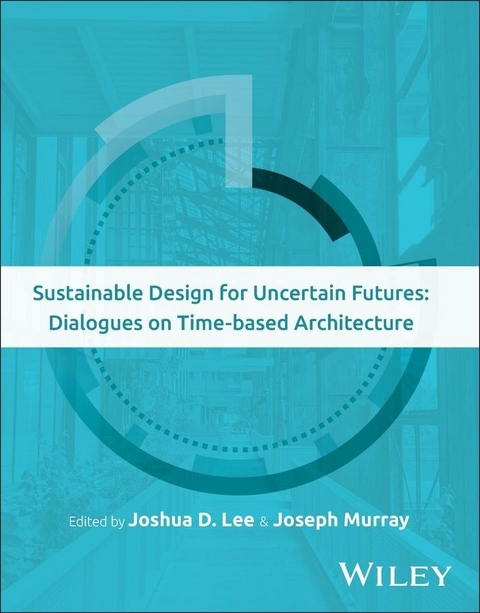
Sustainable Design for Uncertain Futures (eBook)
Explore pivotal intersections and themes between strategies for buildings and cities to adapt to shifting circumstances.
Sustainable Design for Uncertain Futures introduces fourteen time-based strategies in architecture through a series of dialogues between experts. This format embraces a dynamic exploration of strategies ranging from Adaptive Reuse to Bio Design, revealing how each one addresses forces of change and adds adaptive capacity to the built environment.
The book's structure invites readers to engage with these strategies on multiple levels. Each chapter begins with a framing of the fundamentals, providing context and key examples to situate the strategies in the wider field. At the core of each chapter is a moderated dialogue that offers key insights into how these strategies work in practice and how they can be used in combination. By presenting these strategies through dialogue, the editors demonstrate the collaborative thinking needed to address growing uncertainty in the built environment and provide readers with an actionable framework of technical and management approaches.
The book's practical focus helps bridge the gap between theory and application, making this edited volume an invaluable resource for both academics and practitioners. Readers will find dialogues involving fifteen renowned experts in their respective fields:
Avi Friedman & Naomi Keena (Mass Customization) ? Michael Fox (Computationally Responsive Environments) / Bie Plevoets (Adaptive Reuse) ? John Dale (Open Building) / Aki Ishida (Metabolism) ? Michelle Laboy (Persistence) / Felix Heisel (Circular Construction) ? Jenni Minner (Preservation) / Kim Trogal (Repair) ? Brad Guy (Design for Disassembly & Adaptability) / Sarah Wigglesworth (Inclusive Design) ? Irena Bauman (Resilience) / Doris Sung (Smart Materials) ? Mitchell Joachim (Bio Design)
Sustainable Design for Uncertain Futures presents:
- The fundamentals of each strategy, along with a short summary of each with its affordances and challenges and a few key examples
- The editors' theory of primary time signatures, enabling readers to see and plan the combination of different time-based strategies to increase building lifecycle coverage for adaptive capacity
- Critical insights from thought leaders across a wide spectrum of approaches to sustainability
Academics, practitioners, and others interested in change in the built environment can use the strategies discussed in Sustainable Design for Uncertain Futures to develop architectural solutions that accommodate climate change, shifting demographics, new live-work patterns, and many other uncertainties.
Joshua D. Lee, PhD is an Associate Teaching Professor of Architecture at Carnegie Mellon University. His research interests include sustainable design, adaptable architecture, open building, systems-based architecture, circular construction, public interest design, post-occupancy evaluation, and educational facilities. His 2019 book, Flexibility and Design: Learning from the School Construction Systems Development (SCSD) Project, provides a longitudinal evaluation of this innovative and impactful project. Joshua is a registered architect and founder of the Protean Design Collaborative. He completed his Master of Architecture, Master of Sustainable Design, and PhD at the University of Texas at Austin.
Joseph Murray is a designer and systems thinker whose projects span user experience, social research, and the built environment. He has worked for architects and engineering firms throughout his career and has developed an expertise in building lifecycle management, focusing on long-term change processes at the building and district scales. Expanding on this interdisciplinary approach, Joseph is currently pursuing a PhD in Architecture-Engineering-Construction Management at Carnegie Mellon University. His dissertation investigates adaptable building systems and time-based architectural practices. He holds an MA in Sociology and Social Anthropology from Central European University. Joseph is a board member of the Council on Open Building and is a collaborating researcher at Cornell University's Just Places Lab.
Explore pivotal intersections and themes between strategies for buildings and cities to adapt to shifting circumstances. Sustainable Design for Uncertain Futures introduces fourteen time-based strategies in architecture through a series of dialogues between experts. This format embraces a dynamic exploration of strategies ranging from Adaptive Reuse to Bio Design, revealing how each one addresses forces of change and adds adaptive capacity to the built environment. The book s structure invites readers to engage with these strategies on multiple levels. Each chapter begins with a framing of the fundamentals, providing context and key examples to situate the strategies in the wider field. At the core of each chapter is a moderated dialogue that offers key insights into how these strategies work in practice and how they can be used in combination. By presenting these strategies through dialogue, the editors demonstrate the collaborative thinking needed to address growing uncertainty in the built environment and provide readers with an actionable framework of technical and management approaches. The book s practical focus helps bridge the gap between theory and application, making this edited volume an invaluable resource for both academics and practitioners. Readers will find dialogues involving fifteen renowned experts in their respective fields: Avi Friedman & Naomi Keena (Mass Customization) Michael Fox (Computationally Responsive Environments) / Bie Plevoets (Adaptive Reuse) John Dale (Open Building) / Aki Ishida (Metabolism) Michelle Laboy (Persistence) / Felix Heisel (Circular Construction) Jenni Minner (Preservation) / Kim Trogal (Repair) Brad Guy (Design for Disassembly & Adaptability) / Sarah Wigglesworth (Inclusive Design) Irena Bauman (Resilience) / Doris Sung (Smart Materials) Mitchell Joachim (Bio Design) Sustainable Design for Uncertain Futures presents: The fundamentals of each strategy, along with a short summary of each with its affordances and challenges and a few key examplesThe editors theory of primary time signatures, enabling readers to see and plan the combination of different time-based strategies to increase building lifecycle coverage for adaptive capacityCritical insights from thought leaders across a wide spectrum of approaches to sustainability Academics, practitioners, and others interested in change in the built environment can use the strategies discussed in Sustainable Design for Uncertain Futures to develop architectural solutions that accommodate climate change, shifting demographics, new live-work patterns, and many other uncertainties.
| Erscheint lt. Verlag | 24.7.2025 |
|---|---|
| Sprache | englisch |
| Themenwelt | Technik ► Bauwesen |
| Schlagworte | adaptive reuse • bio design • circular construction • Computationally Responsive Environments • Design for Disassembly & Adaptability • inclusive design • Mass Customization • Metabolism • Open Building • Persistence • Preservation • Resilience • Smart Materials |
| ISBN-13 | 9781394217151 / 9781394217151 |
| Informationen gemäß Produktsicherheitsverordnung (GPSR) | |
| Haben Sie eine Frage zum Produkt? |
 PDF (Adobe DRM)
Kopierschutz: Adobe-DRM
Adobe-DRM ist ein Kopierschutz, der das eBook vor Mißbrauch schützen soll. Dabei wird das eBook bereits beim Download auf Ihre persönliche Adobe-ID autorisiert. Lesen können Sie das eBook dann nur auf den Geräten, welche ebenfalls auf Ihre Adobe-ID registriert sind.
Details zum Adobe-DRM
Dateiformat: PDF (Portable Document Format)
Mit einem festen Seitenlayout eignet sich die PDF besonders für Fachbücher mit Spalten, Tabellen und Abbildungen. Eine PDF kann auf fast allen Geräten angezeigt werden, ist aber für kleine Displays (Smartphone, eReader) nur eingeschränkt geeignet.
Systemvoraussetzungen:
PC/Mac: Mit einem PC oder Mac können Sie dieses eBook lesen. Sie benötigen eine
eReader: Dieses eBook kann mit (fast) allen eBook-Readern gelesen werden. Mit dem amazon-Kindle ist es aber nicht kompatibel.
Smartphone/Tablet: Egal ob Apple oder Android, dieses eBook können Sie lesen. Sie benötigen eine
Geräteliste und zusätzliche Hinweise
Buying eBooks from abroad
For tax law reasons we can sell eBooks just within Germany and Switzerland. Regrettably we cannot fulfill eBook-orders from other countries.
aus dem Bereich