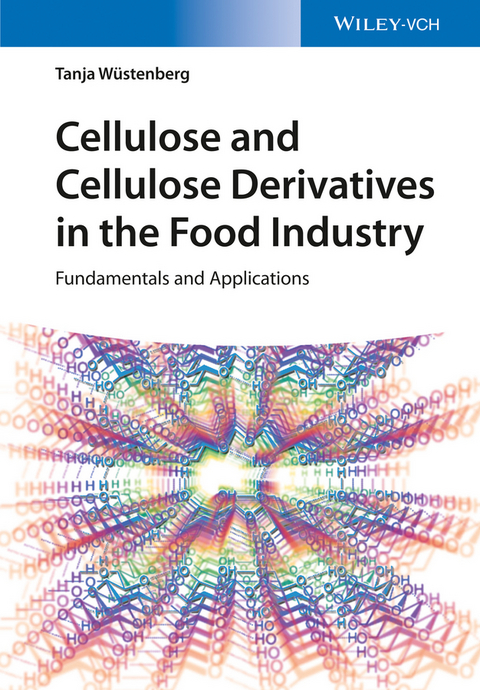
Cellulose and Cellulose Derivatives in the Food Industry
Wiley-VCH (Verlag)
978-3-527-33758-3 (ISBN)
Tanya Wüstenberg joined Dow Wolff Cellulosics (now Dow Company) in 2003 and worked as application manager for 10 years. During this period she became passionate about cellulose and cellulose derivatives and their multifunctional properties. She studied food technology at the University of Applied Sciences Fulda (Germany) and obtained her diploma as food engineer 1998. Thereafter, Tanja Wüstenberg worked as development engineer in the food industry for many years and held positions at the Fraunhofer Institute for Process Engineering and Packaging (IVV) and Sensient Food Ingredients. Furthermore, she headed the European Technical Center at National Starch & Chemical in Hamburg (Germany) for several years. Tanja Wüstenberg is an expert in the application of cellulose ethers and the development of innovative cellulose-based products. She published several brochures on hydrocolloids and a German language cellulose book.
Preface
GENERAL OVERVIEW OF FOOD HYDROCOLLOIDS
Introduction to the World of Hydrocolloids
Plant Extracts
Seed Flours
Exudates
Bacterial Polysaccharides
Overview Tables for the Most Important Cellulose Derivatives
Commercial Development - Global Market
RHEOLOGY OF FOOD HYDROCOLLOIDS
Introduction to Rheology, Rheometry, and Visco-Elasticity
Definitions
Basic Data
Different Types of Flow Behaviour
Structures of Polymers with Shear-Thinning Flow Behaviour
Causes of Shear-Thickening of Products
Factors that Influence Rheological Behaviour
Viscosity Measurement of Thickening Hydrocolloid Solutions
Characterization of Gels
Viscosimeters and Rheometers
Relationship between Rheology and Sensory
CELLULOSE
Introduction, History and Development
Raw Materials and Biological Origin
Manufacture of Pulp
Chemical Composition and Structure
Rheology
Stability
Analysis and Rheometry
Synergies with Other Hydrocolloids
Application in Food Products
Options for Derivatization of Cellulose
Nutritional Properties
Legislation
MICROCRYSTALLINE CELLULOSE
General Manufacturing Process
Chemistry
Rheology
Stability
Rheometry
Preparation of MCC Dispersions in Food
Synergies with Other Hydrocolloids
Functions and Properties of MCC
Food Applications with Typical Formulations
Non-food Applications
Nutritional Properties
Legislation
FUNDAMENTALS OF WATER-SOLUBLE CELLULOSE ETHERS AND METHYLCELLULOSE
Manufacturing Process of Cellulose Ethers
Chemistry
Rheology
Stability
Rheometry
Synergies with Other Hydrocolloids
Food Applications with Typical Formulations
Non-food Applications
Nutritional Properties
Legislation
ETHYLCELLULOSE
Manufacturing
Chemistry
Rheology
Stability
Rheometry
Synergies with Other Hydrocolloids
Food Applications with Typical Formulations
Non-food Applications
Nutritional Properties
Legislation
HYDROXYPROPYLCELLULOSE
Manufacturing
Chemistry
Rheology
Stability
Rheometry
Synergies with Other Hydrocolloids
Food Applications with Typical Formulations
Non-food Applications
Nutritional Properties
Legislation
HYDROXYPROPYLMETHYLCELLULOSE
Manufacturing
Chemistry
Rheology
Stability
Rheometry
Synergies with Other Hydrocolloids
Food Applications with Typical Formulations
Non-food Applications
Nutritional Properties
Legislation
METHYLETHYLCELLULOSE
Manufacturing
Chemistry
Rheology
Stability
Rheometry
Synergies with Other Hydrocolloids
Food Applications with Typical Formulations
Non-food Applications
Nutritional Properties
Legislation
SODIUM CARBOXYMETHYLCELLULOSE
Manufacturing
Chemistry
Rheology
Stability
Rheometry
Synergies of Cellulose Gum with Other Hydrocolloids
Functional Properties of Carboxymethylcellulose
Use of Purified CMC in Regulated Applications
Food Applications with Typical Formulations
Non-food Applications
Nutritional Properties
Legislation
CROSSLINKED SODIUM CARBOXYMETHYLCELLULOSE
Manufacturing
Chemistry
Rheology
Stability
Rheometry
Synergies with Other Hydrocolloids
Food Applications with Typical Formulations
Non-food Applications
Nutritional Properties
Legislation
ENZYMATICALLY HYDROLYSED CARBOXYMETHYLCELLULOSE
Manufacturing
Chemistry
Rheology
Stability
Rheometry
Synergies with Other Hydrocolloids
Food Applications with Typical Formulations
Non-food Applications
Nutritional Properties
Legislation
NANOCELLULOSE
Definition and Summary
Commercial Products
History and Terminology
Manufacturing Process
Chemistry and Rheometry
Rheology
Stability
Synergies with Other Substances
Food Applications
Non-Food Applications
Nutritional Properties and Toxicity
Safety Aspects
Index
| Erscheint lt. Verlag | 1.10.2014 |
|---|---|
| Sprache | englisch |
| Maße | 170 x 244 mm |
| Gewicht | 1335 g |
| Themenwelt | Technik ► Lebensmitteltechnologie |
| Weitere Fachgebiete ► Land- / Forstwirtschaft / Fischerei | |
| Schlagworte | Cellulose/Paper/Textile Chemistry • Cellulose-, Papier- u. Textilchemie • Chemie • Chemistry • Food Processing, Production & Manufacture • Food Processing, Production & Manufacture • Food Science & Technology • Food Science & Technology • Herstellung u. Verarbeitung von Lebensmitteln • Lebensmittelforschung u. -technologie • Lebensmitteltechnik • Nachhaltige u. Grüne Chemie • Oberflächen- u. Kolloidchemie • Surface & Colloid Chemistry • Surface & Colloid Chemistry • Sustainable Chemistry & Green Chemistry • Sustainable Chemistry & Green Chemistry • Zellulose • Zellulose / Cellulose |
| ISBN-10 | 3-527-33758-X / 352733758X |
| ISBN-13 | 978-3-527-33758-3 / 9783527337583 |
| Zustand | Neuware |
| Informationen gemäß Produktsicherheitsverordnung (GPSR) | |
| Haben Sie eine Frage zum Produkt? |
aus dem Bereich