Machine Learning in Water Treatment (eBook)
773 Seiten
Wiley-Scrivener (Verlag)
978-1-394-30351-9 (ISBN)
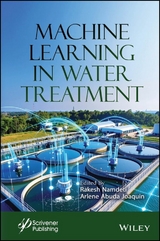
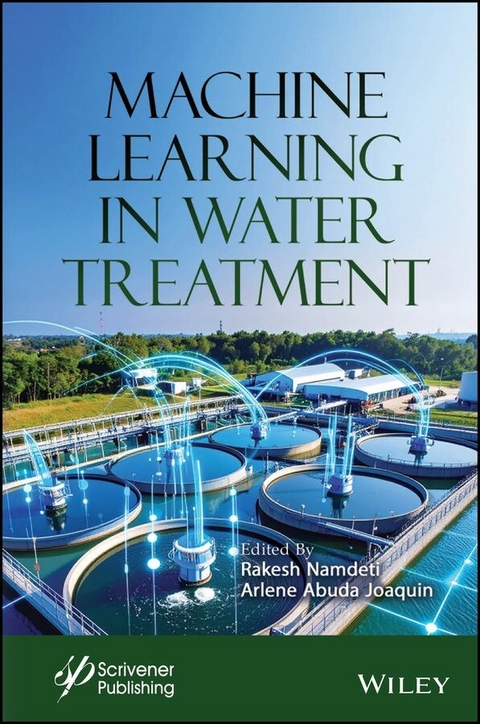
Machine Learning in Water Treatment is a must-have for anyone interested in how artificial intelligence is transforming water treatment, offering practical insights, case studies, and a deep dive into cutting-edge machine learning techniques that can improve water quality management.
Machine Learning in Water Treatment explores the complex fields of wastewater treatment and water purification, offering a thorough analysis of the cutting-edge machine learning methods used to solve problems with water quality control. It provides insights into how artificial intelligence can be incorporated with conventional procedures, bridging the gap between conventional water treatment techniques and state-of-the-art data-driven solutions. The book will cover the foundations of water treatment procedures, providing insights into the ideas behind physical, chemical, and biological treatment modalities. Difficulties in managing water and wastewater quality are paving the way for the use of machine learning as an effective tool for control and optimization.
Fundamentally, the book explains how machine learning models are used in water treatment system control, optimization, and predictive modeling. Readers will learn how to take advantage of machine learning algorithms' potential for real-time treatment process optimization, quality issue identification, and water pollutant level prediction through a thorough investigation of data collection, preprocessing, and model creation. Case studies and real-world applications provide insightful information about the application of machine learning technologies in a variety of scenarios. With its unique combination of theoretical understanding and real-world applications, this book is an invaluable tool for understanding how water quality management is changing in the age of data-driven decision-making.
Rakesh Namdeti, PhD is a lecturer in the Department of Chemical Engineering at the University of Technology and Applied Sciences, Salalah. He has over 20 publications, including book chapters and articles in international journals of repute. His research interests include chemical processes, separation technology, and petroleum refining.
Arlene Abuda Joaquin, PhD is lecturer in the Department of Chemical Engineering at the University of Technology and Applied Sciences, Salalah. She is credited with over 15 publications, including book chapters and articles in international journals. Her research focuses on water and wastewater treatment, water quality, and environmental pollution.
Machine Learning in Water Treatment is a must-have for anyone interested in how artificial intelligence is transforming water treatment, offering practical insights, case studies, and a deep dive into cutting-edge machine learning techniques that can improve water quality management. Machine Learning in Water Treatment explores the complex fields of wastewater treatment and water purification, offering a thorough analysis of the cutting-edge machine learning methods used to solve problems with water quality control. It provides insights into how artificial intelligence can be incorporated with conventional procedures, bridging the gap between conventional water treatment techniques and state-of-the-art data-driven solutions. The book will cover the foundations of water treatment procedures, providing insights into the ideas behind physical, chemical, and biological treatment modalities. Difficulties in managing water and wastewater quality are paving the way for the use of machine learning as an effective tool for control and optimization. Fundamentally, the book explains how machine learning models are used in water treatment system control, optimization, and predictive modeling. Readers will learn how to take advantage of machine learning algorithms potential for real-time treatment process optimization, quality issue identification, and water pollutant level prediction through a thorough investigation of data collection, preprocessing, and model creation. Case studies and real-world applications provide insightful information about the application of machine learning technologies in a variety of scenarios. With its unique combination of theoretical understanding and real-world applications, this book is an invaluable tool for understanding how water quality management is changing in the age of data-driven decision-making.
| Erscheint lt. Verlag | 29.8.2025 |
|---|---|
| Sprache | englisch |
| Themenwelt | Naturwissenschaften ► Chemie |
| Schlagworte | Artificial Intelligence • machine learning • Wastewater Treatment • Water purification • Water resource management • Water Treatment |
| ISBN-10 | 1-394-30351-3 / 1394303513 |
| ISBN-13 | 978-1-394-30351-9 / 9781394303519 |
| Informationen gemäß Produktsicherheitsverordnung (GPSR) | |
| Haben Sie eine Frage zum Produkt? |
 PDF (Adobe DRM)
Kopierschutz: Adobe-DRM
Adobe-DRM ist ein Kopierschutz, der das eBook vor Mißbrauch schützen soll. Dabei wird das eBook bereits beim Download auf Ihre persönliche Adobe-ID autorisiert. Lesen können Sie das eBook dann nur auf den Geräten, welche ebenfalls auf Ihre Adobe-ID registriert sind.
Details zum Adobe-DRM
Dateiformat: PDF (Portable Document Format)
Mit einem festen Seitenlayout eignet sich die PDF besonders für Fachbücher mit Spalten, Tabellen und Abbildungen. Eine PDF kann auf fast allen Geräten angezeigt werden, ist aber für kleine Displays (Smartphone, eReader) nur eingeschränkt geeignet.
Systemvoraussetzungen:
PC/Mac: Mit einem PC oder Mac können Sie dieses eBook lesen. Sie benötigen eine
eReader: Dieses eBook kann mit (fast) allen eBook-Readern gelesen werden. Mit dem amazon-Kindle ist es aber nicht kompatibel.
Smartphone/Tablet: Egal ob Apple oder Android, dieses eBook können Sie lesen. Sie benötigen eine
Geräteliste und zusätzliche Hinweise
Buying eBooks from abroad
For tax law reasons we can sell eBooks just within Germany and Switzerland. Regrettably we cannot fulfill eBook-orders from other countries.
aus dem Bereich