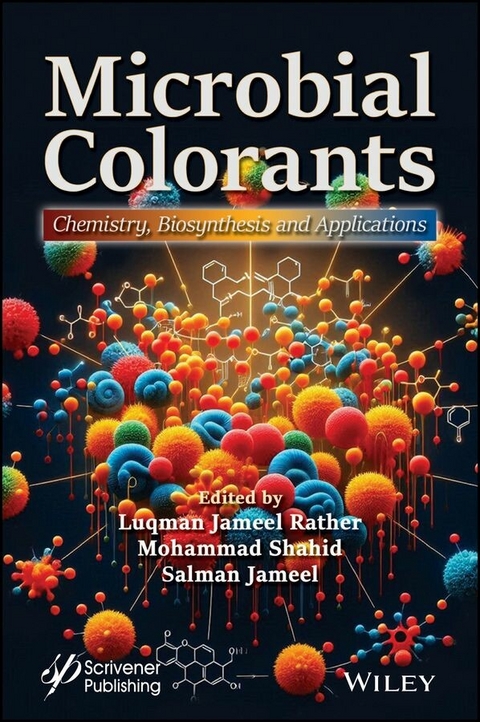
Microbial Colorants (eBook)
1055 Seiten
Wiley-Scrivener (Verlag)
978-1-394-28786-4 (ISBN)
The book is a must-buy for anyone interested in the burgeoning field of microbial colorants, as it provides an extensive exploration of their sources, chemistry, and diverse applications, while addressing crucial aspects of environmental sustainability and regulatory considerations.
Microbial Colorants: Chemistry, Biosynthesis and Applications offers a comprehensive and in-depth exploration of microbial colorants, covering their sources, chemical properties, biosynthesis, and a wide range of applications. The volume compiles information on microbial and non-conventional pigment sources as well as environmental sustainability and regulatory aspects surrounding their use. The first half of the book delves into the sources and chemistry of microbial pigments, covering a variety of topics including bacterial pigments, fungal pigments, algal and cyanobacterial colorants, and more. Readers will gain insight into the diverse world of microbial pigments and the science behind their vibrant colors. The second half of the book focuses on the practical aspects of microbial colorants, including extraction and purification techniques, biotechnological approaches to enhance production, environmental sustainability, and regulatory considerations. It also explores the numerous applications of microbial colorants in industries such as food, cosmetics, textiles, and technology. Microbial colorants are gaining increasing attention due to their natural and sustainable properties. As the world seeks eco-friendly alternatives to synthetic dyes and colorants, microbial pigments offer a promising solution. This book aims to bridge the knowledge gap by providing a comprehensive resource for researchers, students, and professionals interested in this emerging field.
Readers will find the book:
- Explores various microbial pigments and their sources;
- Reviews pigment isolation, biosynthesis, and processing techniques;
- Discusses potential applications of pigments across a range of products in the food and beverage industry, pharmaceutical industry, and textile dyeing industry;
- Covers food safety and toxicity aspects of using microbial pigments as food colorants and includes the latest innovations in the use of microbial pigments in the textile industrial sector for dyeing and finishing purposes;
- Provides regulatory considerations and compliance requirements for using microbial colorants in various industries.
Audience
The book is meant for researchers, academics, and industry experts working in fields related to pigment production, chemistry, isolation, and applications in the food and beverage, medicine, and textile industries. The book will be beneficial to synthetic organic chemists who work in the field of drug development.
Luqman Jameel Rather, PhD, is a postdoctoral scientist at the College of Sericulture, Textile, and Biomass Science, Southwest University, Chongqing, China. He has published over 60 research articles in international journals of repute and edited two books. He is an active member of many research organizations and organizes both national and international conferences. His research interests include functional finishing of textile materials, thermodynamic and kinetic adsorption studies of natural colorants on wool fiber, and nanoparticle-biopolymers.
Mohammad Shahid, PhD, is an assistant professor in the Department of Chemistry, Faculty of Science and Technology, Mewar University, Chittorgarh, Rajasthan, India. He has published over 50 peer-reviewed journal articles, reports, and book chapters, as well as several books. He has also received several esteemed fellowships to support his research pursuits, including grants from the Indian University Grants Commission, a Chinese Postdoctoral Fellowship, an EU Marie Curie Fellowship, and a Dr. D.S. Kothari Fellowship.
Salman Jameel, PhD, is an assistant professor at the Indian Institute of Integrative Medicine, Sanat Nagar, Srinagar, Jammu and Kashmir, India. He is a dedicated researcher in the field of natural products and medicinal chemistry with expertise in isolation, characterization, and structural modifications of bioactive natural compounds. Over the years, he has contributed significantly to scientific literature, with multiple publications in peer-reviewed journals, covering topics such as neuroprotective compounds, antibacterial agents, and novel synthetic methodologies.
The book is a must-buy for anyone interested in the burgeoning field of microbial colorants, as it provides an extensive exploration of their sources, chemistry, and diverse applications, while addressing crucial aspects of environmental sustainability and regulatory considerations. Microbial Colorants: Chemistry, Biosynthesis and Applications offers a comprehensive and in-depth exploration of microbial colorants, covering their sources, chemical properties, biosynthesis, and a wide range of applications. The volume compiles information on microbial and non-conventional pigment sources as well as environmental sustainability and regulatory aspects surrounding their use. The first half of the book delves into the sources and chemistry of microbial pigments, covering a variety of topics including bacterial pigments, fungal pigments, algal and cyanobacterial colorants, and more. Readers will gain insight into the diverse world of microbial pigments and the science behind their vibrant colors. The second half of the book focuses on the practical aspects of microbial colorants, including extraction and purification techniques, biotechnological approaches to enhance production, environmental sustainability, and regulatory considerations. It also explores the numerous applications of microbial colorants in industries such as food, cosmetics, textiles, and technology. Microbial colorants are gaining increasing attention due to their natural and sustainable properties. As the world seeks eco-friendly alternatives to synthetic dyes and colorants, microbial pigments offer a promising solution. This book aims to bridge the knowledge gap by providing a comprehensive resource for researchers, students, and professionals interested in this emerging field. Readers will find the book: Explores various microbial pigments and their sources; Reviews pigment isolation, biosynthesis, and processing techniques; Discusses potential applications of pigments across a range of products in the food and beverage industry, pharmaceutical industry, and textile dyeing industry; Covers food safety and toxicity aspects of using microbial pigments as food colorants and includes the latest innovations in the use of microbial pigments in the textile industrial sector for dyeing and finishing purposes; Provides regulatory considerations and compliance requirements for using microbial colorants in various industries. Audience The book is meant for researchers, academics, and industry experts working in fields related to pigment production, chemistry, isolation, and applications in the food and beverage, medicine, and textile industries. The book will be beneficial to synthetic organic chemists who work in the field of drug development.
1
Introduction to Microbial Colorants
Luqman Jameel Rather1*, Shazia Shaheen Mir2 and Zeenat Islam3
1College of Sericulture, Textile and Biomass Science, Southwest University, Chongqing, PR China
2Laboratory Medicine Department, Faculty of Applied Medical Sciences, Al-Baha University, Al-Baha, Saudi Arabia
3Advanced Research Laboratory, Department of Zoology, School of Life Sciences, University of Kashmir, Srinagar, Jammu & Kashmir, India
Abstract
Microbial pigments have emerged as fascinating compounds with diverse applications, capturing the attention of researchers and industries alike. Developing microbial pigments poses a significant challenge, given the availability of cheap synthetic dyes in the market. Nevertheless, the adverse effects of the majority of azo and benzidine synthetic dyes have prompted numerous scientists and experts to redirect their focus toward more environmentally friendly methods of dye production. This chapter delves into the world of microbial pigments, offering an introduction that explores their significance, classification, structure, and applications. The discussion begins by highlighting the pivotal roles these pigments play in various biological processes, underscoring their ecological and industrial importance. A comprehensive examination of the classification of microbial pigments sheds light on the diversity present within microbial communities, showcasing the wide array of colors produced by bacteria, fungi, and other microorganisms. Furthermore, the chapter delves into the intricate structures of microbial pigments, unraveling the molecular architectures that contribute to their unique and vibrant hues. Understanding the structural nuances opens avenues for manipulation and optimization, crucial for both scientific exploration and practical applications. The latter part of the chapter navigates through the myriad applications of microbial pigments, ranging from the traditional realms of dyeing to modern applications in food, cosmetics, medicine, and textiles. By exploring the multifaceted roles of microbial pigments, this chapter aims to provide a holistic view of their potential, paving the way for further research and innovative utilization in diverse fields.
Keywords: Natural dyes, microbial colorants, biocompatible, biodegradable, textile coloration, food applications
1.1 Background and Significance
Humans have always been attracted by colors and employed natural resources from plants, animals, and minerals and their waste byproducts to color synthetic and natural textiles [1]. The advent of the synthetic colorant “Mauveine” in 1856 by W.H. Perkin, together with its subsequent proliferation and use, made natural colorants/dyes obsolete and only a small number of craftsmen and crafters continued to use them [2]. Researchers have been encouraged to investigate alternative dye sources to address the ecological and healthrelated issues associated with azo and benzidine dyes [3, 4]. The aim is to reduce the textile industry’s reliance on dangerous synthetic colors and minimize their impact. As a reaction to this, several governments implemented stringent limitations on the utilization of synthetic dyes, leading to a spike in the utilization of natural dyes [5, 6]. These natural dyes have emerged as promising alternatives or partners in the field of green chemistry, offering a broad range of applications beyond just coloring textiles. Natural colorants not only provide aesthetically pleasing shades but also offer unique functional properties that are beneficial for the food and textile industries. These include antioxidant, insect repellent, deodorizing, antifeedant, antimicrobial, antifungal, fluorescence, and UV-protective effects [7–12]. The utilization of substantial quantities of water and auxiliary substances for dye extraction and subsequent dyeing procedures has raised significant apprehensions over the production of wastewater containing elevated concentrations of pollutants. The chemical composition of textile effluents from various textile laboratories and enterprises is very varied, resulting in detrimental effects on the aquatic ecosystems of various water bodies [13]. This factor forced scientists to consider alternate dyes and pigments that could be readily removed with little waste production.
This entails the use of cost-efficient cleaner manufacturing technologies and the incorporation of novel dye-producing flora and fauna derived from sustainable harvesting methods, which include various microorganisms, such as bacteria, fungi, algae, yeasts, and actinomycetes. Research investigations on the synthesis of pigments from microorganisms are in their nascent phase and need state-of-the-art research facilities to enhance the commercial feasibility of pigment manufacturing procedures and techniques. Bacterial farming has several benefits, including rapid and uncomplicated growing regardless of the season, high productivity, straightforward extraction, genetic alteration capabilities, and the ability to pick certain strains [14]. Yeasts, a kind of eukaryote, have some advantages over filamentous fungi. They exhibit faster growth rates but need cell disruption because of intracellular synthesis [15, 16]. Bacterial and fungal species from various groups create distinct secondary metabolites, including quinones, carotenoids, and anthocyanins, which are diverse types of colors [17]. The successful commercialization of carotenoid pigments from some distinct fungus species has garnered significant scientific interest in the textile industry [18]. Current research in textile coloring has made notable progress in developing pigments derived from Trichoderma sp. and Aspergillus sp. These pigments are utilized for dyeing cotton and silk, resulting in long-lasting color [19]. Several bacterial species that create various bio-pigments include Flavobacterium sp., A. aurantiacum, Micrococcus sp., P. aeruginosa, S. marcescens, Chromobacterium sp., and Rheinheimera sp. [15]. The first bio-pigment that was effectively grown and used for food purposes was β-carotene, derived from the fungus Blakeslea. This pigment received approval from the European Union in 1995 to be used as a food additive. The production of this microbial pigment can readily meet the year-round demand in several areas of the food and textile industries [20]. Lichens have been used as a source of natural colors since prehistoric times. Paranoid lichens produce natural colors using the acetate–polymelonate pathway, which involves the biosynthesis of depsides and depsidones from phenolic rings [21]. The primary obstacle to producing anthocyanins on a large scale is the restricted availability of these compounds in plant tissues. A biosynthesis technique has arisen to address this disparity, using bacteria or yeast to produce natural chemicals on a huge scale in controlled environments. The use of second-generation lignocellulosic sugars may effectively meet the market demand for various pigments, hence enhancing the production of microbial pigments.
In this chapter, we provide current information on the extraction and chemical production of microbial pigments derived from various types of microorganisms including bacteria, cyanobacteria, fungi, algae, lichens, and others. This comprehensive study has also examined the techniques for enhancing the output of microbial pigment production by contemporary technologies, such as strain creation, co-substrate supplementation, and genetic engineering of bacteria. This also incorporates brief information about the uses of microbial pigments in different industries, such as pharmaceuticals, food, cosmetics, and textiles.
1.2 Classification of Microbial Pigments
1.2.1 Classification Based on the Source
Microbial pigments can be classified based on their source by categorizing them according to the microorganisms responsible for their production. This classification is based on the primary source of pigment production while certain pigments can be generated by more than one microbial source, such as bacteria, fungus, algae, etc. (Figure 1.1). In addition, the progress made in molecular techniques has resulted in the identification of new pigments derived from different microorganisms that were previously unexplored. This has broadened the range and intricacy of microbial pigments.
Figure 1.1 Classification of microbial pigments based on the type of microorganisms.
1.2.1.1 Bacterial Pigments
Researchers have shown significant interest in bacterial pigments due to their diverse industrial applications. These pigments have been extensively utilized in East and Southeast Asia across multiple sectors, including food, cosmetics, textiles, and pharmaceuticals. Bacteria demonstrate a remarkable ability to produce a wide array of natural compounds. Examples include carotenoids, bacteriochlorophylls, phenazines, quinones, melanins, flavins, monascins, violacein, prodigiosin, and indigo [22]. However, commercializing these pigments, especially for use in food or cosmetics, has encountered challenges due to the substantial investment required and the need for extensive toxicity evaluations. Technological advancements have significantly improved the extraction and large-scale commercialization of bacterial pigments, such as riboflavin, β-carotene, and phycocyanin. There is also considerable potential for...
| Erscheint lt. Verlag | 7.4.2025 |
|---|---|
| Sprache | englisch |
| Themenwelt | Naturwissenschaften ► Biologie ► Mikrobiologie / Immunologie |
| Schlagworte | biosynthesis • extraction • Food Safety • Microbial Colorants • Microbial Pigments • Microbial Pigments in Medicine • Microbial Pigments in the Textile Industry • Natural Dyes • Natural Fibers • Pharmaceutical Industry • Skincare Finishes • Synthetic Dyes • textile industry • Textile Materials • UV Protection |
| ISBN-10 | 1-394-28786-0 / 1394287860 |
| ISBN-13 | 978-1-394-28786-4 / 9781394287864 |
| Informationen gemäß Produktsicherheitsverordnung (GPSR) | |
| Haben Sie eine Frage zum Produkt? |
 EPUB (Adobe DRM)
Kopierschutz: Adobe-DRM
Adobe-DRM ist ein Kopierschutz, der das eBook vor Mißbrauch schützen soll. Dabei wird das eBook bereits beim Download auf Ihre persönliche Adobe-ID autorisiert. Lesen können Sie das eBook dann nur auf den Geräten, welche ebenfalls auf Ihre Adobe-ID registriert sind.
Details zum Adobe-DRM
Dateiformat: EPUB (Electronic Publication)
EPUB ist ein offener Standard für eBooks und eignet sich besonders zur Darstellung von Belletristik und Sachbüchern. Der Fließtext wird dynamisch an die Display- und Schriftgröße angepasst. Auch für mobile Lesegeräte ist EPUB daher gut geeignet.
Systemvoraussetzungen:
PC/Mac: Mit einem PC oder Mac können Sie dieses eBook lesen. Sie benötigen eine
eReader: Dieses eBook kann mit (fast) allen eBook-Readern gelesen werden. Mit dem amazon-Kindle ist es aber nicht kompatibel.
Smartphone/Tablet: Egal ob Apple oder Android, dieses eBook können Sie lesen. Sie benötigen eine
Geräteliste und zusätzliche Hinweise
Buying eBooks from abroad
For tax law reasons we can sell eBooks just within Germany and Switzerland. Regrettably we cannot fulfill eBook-orders from other countries.
aus dem Bereich