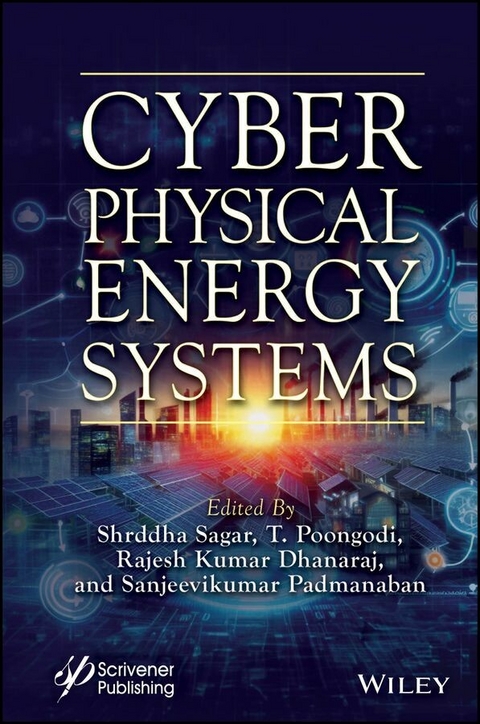
Cyber Physical Energy Systems (eBook)
564 Seiten
Wiley-Scrivener (Verlag)
978-1-394-17299-3 (ISBN)
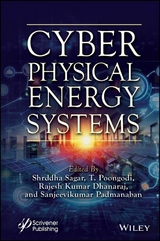
This book is essential for understanding the transformative integration of cyber-physical systems in smart grids, providing valuable insights that will shape the future of sustainable energy production and distribution.
A novel modeling methodology that blends cyber and physical components is a significant advancement for future energy systems. A Cyber-Physical System (CPS) is an integrated component of physical microgrids that combines computers, wireless connections, and controls to create a holistic solution. As a result of cyber-physical systems, a new generation of engineering systems incorporating wireless communication has begun to emerge. Despite that there are various major CPS systems in use today, one of the most challenging sectors for implementation is the smart grid which aims to distribute dependable and efficient electric energy while maintaining a high level of global environmental sustainability.
Smart grids incorporate advanced monitoring to ensure a secure, efficient energy supply, enhancing generator and distributor performance while offering consumers more choices. These systems aim to boost the capacity and responsiveness of energy production, transmission, distribution, and consumption. As renewable energy sources grow, traditional methods are being challenged, requiring cross-domain integration of energy systems and data. This book explores architectures and methods for integrating cutting-edge technology into the power grid for more sustainable energy production and distribution.
Shrddha Sagar, PhD is a professor in the School of Computing Science and Engineering, Galgotias University, India with more than 14 years of experience working in teaching and research. She is the author of over ten book chapters and over 25 international journals and conferences. In her research, she has undertaken meticulous scientific studies of emerging issues in several disciplines including artificial intelligence, Internet of Things, machine learning, and big data.
T. Poongodi, PhD, is a professor in the School of Computing Science and Engineering at the Galgotias University, India. She is the author of over 40 book chapters, over 30 international journals and conferences, and over 10 books. In her research, she has undertaken meticulous scientific studies of emerging issues in several disciplines including network security, wireless ad hoc and sensor networks, Internet of Things (IoT), computer networks, and blockchain technology for emerging communication networks. She is a member of The Institute of Electrical and Electronics Engineers (IEEE), IEEE Women in Engineering, Association for Computing Machinery, International Association of Engineers, Institute of Research Engineers and Doctors, and the International Association of Computer Science and Information Technology.
Rajesh Kumar Dhanaraj, PhD, is a professor in the School of Computing Science and Engineering at Galgotias University, India. He has contributed to over 25 books on various technologies, has 21 Patents, and has authored 53 articles and papers in various refereed journals and international conferences, as well as chapters in books. He is a Senior Member of the Institute of Electrical and Electronics Engineers and a member of the Computer Science Teacher Association and International Association of Engineers, as well as an expert advisory panel member of Texas Instruments Inc., USA.
Sanjeevikumar Padmanaban is a chartered engineer in the Institution of Engineers, India. His research work is focused on the field of power electronics and drives and includes multi-phase machines, multilevel and DC-DC converters, and applications of renewable power generation systems. He has authored over 250 scientific research papers and is involved as a member in various capacities on the committees for more than 4500 international conferences, including the Institute of Electrical and Electronics Engineers and Institution of Engineering and Technology.
This book is essential for understanding the transformative integration of cyber-physical systems in smart grids, providing valuable insights that will shape the future of sustainable energy production and distribution. A novel modeling methodology that blends cyber and physical components is a significant advancement for future energy systems. A Cyber-Physical System (CPS) is an integrated component of physical microgrids that combines computers, wireless connections, and controls to create a holistic solution. As a result of cyber-physical systems, a new generation of engineering systems incorporating wireless communication has begun to emerge. Despite that there are various major CPS systems in use today, one of the most challenging sectors for implementation is the smart grid which aims to distribute dependable and efficient electric energy while maintaining a high level of global environmental sustainability. Smart grids incorporate advanced monitoring to ensure a secure, efficient energy supply, enhancing generator and distributor performance while offering consumers more choices. These systems aim to boost the capacity and responsiveness of energy production, transmission, distribution, and consumption. As renewable energy sources grow, traditional methods are being challenged, requiring cross-domain integration of energy systems and data. This book explores architectures and methods for integrating cutting-edge technology into the power grid for more sustainable energy production and distribution.
| Erscheint lt. Verlag | 14.11.2024 |
|---|---|
| Sprache | englisch |
| Themenwelt | Naturwissenschaften ► Physik / Astronomie |
| Technik ► Elektrotechnik / Energietechnik | |
| Schlagworte | Control and Energy • Cyber-Physical Energy Systems in Industrial IoT • Cyber-Physical Systems • Energy Consumption • Energy Consumption in Cyber-Physical Systems • Energy Management • Energy Management in Smart Factory • Federated Learning-based Intelligent Algorithms • Industrial IoT • IoT-based Advanced Energy Management • Microgrid • Optimization Techniques for Energy Management • Power System • Reliable Distribution • Smart Grid |
| ISBN-10 | 1-394-17299-0 / 1394172990 |
| ISBN-13 | 978-1-394-17299-3 / 9781394172993 |
| Informationen gemäß Produktsicherheitsverordnung (GPSR) | |
| Haben Sie eine Frage zum Produkt? |
 PDF (Adobe DRM)
Kopierschutz: Adobe-DRM
Adobe-DRM ist ein Kopierschutz, der das eBook vor Mißbrauch schützen soll. Dabei wird das eBook bereits beim Download auf Ihre persönliche Adobe-ID autorisiert. Lesen können Sie das eBook dann nur auf den Geräten, welche ebenfalls auf Ihre Adobe-ID registriert sind.
Details zum Adobe-DRM
Dateiformat: PDF (Portable Document Format)
Mit einem festen Seitenlayout eignet sich die PDF besonders für Fachbücher mit Spalten, Tabellen und Abbildungen. Eine PDF kann auf fast allen Geräten angezeigt werden, ist aber für kleine Displays (Smartphone, eReader) nur eingeschränkt geeignet.
Systemvoraussetzungen:
PC/Mac: Mit einem PC oder Mac können Sie dieses eBook lesen. Sie benötigen eine
eReader: Dieses eBook kann mit (fast) allen eBook-Readern gelesen werden. Mit dem amazon-Kindle ist es aber nicht kompatibel.
Smartphone/Tablet: Egal ob Apple oder Android, dieses eBook können Sie lesen. Sie benötigen eine
Geräteliste und zusätzliche Hinweise
Buying eBooks from abroad
For tax law reasons we can sell eBooks just within Germany and Switzerland. Regrettably we cannot fulfill eBook-orders from other countries.
aus dem Bereich