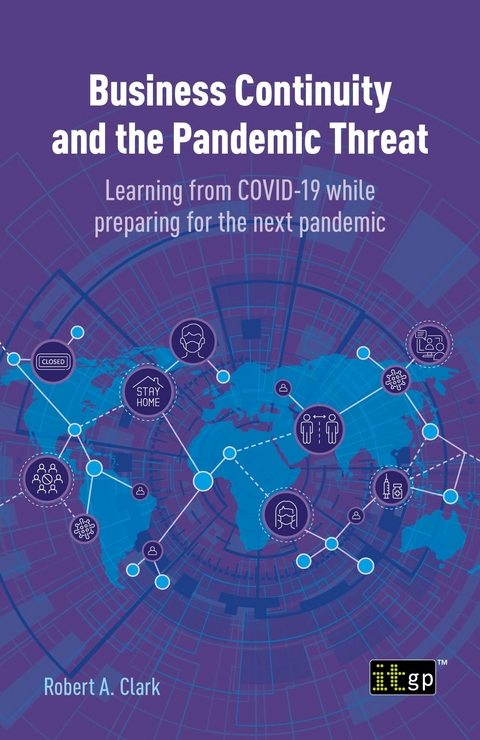
Business Continuity and the Pandemic Threat (eBook)
456 Seiten
Packt Publishing (Verlag)
978-1-80638-948-3 (ISBN)
In today's volatile world, businesses must be prepared for crises, especially pandemics. This book offers a comprehensive guide to help organizations adapt and survive in the face of such challenges. Analyzing the COVID-19 pandemic, it explores the virus's origins, the global response, and the reasons behind widespread unpreparedness. Real-world case studies provide insights into effective strategies and missteps during the crisis.
The book offers practical tools for developing a robust business continuity plan and highlights the crucial role of leadership and crisis management teams. It also covers key lessons on managing lockdowns, mitigating economic impact, and addressing the psychological and societal effects of a pandemic. Emphasizing both operational and human aspects of crisis management, the book underscores that proactive preparedness today can safeguard businesses and lives tomorrow.
CHAPTER 2: WHAT EXACTLY IS A PANDEMIC?
Historically, pandemics can be traced back many centuries. A simple definition that has been used to describe them is “a contagion that has gone global”. Although a pandemic can also affect the animal and bird populations, this book focuses on the human-to-human spread of potentially fatal contagions.
The WHO tells us that this worldwide spread of a novel disease will initially have no vaccines or known cures available, and neither will people have any immunity. Generally, the most common cause of pandemics has been influenza, although in the past 75 years, almost 400 new infectious diseases have been discovered. Since 1971, scientists have identified 25 new pathogens for which we have no vaccines and no treatment, although most have not developed into a pandemic (Quick, 2018, p 41).
Influenza in its various viral forms certainly deserves more than just a passing mention in the history of pandemics. Most notable is the 1918-1919 Spanish influenza outbreak, which alone is estimated to have killed more than 50 million. History has taught us that we can expect an average of three influenza pandemics each century.
In the Middle Ages, caused by the Yersinia pestis bacteria, the bubonic plague, or Black Death as it became known, killed close to 20% of the global population. It ran from 1347-1351, and resulted in an estimated 75 million fatalities out of a world population of 450 million. Localised plague outbreaks do still occur in various parts of the world, but they are generally controlled by antibiotics.
One exception is HIV/AIDS, which was identified around 1980 and has killed almost 40 million in the four decades since its discovery. It is estimated that as many people, primarily in sub-Saharan Africa, are also living with the disease. The origin of HIV/AIDS has been traced back to Cameroon in Africa, as early as 1910. The disease had been in existence for around 50 years before it finally exploded onto the global scene. There is still no vaccine or known cure, but it is now treatable by using what is known as antiretroviral medication.
Perhaps also worthy of mention, although maybe not in the same league as the aforementioned pandemic causes, since first spreading from its origin in the Indian sub-continent around 200 years ago, over an extended period cholera has also killed millions. The WHO has estimated an annual case diagnosis of up to five million, with as many as 120,000 associated deaths. Cholera is treatable and a combination of rehydration and antibiotics are usually prescribed. However, if left untreated, cholera can kill in a matter of hours.
“The Covid-19 pandemic has made clear that our health is inextricably tied to larger environmental issues. Increased population density, global travel, deforestation, large-scale farming and melting of the permafrost has disrupted animal habitats, bringing them in closer contact to humans. This has raised the risk of more frequent zoonotic disease outbreaks and therefore a higher potential for another pandemic.”
(Morrin, 2020)
In 2020, the threat from the novel virus subsequently named SARS-CoV-2 appeared. We now know that this causes the potentially fatal disease that was named COVID-19.
Depending upon the nature of a contagion, it can be transmitted from human to human in any one of a number of ways, including:
• Airborne infection – usually caused by organisms that can survive suspended in the air for long periods.
• Droplet infection – occurs usually from the droplets generated by coughing or sneezing.
• Vector-borne – e.g. carried by mosquitoes, fleas, mites, ticks.
• Direct contact infection – can result from skin-to-skin contact or exposure to contaminated body fluids.
• Indirect contact infection – can occur by touching a contaminated surface (e.g. door handles, handrails or elevator call buttons).
2.1 Known diseases that could cause a pandemic
The WHO has listed a number of diseases on its website that it believes have the potential to develop into epidemics and pandemics. Some of those listed already have achieved epidemic or pandemic status, and their names will no doubt be familiar to readers. Our business continuity and pandemic response plans should be prepared and maintained with these in mind.
It is also worth noting that, over time, the WHO will keep that list updated to reflect any emerging infectious diseases, such as COVID-19, as and when they are identified. In the meantime, I have broken these particular threats that we are facing into three sections. Those that are:
1. Capable of causing a global pandemic.
2. Capable of causing devastating regional epidemics.
3. Those that have the potential to be used in the pursuit of biological warfare and bioterrorism, to which section 2.2 has been devoted.
2.1.1 Global pandemic contenders
These include respiratory viruses, such as pandemic influenza, coronaviruses (between 2002-2019 there have been three), Nipah virus and a small number of others, including as yet unidentified emerging infectious diseases.1
2.1.2 Devastating regional epidemic candidates
This would typically include Ebola, Zika, Yellow Fever and Dengue.2
2.2 Biological warfare and terrorism
Although many politicians and scientists have pointed at a Wuhan wet market as the source of the coronavirus, other theories understandably serve to contradict. One such alternative relates to biological warfare or bioterrorism. Before discussing the origin of the virus in more detail in chapter 3, I wanted to consider the implications and history of such a theory.
Also known as germ warfare, the concept of biological warfare has been around for at least three millennia, and examples can be traced back to the fourteenth century BC (Barras & Greub, 2014). There is a distinction to be made between biological warfare and bioterrorism. The former would usually constitute a country-on-country attack, while the latter would be performed by a terrorist group that is likely to be working to a different agenda.
One biological weapon that has been used in a number of terrorist attacks is anthrax, although, to date, it has only been used in very small quantities. Even so, concern remains over the potential long-term effects of a large-scale anthrax terrorist attack on a metropolitan area. This is presumed likely to be more devastating than a nuclear attack.
During World War II, the British tested the effectiveness of anthrax on the Scottish island of Gruinard. It was concluded that had, for example, Berlin been bombed with anthrax-based biological weapons, it would still have been uninhabitable at least 30 years later (Cole, 1988). By comparison, the rebuilding of Hiroshima after the dropping of the first atomic bomb in 1945, started within four years (Blackford, 2007). Estimated casualties from a mass bioterrorism attack using agents, such as anthrax, smallpox or plague vary considerably from half a million to 30 million (Clark, 2007) and (Richardson, et al., 2007).
In the 1970s, the United Nations initiated the Biological Weapons Convention (BWC), which came into force in 1975. This BWC was better known as the Convention on the Prohibition of the Development, Production and Stockpiling of Bacteriological (Biological) and Toxin Weapons and on their Destruction (United Nations, 2017). However, this did not really address any ambiguities, doubts or suspicions that countries may have harboured regarding other countries biological warfare capabilities and their subsequent compliance with the BWC.
“Only 16 countries plus Taiwan have had or are currently suspected of having biological weapons programs: Canada, China, Cuba, France, Germany, Iran, Iraq, Israel, Japan, Libya, North Korea, Russia, South Africa, Syria, the United Kingdom and the United States.
There is widespread consensus against the possession and use of biological weapons. Most countries are party to the Biological and Toxin Weapon Convention, but there is no way to know whether countries are complying with their commitments.”
(NTI, 2015)
Regardless of whether a biological warfare or terrorist attack was launched on a specific target using a biological agent, such as anthrax, apart from perhaps the scale of the attack, the end result would be the same. For the purpose of this chapter, the terms biological warfare, germ warfare and bioterrorism should be considered as interchangeable.
“Bioterrorism is the deliberate release of viruses, bacteria, or other agents used to cause illness or death in people, animals and plants. They (the virus and bacteria, etc.) are typically found in nature.”
(Costgliola & Quaqliata, 2008, p 7)
Biological terrorism is something that has captured the imagination of television and movie producers. In the BBC series ‘Spooks’, Season Six, Episode One, saw MI5 operatives racing to stop a member of a rogue government unleashing a bio-weapon in the UK. Similarly, the third season of the US production of ‘24’, followed the exploits of Jack Bauer and the fictitious Counter Terrorism Unit, while the team attempted to prevent the release of a deadly virus in Los Angeles. Various movies followed the bio-terrorism theme, the first of which I remember seeing was entitled ‘The Satan Bug’, which is just one of several from that genre now listed on...
| Erscheint lt. Verlag | 30.7.2025 |
|---|---|
| Sprache | englisch |
| Themenwelt | Sachbuch/Ratgeber ► Freizeit / Hobby ► Sammeln / Sammlerkataloge |
| Wirtschaft ► Betriebswirtschaft / Management ► Unternehmensführung / Management | |
| ISBN-10 | 1-80638-948-7 / 1806389487 |
| ISBN-13 | 978-1-80638-948-3 / 9781806389483 |
| Informationen gemäß Produktsicherheitsverordnung (GPSR) | |
| Haben Sie eine Frage zum Produkt? |
 EPUB (Ohne DRM)
Digital Rights Management: ohne DRM
Dieses eBook enthält kein DRM oder Kopierschutz. Eine Weitergabe an Dritte ist jedoch rechtlich nicht zulässig, weil Sie beim Kauf nur die Rechte an der persönlichen Nutzung erwerben.
Dateiformat: EPUB (Electronic Publication)
EPUB ist ein offener Standard für eBooks und eignet sich besonders zur Darstellung von Belletristik und Sachbüchern. Der Fließtext wird dynamisch an die Display- und Schriftgröße angepasst. Auch für mobile Lesegeräte ist EPUB daher gut geeignet.
Systemvoraussetzungen:
PC/Mac: Mit einem PC oder Mac können Sie dieses eBook lesen. Sie benötigen dafür die kostenlose Software Adobe Digital Editions.
eReader: Dieses eBook kann mit (fast) allen eBook-Readern gelesen werden. Mit dem amazon-Kindle ist es aber nicht kompatibel.
Smartphone/Tablet: Egal ob Apple oder Android, dieses eBook können Sie lesen. Sie benötigen dafür eine kostenlose App.
Geräteliste und zusätzliche Hinweise
Buying eBooks from abroad
For tax law reasons we can sell eBooks just within Germany and Switzerland. Regrettably we cannot fulfill eBook-orders from other countries.
aus dem Bereich