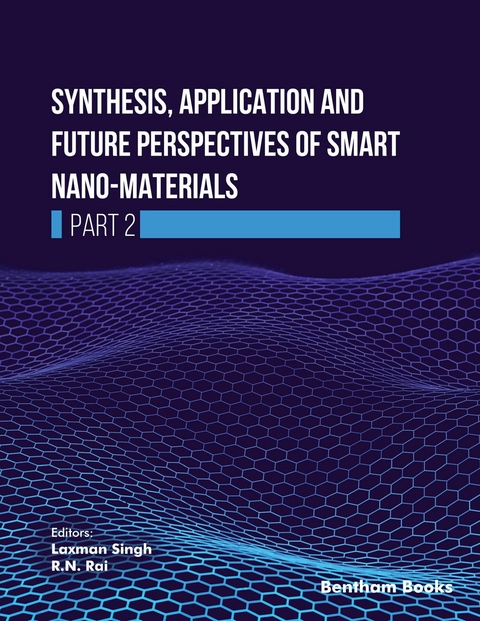
Synthesis, Application and Future Perspectives of Smart Nano materials (Part 2) (eBook)
255 Seiten
Bentham Science Publishers (Verlag)
979-8-89881-048-1 (ISBN)
Highlighting interdisciplinary approaches to the design and integration of nanomaterials in sustainable technologies, biomedicine, and environmental solutions. This volume continues the in-depth exploration of cutting-edge smart nanomaterials, focusing on emerging technologies, hybrid systems, and advanced functional applications Special attention is given to Explores nano-enabled systems for biomedical, environmental, and energy sectors Chapters delve into nano-enabled drug delivery systems, nano photocatalysts for environmental purification, bio-inspired synthesis methods, and scalable production strategies. The book offers critical insight into the role of nanotechnology in addressing global challenges and fostering sustainable innovation. Key Features: Present advanced applications of hybrid and multifunctional nanomaterials Explore nano-enabled systems for biomedical, environmental, and energy sectors Highlight innovative synthesis routes and performance enhancement techniques Discuss scalability, sustainability, and integration into industrial systems.
Nanomaterials in Environmental Remediation: Innovative Solutions for Pollution Mitigation
Bhanu Pratap Singh Gautam1, *, Manjul Gondwal1, *, Roshan Lal1, Yogesh Kumar2, Sarita Kalacoti1, Desh Deepak1
Abstract
Nanomaterials have emerged as a promising technology for environmental remediation due to their unique size, surface area, and physicochemical properties. Nanomaterials can be used to remove pollutants from water, soil, and air, as well as to degrade hazardous waste. Examples of nanomaterials used for environmental remediation include metal nanoparticles, carbon nanotubes, and other engineered nanomaterials. Metal nanoparticles, such as silver, titanium dioxide, and zinc oxide, can be used to degrade organic pollutants. Carbon nanotubes can also be used to adsorb heavy metals such as lead and mercury from water and soil. Additionally, certain nanomaterials can be used as catalysts to speed up the degradation of hazardous chemicals. Nanomaterials can also be used to create more efficient and less energy-intensive processes for environmental remediation. For example, nanofiltration membranes can be used to reduce energy consumption when removing pollutants from water. Nanomaterials can also be used to create more effective adsorbents for the removal of pollutants from air. The use of nanomaterials for environmental remediation is still in its infancy, and research is needed to understand their potential applications and risks. However, the potential of nanomaterials to improve the efficiency and effectiveness of environmental remediation processes is clear.
* Corresponding authors Bhanu Pratap Singh Gautam and Manjul Gondwal: Department of Chemistry, Laxman Singh Mahar Campus Pithoragarh, Soban Singh Jeena University, Almora, Uttarakhand, India; E-mails: gautambps@gmail.com; m.gondwal@gmail.com
INTRODUCTION
The environment has been polluted by organic, inorganic, and pathogenic microbes. Human activities, such as intense agriculture, domestic chores, and temporary industrial procedures, are accountable for the emission of detrimental chemicals. The rapid growth of polluting industries, such as textile production, tannery operations, food and beverage manufacturing, cosmetics development, and pharmaceutical production, leads to the release of dangerous, long-lasting, and harmful substances into the nearby environment. The extensive use of natural resources by the growing population has had a profound effect on the long-term viability of the environment [1-3]. Persistent organic pollutants, such as Aldrin, Dieldrin, Endrin, Toxaphene, Dichloro Diphenyl, and others, have caused disruptions in the life cycle of certain organisms. The problem of nanoplastic seepage into the environment has recently been recognized as a notable concern [4-6]. The hydrodynamic force exerted by water can disintegrate microplastics into smaller particles, with a size of up to 400 nm, that possess the capability to penetrate the surrounding ecosystem. Nanoplastics have the capacity to penetrate the skin and cause harm to different organisms. Observations revealed that the mortality rate of zebrafish exceeded 54% as a result of the passive diffusion of micro plastics into the aquatic system [5]. The primary obstacle encountered by civilization is the deterioration of the environment. Current research is focused on investigating emerging technologies to purify air, water, and soil [6]. The contaminants of concern encompass particulate matter, heavy metals, pesticides, herbicides, fertilizers, oil spills, toxic gases, industrial effluents, sewage, and organic compounds [7, 8]. It is crucial to monitor pollution levels in order to effectively address these challenges. The existence of contaminants in the environment has led to harmful consequences on several biological systems. Thus, it is crucial to identify and treat these conditions early in order to avoid their spread [9-12].
The Detection of Pollution through the Utilization of Nanoparticles
Nanomaterials have the capability to monitor hazardous chemicals in diverse environmental matrices [13]. The unique properties of nanomaterials, including their composition, large surface area, and electrical, magnetic, mechanical, and optical characteristics, enable a wide range of applications [14]. The nanosensors are capable of detecting surface indicators of pollutants or enhancing analytical signals. Nanosensors have been found to exhibit heightened sensitivity in detecting pollutants at exceedingly low levels, surpassing the capabilities of conventional methods [15]. The present article provides a discourse on the nanoparticles of silver, zinc oxide, and silicon oxide. Nanosilver particles (AgNPs) are utilized in pollution detection owing to their distinctive optical, electrical, and thermal characteristics [16]. Devices utilizing silver nanoparticles (AgNPs) have been shown to enhance electron kinetics and promote uniformity [17]. In the experiment, a pencil graphite electrode was employed along with AgNPs and folic acid to detect the presence of Hg2+ ions in tap water. The nanosensor exhibited a linear range of 10-25 μM and a detection limit of 8.43 μM. The sensor for Hg2+ exhibited high sensitivity, selectivity, and rapid response [18].
The intensity of surface plasmon resonance (SPR) and the memristive switching of silver nanoparticles (AgNPs) exhibit alterations. The colorimetric and memristor-based assays exhibited detection limits of 6.2 and 8.7 ppb, correspondingly [19]. The electrochemical detection of 4-nitrophenol has been achieved through the utilization of AgNPs-functionalized reduced graphene oxide (4-NP). The presence of 4-nitrophenol was detected through the utilization of cyclic and differential pulse voltammetry. The sensor's linear range spanned from 0.1 to 363.9 M, while its limit of detection (LOD) was determined to be 48.6 nM. The sensitivity of the sensor was measured to be 35.25 A/M/cm2. In their recent study, Shah and colleagues (2021) detected the presence of Staphylococcus aureus and Candida albicans in Dodonaea viscosa AgNPs. The researchers also detected 2-nitrophenol (2-NP), 4-nitrophenol (4-NP), and additional contaminants such as 2-nitrophenol and 4-nitrophenol (RB).
The utilization of nanomaterials in the detection of water pollution is a crucial aspect of water treatment, as disinfection of contaminated water is imperative in light of the prevailing water scarcity. Pharmaceutical wastewater is composed of various substances, including endocrine disruptors, radionuclides, flame retardants, surfactants, and microbiological contaminants. The conventional techniques are inadequate in detecting these contaminants. The commonly employed techniques for detecting pollutants in wastewater are ICP-OES, ICPMS, FAAS, GFAAS, and XRF [20]. Nonetheless, the aforementioned techniques necessitate the collection of samples, pre-treatment, skilled personnel, costly apparatus, and heightened energy consumption. Nanomaterial-based sensing devices have been found to effectively address the challenges encountered in conventional sensing devices. This is attributed to their affordability, selectivity, sensitivity, and versatility. Sensing devices that utilize nanomaterials have the capability to detect pollutants present in wastewater.
Elimination of Pollutants from the Environment
The environment is subject to the release of toxic substances as a result of human activities, including industrialization [21-23]. It has the potential to impact the climate. Hence, organisms have the potential to experience pain or distress. Efficient, cost-effective, rapid, on-site, and eco-environmentally sustainable approaches to mitigating pollution [24]. According to recent research [25], the implementation of nanotechnology in precision farming has the...
| Erscheint lt. Verlag | 28.10.2025 |
|---|---|
| Sprache | englisch |
| Themenwelt | Sachbuch/Ratgeber ► Freizeit / Hobby ► Sammeln / Sammlerkataloge |
| Technik | |
| ISBN-13 | 979-8-89881-048-1 / 9798898810481 |
| Informationen gemäß Produktsicherheitsverordnung (GPSR) | |
| Haben Sie eine Frage zum Produkt? |
 EPUB (Ohne DRM)
Digital Rights Management: ohne DRM
Dieses eBook enthält kein DRM oder Kopierschutz. Eine Weitergabe an Dritte ist jedoch rechtlich nicht zulässig, weil Sie beim Kauf nur die Rechte an der persönlichen Nutzung erwerben.
Dateiformat: EPUB (Electronic Publication)
EPUB ist ein offener Standard für eBooks und eignet sich besonders zur Darstellung von Belletristik und Sachbüchern. Der Fließtext wird dynamisch an die Display- und Schriftgröße angepasst. Auch für mobile Lesegeräte ist EPUB daher gut geeignet.
Systemvoraussetzungen:
PC/Mac: Mit einem PC oder Mac können Sie dieses eBook lesen. Sie benötigen dafür die kostenlose Software Adobe Digital Editions.
eReader: Dieses eBook kann mit (fast) allen eBook-Readern gelesen werden. Mit dem amazon-Kindle ist es aber nicht kompatibel.
Smartphone/Tablet: Egal ob Apple oder Android, dieses eBook können Sie lesen. Sie benötigen dafür eine kostenlose App.
Geräteliste und zusätzliche Hinweise
Buying eBooks from abroad
For tax law reasons we can sell eBooks just within Germany and Switzerland. Regrettably we cannot fulfill eBook-orders from other countries.
aus dem Bereich