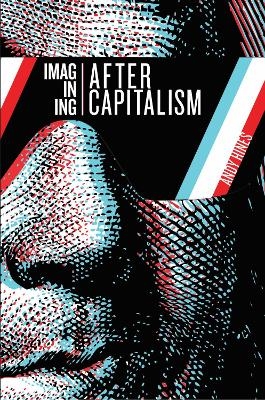
Imagining After Capitalism
Triarchy Press (Verlag)
978-1-917251-03-7 (ISBN)
an environmentally-driven Circular Commons
a socially-driven Non-Workers’ Paradise
a technology-driven Tech-Led Abundance.
There ARE positive alternatives and it’s time to get started.
Imagining After Capitalism is the culmination of professional futurist Andy Hines’s 10-year exploration of what comes next after capitalism. Drawing on his decades of experience developing foresight methodologies, he offers three “guiding images” for the long-term future.
While a lot is written about what is wrong with capitalism, there is much less on what might replace it. The absence of compelling positive alternatives keeps us stuck in a combination of fear, denial, and false hope.
But Andy Hines found that many ideas about what could be next are being developed by citizens, activists, and scholars worldwide. This book analyzes and synthesizes those views, culminating in 3 broad “guiding images”:
an environmentally-driven Circular Commons
a socially-and politically-driven Non-Workers’ Paradise
a technology-driven Tech-Led Abundance.
Among the book’s key findings are:
demonizing capitalism is counter-productive – better to adopt the view that capitalism “did its job” but is no longer a good fi t with the emerging future.
there are 7 key drivers – shifting values, technology acceleration, inequality, automation, stagnation, climate and carrying capacity, and the ineffective left – creating the need for a new system.
proven futurist tools and methods, such as the Three Horizons framework, are uniquely suited to developing compelling images that provide a North Star to more desirable futures.
Imagining After Capitalism argues “first things first.” Let us first decide where we want to go before building detailed plans for getting there. The three “guiding images” are not the answers, but are intended to provoke discussion about the possibilities.
The book offers an alternative to the prevailing doom and gloom and suggests there are indeed positive alternatives out there and it’s time to get started on crafting a different path to the future!
Dr. Andy Hines is Associate Professor and Program Coordinator at the University of Houston’s Graduate Program in Foresight, bringing together the experience he earned as an organizational, consulting, and academic futurist. Previously, he was Managing Director of Social Technologies/Innovaro and served as an Adjunct Professor with the university since 2004. Andy enjoyed earlier careers as a consulting and organizational futurist. He was a partner with Coates & Jarratt, Inc., a think tank and consulting firm that specialized in the study of the future. He was also Futurist & Senior Ideation Leader at Dow Chemical with a mission of using futures tools and knowledge to turn ideas into new business opportunities. Before that, Hines established and ran the Global Trends Program for the Kellogg Company. Andy has written six other books about futures and foresight as well as dozens of articles and speeches, including the 2003 Emerald Literati Awards’ Outstanding Paper accolade for best article published in Foresight for “An Audit for Organizational Futurists” and the 2008 award for “Scenarios: The State of the Art.” Andy co-founded and is former Chair of the Association of Professional Futurists and speaks and consults through his firm Hinesight.
FIGURES
TABLESix
ACKNOWLEDGEMENTS
CHAPTER 1 - INTRODUCTION AND APPROACH
1.1Why After Capitalism?
1.1.1 Theory of change
1.1.2 Voice, tone and intended audience
1.2Focal issue
1.3Framework Foresight approach
1.3.1 How the guiding images “fit”
1.4After Capitalism framework
PART I. THE RESEARCH
CHAPTER 2 - SIGNALS AND DRIVERS
2.1Framing: Three horizons and the domain map
2.2Scanning and researching
2.3Drivers
2.3.1 Shifting values
2.3.2 Technology acceleration
2.3.3 Inequality
2.3.4 Automation
2.3.5 Stagnation
2.3.6 Climate and carrying capacity
2.3.7 Ineffective left
CHAPTER 3 - THE BASELINE
3.1Context
3.2Driver outcomes
3.3Key assumptions guiding Neoliberal Capitalism
3.4Other factors disintegrating the Baseline
3.4.1 Tribalism
3.4.2 Disaffected youth
3.4.3 The dispossessed
3.4.4 Neofeudalism
3.4.5 Emergence of myriad varieties of capitalism
3.4.6 Compilations
3.5Baseline scenario
CHAPTER 4 - TRANSITIONS
4.1Collapse scenarios
4.1.1 Driver outcomes
4.1.2 Overshoot
4.1.3 Class War
4.1.4 Rogue AI
4.2New Equilibrium Scenarios
4.2.1 Driver Outcomes
4.2.2 New Sources of Value
4.2.3 Collaborative Sharing Platforms
4.2.4 Sustainability transition
PART II. THE GUIDING IMAGES
CHAPTER 5 - CIRCULAR COMMONS
5.1.1 Driver outcomes
5.1.2 Challenges and responses
5.1.3 Purposes
5.1.4 Principles
5.1.5 Tools
5.1.6 Personal
5.1.7 Leadership
5.1.8 Pathway
5.1.9 Templates
CHAPTER 6 - NON-WORKERS’ PARADISE
6.1.1 Driver outcomes
6.1.2 Challenges and responses
6.1.3 Purposes
6.1.4 Principles
6.1.5 Tools
6.1.6 Personal
6.1.7 Leadership
6.1.8 Pathway
6.1.9 Templates
CHAPTER 7 - TECH-LED ABUNDANCE
7.1.1 Driver outcomes
7.1.2 Challenges and responses
7.1.3 Purposes
7.1.4 Principles
7.1.5 Tools
7.1.6 Personal
7.1.7 Leadership
7.1.8 Pathway
7.1.9 Templates
7.2Comparing the images
CHAPTER 8 - IMPLICATIONS
8.1Past: As prologue?
8.2Present: Comparing drivers across the scenarios
8.3Future: Utopia not impossible
8.4The Global Question
8.5Pathways to the guiding images
8.5.1 Reform delays the inevitable
8.5.2 What might evolution look like
8.5.3 Revolution
8.5.4 Ways to intervene in a system
CHAPTER 9 - CONCLUSION: TEN SHIFTS
9.2 In closing
GLOSSARY
REFERENCES
| Erscheinungsdatum | 17.10.2024 |
|---|---|
| Zusatzinfo | 30 colour and black & white illustrations |
| Verlagsort | Bridport |
| Sprache | englisch |
| Maße | 152 x 229 mm |
| Themenwelt | Sozialwissenschaften ► Soziologie |
| Wirtschaft ► Betriebswirtschaft / Management ► Unternehmensführung / Management | |
| Wirtschaft ► Volkswirtschaftslehre ► Ökonometrie | |
| ISBN-10 | 1-917251-03-3 / 1917251033 |
| ISBN-13 | 978-1-917251-03-7 / 9781917251037 |
| Zustand | Neuware |
| Informationen gemäß Produktsicherheitsverordnung (GPSR) | |
| Haben Sie eine Frage zum Produkt? |
aus dem Bereich