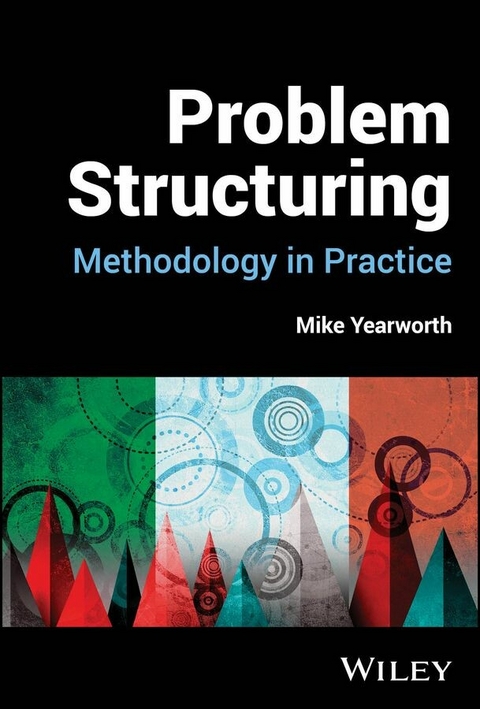
Problem Structuring (eBook)
366 Seiten
Wiley (Verlag)
978-1-119-74483-2 (ISBN)
Current perspectives on approaches to problem structuring in operational research and engineering and prospects for problem structuring methods applicable to a wide range of practice.
Bridging between operational research (OR) and engineering practice, Problem Structuring: Methodology in Practice is grounded in the emergence of soft OR and its development over time as a distinctively new field, broadening the scope of OR to deal with issues of transforming, strategising, and planning in the context of wicked problems. The book is centred on a methodological framing of intervention processes known as problem structuring methods (PSMs) and the techniques presented are suitable for practitioners across a broad range of disciplines.
Written by a highly qualified professor of engineering and management, Problem Structuring: Methodology in Practice contains four linked sections that cover:
- I. Problem formulation when dealing with wicked problems, justification for a methodological approach, the emergence of soft OR, the relevance of pragmatic philosophy to OR practice.
- II. Traces debates and issues in OR leading to the emergence of soft OR, comparative analysis of PSMs leading to a generic framework for soft OR practice, addressing practical considerations in delivering PSM interventions.
- III. Charts the emergence of a problem structuring sensibility in engineering practice, introduces a new PSM based on hierarchical process modelling (HPM) supported by teaching and case studies, makes the case for a processual turn in engineering practice supported by HPM with relevance to OR practice.
- IV. Evaluation of PSM interventions, survey of applications, use of group support systems, new developments supported by machine learning, recontextualising soft OR practice.
Problem Structuring: Methodology in Practice is a thought-provoking and highly valuable resource relevant to all 'students of problems.' It is suitable for any UK Level 7 (or equivalent) programme in OR, engineering, or applied social science where a reflective, methodological approach to dealing with wicked problems is an essential requirement for practice.
Mike Yearworth BSc, PhD, MBA, MBCS, CEng, is Emeritus Professor of Management Science at the University of Exeter Business School. He is Co-Editor-in-Chief of the European Journal of Operational Research and the Systems Engineering Field Editor for Systems Research and Behavioral Science.
Current perspectives on approaches to problem structuring in operational research and engineering and prospects for problem structuring methods applicable to a wide range of practice. Bridging between operational research (OR) and engineering practice, Problem Structuring: Methodology in Practice is grounded in the emergence of soft OR and its development over time as a distinctively new field, broadening the scope of OR to deal with issues of transforming, strategising, and planning in the context of wicked problems. The book is centred on a methodological framing of intervention processes known as problem structuring methods (PSMs) and the techniques presented are suitable for practitioners across a broad range of disciplines. Written by a highly qualified professor of engineering and management, Problem Structuring: Methodology in Practice contains four linked sections that cover: I. Problem formulation when dealing with wicked problems, justification for a methodological approach, the emergence of soft OR, the relevance of pragmatic philosophy to OR practice. II. Traces debates and issues in OR leading to the emergence of soft OR, comparative analysis of PSMs leading to a generic framework for soft OR practice, addressing practical considerations in delivering PSM interventions. III. Charts the emergence of a problem structuring sensibility in engineering practice, introduces a new PSM based on hierarchical process modelling (HPM) supported by teaching and case studies, makes the case for a processual turn in engineering practice supported by HPM with relevance to OR practice. IV. Evaluation of PSM interventions, survey of applications, use of group support systems, new developments supported by machine learning, recontextualising soft OR practice. Problem Structuring: Methodology in Practice is a thought-provoking and highly valuable resource relevant to all students of problems. It is suitable for any UK Level 7 (or equivalent) programme in OR, engineering, or applied social science where a reflective, methodological approach to dealing with wicked problems is an essential requirement for practice.
| Erscheint lt. Verlag | 4.9.2024 |
|---|---|
| Sprache | englisch |
| Themenwelt | Wirtschaft ► Betriebswirtschaft / Management ► Unternehmensführung / Management |
| Schlagworte | Complex Systems • Engineering Ethics • Engineering practice • engineering systems • Group Support Systems • hierarchical process modelling • Operational Research • problem structuring • problem structuring methods • soft operational research • Soft Systems Methodology • Systems Engineering • systems thinking • the practice of operational research • Wicked Problems |
| ISBN-10 | 1-119-74483-0 / 1119744830 |
| ISBN-13 | 978-1-119-74483-2 / 9781119744832 |
| Informationen gemäß Produktsicherheitsverordnung (GPSR) | |
| Haben Sie eine Frage zum Produkt? |
 PDF (Adobe DRM)
Kopierschutz: Adobe-DRM
Adobe-DRM ist ein Kopierschutz, der das eBook vor Mißbrauch schützen soll. Dabei wird das eBook bereits beim Download auf Ihre persönliche Adobe-ID autorisiert. Lesen können Sie das eBook dann nur auf den Geräten, welche ebenfalls auf Ihre Adobe-ID registriert sind.
Details zum Adobe-DRM
Dateiformat: PDF (Portable Document Format)
Mit einem festen Seitenlayout eignet sich die PDF besonders für Fachbücher mit Spalten, Tabellen und Abbildungen. Eine PDF kann auf fast allen Geräten angezeigt werden, ist aber für kleine Displays (Smartphone, eReader) nur eingeschränkt geeignet.
Systemvoraussetzungen:
PC/Mac: Mit einem PC oder Mac können Sie dieses eBook lesen. Sie benötigen eine
eReader: Dieses eBook kann mit (fast) allen eBook-Readern gelesen werden. Mit dem amazon-Kindle ist es aber nicht kompatibel.
Smartphone/Tablet: Egal ob Apple oder Android, dieses eBook können Sie lesen. Sie benötigen eine
Geräteliste und zusätzliche Hinweise
Buying eBooks from abroad
For tax law reasons we can sell eBooks just within Germany and Switzerland. Regrettably we cannot fulfill eBook-orders from other countries.
aus dem Bereich