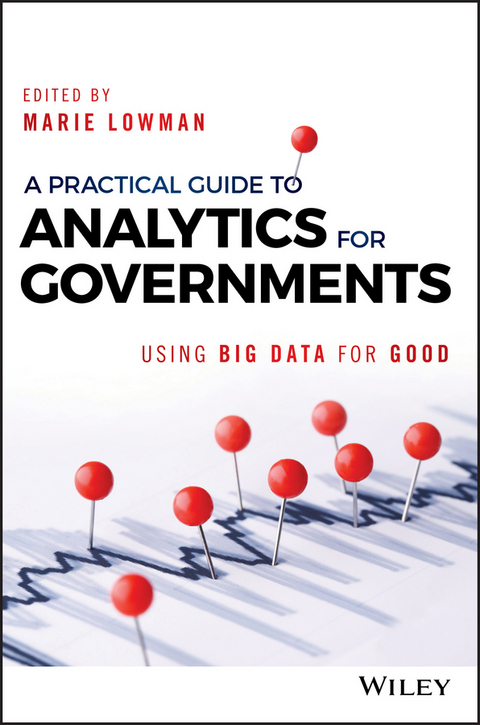
A Practical Guide to Analytics for Governments (eBook)
224 Seiten
Wiley (Verlag)
978-1-119-36254-8 (ISBN)
A Practical Guide to Analytics for Governments provides demonstrations of real-world analytics applications for legislators, policy-makers, and support staff at the federal, state, and local levels. Big data and analytics are transforming industries across the board, and government can reap many of those same benefits by applying analytics to processes and programs already in place. From healthcare delivery and child well-being, to crime and program fraud, analytics can-in fact, already does-transform the way government works. This book shows you how analytics can be implemented in your own milieu: What is the downstream impact of new legislation? How can we make programs more efficient? Is it possible to predict policy outcomes without analytics? How do I get started building analytics into my government organization? The answers are all here, with accessible explanations and useful advice from an expert in the field.
Analytics allows you to mine your data to create a holistic picture of your constituents; this model helps you tailor programs, fine-tune legislation, and serve the populace more effectively. This book walks you through analytics as applied to government, and shows you how to reap Big data's benefits at whatever level necessary.
- Learn how analytics is already transforming government service delivery
- Delve into the digital healthcare revolution
- Use analytics to improve education, juvenile justice, and other child-focused areas
- Apply analytics to transportation, criminal justice, fraud, and much more
Legislators and policy makers have plenty of great ideas-but how do they put those ideas into play? Analytics can play a crucial role in getting the job done well. A Practical Guide to Analytics for Governments provides advice, perspective, and real-world guidance for public servants everywhere.
MARIE LOWMAN is a principal industry consultant-government at SAS Institute. For more than two decades, she has overseen SAS's commitment to helping government organizations provide high-quality services to their constituents, while maximizing resources and budgets.
MARIE LOWMAN is a principal industry consultant-government at SAS Institute. For more than two decades, she has overseen SAS's commitment to helping government organizations provide high-quality services to their constituents, while maximizing resources and budgets.
A Practical Guide to Analytics for Governments 3
Contents 9
Foreword 13
Acknowledgments 17
Chapter 1 Introduction 19
Child Welfare 22
Education 23
Healthcare 23
Prescription Drug Abuse 24
Criminal Justice and Public Safety 24
Smart Cities 25
Transportation 25
Fraud, Waste, and Abuse 26
Establishing a Center of Analytics 26
Chapter 2 Child Well-Being 29
Introduction 30
Data-Driven Culture 31
Data Sharing 34
Data Quality 36
Assessing Risk 40
Addressing the Perceived Limits of Analytics Pertaining to Assessing Risk 43
Impact on Workforce 47
Notes 50
Chapter 3 Education 53
Introduction 54
Build Your Engine—Build the Education Data System Infrastructure 58
Use the Dashboard to Measure What Matters Most—Student Learning Growth 60
Use the Navigation System to Guide Education Policy 65
Look through the Windshield with Predictive Analytics 74
Drive the Car and Use the Data 80
Notes 82
Chapter 4 Healthcare 85
Role of the Government 86
Zika Virus 87
The Challenge 90
Population Health 93
Medicaid Management 101
A Team Effort 103
Value-Based Care 107
Inclusive 109
Risk Adjustment 109
Episodic Association 110
Cost Components 110
Cost Allocation 113
Prescriptive Analytics 113
Conclusion 114
Notes 115
Chapter 5 Prescription Drug Abuse 117
Introduction 118
National Initiatives 121
Prescription Drug Monitoring Programs 124
Advanced Analytics 125
Health Outcomes 127
Notes 129
Chapter 6 Criminal Justice and Public Safety 131
Improving Data Access and Data Quality 135
Access to Data 136
Data Preparation 136
Entity Resolution 137
North Carolina CJLEADS 138
Analytics throughout the Justice and Public Safety System 139
Analytics in Juvenile Justice 139
Oregon Youth Authority 140
Analytics in Adult Offender System 141
Florida Department of Corrections 142
Analytics in Investigations 143
Conclusion 144
Notes 145
Chapter 7 Brilliant Analytics for Smart Cities 147
Smart Cities 149
Technologies in Smart City Solutions 151
IoT and Telecommunications 152
IoT 152
Social Media 153
Cloud-Based Computing and Data Storage 153
Data Management 154
Analytics 155
Analytics for Large Volumes of Data 155
Analytics for Data Received at a Rapid Clip 156
Analytics for Unstructured Data 158
Analytics for Complex Issues 160
Analytics for Transparency 161
Implementing Analytics 161
Notes 168
Chapter 8 Transportation 169
Connected and Autonomous Vehicles (CAVs) 170
The Role of Data and Analytics 172
Benefits of Connected and Autonomous Vehicles 173
National Focus on Adoption of Performance Measures 174
Safety Performance Measures 175
System Performance Measures 175
The Role of Data and Analytics 177
Benefits of Transportation Performance Management and Improved Measures 180
Notes 181
Chapter 9 Fraud, Waste, and Abuse 183
Healthcare 185
Tax and the Underground Economy 188
Benefits Programs 190
Recommendations 192
Notes 195
Chapter 10 Center of Analytics 197
Why a Center of Analytics? 201
What Makes a Center of Analytics? 202
Mindset 202
People 203
Process 204
Technology 206
Building a Center of Analytics? 206
Notes 208
Appendix 209
Index 211
EULA 218
| Erscheint lt. Verlag | 8.5.2017 |
|---|---|
| Reihe/Serie | SAS Institute Inc | SAS Institute Inc |
| Sprache | englisch |
| Themenwelt | Sozialwissenschaften ► Politik / Verwaltung ► Staat / Verwaltung |
| Wirtschaft ► Betriebswirtschaft / Management ► Unternehmensführung / Management | |
| Schlagworte | Big Data • Business & Management • Organisations- u. Managementtheorie • Organization & Management Theory • Regierung • Verwaltung • Wirtschaft u. Management |
| ISBN-10 | 1-119-36254-7 / 1119362547 |
| ISBN-13 | 978-1-119-36254-8 / 9781119362548 |
| Informationen gemäß Produktsicherheitsverordnung (GPSR) | |
| Haben Sie eine Frage zum Produkt? |
 PDF (Adobe DRM)
Kopierschutz: Adobe-DRM
Adobe-DRM ist ein Kopierschutz, der das eBook vor Mißbrauch schützen soll. Dabei wird das eBook bereits beim Download auf Ihre persönliche Adobe-ID autorisiert. Lesen können Sie das eBook dann nur auf den Geräten, welche ebenfalls auf Ihre Adobe-ID registriert sind.
Details zum Adobe-DRM
Dateiformat: PDF (Portable Document Format)
Mit einem festen Seitenlayout eignet sich die PDF besonders für Fachbücher mit Spalten, Tabellen und Abbildungen. Eine PDF kann auf fast allen Geräten angezeigt werden, ist aber für kleine Displays (Smartphone, eReader) nur eingeschränkt geeignet.
Systemvoraussetzungen:
PC/Mac: Mit einem PC oder Mac können Sie dieses eBook lesen. Sie benötigen eine
eReader: Dieses eBook kann mit (fast) allen eBook-Readern gelesen werden. Mit dem amazon-Kindle ist es aber nicht kompatibel.
Smartphone/Tablet: Egal ob Apple oder Android, dieses eBook können Sie lesen. Sie benötigen eine
Geräteliste und zusätzliche Hinweise
Buying eBooks from abroad
For tax law reasons we can sell eBooks just within Germany and Switzerland. Regrettably we cannot fulfill eBook-orders from other countries.
aus dem Bereich