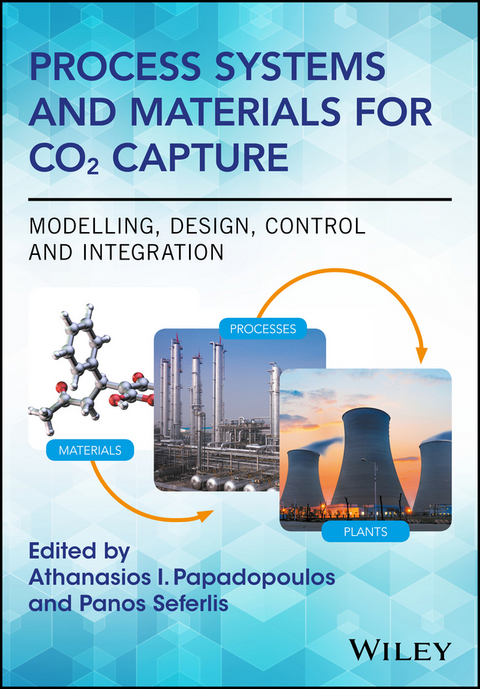
Process Systems and Materials for CO2 Capture (eBook)
John Wiley & Sons (Verlag)
978-1-119-10642-5 (ISBN)
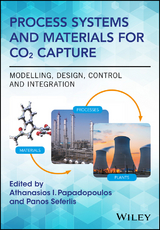
This comprehensive volume brings together an extensive collection of systematic computer-aided tools and methods developed in recent years for CO2 capture applications, and presents a structured and organized account of works from internationally acknowledged scientists and engineers, through:
- Modeling of materials and processes based on chemical and physical principles
- Design of materials and processes based on systematic optimization methods
- Utilization of advanced control and integration methods in process and plant-wide operations
The tools and methods described are illustrated through case studies on materials such as solvents, adsorbents, and membranes, and on processes such as absorption / desorption, pressure and vacuum swing adsorption, membranes, oxycombustion, solid looping, etc.
Process Systems and Materials for CO2 Capture: Modelling, Design, Control and Integration should become the essential introductory resource for researchers and industrial practitioners in the field of CO2 capture technology who wish to explore developments in computer-aided tools and methods. In addition, it aims to introduce CO2 capture technologies to process systems engineers working in the development of general computational tools and methods by highlighting opportunities for new developments to address the needs and challenges in CO2 capture technologies.
Edited by
ATHANASIOS I. PAPADOPOULOS, Chemical Process and Energy Resources Institute, Centre for Research and Technology Hellas, Greece
PANOS SEFERLIS, Department of Mechanical Engineering, Aristotle University of Thessaloniki, Greece
This comprehensive volume brings together an extensive collection of systematic computer-aided tools and methods developed in recent years for CO2 capture applications, and presents a structured and organized account of works from internationally acknowledged scientists and engineers, through: Modeling of materials and processes based on chemical and physical principles Design of materials and processes based on systematic optimization methods Utilization of advanced control and integration methods in process and plant-wide operations The tools and methods described are illustrated through case studies on materials such as solvents, adsorbents, and membranes, and on processes such as absorption / desorption, pressure and vacuum swing adsorption, membranes, oxycombustion, solid looping, etc. Process Systems and Materials for CO2 Capture: Modelling, Design, Control and Integration should become the essential introductory resource for researchers and industrial practitioners in the field of CO2 capture technology who wish to explore developments in computer-aided tools and methods. In addition, it aims to introduce CO2 capture technologies to process systems engineers working in the development of general computational tools and methods by highlighting opportunities for new developments to address the needs and challenges in CO2 capture technologies.
Edited by ATHANASIOS I. PAPADOPOULOS, Chemical Process and Energy Resources Institute, Centre for Research and Technology Hellas, Greece PANOS SEFERLIS, Department of Mechanical Engineering, Aristotle University of Thessaloniki, Greece
List of Contributors
Claire S. Adjiman
Department of Chemical Engineering
Centre for Process Systems Engineering
South Kensington Campus
Imperial College London
UK
Deb Agarwal
Lawrence Berkeley National Laboratory
USA
Hyungwoong Ahn
Institute for Materials and Processes
The University of Edinburgh
UK
Rishi Amrit
Shell Technology Center Houston
Shell Global Solutions (US) Inc.
Houston
USA
Viknesh Andiappan
Energy and Environmental Research Group
School of Engineering
Taylor’s University
Selangor
Malaysia
Eleni Androulaki
National Center for Scientific Research “Demokritos”
Institute of Nanoscience and Nanotechnology
Molecular Thermodynamics and Modelling of Materials Laboratory
Agia Paraskevi Attikis
Greece
Sara Badr
Swiss Federal Institute of Technology
Institute for Chemical and Bioengineering
Zurich
Switzerland
Robert Bennett
CSIRO Energy
Newcastle
Australia
Debangsu Bhattacharyya
West Virginia University
Morgantown
USA
Joshua Boverhof
Lawrence Berkeley National Laboratory
USA
Mario Calado
Process Systems Enterprise
London
UK
Nishanth G. Chemmangattuvalappil
Department of Chemical and Environmental Engineering
Centre of Sustainable Palm Oil Research
The University of Nottingham Malaysia Campus
Semenyih
Selangor
Malaysia
Ming‐Tsz Chen
Department of Chemical Engineering
National Tsing Hua University
Hsinchu
Taiwan, ROC
and
Department of Applied Chemistry
Providence University
Taiwan
ROC
Yang Chen
National Energy Technology Laboratory
Pittsburgh
USA
Fah Keen Chong
Department of Chemical and Environmental Engineering
Centre of Sustainable Palm Oil Research
The University of Nottingham Malaysia Campus
Semenyih
Selangor
Malaysia
Theodoros Damartzis
Chemical Process and Energy Resources Institute (CPERI)
Centre for Research and Technology Hellas (CERTH)
Thermi‐Thessaloniki
Greece
and
Department of Mechanical Engineering
Aristotle University of Thessaloniki
Greece
Prodromos Daoutidis
Department of Chemical Engineering and Materials Science
University of Minnesota
Minneapolis
USA
Aggelos F. Doukelis
Laboratory of Steam Boilers and Thermal Plants
National Technical University of Athens
Greece
Ioannis G. Economou
National Center for Scientific Research “Demokritos”
Institute of Nanoscience and Nanotechnology
Molecular Thermodynamics and Modelling of Materials Laboratory
Agia Paraskevi Attikis
Greece
and
Texas A&M University at Qatar
Chemical Engineering Program
Education City
Doha
Qatar
Fadwa T. Eljack
Department of Chemical Engineering
College of Engineering
Qatar University
Doha
Qatar
John Eslick
West Virginia University
Morgantown
USA
Éric Favre
LRGP CNRS‐Université de Lorraine
Nancy
France
Dominic C. Y. Foo
Department of Chemical and Environmental Engineering
Centre of Sustainable Palm Oil Research
The University of Nottingham Malaysia Campus
Semenyih
Selangor
Malaysia
Esther Forte
Department of Chemical Engineering
Centre for Process Systems Engineering
South Kensington Campus
Imperial College London
UK
Philip Fosbøl
Department of Chemical and Biochemical Engineering
Center for Energy Resources Engineering (CERE)
Technical University of Denmark
Lyngby
Denmark
Peter T. Frailie
McKetta Department of Chemical Engineering
The University of Texas at Austin
USA
Amparo Galindo
Department of Chemical Engineering
Centre for Process Systems Engineering
South Kensington Campus
Imperial College London
UK
Michael C. Georgiadis
Department of Chemical Engineering
Aristotle University of Thessaloniki
Greece
and
Chemical Process and Energy Resources Institute (CPERI)
Centre for Research and Technology Hellas (CERTH)
Thessaloniki
Greece
Arne Gladis
Department of Chemical and Biochemical Engineering
Center for Energy Resources Engineering (CERE)
Technical University of Denmark
Lyngby
Denmark
Smitha Gopinath
Department of Chemical Engineering
Centre for Process Systems Engineering
South Kensington Campus
Imperial College London
UK
Edward Graham
Department of Chemical Engineering
Centre for Process Systems Engineering
South Kensington Campus
Imperial College London
UK
May‐Britt Hägg
Department of Chemical Engineering
Norwegian University of Science and Technology
Trondheim
Norway
M. M. Faruque Hasan
Artie McFerrin Department of Chemical Engineering
Texas A&M University
College Station
USA
Xin He
Department of Chemical and Biochemical Engineering
West Virginia University
Morgantown
USA
Xuezhong He
Department of Chemical Engineering
Norwegian University of Science and Technology
Trondheim
Norway
Konrad Hungerbuehler
Swiss Federal Institute of Technology
Institute for Chemical and Bioengineering
Zurich
Switzerland
George Jackson
Department of Chemical Engineering
Centre for Process Systems Engineering
South Kensington Campus
Imperial College London
UK
Shi‐Shang Jang
Department of Chemical Engineering
National Tsing Hua University
Hsinchu
Taiwan, ROC
Emmanouil K. Kakaras
Laboratory of Steam Boilers and Thermal Plants
National Technical University of Athens
Greece
Eustathios S. Kikkinides
Department of Chemical Engineering
Aristotle University of Thessaloniki
Greece
and
Chemical Process and Energy Resources Institute (CPERI)
Centre for Research and Technology Hellas (CERTH)
Thessaloniki
Greece
Georgios M. Kontogeorgis
Department of Chemical and Biochemical Engineering
Center for Energy Resources Engineering (CERE)
Technical University of Denmark
Lyngby
Denmark
Antonios K. Koumanakos
Laboratory of Steam Boilers and Thermal Plants
National Technical University of Athens
Greece
Yolanda Lara
Research Centre for Energy Resources and Consumption (CIRCE)
Zaragoza
Spain
Kok Keong Lau
Chemical Engineering Department
Universiti Teknologi PETRONAS
Bandar Sri Iskandar
Perak
Malaysia
Adekola Lawal
Process Systems Enterprise
London
UK
Yann Le Moullec
EDF R&D
Chatou
France
Jim Leek
Lawrence Livermore National Laboratory
USA
Fernando V. Lima
Department of Chemical and Biochemical Engineering
West Virginia University
Morgantown
USA
Arne Lindbråthen
Department of Chemical Engineering
Norwegian University of Science and Technology
Trondheim
Norway
Pilar Lisbona
Research Centre for Energy Resources and Consumption (CIRCE)
Zaragoza
Spain
Serene Sow Mun Lock
Chemical Engineering Department
Universiti Teknologi PETRONAS
Bandar Sri Iskandar
Perak
Malaysia
Jinliang Ma
National Energy Technology Laboratory
Morgantown
USA
Nial Mac Dowell
Centre for Process Systems Engineering
Imperial College London
South Kensington
UK
and
Centre for Environmental Policy
Imperial College London
South Kensington
UK
Priyadarshi Mahapatra
National Energy Technology Laboratory
Morgantown
USA
Ana Martínez
Research Centre for Energy Resources and Consumption (CIRCE)
Zaragoza
Spain
David C. Miller
National Energy Technology Laboratory
Pittsburgh
USA
Alexander Mitsos
AVT Process Systems Engineering (SVT)
RWTH Aachen University
Germany
Thibaut Neveux
EDF R&D
Chatou
France
and
LRGP CNRS‐Université de Lorraine
Nancy
France
Brenda Ng
Lawrence Livermore National Laboratory
USA
Denny K. S. Ng
Department of Chemical and Environmental Engineering
Centre of Sustainable Palm Oil Research
The University of Nottingham Malaysia Campus
Semenyih
Selangor
Malaysia
Daniel R. Nieto
Department of Chemical Engineering
Norwegian University of Science and Technology
Trondheim
Norway
George N. Nikolaidis
Department of Chemical Engineering
Aristotle University of Thessaloniki
Greece
and
Chemical Process and Energy Resources Institute...
| Erscheint lt. Verlag | 7.3.2017 |
|---|---|
| Sprache | englisch |
| Themenwelt | Naturwissenschaften ► Chemie ► Technische Chemie |
| Naturwissenschaften ► Physik / Astronomie | |
| Technik ► Elektrotechnik / Energietechnik | |
| Wirtschaft | |
| Schlagworte | calcium looping • Carbon Capture & Storage • carbon capture and storage (CCS) • chemical engineering • Chemie • Chemische Verfahrenstechnik • Chemistry • CO2 capture • Energie • Energy • Environmental Chemistry • Kohlenstoff-Abscheidung u. -Speicherung • Membrane • Modelling • Oxycoal • Post-Combustion • Pre-Combustion • Process Control • Process design • Process Engineering • Process Optimization • Prozesssteuerung • Umweltchemie |
| ISBN-10 | 1-119-10642-7 / 1119106427 |
| ISBN-13 | 978-1-119-10642-5 / 9781119106425 |
| Informationen gemäß Produktsicherheitsverordnung (GPSR) | |
| Haben Sie eine Frage zum Produkt? |
 EPUB (Adobe DRM)
Kopierschutz: Adobe-DRM
Adobe-DRM ist ein Kopierschutz, der das eBook vor Mißbrauch schützen soll. Dabei wird das eBook bereits beim Download auf Ihre persönliche Adobe-ID autorisiert. Lesen können Sie das eBook dann nur auf den Geräten, welche ebenfalls auf Ihre Adobe-ID registriert sind.
Details zum Adobe-DRM
Dateiformat: EPUB (Electronic Publication)
EPUB ist ein offener Standard für eBooks und eignet sich besonders zur Darstellung von Belletristik und Sachbüchern. Der Fließtext wird dynamisch an die Display- und Schriftgröße angepasst. Auch für mobile Lesegeräte ist EPUB daher gut geeignet.
Systemvoraussetzungen:
PC/Mac: Mit einem PC oder Mac können Sie dieses eBook lesen. Sie benötigen eine
eReader: Dieses eBook kann mit (fast) allen eBook-Readern gelesen werden. Mit dem amazon-Kindle ist es aber nicht kompatibel.
Smartphone/Tablet: Egal ob Apple oder Android, dieses eBook können Sie lesen. Sie benötigen eine
Geräteliste und zusätzliche Hinweise
Buying eBooks from abroad
For tax law reasons we can sell eBooks just within Germany and Switzerland. Regrettably we cannot fulfill eBook-orders from other countries.
aus dem Bereich