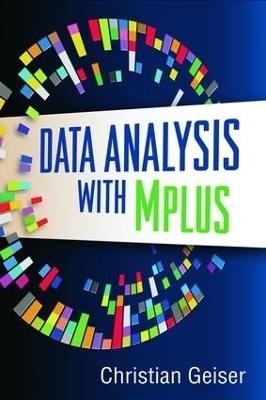
Data Analysis with Mplus
Guilford Press (Verlag)
978-1-4625-0782-5 (ISBN)
- Titel ist leider vergriffen;
keine Neuauflage - Artikel merken
Christian Geiser, PhD, is CEO of Quantfish and former Professor of Psychology at Utah State University. His research interests are in psychometrics and structural equation modeling, particularly in longitudinal data analysis and multitrait–multimethod modeling. As part of his methodological work, he has presented new longitudinal structural equation modeling approaches for examining effects of situations and person–situation interactions, as well as models for integrating information from multiple reporters or other methods in longitudinal analyses. He offers Mplus workshops at www.goquantfish.com.
1. Data Management in SPSS
1.1 Coding Missing Values
1.2 Exporting an ASCII Data File for Mplus
2. Reading Data into Mplus
2.1 Importing and Analyzing Individual Data (Raw Data)
2.1.1 Basic Structure of the Mplus Syntax and Basic Analysis
2.1.2 Mplus Output for Basic Analysis
2.2 Importing and Analyzing Summary Data (Covariance or Correlation Matrices)
3. Linear Structural Equation Models
3.1 What are Linear SEMs?
3.2 Simple Linear Regression Analysis with Manifest Variables
3.3 Latent Regression Analysis
3.4 Confirmatory Factor Analysis
3.4.1 First-Order CFA
3.4.2 Second-Order CFA
3.5 Path Models and Mediator Analysis
3.5.1 Introduction and Manifest Path Analysis
3.5.2 Manifest Path Analysis in Mplus
3.5.3 Latent Path Analysis
3.5.4 Latent Path Analysis in Mplus
4. Structural Equation Models for Measuring Variability and Change
4.1 Latent State Analysis
4.1.1 LS versus LST Models
4.1.2 Analysis of LS Models in Mplus
4.1.3 Modeling Indicator-Specific Effects
4.1.4 Testing for Measurement Invariance across Time
4.2 LST Analysis
4.3 Autoregressive Models
4.3.1 Manifest Autoregressive Models
4.3.2 Latent Autoregressive Models
4.4 Latent Change Models
4.5 Latent Growth Curve Models
4.5.1 First-Order LGCMs
4.5.2 Second-Order LGCMs
5. Multilevel Regression Analysis
5.1 Introduction to Multilevel Analysis
5.2 Specification of Multilevel Models in Mplus
5.3 Option two level basic
5.4 Random Intercept Models
5.4.1 Null Model (Intercept-Only Model)
5.4.2 One-Way Random Effects of ANCOVA
5.4.3 Means-as-Outcomes Model
5.5 Random Intercept and Slope Models
5.5.1 Random Coefficient Regression Analysis
5.5.2 Intercepts-and-Slopes-as-Outcomes Model
6. Latent Class Analysis
6.1 Introduction to Latent Class Analysis
6.2 Specification of LCA Models in Mplus
6.3 Model Fit Assessment and Model Comparisons
6.3.1 Absolute Model Fit
6.3.2 Relative Model Fit
6.3.3 Interpretability
Appendix A: Summary of Key Mplus Commands Discussed in This Book
Appendix B: Common Mistakes in the Mplus Input Setup and Troubleshooting
Appendix C: Further Readings
| Erscheint lt. Verlag | 22.1.2013 |
|---|---|
| Reihe/Serie | Methodology in the Social Sciences |
| Verlagsort | New York |
| Sprache | englisch |
| Maße | 156 x 234 mm |
| Gewicht | 566 g |
| Themenwelt | Geisteswissenschaften ► Psychologie ► Allgemeine Psychologie |
| Geisteswissenschaften ► Psychologie ► Entwicklungspsychologie | |
| Geisteswissenschaften ► Psychologie ► Sozialpsychologie | |
| Medizin / Pharmazie ► Medizinische Fachgebiete ► Psychiatrie / Psychotherapie | |
| Medizin / Pharmazie ► Pflege | |
| Sozialwissenschaften ► Pädagogik | |
| Sozialwissenschaften ► Soziologie | |
| Wirtschaft ► Volkswirtschaftslehre ► Ökonometrie | |
| ISBN-10 | 1-4625-0782-4 / 1462507824 |
| ISBN-13 | 978-1-4625-0782-5 / 9781462507825 |
| Zustand | Neuware |
| Informationen gemäß Produktsicherheitsverordnung (GPSR) | |
| Haben Sie eine Frage zum Produkt? |
aus dem Bereich