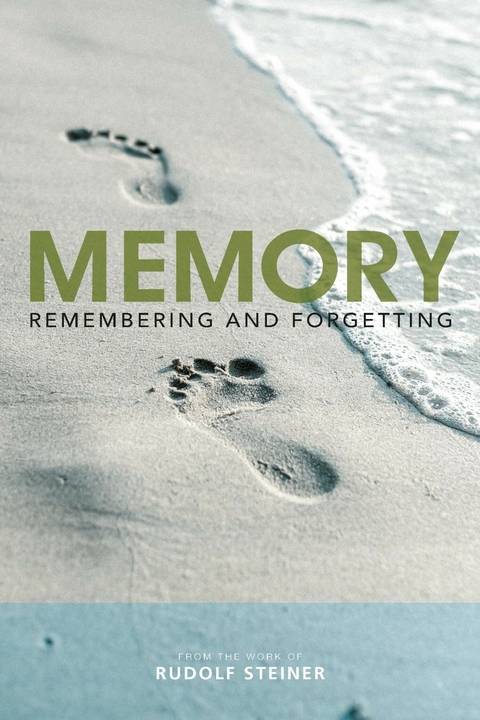
What is the meaning of memory in the information age? When all knowledge is seemingly digitised and available for reference at any time, do we actually need human memory? One consequence of the proliferation of digitization is the deterioration of our capacity to remember - a symptom that is apparent in a steady increase in dementia within contemporary society. Rudolf Steiner indicates that memory is the determining factor in awareness of oneself. Even a partial loss of memory leads to loss of self-consciousness and the sense of our 'I'. Thus, memory is crucial for the development of I-consciousness - not only for the individual, but for humanity as a whole. Rudolf Steiner's research on memory, recollection and forgetting has many implications for the way we learn, for inner development and spiritual growth. This unique selection of passages from his works offers insights into how consciousness can remain autonomous and creative in a digital environment. It also provides ideas for improving education and emphasizes the importance of life-long learning. Chapters include: 'The Development of Memory Throughout Human History'; 'The Formation of Memory, Remembering and Forgetting in the Human Individual'; 'Remembering and Forgetting in Connection with Education'; 'How Remembering and Forgetting are Transformed by the Schooling Path - Imagination and Inspiration'; 'Remembering Backwards (Ruckschau) and Memory Exercises'; 'Subconscious Memories of the Pre-birth Period and of Life Between Death and a New Birth'; 'Memory and Remembering after Death'; 'The Development of Memory in the Future'.
| Erscheint lt. Verlag | 16.9.2020 |
|---|---|
| Einführung | A. Neider |
| Übersetzer | J. Collis, P. King |
| Verlagsort | London |
| Sprache | englisch |
| Themenwelt | Geisteswissenschaften ► Religion / Theologie |
| Weitere Fachgebiete ► Anthroposophie | |
| ISBN-10 | 1-85584-510-5 / 1855845105 |
| ISBN-13 | 978-1-85584-510-7 / 9781855845107 |
| Informationen gemäß Produktsicherheitsverordnung (GPSR) | |
| Haben Sie eine Frage zum Produkt? |
 EPUB (Adobe DRM)
Kopierschutz: Adobe-DRM
Adobe-DRM ist ein Kopierschutz, der das eBook vor Mißbrauch schützen soll. Dabei wird das eBook bereits beim Download auf Ihre persönliche Adobe-ID autorisiert. Lesen können Sie das eBook dann nur auf den Geräten, welche ebenfalls auf Ihre Adobe-ID registriert sind.
Details zum Adobe-DRM
Dateiformat: EPUB (Electronic Publication)
EPUB ist ein offener Standard für eBooks und eignet sich besonders zur Darstellung von Belletristik und Sachbüchern. Der Fließtext wird dynamisch an die Display- und Schriftgröße angepasst. Auch für mobile Lesegeräte ist EPUB daher gut geeignet.
Systemvoraussetzungen:
PC/Mac: Mit einem PC oder Mac können Sie dieses eBook lesen. Sie benötigen eine
eReader: Dieses eBook kann mit (fast) allen eBook-Readern gelesen werden. Mit dem amazon-Kindle ist es aber nicht kompatibel.
Smartphone/Tablet: Egal ob Apple oder Android, dieses eBook können Sie lesen. Sie benötigen eine
Geräteliste und zusätzliche Hinweise
Buying eBooks from abroad
For tax law reasons we can sell eBooks just within Germany and Switzerland. Regrettably we cannot fulfill eBook-orders from other countries.
aus dem Bereich