Molecular Techniques in Food Biology (eBook)
472 Seiten
Wiley (Verlag)
978-1-119-37459-6 (ISBN)
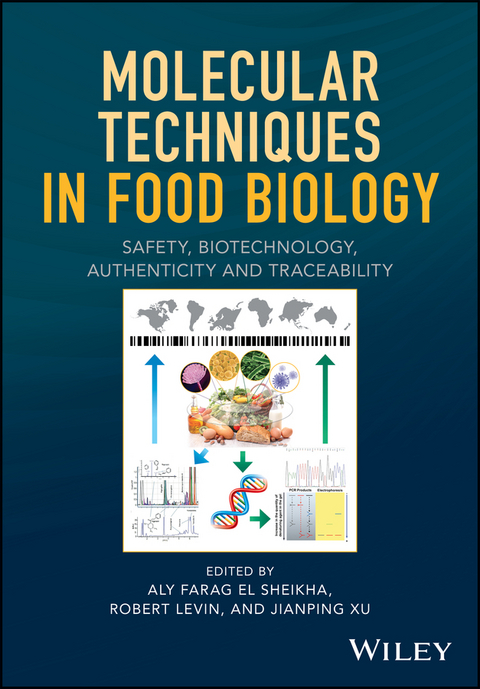
Molecular Techniques in Food Biology: Safety, Biotechnology, Authenticity & Traceability explores all aspects of microbe-food interactions, especially as they pertain to food safety. Traditional morphological, physiological, and biochemical techniques for the detection, differentiation, and identification of microorganisms have severe limitations. As an alternative, many of those responsible for monitoring food safety are turning to molecular tools for identifying foodborne microorganisms. This book reviews the latest molecular techniques for detecting, identifying, and tracing microorganisms in food, addressing both good foodborne microbes, such as those used for fermentation and in probiotics, and harmful ones responsible for foodborne illness and food quality control problems.
Molecular Techniques in Food Biology: Safety, Biotechnology, Authenticity & Traceability brings together contributions by leading international authorities in food biology from academe, industry, and government. Chapters cover food microbiology, food mycology, biochemistry, microbial ecology, food biotechnology and bio-processing, food authenticity, food origin traceability, and food science and technology. Throughout, special emphasis is placed on novel molecular techniques relevant to food biology research and for monitoring and assessing food safety and quality.
- Brings together contributions from scientists at the leading edge of the revolution in molecular food biology
- Explores how molecular techniques can satisfy the dire need to deepen our understanding of how microbial communities develop in foods of all types and in all forms
- Covers all aspects of food safety and hygiene, microbial ecology, food biotechnology and bio-processing, food authenticity, food origin traceability, and more
- Fills a yawning gap in the world literature on food traceability using molecular techniques
Aly Farag El Sheikha, PhD is a Researcher at Department of Biology, McMaster University, Hamilton, Ontario, Canada
Robert Levin, PhD is a Professor Emeritus at Department of Food Science at the University of Massachusetts, Amherst, MA, USA
Jianping Xu, PhD is a Professor at Department of Biology at McMaster University, Hamilton, Ontario, Canada
Molecular Techniques in Food Biology: Safety, Biotechnology, Authenticity & Traceability explores all aspects of microbe-food interactions, especially as they pertain to food safety. Traditional morphological, physiological, and biochemical techniques for the detection, differentiation, and identification of microorganisms have severe limitations. As an alternative, many of those responsible for monitoring food safety are turning to molecular tools for identifying foodborne microorganisms. This book reviews the latest molecular techniques for detecting, identifying, and tracing microorganisms in food, addressing both good foodborne microbes, such as those used for fermentation and in probiotics, and harmful ones responsible for foodborne illness and food quality control problems. Molecular Techniques in Food Biology: Safety, Biotechnology, Authenticity & Traceability brings together contributions by leading international authorities in food biology from academe, industry, and government. Chapters cover food microbiology, food mycology, biochemistry, microbial ecology, food biotechnology and bio-processing, food authenticity, food origin traceability, and food science and technology. Throughout, special emphasis is placed on novel molecular techniques relevant to food biology research and for monitoring and assessing food safety and quality. Brings together contributions from scientists at the leading edge of the revolution in molecular food biology Explores how molecular techniques can satisfy the dire need to deepen our understanding of how microbial communities develop in foods of all types and in all forms Covers all aspects of food safety and hygiene, microbial ecology, food biotechnology and bio-processing, food authenticity, food origin traceability, and more Fills a yawning gap in the world literature on food traceability using molecular techniques This book is an important working resource for professionals in agricultural, food science, biomedicine, and government involved in food regulation and safety. It is also an excellent reference for advanced students in agriculture, food science and food technology, biochemistry, microbiology, and biotechnology, as well as academic researchers in those fields.
Aly Farag El Sheikha, PhD is a Researcher at Department of Biology, McMaster University, Hamilton, Ontario, Canada Robert Levin, PhD is a Professor Emeritus at Department of Food Science at the University of Massachusetts, Amherst, MA, USA Jianping Xu, PhD is a Professor at Department of Biology at McMaster University, Hamilton, Ontario, Canada
Title Page 5
Copyright Page 6
Dedication Page 7
Contents 9
List of Contributors 15
Preface 19
Acknowledgments 21
Section I General Topics 23
Chapter 1 How to Determine the Geographical Origin of Food by Molecular Techniques 25
1.1 Linkage Between Food and Its Geographical Origin: Historical View 25
1.2 Scope and Approach 26
1.3 Definitions Related to Tracking of Food Origins 26
1.4 Driving Forces for Determining the Geo-origin of Food 30
1.5 Geo-origin Determination … Evolution of Molecular Techniques 35
1.6 Pros and Cons of Molecular Techniques Used as Geo-Discriminative Tools of Food 38
1.7 Conclusions 39
References 40
Chapter 2 Unraveling Pathogenic Behavior of Phytopathogens through Advanced Molecular Techniques 49
2.1 Introduction 49
2.2 Plant Pathogens: A Menace to Agricultural Productivity 50
2.3 Future Directions 60
References 61
Chapter 3 Molecular Characterization of Ochratoxigenic Fungal Flora as an Innovative Tool to Certify Coffee Origin 69
3.1 Introduction: Coffee Factsheet 69
3.2 The Microflora of Coffee 72
3.3 Detection of Ochratoxigenic Fungi in Coffee by Molecular Techniques 77
3.4 Using Molecular Detection of OTA-producing Fungi to Certify Coffee Origin: Is it Possible? 79
3.5 Conclusions and Future Perspectives 85
References 85
Chapter 4 Molecular and “Omics” Techniques for Studying Gut Microbiota Relevant to Food Animal Production 93
4.1 Introduction 93
4.2 Methods for Studying Gut Microbiota Composition 94
4.3 Culture-independent Techniques 94
4.4 Tools for Functional Studies of Gut Microbiota 97
4.5 “Omics” 98
4.6 Animal Models 100
4.7 Bioinformatics 101
4.8 Application in Poultry and Swine Research 102
4.9 Integrated Approaches for Studying Gut Microbiome 105
4.10 Conclusions and Future Directions 106
Acknowledgments 107
References 107
Chapter 5 Molecular Techniques for Making Recombinant Enzymes Used in Food Processing 117
5.1 Introduction 117
5.2 Molecular Strategies to Produce Recombinant Enzymes Used in the Food Industry 118
5.3 Applications and Safety Issues of Enzymes in the Food Industry 128
5.4 Conclusions and Future Perspectives 131
References 132
Section II Fruits and Vegetables 137
Chapter 6 Molecular Identification and Distribution of Yeasts in Fruits 139
6.1 Introduction 139
6.2 Molecular Methods for Distinguishing Yeast Species and Strains 140
6.3 Yeast Diversity in Wild/fresh Fruits 142
6.4 Yeast Diversity in Processed Fruits 156
6.5 Conclusions and Future Perspectives 163
Acknowledgments 164
References 164
Chapter 7 Current and New Insights on Molecular Methods to Identify Microbial Growth in Fruit Juices 167
7.1 Introduction 167
7.2 Microorganisms in Fruit Juices 168
7.3 Conventional Identification Techniques 170
7.4 Non-conventional Identification Techniques 172
7.5 Molecular Techniques 173
7.6 Conclusions and Future Perspectives 176
References 176
Section III Fish and Meat Products (Non-Fermented) 183
Chapter 8 Molecular Techniques Related to the Identification of the Bacterial Flora of Seafood 185
8.1 Introduction 185
8.2 Major Seafood Spoilage Bacteria 186
8.3 Seafood-borne Bacterial Pathogens 205
8.4 Conclusions and Future Perspectives 223
References 223
Chapter 9 Assessment of the Microbial Ecology of Meat and Meat Products at the Molecular Level: Current Status and Future Perspectives 237
9.1 Introduction 237
9.2 Extraction of Nucleic Acids 238
9.3 Microbial Communities Assessment 238
9.4 Detection of Selected Bacterial Target 242
9.5 Biodiversity Assessment 247
9.6 Conclusion and Future Perspectives 248
References 249
Section IV Fermented Foods and Beverages 261
Chapter 10 Revolution in Fermented Foods: From Artisan Household Technology to the Era of Biotechnology 263
10.1 Introduction 263
10.2 Historical View: Where and When Did Fermentation Start? 264
10.3 Fermented Foods: From the Past to the Current Era 265
10.4 Fermented Foods and Health Effects 268
10.5 Is it Possible to Trace the Geographical Origin of Fermented Foods? 271
10.6 Conclusions and Future Perspectives 274
References 276
Chapter 11 Molecular Techniques for the Identification of LAB in Fermented Cereal and Meat Products 283
11.1 Introduction 283
11.2 Fermented Food Products 284
11.3 Lactic Acid Bacteria and Fermented Foods 287
11.4 Molecular Approaches Used to Study Fermenting Microflora 290
11.5 Identification of Lab in Fermented Cereal and Meat Products 291
11.6 Advantages of Molecular Techniques 297
11.7 Concluding Remarks 297
Acknowledgment 299
References 299
Chapter 12 Molecular Techniques and Lactic Acid-Fermented Fruits and Vegetables 307
12.1 Introduction 307
12.2 Fermented Fruits and Vegetables: Between the Past and the Present 308
12.3 Benefits of Fermented Fruits and Vegetables 308
12.4 Techniques of Lab Analysis Used in Fermented Fruits and Vegetables 310
12.5 Future Applications 322
12.6 Conclusions 322
References 322
Chapter 13 New Trends in Molecular Techniques to Identify Microorganisms in Dairy Products 331
13.1 Introduction 331
13.2 Polymerase Chain Reaction (PCR)-based Methods 332
13.3 Fluorescent In Situ Hybridization 338
13.4 Immuno-based Methodologies, Biochips, and Nanosensors 339
13.5 Benefits and Limitations of Molecular Techniques 340
13.6 Conclusions and Future Perspectives 340
References 340
Chapter 14 Molecular Techniques for the Detection and Identification of Yeasts in Wine 345
14.1 Introduction 345
14.2 Methods of Identification and Detection of Biodiversity 349
14.3 Enumeration of Wine Yeasts 352
14.4 Diversity of Wine Yeasts 354
14.5 Conclusions and Future Perspectives 356
References 356
Section V Foodborne Pathogens and Food Safety 363
Chapter 15 Rapid Detection of Food Pathogens Using Molecular Methods 365
15.1 Introduction 365
15.2 Methods Used to Detect Foodborne Pathogens 366
15.3 Conclusions 377
References 377
Chapter 16 Biosensor-Based Techniques: A Reliable and Primary Tool for Detection of Foodborne Pathogens 383
16.1 Introduction 383
16.2 Ideal Requirements for Biosensor-based Microbial Detection Assay 388
16.3 Need for Rapid Method 389
16.4 Classification of Biosensors 389
16.5 Conclusions and Future Perspectives 400
References 401
Chapter 17 Molecular Identification and Detection of Foodborne and Feedborne Mycotoxigenic Fungi 407
17.1 Mycotoxigenic Fungi 407
17.2 Polymerase Chain Reaction-based Characterization of Mycotoxigenic Fungi 408
17.3 Genomics of Mycotoxigenic Fungi 416
17.4 Functional Genomics of Mycotoxigenic Fungi 418
17.5 Conclusions and Future Perspectives 420
References 420
Chapter 18 Molecular Identification of Enteric Viruses in Fresh Produce 431
18.1 Introduction 431
18.2 Sample Treatment 432
18.3 Sample Receipt 432
18.4 Removal of Viruses from the Food Surfaces 432
18.5 Removal of Food Substances 433
18.6 Concentration of Viruses 433
18.7 Nucleic Acid Extraction 433
18.8 Detection Assay 434
18.9 ISO 15216-1/2:2013: the future “gold standard” 435
18.10 Quantitation 437
18.11 What is a Positive? 437
18.12 Future Developments and Requirements 438
18.13 Conclusions and Future Perspectives 438
References 439
Section VI Future Perspectives 443
Chapter 19 Molecular Techniques and Foodstuffs: Innovative Fingerprints, Then What? 445
19.1 Introduction 445
19.2 Emerging Fingerprinting Technologies 446
19.3 DNA Fingerprints 448
19.4 Conclusions and Future Perspectives 450
References 453
Index 457
EULA 475
| Erscheint lt. Verlag | 2.1.2018 |
|---|---|
| Sprache | englisch |
| Themenwelt | Naturwissenschaften ► Biologie |
| Technik ► Lebensmitteltechnologie | |
| Weitere Fachgebiete ► Land- / Forstwirtschaft / Fischerei | |
| Schlagworte | Food Science & Technology • Lebensmittelforschung u. -technologie • Microbiology, Food Safety & Security • Mikrobiologie u. Nahrungsmittelsicherheit |
| ISBN-10 | 1-119-37459-6 / 1119374596 |
| ISBN-13 | 978-1-119-37459-6 / 9781119374596 |
| Informationen gemäß Produktsicherheitsverordnung (GPSR) | |
| Haben Sie eine Frage zum Produkt? |
 PDF (Adobe DRM)
Größe: 8,1 MB
Kopierschutz: Adobe-DRM
Adobe-DRM ist ein Kopierschutz, der das eBook vor Mißbrauch schützen soll. Dabei wird das eBook bereits beim Download auf Ihre persönliche Adobe-ID autorisiert. Lesen können Sie das eBook dann nur auf den Geräten, welche ebenfalls auf Ihre Adobe-ID registriert sind.
Details zum Adobe-DRM
Dateiformat: PDF (Portable Document Format)
Mit einem festen Seitenlayout eignet sich die PDF besonders für Fachbücher mit Spalten, Tabellen und Abbildungen. Eine PDF kann auf fast allen Geräten angezeigt werden, ist aber für kleine Displays (Smartphone, eReader) nur eingeschränkt geeignet.
Systemvoraussetzungen:
PC/Mac: Mit einem PC oder Mac können Sie dieses eBook lesen. Sie benötigen eine
eReader: Dieses eBook kann mit (fast) allen eBook-Readern gelesen werden. Mit dem amazon-Kindle ist es aber nicht kompatibel.
Smartphone/Tablet: Egal ob Apple oder Android, dieses eBook können Sie lesen. Sie benötigen eine
Geräteliste und zusätzliche Hinweise
Buying eBooks from abroad
For tax law reasons we can sell eBooks just within Germany and Switzerland. Regrettably we cannot fulfill eBook-orders from other countries.
aus dem Bereich