Food Forensics and Toxicology (eBook)
John Wiley & Sons (Verlag)
978-1-119-10138-3 (ISBN)
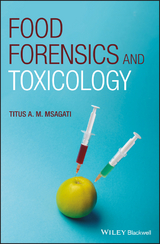
A comprehensive guide, offering a toxicological approach to food forensics, that reviews the legal, economic, and biological issues of food fraud
Food Forensics and Toxicology offers an introduction and examination of forensics as applied to food and foodstuffs. The author puts the focus on food adulteration and food fraud investigation. The text combines the legal/economic issues of food fraud with the biological and health impacts of consuming adulterated food. Comprehensive in scope, the book covers a wide-range of topics including food adulteration/fraud, food 'fingerprinting' and traceability, food toxicants in the body, and the accidental or deliberate introduction of toxicants into food products.
In addition, the author includes information on the myriad types of toxicants from a range of food sources and explores the measures used to identify and quantify their toxicity. This book is designed to be a valuable reference source for laboratories, food companies, regulatory bodies, and researchers who are dealing with food adulteration, food fraud, foodborne illness, micro-organisms, and related topics. Food Forensics and Toxicology is the must-have guide that:
- Takes a comprehensive toxicological approach to food forensics
- Combines the legal/economic issue of food fraud with the biological/health impacts of consuming adulterated food in one volume
- Discusses a wide range of toxicants (from foods based on plants, animals, aquatic and other sources)
- Provides an analytical approach that details a number of approaches and the optimum means of measuring toxicity in foodstuffs
Food Forensics and Toxicology gives professionals in the field a comprehensive resource that joins information on the legal/economic issues of food fraud with the biological and health implications of adulterated food.
TITUS A. M. MSAGATI is based in the College of Science, Engineering and Technology at the University of South Africa in Johannesburg. He is the author of Chemistry of Food Additives and Preservatives from Wiley.
A comprehensive guide, offering a toxicological approach to food forensics, that reviews the legal, economic, and biological issues of food fraud Food Forensics and Toxicology offers an introduction and examination of forensics as applied to food and foodstuffs. The author puts the focus on food adulteration and food fraud investigation. The text combines the legal/economic issues of food fraud with the biological and health impacts of consuming adulterated food. Comprehensive in scope, the book covers a wide-range of topics including food adulteration/fraud, food "e;fingerprinting"e; and traceability, food toxicants in the body, and the accidental or deliberate introduction of toxicants into food products. In addition, the author includes information on the myriad types of toxicants from a range of food sources and explores the measures used to identify and quantify their toxicity. This book is designed to be a valuable reference source for laboratories, food companies, regulatory bodies, and researchers who are dealing with food adulteration, food fraud, foodborne illness, micro-organisms, and related topics. Food Forensics and Toxicology is the must-have guide that: Takes a comprehensive toxicological approach to food forensics Combines the legal/economic issue of food fraud with the biological/health impacts of consuming adulterated food in one volume Discusses a wide range of toxicants (from foods based on plants, animals, aquatic and other sources) Provides an analytical approach that details a number of approaches and the optimum means of measuring toxicity in foodstuffs Food Forensics and Toxicology gives professionals in the field a comprehensive resource that joins information on the legal/economic issues of food fraud with the biological and health implications of adulterated food.
TITUS A. M. MSAGATI is based in the College of Science, Engineering and Technology at the University of South Africa in Johannesburg. He is the author of Chemistry of Food Additives and Preservatives from Wiley.
List of Figures vii
List of Tables xi
Preface xiii
List of Acronyms and Abbreviations xv
1 Food Forensics: Introduction 1
2 Food Provenance and Food Fingerprinting: Authentication and Traceability of Foods and Food Products 7
3 Food Forensic Cases Related to Food Allergenomic Sabotage and Food Intolerance: Allergens and Allergenicity of Processed Foods 47
4 Food Forensics Cases Related to Food Bioterrorism/Food Bio?]Weapons and Food Poisoning Agents: Agrochemical Food Poisoning Agents 57
5 Food Forensic Cases Related to Food Bioterrorism/Food Bio?]Weapons and Food Poisoning Agents: Biological Food Poisoning Agents 107
6 Food Forensics Cases Related to Food Bioterrorism Poisoning using Pathogenic Viruses 145
7 Food Forensics Cases Related to Genetically Modified Organisms (GMO) Foods 153
8 Food Forensics Cases Related to Poisoning of Food and Water using Radionuclides 169
9 Food Forensics Cases Related to Nano and Novel/Intelligent Foods, Feeds and Agroproducts 177
10 Food Forensics Related to Application of Food Additives and Food Improvement Agents 209
11 Application of Molecular Biology Techniques in Food Forensics 223
12 Application of Atomic and Molecular Spectroscopic Techniques in Food Forensics 255
13 Application of Microscopy Techniques in Food Forensics 295
14 Application of Ionizing Radiations (X?]rays/gamma?]Rays) Techniques in Food Forensics 309
15 Application of Chromatographic Techniques in Food Forensics 323
16 Application of Hyphenated Techniques in Food Forensics 341
17 Application of Electromigration Driven Techniques in Food Forensics 347
18 Application of Thermal Methods in Food Forensics 361
19 Application of Electrochemical Methods and Biosensors in Food Forensics 379
20 Application of Flow?]Cytometry in Food Forensics 391
21 Application of Multivariate Statistical Analysis/Chemometrics in Food Forensics 395
22 Conclusions and Future Trends 411
Index
List of Acronyms and Abbreviations
- 2,4‐D
- 4‐Dichlorophenoxyacetic acid
- 2,4,5‐T
- 2,4,5‐Trichlorophenoxyacetic acid
- 3PBA
- 3‐Phenoxybenzoic acid
- 4F3PBA
- 4‐Fluoro‐3‐phenoxybenzoic acid
- AAS
- Atomic Absorption Spectroscopy
- AC
- Affinity Chromatography
- AChE
- Acetylcholinesterase
- ACP
- Ascorbyl‐palmitate
- ADA
- Aliphatic dicarboxylic acid
- ADI
- Acceptable Daily Intake
- AdSV
- Adsorptive stripping voltammetry
- AFM
- Atomic Force Microscopy
- ALT
- Alanine aminotransferase
- AM
- Atrazine mercapturate
- AMP_PCR
- Anchored microsatellite primed‐PCR
- ANN
- Artificial Neural Networks
- ANOVA
- Analysis of Variance
- APCI
- Atmospheric Pressure Chemical Ionization
- API
- Atmospheric Pressure Ionization
- AST
- Aspartate aminotransferase
- ATR
- Attenuated Total Reflection
- BChE
- Butyrylcholinesterase
- BDDE
- Boron‐doped diamond electrode
- BFE
- Bismuth film electrodes
- BHA
- Butylated hydroxyanisole
- BHT
- Butylated hydroxytoluene
- BOTX
- Botulinum toxin
- BSDA
- Backward Stepwise Discriminant Analysis
- BSE
- Bovine Spongiform Encephalopathy
- BSEs
- Backscattered electrons
- CA
- Chromosomal aberrations
- CART
- Classification and Regression Trees
- CCD
- Charged Coupled Detector
- CD
- Circular Dichroism
- CDT
- Cytolethal Distending Toxin
- CE
- Capillary Electrophoresis
- CEC
- Capillary Electrochromatography
- CGE
- Capillary Gel Electrophoresis
- CIEF
- Capillary Isoelectric Focusing
- CITP
- Capillary Isotachophoresis
- CK
- Creatine kinase
- CM
- Carboxylmethyl
- CMC
- Carboxylmethyl cellulose
- CMP
- Caseinomacropeptide
- CNE
- Carbon nanotube electrodes
- CNS
- Coagulase‐Negative Staphylococci
- CPB
- Clostridium perfringens Beta toxins
- CPE
- Carbon paste electrodes
- CPE
- Clostridium perfringens Enterotoxins
- CPLA
- Polylactide aliphatic copolymer
- CP‐MAS
- Cross Polarization Magic Angle Spinning
- CPS
- Coagulase‐Positive Staphylococci
- CSIA
- Compound‐specific isotope analysis
- CSV
- Cathodic stripping voltammetric
- CTAB
- Cetyltrimethyl Ammonium Bromide
- CYP
- Cytochrome P
- CZE
- Capillary Zone Electrophoresis
- DA
- Discriminant Analysis
- DAD
- Diode Array Detector
- DAP
- Dialkyl phosphates
- DBCA
- 3‐(2,2‐dibromovinyl)‐2,2‐dimethylcyclopropane‐1‐carboxylic acid
- DCCA
- 3‐(2,2‐dichlorovinyl)‐2,2‐dimethylcyclopropane‐1‐carboxylic acid
- DDD
- Dichlorodiphenyl dichloroethane
- DDE
- Dichlorodiphenyl ethane
- DDT
- Dichlorodiphenyl tetrachloroethane
- DEAE
- Diethyl aminoethyl cellulose
- DEET
- N,N‐diethyl‐m‐toluamide
- DEP
- Diethyl phthalate
- DEPT
- Distortionless enhancement by polarization transfer
- DG
- Dodecyl gallate
- DG
- 1,2‐diacylglycerol
- DLS
- Dynamic Light Scattering
- DMSO
- Dimethylsulfoxide
- DNA
- Deoxyribonucleic acid
- DRIFTS
- Diffuse Reflectance Infrared Fourier Transform Spectroscopy
- DSBs
- Double Strand Breaks
- DSC
- Differential Scanning Calorimetry
- ds‐cDNA
- Double Strand Complementary DNA
- DSC
- Differential Scanning Calorimetry
- DTA
- Differential Thermal Analysis
- DTG
- Differential Thermogravimetry
- ECD
- Electron Capture Detector
- EELS
- Electron Energy Loss Spectroscopy
- EIA
- Enzyme Immunoassay
- EI‐MS
- Electron Ionization Mass Spectrometry
- ELISA
- Enzyme Linked Immunosorbent Assay
- ELSD
- Evaporative Light Scattering detector
- EMR
- Electromagnetic Radiation
- ENPs
- Engineered nano particles
- EOF
- Electroosmotic Flow
- EPN
- Ethyl Paraoxon
- EPR
- Electron Paramagnetic Resonance
- ESCA
- Electron Spectroscopy for Chemical Analysis
- ESEM
- Environmental Scanning Electron Microscopy
- ESI–MS
- Electrospray Mass Spectrometry
- ETX
- Epsilon toxin
- F4
- Flow Field‐Flow Fractionation
- FAAS
- Flame‐AAS
- FCMs
- Food contact materials
- FFF
- Field‐Flow Fractionation
- FINS
- Forensically informative nucleotide sequencing
- FIR
- Far‐Infrared
- FITC
- Fluorescein isothiocyanate
- FMOC
- 9‐Fluorenyhlmethyl chloroformate
- FP
- Fluorescence Polarization
- FSCE
- Free Solution Capillary Electrophoresis
- FSDA
- Forward Stepwise Discriminant Analysis
- FTIR
- Fourier Transform Infrared Spectroscopy
- GBS
- Guillain‐Barré syndrome
- GC
- Gas Chromatography
- GC FIS/NPD/FPD
- Gas Chromatography Flame Ionization Detector/Nitrogen Phosphorus Detector/Fluorine Phosphorus Detector
- GFAAS
- Graphite Furnace‐AAS
- GGT
- Gamma glutamyl transferase
- GM
- Genetically Modified Foods/Organisms
- GPC
- Gel Permeation Chromatography
- GSTP1
- Glutathione S‐Transferase Polymorphisms 1
- HA
- Hemagglutinin
- HCA
- Hierarchical Cluster Analysis
- HCB
- Hexachlorobenzene
- HCH
- Hexachlorocyclohexane
- HDC
- Hydrodynamic chromatography
- HFB
- Heptafluorobutylated
- HFBA
- Heptafluorobutyric acid
- HFBI
- Heptafluorobutyrylimidazole
- HMDE
- Hanging mercury drop electrode
- HMF
- Hydroxymethylfurfural
- HPAECPAD
- High Performance Anionic Exchange Chromatography – Pulsed Amperometric Detector
- HPAI
- Highly Pathogenic Avian Influenza Virus
- HPLC
- High Performance Liquid Chromatography
- HPMC
- Hydroxypropylmethylcellulose
- HPTLC
- High Performance Thin Layer Chromatography
- HUVECS
- Human umbilical vein endothelial cells
- IACE
- Immunoaffinity capillary electrophoresis
- IC
- Ion Chromatography
- ICP
- Inductively Coupled Plasma
- ICP‐OES
- Inductively Coupled Plasma Optical Emission Spectroscopy
- IDT
- Initial decomposition temperature
- IEC
- Ion Exchange Chromatography
- IMPY
- 2‐Isopropyl‐4‐methyl‐6‐hydroxypyrimidine
- IRMS
- Stable Isotope Ratio Mass Spectrometry
- ISFET
- Ion‐selective field effect transistors
- ISSR
- Inter‐sequence simple repeat
- ITX
- Iota toxin
- kNN
- k‐Nearest Neighbours
- LC‐Q‐TOF‐MS
- Liquid Chromatography‐Quadruple‐Time of Flight‐Mass Spectrometry
- LDA
- Linear Discriminant Analysis
- LDH
- Lactate dehydrogenase
- LDPE
- Low‐density polyethylene film
- LIF
- Laser‐induced Fluorescence (detector)
- LOS
- Lipo‐oligosaccharide
- LPAI
- Low Pathogenic Avian Influenza Virus
- LPS
- Lipopolysaccharide
- MALDI‐TOF‐MS
- Matrix‐assisted Laser Desorption Time of Flight Mass Spectrometry
- MALS
- Multi Angle Light Scattering
- MANOVA
- Multivariate Analysis of Variance
- MBTFA
- N‐methyl‐bis(trifluoroacetamide)
- MCF
- Menthylchloroformate
- MCHO
- Mean Corpuscular Hemoglobin Concentration
- MDA
- Malathion dicarboxylic acid
- MDM
- Mechanically deboned meat
- MEKC
- Micellar Electrokinetic Chromatography
- MES
- 2‐(N‐morpholino)ethanesulfonic acid
- MFE
- Mercury film electrode
- MIR
- Multiple Internal Reflection Spectroscopy
- MLR
- Multiple Linear Regression
- MMA
- Malathion monocarboxylic acid
- MN
- Micronuclei
- MPK
- Mitogen‐activated Protein Kinase
- MP‐PCR
- Microsatellite primed‐PCR
- MPV
- Mean Platelet Volume
- MRDT
- Maximum rate of decomposition
- MRI
- Magnetic Resonance Imaging Microscopy
- MRM
- Mechanically recovered/reclaimed meat
- MS
- Mass Spectrometry
- MSM
- Mechanically separated meat
- NA
- Neuraminidase
- NAD
- Nicotinamide Adenine...
| Erscheint lt. Verlag | 16.10.2017 |
|---|---|
| Sprache | englisch |
| Themenwelt | Naturwissenschaften ► Biologie |
| Technik ► Lebensmitteltechnologie | |
| Weitere Fachgebiete ► Land- / Forstwirtschaft / Fischerei | |
| Schlagworte | analysis of food provenance • Analytische Chemie / Forensik • authentication of alcoholic beverages • chemical food poisoning agents • Chemie • Chemistry • chemometric tools and methods for food authentication • detection of allergenic specifics in foods • food allergy and food intolerance • Food Forensics and Toxicology • Food Science & Technology • Forensics • Guide to food fraudulence and adulteration • labelling of foods that contain allergens • Lebensmittelforschung u. -technologie • methods of dairy product authentication • Microbiology, Food Safety & Security • Mikrobiologie u. Nahrungsmittelsicherheit • milk sugar intolerance • organic acids in fruit juice and geographic indicator • processes for determining the geographic indications origins of food • proteomics based methods for food allergens • reference to food fraudulence and adulteration • sampling approaches for vibrational spectroscopy techniques • scientific methods for verifying food fraudulent cases • Titus A. M. Msagati • Toxicology • Toxikologie |
| ISBN-10 | 1-119-10138-7 / 1119101387 |
| ISBN-13 | 978-1-119-10138-3 / 9781119101383 |
| Informationen gemäß Produktsicherheitsverordnung (GPSR) | |
| Haben Sie eine Frage zum Produkt? |
 EPUB (Adobe DRM)
Kopierschutz: Adobe-DRM
Adobe-DRM ist ein Kopierschutz, der das eBook vor Mißbrauch schützen soll. Dabei wird das eBook bereits beim Download auf Ihre persönliche Adobe-ID autorisiert. Lesen können Sie das eBook dann nur auf den Geräten, welche ebenfalls auf Ihre Adobe-ID registriert sind.
Details zum Adobe-DRM
Dateiformat: EPUB (Electronic Publication)
EPUB ist ein offener Standard für eBooks und eignet sich besonders zur Darstellung von Belletristik und Sachbüchern. Der Fließtext wird dynamisch an die Display- und Schriftgröße angepasst. Auch für mobile Lesegeräte ist EPUB daher gut geeignet.
Systemvoraussetzungen:
PC/Mac: Mit einem PC oder Mac können Sie dieses eBook lesen. Sie benötigen eine
eReader: Dieses eBook kann mit (fast) allen eBook-Readern gelesen werden. Mit dem amazon-Kindle ist es aber nicht kompatibel.
Smartphone/Tablet: Egal ob Apple oder Android, dieses eBook können Sie lesen. Sie benötigen eine
Geräteliste und zusätzliche Hinweise
Buying eBooks from abroad
For tax law reasons we can sell eBooks just within Germany and Switzerland. Regrettably we cannot fulfill eBook-orders from other countries.
aus dem Bereich