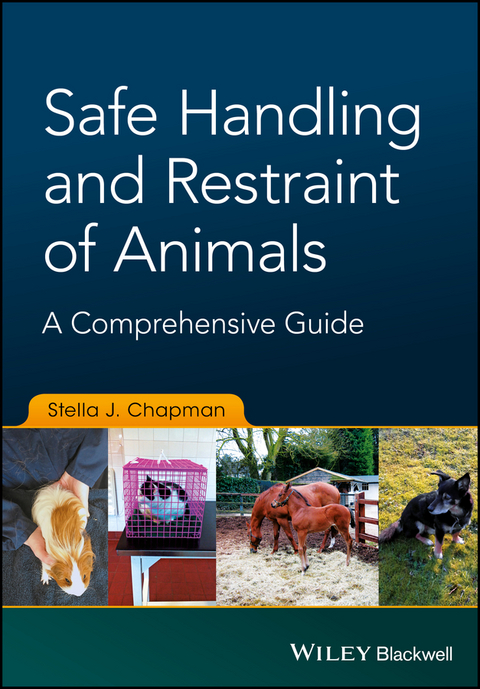
Safe Handling and Restraint of Animals (eBook)
John Wiley & Sons (Verlag)
978-1-119-07791-6 (ISBN)
Provides all you need to know about the safe and humane handling and restraint of animals.
Safe Handling and Restraint of Animals takes a holistic approach to the handling of a wide variety of animal species. This comprehensive resource offers a thorough overview of how to safely handle and restrain a number of commonly encountered species including dogs, cats, small mammals, exotic pets, horses and farm animals. Each chapter discusses the behaviour of the species and then outlines the appropriate handling and restraint methods, including any equipment required, multiple explanatory photographs, and useful further reading.
- Covers a wide range of species commonly encountered by veterinary staff and those working within animal industries
- Includes key points and self-assessment questions at the end of each chapter, and a glossary of terms
- Ideal for students of any animal-related degree or diploma programme, including veterinary medicine, veterinary nursing, and animal studies and husbandry
Written for students and professionals who work with animals, Safe Handling and Restraint of Animals: A Comprehensive Guide encompasses all aspects of handling and physical restraint, including biosecurity and welfare issues.
Stella J. Chapman is a veterinarian with a keen interest in animal welfare and behaviour, and the role that the veterinarian has to play in animal husbandry. Stella has lectured at the Sydney School of Veterinary Science, University of Sydney, Australia and the School of Veterinary Medicine, University of Surrey, UK.
Provides all you need to know about the safe and humane handling and restraint of animals. Safe Handling and Restraint of Animals takes a holistic approach to the handling of a wide variety of animal species. This comprehensive resource offers a thorough overview of how to safely handle and restrain a number of commonly encountered species including dogs, cats, small mammals, exotic pets, horses and farm animals. Each chapter discusses the behaviour of the species and then outlines the appropriate handling and restraint methods, including any equipment required, multiple explanatory photographs, and useful further reading. Covers a wide range of species commonly encountered by veterinary staff and those working within animal industries Includes key points and self-assessment questions at the end of each chapter, and a glossary of terms Ideal for students of any animal-related degree or diploma programme, including veterinary medicine, veterinary nursing, and animal studies and husbandry Written for students and professionals who work with animals, Safe Handling and Restraint of Animals: A Comprehensive Guide encompasses all aspects of handling and physical restraint, including biosecurity and welfare issues.
Stella J. Chapman is a veterinarian with a keen interest in animal welfare and behaviour, and the role that the veterinarian has to play in animal husbandry. Stella has lectured at the Sydney School of Veterinary Science, University of Sydney, Australia and the School of Veterinary Medicine, University of Surrey, UK.
5.2.5 Restraint for Sexing or Examination of the Abdomen 1
5.2.6 Restraint for Aggressive Rabbits 1
5.2.7 Alternative Restraint Methods for Rabbits 1
5.2.8 Towel Wrap or `Bunny Burrito´ 1
5.2.9 Tonic Immobilization 1
5.3 Aggression 1
5.3.1 Aggression as a Normal Behaviour 1
5.3.2 Aggression as an Abnormal Behaviour 1
5.3.3 Preventing and Minimizing Aggressive Behaviour 1
Key Points 1
Self-assessment Questions 1
References 1
Further Reading 1
6: Handling and Restraint of Rodents 1
6.1 General Species Information 1
6.1.1 Guinea Pigs 1
6.1.2 Rats 1
6.1.3 Mice 1
6.1.4 Hamsters 1
6.1.5 Gerbils 1
6.2 Behaviour of Rodents 1
6.2.1 Anatomical Considerations 1
6.2.2 Social Behaviour 1
6.2.3 Communication 1
6.3 Handling and Restraint of Small Rodents 1
6.3.1 General Guidelines 1
6.3.2 Points to Consider 1
6.3.3 Mice 1
6.3.4 Hamsters and Gerbils 1
6.4 Handling and Restraint of Rats 1
6.4.1 Approach (Figure 6.11) 1
6.4.2 Capture 1
6.4.3 General Table Restraint 1
6.4.4 Restraint for Sexing or Examination of the Abdomen 1
6.4.5 Additional Methods of Restraint 1
6.4.6 Aggression 1
6.5 Handling and Restraint of Guinea Pigs 1
6.5.1 Approach 1
6.5.2 Capture 1
6.5.3 General Table Restraint 1
6.5.4 Restraint for Sexing or Examination of the Abdomen 1
6.5.5 Carrying a Guinea Pig 1
6.5.6 Aggression in Guinea Pigs 1
Key Points 1
Self-assessment Questions 1
References 1
Further Reading 1
7: Handling and Restraint of Ferrets 1
7.1 Behaviour of Ferrets 1
7.1.1 Communication 1
7.2 Handling and Restraint of Ferrets 1
7.2.1 General points 1
7.2.2 Approach (Figure 7.1) 1
7.2.3 Capture 1
7.2.4 General Table Restraint 1
7.2.5 Restraint for Sexing and Examination of the Abdomen 1
7.2.6 Restraint of Aggressive Ferrets 1
7.2.7 Use of Harnesses 1
Key Points 1
Self-assessment Questions 1
References 1
Further Reading 1
8: Handling and Restraint of Horses and Donkeys 1
8.1 Equine Behaviour 1
8.1.1 Temperament 1
8.1.2 Communication 1
8.1.3 Key Differences Between Horses and Donkeys 1
8.1.3.1 In General 1
8.1.3.2 How Donkey Behaviour Can Affect Handling 1
8.1.3.3 How to Use Behavioural Traits to Effect when Handling Donkeys 1
8.2 How to Approach a Horse/Donkey 1
8.3 How to Put on a Head Collar and Lead in Hand 1
8.3.1 How to Put a Head Collar on a Horse in the Stable 1
8.3.2 How to Put a Head Collar on a Donkey in the Field 1
8.3.3 Quick Release Knot 1
8.3.4 How to Lead in Hand 1
8.4 Physical Restraint 1
8.5 Methods and Equipment 1
8.5.1 Head Collar 1
8.5.2 Bridle 1
8.5.3 Chiffney Bit 1
8.5.4 Twitch 1
8.5.5 Stocks 1
8.5.6 Tail Restraint 1
8.5.7 Physical Restraint of Donkeys 1
8.6 Training for Restraint 1
8.6.1 Training Donkeys for Restraint 1
8.7 Handling and Restraint of Foals 1
8.7.1 Development of Behaviour 1
8.7.2 Restraint of Foals 1
8.8 Handling and Restraint of Stallions 1
Key Points 1
Self-assessment Questions 1
References 1
Further Reading 1
9: Handling and Restraint of Cattle 1
9.1 Behaviour 1
9.1.1 Dairy and Beef Cattle 1
9.2 How to Use Behavioural Traits to Good Effect When Handling 1
9.2.1 Cattle as a Prey Animal 1
9.2.2 Flight Zone and Point of Balance 1
9.2.3 Cattle as a Social Species 1
9.2.4 Previous Experience 1
9.2.5 Cattle Signals to Look For 1
9.3 How to Approach and Move Cattle 1
9.3.1 Approaching and Moving a Group of Cattle 1
9.3.2 Approaching and Moving the Individual 1
9.3.3 Moving a Calf 1
9.4 Handling Facilities 1
9.4.1 Special Note: Bulls and Calves Use of Dogs and Vehicles
9.5 How to Restrain Cattle 1
9.5.1 Physical Restraint 1
9.5.2 Roping or Casting 1
9.6 Training for Restraint 1
9.7 Special Considerations 1
Key Points 1
Self-assessment Questions 1
References 1
Further Reading 1
10: Handling and Restraint of Small Ruminants 1
10.1 Behaviour 1
10.1.1 How to Use Behavioural Traits to Effect when Handling 1
10.1.1.1 The Flocking Instinct 1
10.1.1.2 Follow the Leader 1
10.2 How to Approach and Move Sheep 1
10.2.1 Methods and Equipment 1
10.2.2 Approaching and Moving a Group of Sheep 1
10.2.3 Approaching and Moving an Individual Sheep 1
10.2.4 Handling Facilities 1
10.2.5 Special Note: Rams, Lambs and Pregnant Ewes Use of Dogs/Vehicles
10.3 How to Approach and Move Goats 1
10.3.1 Methods and Equipment 1
10.3.2 Moving a Group 1
10.3.3 Moving an Individual 1
10.3.4 Handling Facilities 1
10.3.5 Special Note: Kids, Pregnant Does and Bucks 1
10.4 How to Restrain a Sheep 1
10.4.1 Methods and Equipment 1
10.4.2 Physical Restraint 1
10.4.3 Training for Restraint 1
10.5 How to Restrain Goats 1
10.5.1 Methods and Equipment 1
10.5.2 Physical Restraint 1
10.5.3 Training for Restraint 1
10.6 Special Considerations 1
Key Points 1
Self-assessment Questions 1
References 1
Further Reading 1
11: Handling and Restraint of Pigs 1
11.1 Behaviour 1
11.1.1 How this Can Affect Handling 1
11.1.2 How to Use Behavioural Traits to Effect When Handling 1
11.2 How to Approach and Move Pigs 1
11.2.1 General Methods and Equipment 1
11.2.2 Moving a Group of Pigs 1
11.2.3 Moving the Individual 1
11.2.4 Sows, Boars, Finishers and Piglets 1
11.3 How to Restrain Pigs 1
11.3.1 Methods and Equipment 1
11.3.2 Physical Restraint 1
11.3.3 Training for Restraint 1
11.4 Special Considerations 1
Key Points 1
Self-assessment Questions 1
References 1
Further Reading 1
12: Handling and Restraint of South American Camelids 1
12.1 Behaviour 1
12.1.1 Alpacas and Llama 1
12.2 How to Use Behavioural Traits to Effect When Handling 1
12.2.1 Handling Facilities 1
12.3 How to Approach and Halter a Camelid 1
12.3.1 Approaching Adult Camelids 1
12.3.2 Approaching Cria 1
12.3.3 How to Put on a Head Collar/Halter 1
12.3.4 How to Lead a Camelid 1
12.4 How to Restrain a Camelid 1
12.4.1 Methods and Equipment 1
12.4.2 Physical Restraint 1
12.4.3 Training Adult Camelids for Restraint 1
12.5 Training Cria 1
12.6 Special Considerations 1
Key Points 1
Self-assessment Questions 1
References 1
Further Reading 1
13: Handling and Restraint of Poultry and Aviary Birds 1
13.1 Behavioural Considerations 1
13.1.1 Flight Distance 1
13.1.2 Environment 1
13.2 Anatomical Considerations 1
13.3 How to Restrain Birds 1
13.3.1 Preparation Prior to Handling 1
13.3.2 Visual Assessment of Birds 1
13.4 Handling Techniques for Common Cage and Aviary Species 1
13.4.1 General Points Regarding the Handling of Poultry 1
13.4.2 Handling and Restraint of Chickens 1
13.4.3 Handling and Restraint of Other Poultry 1
13.4.4 Handling and Restraint of Pigeons and Doves 1
13.4.5 Handling and Restraint of Small Passerines 1
13.4.6 Handling and Restraint of Psittacines 1
Key Points 1
Self-assessment Questions 1
References 1
Further Reading 1
14: Handling and Restraint of Reptiles 1
14.1 Behaviour and Special Considerations 1
14.1.1 Lizards 1
14.1.2 Snakes 1
14.1.3 Chelonians 1
14.2 Restraint and Handling of Snakes 1
14.2.1 Anatomical Considerations 1
14.2.2 Handling Snakes 1
14.2.2.1 Non-venomous Snakes 1
14.2.2.2 Venomous Snakes 1
14.3 Restraint and Handling of Lizards 1
14.3.1 Anatomical Considerations 1
14.3.2 Handling 1
14.4 Restraint and Handling of Chelonians 1
14.4.1 Anatomical Considerations 1
14.4.2 Handling 1
Key Points 1
Self-assessment Questions 1
References 1
Further Reading 1
Glossary 1
Answers to Chapter Questions 1
Chapter One: Biosecurity 1
Chapter Two: Welfare 1
Chapter Three: Dogs 1
Chapter Four: Cats 1
Chapter Five: Rabbits 1
Chapter Six: Rodents 1
Chapter Seven: Ferrets 1
Chapter Eight: Horses 1
Chapter Nine: Cattle 1
Chapter Ten: Small Ruminants 1
Chapter Eleven: Pigs 1
Chapter Twelve: Camelids 1
Chapter Thirteen: Birds 1
Chapter Fourteen: Reptiles 1
Index 1
End User License Agreement 1
| Erscheint lt. Verlag | 16.8.2017 |
|---|---|
| Sprache | englisch |
| Themenwelt | Sachbuch/Ratgeber ► Natur / Technik ► Natur / Ökologie |
| Veterinärmedizin | |
| Weitere Fachgebiete ► Land- / Forstwirtschaft / Fischerei | |
| Schlagworte | handling and restraint of cats • handling and restraint of cattle • handling and restraint of dogs • handling and restraint of donkeys • handling and restraint of farm animals</p> • handling and restraint of ferrets • handling and restraint of horses • handling and restraint of rabbits • handling and restraint of rodents • Haustierhaltung / Sonstige Tiere • infection control in animals • lifestyle • lifestyles • <p>biosecurity and equipment for safe handling and restraint of animals • personal hygiene when working with animals • Pet Care / Other Animals • Pflege i. d. Veterinärmedizin • Pflege i. d. Veterinärmedizin • protective equipment working with animals • transmission of disease in animals • types of restraints and consideration for animal welfare • Veterinärmedizin • Veterinärmedizin • Veterinary Medicine • Veterinary Nursing & Animal Care • welfare considerations for the safe handling and restraint of animals |
| ISBN-10 | 1-119-07791-5 / 1119077915 |
| ISBN-13 | 978-1-119-07791-6 / 9781119077916 |
| Informationen gemäß Produktsicherheitsverordnung (GPSR) | |
| Haben Sie eine Frage zum Produkt? |
 PDF (Adobe DRM)
Kopierschutz: Adobe-DRM
Adobe-DRM ist ein Kopierschutz, der das eBook vor Mißbrauch schützen soll. Dabei wird das eBook bereits beim Download auf Ihre persönliche Adobe-ID autorisiert. Lesen können Sie das eBook dann nur auf den Geräten, welche ebenfalls auf Ihre Adobe-ID registriert sind.
Details zum Adobe-DRM
Dateiformat: PDF (Portable Document Format)
Mit einem festen Seitenlayout eignet sich die PDF besonders für Fachbücher mit Spalten, Tabellen und Abbildungen. Eine PDF kann auf fast allen Geräten angezeigt werden, ist aber für kleine Displays (Smartphone, eReader) nur eingeschränkt geeignet.
Systemvoraussetzungen:
PC/Mac: Mit einem PC oder Mac können Sie dieses eBook lesen. Sie benötigen eine
eReader: Dieses eBook kann mit (fast) allen eBook-Readern gelesen werden. Mit dem amazon-Kindle ist es aber nicht kompatibel.
Smartphone/Tablet: Egal ob Apple oder Android, dieses eBook können Sie lesen. Sie benötigen eine
Geräteliste und zusätzliche Hinweise
Buying eBooks from abroad
For tax law reasons we can sell eBooks just within Germany and Switzerland. Regrettably we cannot fulfill eBook-orders from other countries.
aus dem Bereich