Zum Hauptinhalt springen
Nicht aus der Schweiz? Besuchen Sie lehmanns.de

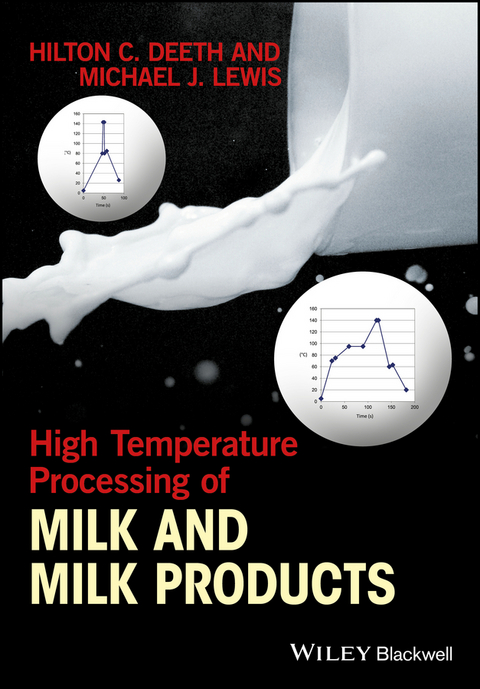
High Temperature Processing of Milk and Milk Products (eBook)

eBook Download: EPUB
2017
John Wiley & Sons (Verlag)
978-1-118-46049-8 (ISBN)

Lese- und Medienproben

High Temperature Processing of Milk and Milk Products - Hilton C. Deeth, Michael J. Lewis
Systemvoraussetzungen
176,99 inkl. MwSt
(CHF 169,95)
Der eBook-Verkauf erfolgt durch die Lehmanns Media GmbH (Berlin) zum Preis in Euro inkl. MwSt.
  • Download sofort lieferbar
  • Zahlungsarten anzeigen

This book covers many aspects of thermal processing of milk and milk products with particular focus on UHT processing. It commences with an overview of the major thermal processing technologies: thermisation, pasteurisation, extended-shelf-life (ESL), UHT and in-container sterilisation.  It discusses the principles of the technologies, the processing and packaging equipment used, processing issues such as temperature-time profiles, heat stability, fouling and cleaning, and the quality and safety aspects of the products produced. It provides a balance of the engineering aspects of the processes and the chemical, microbiological and sensory aspects of the products.  The changes that occur in products during processing and storage, and the related defects which can arise, are central to the book.  The discussions of these changes will be an aid to industry personnel in identifying the causes of quality defects in these products and devising measures which can be taken to eliminate or minimise the defects.


About the Authors
Hilton C. Deeth, Emeritus Professor, School of Agriculture and Food Sciences, University of Queensland, Australia, and consultant to the dairy industry

Michael J. Lewis, Honorary Fellow, Department of Food and Nutritional Sciences, Taught and researched at The University of Reading, Whiteknights, UK, for 38 years and now working as an adviser on milk and milk products


This book covers many aspects of thermal processing of milk and milk products with particular focus on UHT processing. It commences with an overview of the major thermal processing technologies: thermisation, pasteurisation, extended-shelf-life (ESL), UHT and in-container sterilisation. It discusses the principles of the technologies, the processing and packaging equipment used, processing issues such as temperature-time profiles, heat stability, fouling and cleaning, and the quality and safety aspects of the products produced. It provides a balance of the engineering aspects of the processes and the chemical, microbiological and sensory aspects of the products. The changes that occur in products during processing and storage, and the related defects which can arise, are central to the book. The discussions of these changes will be an aid to industry personnel in identifying the causes of quality defects in these products and devising measures which can be taken to eliminate or minimise the defects.

About the Authors Hilton C. Deeth, Emeritus Professor, School of Agriculture and Food Sciences, University of Queensland, Australia, and consultant to the dairy industry Michael J. Lewis, Honorary Fellow, Department of Food and Nutritional Sciences, Taught and researched at The University of Reading, Whiteknights, UK, for 38 years and now working as an adviser on milk and milk products

1
History and Scope of the Book


1.1 Setting the Scene


Bovine milk is the main source of milk in the world today. Table 1.1 illustrates some production data for the leading bovine milk producing countries in the world. The first column shows total milk production, whereas the second shows milk production expressed as per head of population. Thus countries like New Zealand and Ireland (see footnote) produce large quantities per capita, whereas countries such as China, although positioned in the top five milk producers in the world, are most probably not producing sufficient milk for their increasing populations who are developing a taste for milk and milk products. USA and Brazil are also large producers of bovine milk. Much of the milk in Brazil is consumed as liquid milk with a fair proportion being UHT processed.

Table 1.1 Leading producers of bovine milk in 2012, with populations and production per head of population.

from: http://dairy.ahdb.org.uk/market‐information/supply‐production/milk‐production/world‐milk‐production/#.VzxQVHn2aUk and world population figures

Milk production, 2012
(billion L)
Population
(billion)
Per capita consumption (L/person)
United States of America 90.9 0.318 286
India 54.0 1.244 43.4
China 37.8 1.364 27.7
Brazil 32.3 0.204 158
Russian Federation 31.6 0.146 216
Germany 30.5 0.081 377
France 24.0 0.066 364
New Zealand 20.0 0.0046 4350
Turkey 16.0 0.078 205
United Kingdom 13.9 0.065 214
World 620.3 7.25 85.6

It is very exciting time to be writing a book on high‐temperature processing, particularly ultra‐high temperature (UHT) processing. UHT is a continuous process and as such is applicable to any product that can be pumped through a heat exchanger and then aseptically packaged, although the vast majority of products are either milk or milk‐based. UHT milk and milk products are now global commodities and are being transported large distances to all parts of the world. In a number of traditional milk‐drinking countries, for example, UK, Greece and Australia, pasteurised milk is still the milk of preference and the cooked flavour that is associated with UHT and sterilised milk is given as a major reason for maintaining this status quo (Perkins & Deeth, 2011). In contrast, in some other countries much more UHT milk is consumed than pasteurised milk. For example, in France, Belgium and Portugal, more than 90% of all liquid milk purchased is UHT‐treated, whereas in the UK, Norway, Sweden, Australia and New Zealand, it is less than 10%. Similar variations are also found in other parts of the world, with less than 5% of UHT milk being consumed in India and USA but over 60% in Vietnam and China. In other words, availability and also preferences for pasteurised or sterilised milk vary from country to country. Some examples for Europe and other parts of the world are given in Table 1.2.

Table 1.2 Percentage of drinking milk which is UHT processed in various European countries and worldwide.

Information from Wikipedia and Datamonitor (China has the largest forecast growth increase in UHT milk consumption over the period 2012 to 2020. India also has a high projected growth rate but is starting from a much lower base level).

Europe
Greece 0.9
Norway 5.3
UK 8.4
Austria 20.3
Germany 66.1
France 95.5
Spain 95.7
Belgium 96.7
Worldwide
US 2
India 3
Australia 11
Japan 11
Malaysia 28
China 32
Thailand 46
Vietnam 62

Recently, there has been a substantial increase in UHT capacity in all parts of the world. In part, this is to supply the increased demand for UHT milk from China. It is also predicted that there will be an increased demand from Africa and other parts of South East Asia. Since UHT milk does not require refrigeration and has a long shelf‐life, it provides a very convenient way of providing good quality milk to large populations in remote areas, without the need for the expensive cold chain infrastructure. UHT milk is now transported to China and other parts of South East Asia from countries such as Australia, New Zealand and even longer distances from USA and several countries in Europe. Both large multinational conglomerates and much smaller companies are engaged in these activities.

The demand for UHT milk is increasing worldwide. It has been estimated that the compound annual growth rate for UHT milk in the world between 2013 and 2019 will be 12.5%, with the global market reaching USD 137.6 billion in 2019 (Persistance Market Research, 2014). In locations where fresh milk is not available, UHT milk can be produced from milk powder. Also milk demand is increasing in locations where there has previously been no strong culture of drinking milk; there is a continuing investment in UHT capability in various parts of the world to meet this demand.

Demand for UHT milk is not the only factor that is changing in relation to the market for milk and milk products. The variety of milk‐based beverages is constantly expanding. In the early days of UHT processing, only white milk and some cream products were processed. The variety in milk drinks has since mushroomed and now includes flavoured milk and products containing additives offering health benefits, derived either from naturally occurring components in the milk or non‐milk components, such as plant extracts, fruit juices and other substances such as melatonin and dietary fibre (see Tables 1.3 and 1.4). There are also many products of non‐dairy origin; these are covered in more detail in Chapter 9.

Table 1.3 Some drinking milk products available commercially or being developed.

Milk types
Full‐cream, skim, semi‐skim – HTST, ESL, UHT, sterilised
Flavoured
Lactose‐reduced
Carbonated
Goat’s, sheep, buffalo’s, horse and camel’s milk
Microfiltered
Breakfast milks
A2 milk
Yogurt drink
Pet milk
Soy, almond, oat and other plant “milks”
Additives/fortifiers
Calcium and other minerals
Vitamins
Plant sterols and stannols
Omega‐3, conjugated linoleic acid (CLA)
Microparticulated whey protein
Milk bioactive peptides
Dietary fibre (e.g., β‐glucan, inulin)
Melatonin
Polyphenols
Oligosaccharides

Table 1.4 Some high‐temperature‐processed milk products from different countries.

Product Country Brand Name Format Other comments
On‐the‐go snack USA Dynamoo UHT, 8 fl oz, boxes
Red‐bean flavoured milk Taiwan Acacia Lover UHT, 250 mL bottle
Fruit and milk drink France Danoo Mon fruit prefere 1 L re‐sealable carton Acidic product
Milk shake USA Cold Stone Milk Shake UHT, 12 fl oz plastic bottle
Nutritious weight loss shake UK USlim UHT,...

Erscheint lt. Verlag 14.3.2017
Sprache englisch
Themenwelt Naturwissenschaften Biologie
Technik Lebensmitteltechnologie
Weitere Fachgebiete Land- / Forstwirtschaft / Fischerei
Schlagworte Aspects • Balance • Book • Dairy Food • Engineering • equipment • Food Processing, Production & Manufacture • Food Science & Technology • Herstellung u. Verarbeitung von Lebensmitteln • High • Issues • Lebensmittelforschung u. -technologie • Major • many • Microbiology, Food Safety & Security • Mikrobiologie • Mikrobiologie u. Nahrungsmittelsicherheit • Milch • Milcherzeugnis • Milchprodukte • milk • Overview • Principles • Processing • Products • Profiles • Safety • Technologies • Temperature • temperaturetime • thermal • thermisation
ISBN-10 1-118-46049-9 / 1118460499
ISBN-13 978-1-118-46049-8 / 9781118460498
Informationen gemäß Produktsicherheitsverordnung (GPSR)
Haben Sie eine Frage zum Produkt?
EPUBEPUB (Adobe DRM)

Kopierschutz: Adobe-DRM
Adobe-DRM ist ein Kopierschutz, der das eBook vor Mißbrauch schützen soll. Dabei wird das eBook bereits beim Download auf Ihre persönliche Adobe-ID autorisiert. Lesen können Sie das eBook dann nur auf den Geräten, welche ebenfalls auf Ihre Adobe-ID registriert sind.
Details zum Adobe-DRM

Dateiformat: EPUB (Electronic Publication)
EPUB ist ein offener Standard für eBooks und eignet sich besonders zur Darstellung von Belle­tristik und Sach­büchern. Der Fließ­text wird dynamisch an die Display- und Schrift­größe ange­passt. Auch für mobile Lese­geräte ist EPUB daher gut geeignet.

Systemvoraussetzungen:
PC/Mac: Mit einem PC oder Mac können Sie dieses eBook lesen. Sie benötigen eine Adobe-ID und die Software Adobe Digital Editions (kostenlos). Von der Benutzung der OverDrive Media Console raten wir Ihnen ab. Erfahrungsgemäß treten hier gehäuft Probleme mit dem Adobe DRM auf.
eReader: Dieses eBook kann mit (fast) allen eBook-Readern gelesen werden. Mit dem amazon-Kindle ist es aber nicht kompatibel.
Smartphone/Tablet: Egal ob Apple oder Android, dieses eBook können Sie lesen. Sie benötigen eine Adobe-ID sowie eine kostenlose App.
Geräteliste und zusätzliche Hinweise

Buying eBooks from abroad
For tax law reasons we can sell eBooks just within Germany and Switzerland. Regrettably we cannot fulfill eBook-orders from other countries.

Mehr entdecken
aus dem Bereich
Entwicklung und Gestaltung von Fließgewässern

von Heinz Patt

eBook Download (2024)
Springer Fachmedien Wiesbaden (Verlag)
CHF 87,90
Lehrbuch des Hufbeschlages begründet von Hermann Ruthe

von Lutz-Ferdinand Litzke

eBook Download (2019)
Thieme (Verlag)
CHF 117,20