High Temperature Processing of Milk and Milk Products (eBook)
John Wiley & Sons (Verlag)
978-1-118-46048-1 (ISBN)
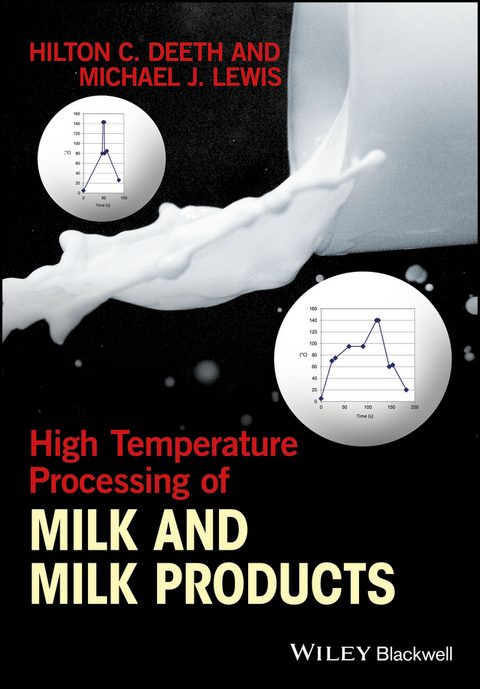
This book covers many aspects of thermal processing of milk and milk products with particular focus on UHT processing. It commences with an overview of the major thermal processing technologies: thermisation, pasteurisation, extended-shelf-life (ESL), UHT and in-container sterilisation. It discusses the principles of the technologies, the processing and packaging equipment used, processing issues such as temperature-time profiles, heat stability, fouling and cleaning, and the quality and safety aspects of the products produced. It provides a balance of the engineering aspects of the processes and the chemical, microbiological and sensory aspects of the products. The changes that occur in products during processing and storage, and the related defects which can arise, are central to the book. The discussions of these changes will be an aid to industry personnel in identifying the causes of quality defects in these products and devising measures which can be taken to eliminate or minimise the defects.
About the Authors
Hilton C. Deeth, Emeritus Professor, School of Agriculture and Food Sciences, University of Queensland, Australia, and consultant to the dairy industry
Michael J. Lewis, Honorary Fellow, Department of Food and Nutritional Sciences, Taught and researched at The University of Reading, Whiteknights, UK, for 38 years and now working as an adviser on milk and milk products
This book covers many aspects of thermal processing of milk and milk products with particular focus on UHT processing. It commences with an overview of the major thermal processing technologies: thermisation, pasteurisation, extended-shelf-life (ESL), UHT and in-container sterilisation. It discusses the principles of the technologies, the processing and packaging equipment used, processing issues such as temperature-time profiles, heat stability, fouling and cleaning, and the quality and safety aspects of the products produced. It provides a balance of the engineering aspects of the processes and the chemical, microbiological and sensory aspects of the products. The changes that occur in products during processing and storage, and the related defects which can arise, are central to the book. The discussions of these changes will be an aid to industry personnel in identifying the causes of quality defects in these products and devising measures which can be taken to eliminate or minimise the defects.
About the Authors Hilton C. Deeth, Emeritus Professor, School of Agriculture and Food Sciences, University of Queensland, Australia, and consultant to the dairy industry Michael J. Lewis, Honorary Fellow, Department of Food and Nutritional Sciences, Taught and researched at The University of Reading, Whiteknights, UK, for 38 years and now working as an adviser on milk and milk products
Title Page 5
Copyright Page 6
Contents 7
About the Authors 17
Preface 19
List of Abbreviations 23
Chapter 1 History and Scope of the Book 27
1.1 Setting the Scene 27
1.2 Scope of the Book 33
1.3 Reasons for Heating Foods 33
1.4 Brief History of Sterilisation Processes 34
References 38
Chapter 2 Heat Treatments of Milk – Thermisation and Pasteurisation 41
2.1 Introduction 41
2.2 Thermisation 42
2.3 Pasteurisation 43
2.3.1 Introduction 43
2.3.2 Historical Background 44
2.3.3 Pasteurisation Equipment 47
2.3.3.1 Holder or Batch Heating 47
2.3.3.2 Continuous Heating 48
2.3.4 Process Characterisation 50
2.3.4.1 D-value 50
2.3.4.2 z-value 51
2.3.4.3 Pasteurisation Unit (PU) 51
2.3.4.4 p* 52
2.3.5 Processing Conditions 53
2.3.6 Changes During Pasteurisation 54
2.3.6.1 Microbiological Aspects 54
2.3.6.2 Enzyme Inactivation 55
2.3.6.3 Other Changes 57
2.3.7 Changes During Storage 58
2.3.7.1 Changes Due to Post-Pasteurisation Contamination (PPC) 58
2.3.7.2 Other Changes 59
2.3.8 Pasteurisation of Other Milk-Based Products 60
References 62
Chapter 3 Heat Treatments of Milk – ESL, UHT and in-Container Sterilisation 67
3.1 Introduction 67
3.2 Some Important Definitions 67
3.2.1 Q10 67
3.2.2 Bacterial Indices, B* and F0 68
3.2.3 Chemical Index, C* 69
3.3 Extended Shelf-Life (ESL) Milk Processing 70
3.3.1 ESL Milk by Thermal Treatment 70
3.3.1.1 ESL Milk by Thermal Treatment Plus Aseptic Packaging 74
3.3.2 ESL Milk by Microfiltration Plus HTST Heat Treatment 75
3.3.3 ESL Milk by Thermal Treatment Plus Bactofugation 76
3.3.4 ESL Milk by Thermal Treatment Plus an Antibacterial Agent 76
3.3.5 ESL Milk by Thermal Treatment Plus a Non-Thermal Technology Treatment 76
3.3.5.1 UV irradiation 76
3.3.5.2 Pulsed Electric Field (PEF) Technology 77
3.3.5.3 Gamma-Irradiation 77
3.3.6 ESL Milk by Multiple Thermal Treatments 77
3.4 Sterilisation 78
3.4.1 Introduction 78
3.4.2 UHT Processing 80
3.4.2.1 Introduction 80
3.4.2.2 UHT Principle 1 80
3.4.2.3 UHT Principle 2 81
3.4.3 In-Container Sterilisation 84
3.4.3.1 Conventional Retort Processes 84
3.4.3.2 Alternative Retort Processes 86
References 87
Chapter 4 Microbiological Aspects 91
4.1 Introduction 91
4.2 Bacteria in Raw Milk 91
4.2.1 Non-Spore-Forming Psychrotrophic Bacteria and their Heat-Resistant Enzymes 94
4.2.2 Spore-Forming Bacteria 95
4.2.2.1 Non-Pathogenic Spore-Formers 95
4.2.2.2 Pathogenic Spore-Formers 97
4.3 Heat Inactivation of Bacteria 104
4.4 Microflora in Processed Milks 106
4.4.1 Pasteurised Milk 106
4.4.2 ESL Milk 109
4.4.2.1 Microbiological Issues Related to the Heating Process 109
4.4.2.2 Optimum Processing Conditions for High Microbiological Quality and Safety of ESL Milk 110
4.4.2.3 Microbiological Issues Associated with Post-Process Contamination 110
4.4.3 UHT Milk 111
4.4.3.1 Spores in UHT Milk Produced From Fresh Milk 111
4.4.3.2 Spores in Milk Powders Used for UHT Reconstituted Milk 113
4.4.3.3 Spores in Non-Milk Ingredients Used in UHT Milk Products 114
4.4.3.4 Other Microbial Contamination 115
4.4.4 In-Container Sterilised Milk 116
4.5 Sterilisation of Equipment and Packaging to Prevent Microbial Contamination of UHT Products 116
References 117
Chapter 5 UHT Processing and Equipment 129
5.1 The UHT Process 129
5.2 Heating 130
5.2.1 Steam-/Hot-Water-Based Heating Systems 130
5.2.1.1 Direct Heating 130
5.2.1.2 Indirect heating 135
5.2.1.3 Pre?Heating 137
5.2.1.4 Comparison of Indirect and Direct UHT Plants 139
5.2.1.5 Combination Direct–Indirect Systems 139
5.2.1.6 Scraped-Surface Heat Exchanger Systems 141
5.2.1.7 Pilot-Scale Equipment 143
5.2.1.8 Engineering Aspects 149
5.2.2 Electrically Based Heating Systems 172
5.2.2.1 Electrical Tube Heating 172
5.2.2.2 Ohmic Heating 172
5.2.2.3 Microwave Heating 174
5.3 Homogenisation 176
5.4 Deaeration 180
5.5 Aseptic Packaging 181
5.5.1 Types of Packaging 181
5.5.1.1 Paperboard Cartons 181
5.5.1.2 Plastic Bottles 182
5.5.1.3 Pouches 183
5.5.1.4 Bulk Aseptic Packaging 184
5.5.2 Sterilisation of Packaging 184
5.5.3 Establishing and Maintaining a Sterile Environment 184
5.5.4 Aseptic Package Integrity 185
5.5.5 Validation of Aseptic Packaging Operations 185
5.6 Plant Cleaning and Sanitisation 187
5.6.1 Introduction 187
5.6.2 Rinsing 187
5.6.3 Water?Product Changeover 188
5.6.4 Cleaning 188
5.6.5 Methods of Measuring Cleaning Effectiveness 190
5.6.6 Kinetics of Cleaning 192
5.6.7 Disinfecting and Sterilising 193
5.6.7.1 Use of Heat 193
5.6.7.2 Use of Chemicals 194
References 194
Chapter 6 Changes During Heat Treatment of Milk 203
6.1 Chemical 203
6.1.1 pH and Ionic Calcium 203
6.1.1.1 Effects of Addition of Phosphates, Citrate and EDTA 207
6.1.2 Mineral salts 208
6.1.2.1 Mineral Partitioning and Associated Changes 208
6.1.2.2 Addition of Mineral Salts 209
6.1.3 Proteins 210
6.1.3.1 Whey Protein Denaturation 210
6.1.3.2 Coagulation of Caseins 214
6.1.3.3 Protein Cross-linking 214
6.1.3.4 Dissociation of Caseins from the Casein Micelle 215
6.1.3.5 Effects on Enzymes 216
6.1.3.6 Effect on Rennet Coagulation of Casein 219
6.1.4 Lactose 221
6.1.4.1 Lactosylation and the Maillard reaction 221
6.1.4.2 Lactulose formation 224
6.1.5 Vitamins 226
6.1.6 Flavour 227
6.1.6.1 Volatile Sulfur Compounds 230
6.1.6.1.1 Hydrogen Sulfide 231
6.1.6.2 Monocarbonyl Compounds 233
6.1.7 Chemical Heat Indices 234
6.2 Physical Changes 238
6.2.1 Heat stability 238
6.2.1.1 Measurement of Heat Stability 238
6.2.1.2 Is HCT a Good Predictor of Heat Stability in Uht Treatment? 240
6.2.1.3 Stability to UHT processing and some comparisons with in-container sterilisation 242
6.2.1.4 Is Ethanol Stability a Good Predictor of Heat Stability in UHT treatment? 246
6.2.2 Fouling 248
6.2.2.1 Introduction 248
6.2.2.2 Terms Used in fouling 250
6.2.2.3 Measurement of fouling 251
6.2.2.4 Factors affecting fouling 255
6.2.2.5 Fouling mechanism 261
6.2.2.6 Methods to Reduce Fouling 262
6.2.2.7 Fouling in Other Products 264
6.2.2.8 Biofilms 264
6.3 Kinetics and Computer Modelling 266
References 268
Chapter 7 Changes During Storage of UHT Milk 287
7.1 Chemical Changes 289
7.1.1 pH 289
7.1.2 Dissolved Oxygen Content 290
7.1.3 Flavour 292
7.1.3.1 Sulfurous Flavour 294
7.1.3.2 Cooked/Heated/Sterilised Flavour 294
7.1.3.3 Stale/Oxidised Flavour 295
7.1.3.4 Bitterness 296
7.1.3.5 Hydrolytic Rancidity (Lipolysis) 297
7.1.3.6 Flavour Improvement 298
7.1.4 Proteolysis 299
7.1.5 Protein Cross-Linking 301
7.1.6 Deamidation 302
7.1.7 Lactosylation 303
7.1.8 Formation of Monosaccharides 304
7.1.9 Reactivation of Alkaline Phosphatase 304
7.1.10 Vitamins 305
7.1.11 Light-Induced Changes 306
7.2 Physical 308
7.2.1 Sedimentation 308
7.2.2 Age Gelation 309
7.2.2.1 Proteolysis 310
7.2.2.2 Milk Production Factors 311
7.2.2.3 Severity of Sterilisation Heating 311
7.2.2.4 Temperature of Storage 312
7.2.2.5 Additives 312
7.2.2.6 Mechanism 314
7.2.2.7 Practical Issues with Gelation 314
7.2.3 Thinning 315
7.2.4 Fat Separation 316
7.2.5 Maillard Browning 318
7.2.5.1 Browning of Milk and Milk Products 318
7.2.5.2 Browning of Fruit Juices 324
7.3 Changes to Some UHT Products Other than Single-Strength Fresh White Cow’s Milk 325
7.4 Accelerated Storage Testing 326
7.5 Chemical and Physical Changes During Storage Trials of UHT Milk 327
7.5.1 Storage Trial 1 (DIAL, 2014) 327
7.5.2 Storage Trial 2 (UCC, 2015) 330
7.5.3 Other Storage Trials 333
References 333
Chapter 8 Quality Control and Assurance 347
8.1 Introduction 347
8.2 Safety and Quality Considerations 347
8.2.1 Safety Issues 347
8.2.2 Quality Issues 349
8.3 Heat Treatment Regulations 349
8.4 Quality Assurance/Commercial Sterility: The Current Approach 353
8.4.1 Introduction 353
8.4.2 Commercially Sterile Products 355
8.4.3 Sampling Theories and Probabilities 355
8.4.4 Characteristic Curves 356
8.4.5 Sampling for Process Verification 359
8.4.6 Sampling Plans for Refrigerated Products 360
8.5 Important Quality Considerations for UHT Processing 361
8.5.1 Raw Material Quality 362
8.5.2 Processing Aspects 364
8.5.3 Other Factors 365
8.6 Some Practical Aspects 366
8.7 Microbiological Examination of Heat?Treated Foods 369
8.7.1 Introduction 369
8.7.2 Sample Pre-Incubation 370
8.7.3 Testing for Microbial Activity 371
8.7.4 Plate Counting and Microscopy 371
8.7.5 Rapid Instrumental Methods for Total Bacteria 373
8.7.5.1 Based on DEFT Method 373
8.7.5.2 Based on Impedance Measurement 373
8.7.5.3 Based on Carbon Dioxide Detection 374
8.7.5.4 Based on Dissolved Oxygen Depletion 374
8.7.5.5 Based on Flow Cytometry (FCM) 374
8.7.5.6 Based on ATP of Viable Cells 376
8.7.5.7 Based on Colour Indicators 376
8.7.6 Analyses of Specific Bacteria 376
8.7.6.1 Molecular and Immunological Methods 376
8.7.6.2 Antibody-Based Methods 377
8.7.6.3 Nucleic Acid-Based Methods 378
8.7.7 Indirect Methods Based on the Metabolic Activity of Microorganisms 380
8.8 Non-Invasive Methods 380
8.9 The Milk Microbiome 381
8.10 Use of Modelling Procedures 382
8.11 UHT Product Alerts and Recalls 383
8.12 Time??Temperature Indicators 384
8.13 Conclusions 384
References 385
Chapter 9 Other Shelf-Stable Products 391
9.1 Introduction 391
9.2 Reconstituted and Recombined Milk 391
9.3 Concentrated Milk Products 393
9.3.1 UHT Evaporated Milk 397
9.3.2 Concentration by Membrane Filtration 398
9.4 Lactose-Reduced Milk (LRM) 399
9.5 Mineral-Fortified Milk 400
9.5.1 Calcium 400
9.5.2 Other Minerals 402
9.6 Flavoured Milk 403
9.6.1 Fruit-Flavoured Milk 404
9.6.2 Chocolate and Other Confectionery Milk 405
9.7 High-Protein Milk Drinks 409
9.8 Breakfast Milk Products 410
9.9 Starch-Based and Thickened Desserts 411
9.10 UHT Cream 412
9.11 UHT Ice Cream Mix 413
9.12 Infant Formulae 416
9.13 UF Permeate 417
9.14 Whey Proteins 418
9.15 Yogurt and Cheese 418
9.15.1 Yogurt 418
9.15.1.1 Yogurt Produced from UHT Milk 418
9.15.1.2 Ambient Yogurt 421
9.15.2 Cheese made from UHT Milk 421
9.16 Milk from Species other than Cows 422
9.16.1 Buffalo’s Milk 423
9.16.2 Goat’s Milk 424
9.16.3 Camel’s Milk 426
9.17 Non-Dairy Products 427
9.17.1 Soy Milk 430
9.17.2 Peanut Milk 434
9.17.3 Coconut Milk 436
9.17.4 Almond Milk 437
9.18 Other Non-Dairy Beverages 437
9.18.1 Tea and Coffee 437
9.18.2 Fruit Juices, Purees and Drinks 438
References 441
Chapter 10 Non-Thermal Technologies 453
10.1 Introduction 453
10.2 Microfiltration 453
10.3 High-Pressure Processing 459
10.3.1 Effect on Bacteria and Potential for Producing ESL and Shelf?Stable Milk 459
10.3.2 Effect on Milk Components 460
10.4 Pulsed Electric Field (PEF) Technology 461
10.4.1 Effect on Bacteria and Potential for Producing ESL and Shelf-Stable Milk 462
10.4.2 Effect on Milk Components 463
10.5 High-Pressure Homogenisation 464
10.5.1 Effect on Microorganisms and Potential for Producing ESL and Shelf-Stable Milk 466
10.5.2 Effect on Milk Components 468
10.6 Bactofugation 469
10.7 UV Irradiation 470
10.8 Gamma Irradiation 472
10.9 Carbon Dioxide 473
10.9.1 High Pressure Carbon Dioxide 475
References 476
Chapter 11 Analytical Methods 487
11.1 Introduction 487
11.2 Commonly Used Analytical Methods 487
11.2.1 Amylase 487
11.2.2 Browning 488
11.2.2.1 Colour Meter Analysis 488
11.2.2.2 Colourimetric Analysis 489
11.2.3 Density/Specific Gravity 489
11.2.4 Dissolved Oxygen 489
11.2.5 Fat Separation and Fat Particle Size 490
11.2.5.1 Fat Separation 490
11.2.5.2 Fat Particle Size 490
11.2.6 Flavour Volatiles 493
11.2.7 Fouling of Heat Exchangers 495
11.2.8 Freezing Point Depression (FPD) 496
11.2.9 Furosine 497
11.2.10 Hydrogen Peroxide 497
11.2.11 Hydroxymethyl Furfural (HMF) 498
11.2.12 Lactulose 498
11.2.13 Lysinoalanine (LAL) 499
11.2.14 Lipase 499
11.2.15 Lipolysis (Free Fatty Acids) 501
11.2.16 Lysine – Blocked and Reactive 501
11.2.16.1 Blocked Lysine 501
11.2.16.2 Chemically Reactive or Available Lysine 503
11.2.17 Minerals and Salts 503
11.2.17.1 Ionic Calcium 506
11.2.18 pH and Titratable Acidity 510
11.2.18.1 pH 510
11.2.18.2 Titratable Acidity (TA) 511
11.2.19 Protease 512
11.2.19.1 Plasmin 512
11.2.19.2 Bacterial Proteases 512
11.2.20 Protein 513
11.2.21 Proteolysis (Peptides) 514
11.2.21.1 Distinguishing Peptides Produced by Plasmin and Bacterial Proteases by Analysis of Primary Amine Groups 516
11.2.21.2 HPLC Analysis 516
11.2.21.3 Polyacrylamide Gel Electrophoresis (PAGE) Analysis 517
11.2.22 Sediment 518
11.2.23 Sensory Characteristics 519
11.2.24 Separation Methods 522
11.2.24.1 Dialysis and Ultrafiltration 522
11.2.24.2 Centrifugation 524
11.2.25 Stability Tests 525
11.2.25.1 Ethanol Stability Test 525
11.2.25.2 Other Heat Stability Tests 527
11.2.25.3 Accelerated Physical Stability 528
11.2.26 Viscosity 528
11.2.27 Vitamins 529
11.2.28 Whey Protein Denaturation 529
11.2.28.1 Soluble Tryptophan 530
11.2.28.2 Turbidity Test 530
11.3 Advanced Analytical Techniques 531
11.3.1 Chemometrics 531
11.3.2 Nuclear Magnetic Resonance (NMR) 532
11.3.3 Proteomics 534
11.3.4 Ultrasonic Techniques 535
References 536
Chapter 12 Concluding Comments 553
12.1 Spore-Forming Bacteria 553
12.1.1 Highly Heat-Resistant Spores 553
12.1.2 Enzymes Produced by Spores 553
12.1.3 Sources of Spores 553
12.1.4 Identification of Spores 554
12.1.5 Spore Counts in Raw Milk 554
12.1.6 Conditions of Activation and Germination of Spores 554
12.1.7 Psychrotrophic Spore-Formers 555
12.2 Biofilms 555
12.3 Age Gelation 556
12.3.1 Mechanism 556
12.3.2 Early Prediction of a Milk’s Susceptibility 556
12.4 Predictive Modelling 556
12.5 The Shelf-Life of UHT Milk 557
12.6 The Shelf-Life of ESL Milk 558
12.7 Non-Thermal Technologies 559
12.8 Analytical Methods 559
12.9 Using the Literature 559
12.10 Further Reading 560
Index 567
Supplemental Images 583
EULA 587
| Erscheint lt. Verlag | 14.3.2017 |
|---|---|
| Sprache | englisch |
| Themenwelt | Naturwissenschaften ► Biologie |
| Technik ► Lebensmitteltechnologie | |
| Weitere Fachgebiete ► Land- / Forstwirtschaft / Fischerei | |
| Schlagworte | Aspects • Balance • Book • Dairy Food • Engineering • equipment • Food Processing, Production & Manufacture • Food Science & Technology • Herstellung u. Verarbeitung von Lebensmitteln • High • Issues • Lebensmittelforschung u. -technologie • Major • many • Microbiology, Food Safety & Security • Mikrobiologie • Mikrobiologie u. Nahrungsmittelsicherheit • Milch • Milcherzeugnis • Milchprodukte • milk • Overview • Principles • Processing • Products • Profiles • Safety • Technologies • Temperature • temperaturetime • thermal • thermisation |
| ISBN-10 | 1-118-46048-0 / 1118460480 |
| ISBN-13 | 978-1-118-46048-1 / 9781118460481 |
| Informationen gemäß Produktsicherheitsverordnung (GPSR) | |
| Haben Sie eine Frage zum Produkt? |
 PDF (Adobe DRM)
Kopierschutz: Adobe-DRM
Adobe-DRM ist ein Kopierschutz, der das eBook vor Mißbrauch schützen soll. Dabei wird das eBook bereits beim Download auf Ihre persönliche Adobe-ID autorisiert. Lesen können Sie das eBook dann nur auf den Geräten, welche ebenfalls auf Ihre Adobe-ID registriert sind.
Details zum Adobe-DRM
Dateiformat: PDF (Portable Document Format)
Mit einem festen Seitenlayout eignet sich die PDF besonders für Fachbücher mit Spalten, Tabellen und Abbildungen. Eine PDF kann auf fast allen Geräten angezeigt werden, ist aber für kleine Displays (Smartphone, eReader) nur eingeschränkt geeignet.
Systemvoraussetzungen:
PC/Mac: Mit einem PC oder Mac können Sie dieses eBook lesen. Sie benötigen eine
eReader: Dieses eBook kann mit (fast) allen eBook-Readern gelesen werden. Mit dem amazon-Kindle ist es aber nicht kompatibel.
Smartphone/Tablet: Egal ob Apple oder Android, dieses eBook können Sie lesen. Sie benötigen eine
Geräteliste und zusätzliche Hinweise
Buying eBooks from abroad
For tax law reasons we can sell eBooks just within Germany and Switzerland. Regrettably we cannot fulfill eBook-orders from other countries.
aus dem Bereich