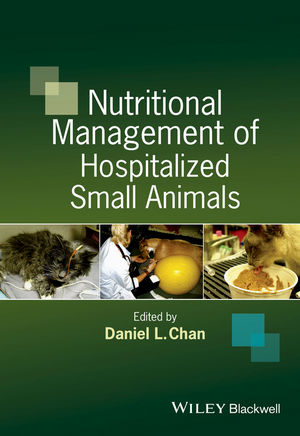
Nutritional Management of Hospitalized Small Animals (eBook)
John Wiley & Sons (Verlag)
978-1-119-05296-8 (ISBN)
- Represents the definitive resource for small animal veterinarians in providing optimal nutritional support for their patients during hospitalization
- Discusses and demonstrates the most up-to-date techniques available for successfully implementing nutritional support for hospitalized small animal patients
- Provides step-by-step pictorial instructions on how to implement the most appropriate techniques for particular patients
- Reveals expected outcomes and possible complications along with strategies to minimize risk of complications
Daniel L. Chan is Professor of Emergency, Critical Care and Nutrition at the Royal Veterinary College, University of London, UK where he is the Head of the Section for Emergency and Critical Care and of the Nutritional Support Service. He is a Diplomate of the American and European Colleges of Veterinary Emergency and Critical Care and of the American College of Veterinary Nutrition.
Nutritional Management of Hospitalized Small Animals offers veterinarians, veterinary students and technicians a comprehensive reference to the latest information relating to the principles and practice of nutritional support in small animals that require hospitalization. Represents the definitive resource for small animal veterinarians in providing optimal nutritional support for their patients during hospitalization Discusses and demonstrates the most up-to-date techniques available for successfully implementing nutritional support for hospitalized small animal patients Provides step-by-step pictorial instructions on how to implement the most appropriate techniques for particular patients Reveals expected outcomes and possible complications along with strategies to minimize risk of complications
Daniel L. Chan is Professor of Emergency, Critical Care and Nutrition at the Royal Veterinary College, University of London, UK where he is the Head of the Section for Emergency and Critical Care and of the Nutritional Support Service. He is a Diplomate of the American and European Colleges of Veterinary Emergency and Critical Care and of the American College of Veterinary Nutrition.
Contributors vii
Preface ix
Acknowledgements xi
1 Nutritional assessment in small animals 1
Kathryn E. Michel
2 Estimating energy requirements of small animal patients 7
Daniel L. Chan
3 Routes of nutritional support in small animals 14
Sally Perea
4 Nasoesophageal feeding tubes in dogs and cats 21
Isuru Gajanayake
5 Esophagostomy feeding tubes in dogs and cats 29
Laura Eirmann
6 Gastrostomy feeding tubes in dogs and cats 41
Isuru Gajanayake and Daniel L. Chan
7 Jejunostomy feeding tubes in dogs and cats 54
F. A. (Tony) Mann and Robert C. Backus
8 Minimally invasive placement of postpyloric feeding tubes 65
Matthew W. Beal
9 Tube feeding in small animals: diet selection and preparation 80
Iveta Becvarova
10 Intravenous access for parenteral nutrition in small animals 92
Sophie Adamantos
11 Parenteral nutrition in small animals 100
Daniel L. Chan and Lisa M. Freeman
12 Pathophysiology and clinical approach to malnutrition in dogs and cats 117
Jason W. Gagne and Joseph J. Wakshlag
13 Appetite stimulants in dogs and cats 128
Lisa P. Weeth
14 Adverse food reactions in small animals 136
Cecilia Villaverde and Marta Hervera
15 Nutritional management of short bowel syndrome in dogs and cats 152
Daniel L. Chan
16 Refeeding syndrome in small animals 159
Daniel L. Chan
17 Feeding small animal patients with gastrointestinal motility disorders 165
Karin Allenspach and Daniel L. Chan
18 Immune modulating nutrients in small animals 172
Daniel L. Chan
19 Nutritional management of superficial necrolytic dermatitis in dogs 183
Andrea V. Volk and Ross Bond
20 Nutritional support in acute kidney injury in dogs and cats 193
Denise A. Elliott
21 Nutritional support in hepatic failure in dogs and cats 199
Renee M. Streeter and Joseph J. Wakshlag
22 Nutritional management of the septic patient 210
Daniel L. Chan
23 Nutritional support during acute pancreatitis 219
Kristine B. Jensen and Daniel L. Chan
24 Nutritional support in the mechanically ventilated small animal patient 228
Daniel L. Chan
25 Nutritional support in exotic pet species 234
Jeleen A. Briscoe, La'Toya Latney and Cailin R. Heinze
Index 247
"In short, this book is a succinct, clearly written reference guide that describes patient selection, pathophysiology, and criteria for initiating nutritional support and determining the most appropriate dietary characteristics for each patient ." (Journal of the American Veterinary Medical Association, 15 December 2015)
"Critique: Comprised of twenty-three specialized articles ranging from Kathryn E. Michel's 'Nutritional Assessment in Small Animals'; to Iveta Becvarova's 'Tube Feeding in Small Animals: Diet Selection and Preparation'; to Lisa P. Weeth's 'Appetite Stimulants in Dogs and Cats'; to 'Nutritional Support in Exotic Pet Species' by Jeleen A. Briscoe, La Toya Latney, and Cailin R. Heinze, "Nutritional Management of Hospitalized Small Animals" will prove to be an invaluable contribution to professional, animal clinic, and academic library Veterinarian Medicine reference collections and supplemental studies reading lists." (Midwest Book Review, 1 October 2015)
"An essential read for those who are serious about their in-patients!." (Vet Nurses Today, 1 October 2015)
"No veterinary hospital or technician overseeing nutrition should be without this invaluable guide, which packs the latest information and research into discussions of best practices." (Donovan's Literary Services 2016)
CHAPTER 1
Nutritional assessment in small animals
Kathryn E. Michel
Department of Clinical Studies, School of Veterinary Medicine, University of Pennsylvania, Philadelphia, PA, USA
Introduction
It is generally believed that hospitalized patients experiencing malnutrition are at greater risk of morbidity and mortality. There is ample evidence in human patients that this is the case, and while this association has not been clearly established in small animal patients, caloric intake has been found to be positively associated with hospital discharge (Mullen et al., 1979, Brunetto et al., 2010). Despite the lack of a proven direct causal relationship between impaired nutritional status and poor clinical outcome, the assumption is that the prevention or correction of nutritional deficiencies should minimize or eliminate the risk of nutritionally associated morbidity and mortality.
Inadequate food intake is a very common presenting complaint in small animal practice and only a minority of dogs and cats achieve adequate voluntary food intake during hospitalization (Remillard et al., 2001). The task of identifying and determining the magnitude of malnutrition in a patient and deciding whether steps need to be taken to address the problem is complicated by several factors. First, the degree of malnutrition and its impact on a patient’s body composition, metabolism and functional status varies considerably with the extent of insufficiency of calorie and nutrient intake, the patient’s illness and other physiological demands (See Chapter 11). Furthermore, as many of the parameters used to assess the nutritional status of patients are substantially affected by illness and injury, it is therefore difficult, if not impossible, to gauge the extent to which malnutrition, as opposed to the underlying disease, has contributed to changes in any given parameter. Alterations in visceral proteins (e.g., albumin, transferrin), markers of immune function (e.g., total lymphocyte counts, intradermal skin testing), and body composition (e.g., weight loss, skin fold thickness, body condition scoring) have all been explored as markers of nutritional status in both human and small animal patients (Mullen et al., 1979, Otto et al., 1992, Michel 1993). Additionally, functional tests such as grip strength and peak expiratory flow rate and sophisticated body composition analysis using dual X-ray absorptiometry, bioelectrical impedance and other modalities have been investigated in human patients (Hill, 1992). Ultimately, however, the diagnostic accuracy of these tests remains unknown because there is still no universally accepted “gold standard” of malnutrition with which these tests can be compared.
The recognition that a true “diagnostic test” for malnutrition might not be forthcoming caused a shift in perspective on nutritional assessment. Many of the parameters used to assess malnutrition have been found to be associated with clinical outcome. While they might not be specific markers of nutritional status (many could be deranged for reasons other than malnutrition), they could be used as prognostic indicators. Thus nutritional assessment has evolved into a prognostic, rather than a diagnostic instrument. The techniques that are used to assess nutritional status are those known to be associated with malnutrition, and these have proven to be useful in predicting which patients are more likely to suffer complications. Patients are selected for nutritional support not simply because they are malnourished but rather on the basis of whether nutritional support might have an impact on their clinical outcome. The corollary is that there are malnourished patients for whom providing nutritional support, with its inherent risks and cost, will confer no benefit.
Indications for nutritional assessment
The importance of nutritional assessment is receiving growing recognition in small animal medicine (Freeman et al., 2011). All hospitalized patients should undergo nutritional assessment as part of their initial work up. Given the likelihood that the majority of patients will have inadequate voluntary food intake throughout their hospitalization, the task of nutritional assessment will allow early identification of that subset of patients who are truly at risk, and thus enable prioritization of time and resources for addressing the needs of those patients. The process of nutritional assessment can also facilitate decision-making with regard to selecting an appropriate diet for the patient, deciding whether assisted feeding is indicated and, if it is indicated, determining the best route of assisted feeding for that patient. Furthermore, a properly done nutritional assessment will permit the clinician to anticipate potential complications and develop a feeding plan that will monitor for and minimize the risk of those complications.
Methods of nutritional assessment
There have been only limited investigations of prognostic markers of nutritional status in small animal patients. Admission serum albumin concentration has been shown to correlate with risk of mortality in critically ill dogs (Michel, 1993). In the same population, admission body condition score and lymphocyte count did not correlate with outcome. Intradermal skin testing has been shown to be a feasible means of evaluating cell-mediated immunity in cats but whether this test is associated with nutritional status or is predictive of clinical outcome has not yet been investigated (Otto et al., 1992). Also noted in feline patients is an association between elevation of serum creatinine kinase activity and anorexia which resolves upon reintroduction of food (Fascetti, Mauldin and Mauldin, 1997).
For human patients a rapid, simple, ‘bedside’ prognostic tool for nutritional assessment called subjective global assessment (SGA) has been in use for approximately 3 decades (Baker et al., 1982). The technique was designed to utilize readily available historical and physical parameters to identify malnourished patients who are at increased risk for complications and who will presumably benefit from nutritional intervention. The assessment involves determining whether nutrient assimilation has been restricted because of decreased food intake, maldigestion or malabsorption, whether any effects of malnutrition on organ function and body composition are evident, and whether the patient’s disease process influences its nutrient requirements. The findings of the historical and physical assessment are used to categorize the patient as A: well nourished, B: moderately malnourished or at risk of becoming malnourished, and C: severely malnourished. SGA has been investigated for its ability to identify patients at risk of medical complications in diverse patient populations, and has been shown to have excellent inter-observer agreement and better predictive accuracy than traditional markers of nutritional status (Keith, 2008).
The SGA can easily be adapted to veterinary patients. The patient history should be assessed for indications of malnutrition, including evidence of weight loss and the time frame in which it has occurred, sufficiency of dietary intake including the nutritional adequacy of the diet, the presence of persistent gastrointestinal signs, the patient’s functional capacity (e.g., evidence of weakness, exercise intolerance) and the metabolic demands of the patient’s underlying disease state. The physical exam should focus on changes in body composition, presence of edema or ascites, and appearance of the patient’s hair coat. With regard to assessing changes in body composition, it is important to recognize that while metabolically stressed patients experience catabolism of lean tissue, these changes may not be noted using standard body condition scoring systems if the patient has normal or excessive body fat (Figure 1.1). Since catabolism of lean tissue can have deleterious consequences for outcome, it is important that along with evaluation of body fat, patients undergo evaluation of muscle mass to assess lean tissue status (Freeman et al., 2011). A muscle mass scoring system that has been used in dogs and cats is outlined in Table 1.1 (Michel, Sorenmo and Shofer, 2004, Michel et al., 2011).
Figure 1.1 An example of a patient exhibiting significant wasting of the epaxial musculature despite having excessive body fat.
Table 1.1 Description of a muscle mass scoring system for dogs and cats.
| Score | Muscle Mass |
| 0 | On palpation over the spine, muscle mass is severely wasted |
| 1 | On palpation over the spine, mass is moderately wasted |
| 2 | On palpation over the spine, muscle mass is mildly wasted |
| 3 | On palpation over the spine, muscle mass is normal |
The next step of nutritional assessment is to determine whether or not the patient’s voluntary food intake is sufficient. To do this one must have a caloric goal, select an appropriate food and formulate a feeding recommendation for the patient. This will permit an accurate accounting of how much food is offered to the patient and will allow evaluation of the patient’s intake based on how much of the food is consumed. A reasonable initial caloric goal for hospitalized dogs and...
| Erscheint lt. Verlag | 30.6.2015 |
|---|---|
| Sprache | englisch |
| Themenwelt | Medizin / Pharmazie |
| Veterinärmedizin ► Kleintier | |
| Weitere Fachgebiete ► Land- / Forstwirtschaft / Fischerei | |
| Schlagworte | Critical Care Nutrition, Critical Care Diets, Tube Feeding, Enteral Nutrition, Assisted Feeding, Total Parenteral Nutrition, IV nutrition, TPN, PPN, Partial Parenteral Nutrition, Inappetance, Anorexia, Nutritional Support • Hospitalismus • Kleintier • Veterinärmedizin • Veterinärmedizin f. Kleintiere • Veterinärmedizin / Notfallmedizin • Veterinärmedizin • Veterinärmedizin f. Kleintiere • Veterinärmedizin / Notfallmedizin • Veterinary Emergency & Critical Care • Veterinary Medicine • Veterinary Medicine - Small Animal General |
| ISBN-10 | 1-119-05296-3 / 1119052963 |
| ISBN-13 | 978-1-119-05296-8 / 9781119052968 |
| Informationen gemäß Produktsicherheitsverordnung (GPSR) | |
| Haben Sie eine Frage zum Produkt? |
 EPUB (Adobe DRM)
Kopierschutz: Adobe-DRM
Adobe-DRM ist ein Kopierschutz, der das eBook vor Mißbrauch schützen soll. Dabei wird das eBook bereits beim Download auf Ihre persönliche Adobe-ID autorisiert. Lesen können Sie das eBook dann nur auf den Geräten, welche ebenfalls auf Ihre Adobe-ID registriert sind.
Details zum Adobe-DRM
Dateiformat: EPUB (Electronic Publication)
EPUB ist ein offener Standard für eBooks und eignet sich besonders zur Darstellung von Belletristik und Sachbüchern. Der Fließtext wird dynamisch an die Display- und Schriftgröße angepasst. Auch für mobile Lesegeräte ist EPUB daher gut geeignet.
Systemvoraussetzungen:
PC/Mac: Mit einem PC oder Mac können Sie dieses eBook lesen. Sie benötigen eine
eReader: Dieses eBook kann mit (fast) allen eBook-Readern gelesen werden. Mit dem amazon-Kindle ist es aber nicht kompatibel.
Smartphone/Tablet: Egal ob Apple oder Android, dieses eBook können Sie lesen. Sie benötigen eine
Geräteliste und zusätzliche Hinweise
Buying eBooks from abroad
For tax law reasons we can sell eBooks just within Germany and Switzerland. Regrettably we cannot fulfill eBook-orders from other countries.
aus dem Bereich