Cellulosic Energy Cropping Systems (eBook)
John Wiley & Sons (Verlag)
978-1-118-67632-5 (ISBN)
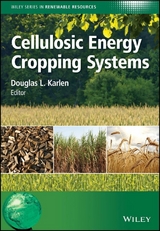
Cellulosic Energy Cropping Systems presents a comprehensive overview of how cellulosic energy crops can be sustainably produced and converted to affordable energy through liquid fuels, heat and electricity.
The book begins with an introduction to cellulosic feedstocks, discussing their potential as a large-scale sustainable energy source, and technologies for the production of liquid fuels, heat and electricity. Subsequent chapters examine miscanthus, switchgrass, sugarcane and energy cane, sorghums and crop residues, reviewing their phylogeny, cultural practices, and opportunities for genetic improvement. This is followed by a detailed focus on woody crops, including eucalyptus, pine, poplar and willow. Critical logistical issues associated with both herbaceous and woody feedstocks are reviewed, and alternate strategies for harvesting, transporting, and storing cellulosic materials are also examined. The final sectionof the booktackles the challenge of achieving long-term sustainability, addressing economic, environmental and social factors.
Cellulosic Energy Cropping Systems is a valuable resource for academics, students and industry professionals working in the field of biomass cultivation and conversion, bioenergy, crop science and agriculture.
Topics covered include:
- Identifying suitable cellulosic energy crops that are adapted to a wide range of climates and soils
- Best management practices for sustainably growing, harvesting, storing, transporting and pre-processing these crops
- The development of integrated cellulosic energy cropping systems for supplying commercial processing plants
- Challenges and opportunities for the long-term sustainability of cellulosic energy crops
This book was conceived and initiated by David I. Bransby, Professor of Energy and Forage Crops in the Department of Crop, Soil and Environmental Sciences at Auburn University, USA.
For more information on the Wiley Series in Renewable Resources, visit www.wiley.com/go/rrs
Cellulosic Energy Cropping Systems presents a comprehensive overview of how cellulosic energy crops can be sustainably produced and converted to affordable energy through liquid fuels, heat and electricity. The book begins with an introduction to cellulosic feedstocks, discussing their potential as a large-scale sustainable energy source, and technologies for the production of liquid fuels, heat and electricity. Subsequent chapters examine miscanthus, switchgrass, sugarcane and energy cane, sorghums and crop residues, reviewing their phylogeny, cultural practices, and opportunities for genetic improvement. This is followed by a detailed focus on woody crops, including eucalyptus, pine, poplar and willow. Critical logistical issues associated with both herbaceous and woody feedstocks are reviewed, and alternate strategies for harvesting, transporting, and storing cellulosic materials are also examined. The final sectionof the booktackles the challenge of achieving long-term sustainability, addressing economic, environmental and social factors. Cellulosic Energy Cropping Systems is a valuable resource for academics, students and industry professionals working in the field of biomass cultivation and conversion, bioenergy, crop science and agriculture. Topics covered include: Identifying suitable cellulosic energy crops that are adapted to a wide range of climates and soils Best management practices for sustainably growing, harvesting, storing, transporting and pre-processing these crops The development of integrated cellulosic energy cropping systems for supplying commercial processing plants Challenges and opportunities for the long-term sustainability of cellulosic energy crops This book was conceived and initiated by David I. Bransby, Professor of Energy and Forage Crops in the Department of Crop, Soil and Environmental Sciences at Auburn University, USA. For more information on the Wiley Series in Renewable Resources, visit www.wiley.com/go/rrs
Dr Douglas L. Karlen, USDA, Agricultural Research Service, National Laboratory for Agriculture and the Environment Dr Karlen is an experienced research scientist in the Soil, Water, and Air Resources Research Unit at the USDA, Agricultural Research Service. His soil and crop management research program uses a systems approach involving research scientists and engineers, producers, action agencies, non-government organizations, agribusiness, and other state and federal partners to quantify physical, chemical, and biological effects of conventional and organic farming practices. His current focus is on sustaining or improving soil quality while striving to produce sustainable feedstock supplies for lignocellulosic biofuel production.
2
Conversion Technologies for the Production of Liquid Fuels and Biochemicals
Sofie Dobbelaere, Tom Anthonis, and Wim Soetaert
Centre of Expertise for Industrial Biotechnology and Biocatalysis, Faculty of Bioscience Engineering, Ghent University, Belgium
2.1 Introduction
Until the last century, plant-based resources were largely focused towards food, feed, and fiber production. In addition, biomass has been a major source of energy for mankind worldwide. However, plant/crop-based renewable resources are also a viable alternative to the current dependence on non-renewable, diminishing fossil fuels, to alleviate greenhouse gas (GHG) emissions, and a strategic option to meet the growing need for industrial building blocks and bioenergy. Indeed, biomass seems a very promising resource for substituting fossil hydrocarbons as a renewable source of energy and as a sustainable raw material for various industrial sectors. Over the past decades, the use of biomass has increased rapidly in many parts of the world, mainly to meet the often ambitious targets for energy supply.
Developing biomass into a sustainable, domestic source of affordable biochemicals and biofuels requires the flexibility to use a wide variety of, preferably, non-food biomass resources. Lignocellulosic biomass such as agricultural and forestry residues and herbaceous energy crops can serve as low-cost renewable feedstock for many, next-generation, bio-derived products. However, the use of biomass as feedstock for the production of materials, products or energy requires new technologies well adapted to the physical cha-racteristics of the biomass. The use of plant/crop resources for energy, or as basic building blocks for industrial production, has been limited because of a poor fit with the hydrocarbon processing system that has been successfully developed to utilize fossil fuels [1]. Although biomass is a nearly universal feedstock, characterized by a high versatility, domestic availability, and renewability, at the same time it has also its limitations. Over the years, numerous research and development efforts have been undertaken to develop and apply new cost-efficient conversion processes for lignocellulosic biomass. This chapter gives an overview of the conversion technologies for liquid fuels and biochemicals.
2.2 Biomass Conversion Technologies
Generally, two main routes for the conversion of lignocellulosic biomass can be distinguished, which can lead to the production of biofuels and other value-added commodity chemicals (Figure 2.1):
Figure 2.1 Schematic representation of the two routes for the conversion of lignocellulosic biomass.
The (Bio)Chemical Route: Biochemical conversion makes use of the enzymes of bacteria or other microorganisms to break down and convert the biomass. In most cases the microorganisms themselves are used to perform the conversion processes, such as fermentation, anaerobic digestion or composting. Sometimes, only the isolated enzymes are used, also known as biocatalysis. Plant monomers can also be further converted chemically.
The Thermochemical Route: Thermochemical conversion includes processes in which heat and pressure are the dominant mechanisms to convert the biomass into another chemical form.
The bioconversion of lignocellulosic residues to biofuels and biochemicals is more complicated than the bioconversion of sugar or starch-based feedstock. Plant cell walls are naturally resistant to microbial and enzymatic (fungal and bacterial) deconstruction. This recalcitrant nature of the lignocellulosic feedstock (resistance of plant cell walls to deconstruction) therefore poses a significant hurdle in the biochemical route and necessitates extra pretreatment steps before this lignocellulosic biomass can serve as low-cost feedstock for the production of fuel ethanol and other value-added commodity chemicals. Plant cell walls are comprised of long chains (polymers) of sugars (carbohydrates such as cellulose and hemicellulose), which can be converted into common monomer sugars such as glucose, xylose, and so on, the ideal substrates for chemical, physical, and fermentation processes [2]. However, these polymers are bound together by lignin, which has to be degraded first before the sugar polymers become accessible to hydrolysis by chemical or biological means. Lignin is a complex structure containing aromatic groups linked in a three-dimensional structure that is particularly difficult to biodegrade [3]. Lignins perform an important role in strengthening cell walls by cross-linking polysaccharides, thus providing support to structural elements in the overall plant body. This also helps the plant to resist moisture and biological attack [4]. These same properties, however, constitute one of the drawbacks of using lignocellulosic material in fermentation, as they make lignocellulose resistant to physical, chemical, and biological degradation. The higher the proportion of lignin, the higher the resistance to chemical and enzymatic degradation [5]. Overcoming the recalcitrance of lignocellulosic biomass is a key step in the biochemical production of fuels and chemicals; it is the main goal of the pretreatment.
In the thermochemical conversion route, the recalcitrant nature of the lignocellulosic biomass poses no problems to the technology. However, other limitations of the biomass need to be taken into account in this case: the energy density of biomass is low compared to that of coal, liquid petroleum or petroleum-derived fuels. And most biomass, as received, has a high burden of physically adsorbed moisture, up to 50% by weight [6].
2.3 (Bio)Chemical Conversion Route
Biochemical conversion comprises breaking down or “cracking” biomass by using physical, chemical, enzymatic and/or microbial action, to make the polymeric carbohydrates of the biomass (hemicellulose and cellulose) available as (fermentable) sugars, which can then be converted into biofuels and bioproducts using microorganisms (bacteria, yeast, fungi, etc.) and their enzymes or chemically converted using specific catalysts. A general overview of the different process steps of the biochemical conversion of lignocellulosic biomass is given in Figure 2.2.
Figure 2.2 Schematic picture for the conversion of lignocellulosic biomass into bioethanol highlighting the major steps. Hydrolysis and fermentation can be performed separately (SHF, indicated by broken arrows) or as simultaneous saccharification and fermentation (SSF). In consolidated bioprocessing (CBP), however, all bioconversion steps are minimized to one step in a single reactor using one or more microorganisms. (Reproduced from Dashtban, M., Schraft, H. and Qin, W. Fungal Bioconversion of Lignocellulosic Residues; Opportunities & Perspectives. Int J Biol Sci 2009; 5(6):578–595. doi:10.7150/ijbs.5.578 © 2009, Ivyspring International Publisher [7]).
Firstly, a reduction in particle size is often needed to make material handling easier and to increase surface/volume ratio, so as to enable better accessibility of the processed material in the next pretreatment step. Size reduction is most often done by a mechanical process such as crushing, milling, chipping, grinding or pulverizing to the required particle size.
2.3.1 Pretreatment
The following step is the pretreatment of the fractionated material. The main goal of pretreatment is to overcome this lignocellulosic recalcitrance, to separate the cellulose from the matrix polymers, and to make it more accessible for enzymatic hydrolysis. Reports have shown that pretreatment can improve sugar yields to greater than 90% theoretical yield for biomass such as wood, grasses, and corn [8, 9]. Pretreatment technologies for lignocellulosic biomass include thermal, (thermo)chemical, physical and biological methods or various combinations thereof [5, 9].
In general, pretreatment processes produce a solid pretreated biomass residue that is more amenable to enzymatic hydrolysis by cellulases and related enzymes than native biomass. Many pretreatment approaches, such as dilute acid and steam/pressurized hot water based methods, seek to achieve this by hydrolyzing a significant amount of the hemicellulose fraction of biomass and recovering the resulting soluble monomeric and/or oligomeric sugars. Other pretreatment processes, such as alkaline-based methods, are generally more effective at solubilizing a greater fraction of lignin while leaving behind much of the hemicellulose in an insoluble, polymeric form [10]. Most pretreatment approaches do not hydrolyze significant amounts of the cellulose fraction of biomass but enable more efficient enzymatic hydrolysis of the cellulose by removal of the surrounding hemicellulose and/or lignin along with modification of the cellulose microfibril structure [11]. Biological pretreatment uses microorganisms and their enzymes selectively for delignification of lignocellulosic residues and has the advantages of a low energy demand, minimal waste production and a lack of environmental effects [7, 12, 13]. It has been suggested that there will probably not be a general pretreatment procedure and that different raw materials will require different pretreatments [10]. Table 2.1 gives an overview of the different pretreatment technologies.
Table 2.1 Overview pretreatment methods [9, 14–17].
The choice of the optimum pretreatment process depends very much on the objective of the biomass pretreatment, its economic assessment and environmental impact. Technological...
| Erscheint lt. Verlag | 12.6.2014 |
|---|---|
| Reihe/Serie | Wiley Series in Renewable Resource |
| Wiley Series in Renewable Resources | Wiley Series in Renewable Resources |
| Sprache | englisch |
| Themenwelt | Naturwissenschaften ► Chemie |
| Technik ► Elektrotechnik / Energietechnik | |
| Technik ► Umwelttechnik / Biotechnologie | |
| Wirtschaft | |
| Weitere Fachgebiete ► Land- / Forstwirtschaft / Fischerei | |
| Schlagworte | Bioenergie • bioenergy • Biowissenschaften • Book • Botanik • Cellulosic • cellulosic feedstocks • Chapters • Chemie • Chemistry • comprehensive overview • cropping • crops • Energie • Energy • examine • fuels • Grüne Chemie • Grüne Chemie • Introduction • largescale • Life Sciences • liquid • Miscanthus • Nachhaltige u. Grüne Chemie • Nachhaltige u. Grüne Chemie • Phylogeny • plant science • Potential • Production • source • Sustainable Chemistry & Green Chemistry • Sustainable energy • sustainably • Systems • Zellulose |
| ISBN-10 | 1-118-67632-7 / 1118676327 |
| ISBN-13 | 978-1-118-67632-5 / 9781118676325 |
| Informationen gemäß Produktsicherheitsverordnung (GPSR) | |
| Haben Sie eine Frage zum Produkt? |
 EPUB (Adobe DRM)
Kopierschutz: Adobe-DRM
Adobe-DRM ist ein Kopierschutz, der das eBook vor Mißbrauch schützen soll. Dabei wird das eBook bereits beim Download auf Ihre persönliche Adobe-ID autorisiert. Lesen können Sie das eBook dann nur auf den Geräten, welche ebenfalls auf Ihre Adobe-ID registriert sind.
Details zum Adobe-DRM
Dateiformat: EPUB (Electronic Publication)
EPUB ist ein offener Standard für eBooks und eignet sich besonders zur Darstellung von Belletristik und Sachbüchern. Der Fließtext wird dynamisch an die Display- und Schriftgröße angepasst. Auch für mobile Lesegeräte ist EPUB daher gut geeignet.
Systemvoraussetzungen:
PC/Mac: Mit einem PC oder Mac können Sie dieses eBook lesen. Sie benötigen eine
eReader: Dieses eBook kann mit (fast) allen eBook-Readern gelesen werden. Mit dem amazon-Kindle ist es aber nicht kompatibel.
Smartphone/Tablet: Egal ob Apple oder Android, dieses eBook können Sie lesen. Sie benötigen eine
Geräteliste und zusätzliche Hinweise
Buying eBooks from abroad
For tax law reasons we can sell eBooks just within Germany and Switzerland. Regrettably we cannot fulfill eBook-orders from other countries.
aus dem Bereich