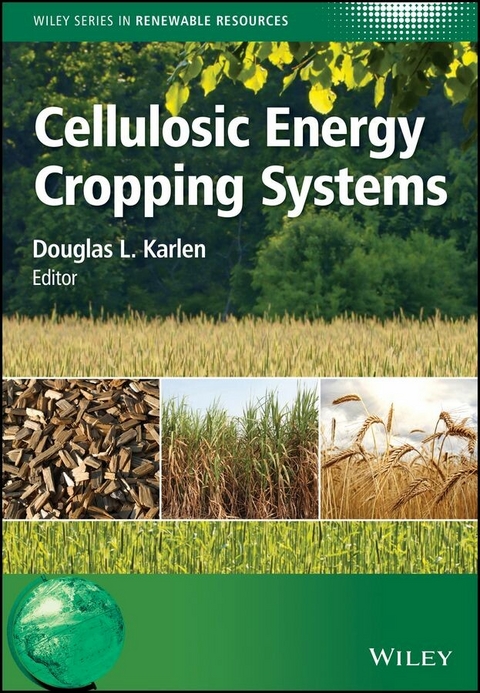
Cellulosic Energy Cropping Systems (eBook)
John Wiley & Sons (Verlag)
978-1-118-67634-9 (ISBN)
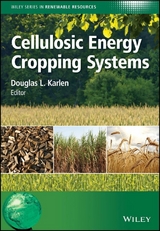
Cellulosic Energy Cropping Systems presents a comprehensive overview of how cellulosic energy crops can be sustainably produced and converted to affordable energy through liquid fuels, heat and electricity.
The book begins with an introduction to cellulosic feedstocks, discussing their potential as a large-scale sustainable energy source, and technologies for the production of liquid fuels, heat and electricity. Subsequent chapters examine miscanthus, switchgrass, sugarcane and energy cane, sorghums and crop residues, reviewing their phylogeny, cultural practices, and opportunities for genetic improvement. This is followed by a detailed focus on woody crops, including eucalyptus, pine, poplar and willow. Critical logistical issues associated with both herbaceous and woody feedstocks are reviewed, and alternate strategies for harvesting, transporting, and storing cellulosic materials are also examined. The final sectionof the booktackles the challenge of achieving long-term sustainability, addressing economic, environmental and social factors.
Cellulosic Energy Cropping Systems is a valuable resource for academics, students and industry professionals working in the field of biomass cultivation and conversion, bioenergy, crop science and agriculture.
Topics covered include:
- Identifying suitable cellulosic energy crops that are adapted to a wide range of climates and soils
- Best management practices for sustainably growing, harvesting, storing, transporting and pre-processing these crops
- The development of integrated cellulosic energy cropping systems for supplying commercial processing plants
- Challenges and opportunities for the long-term sustainability of cellulosic energy crops
This book was conceived and initiated by David I. Bransby, Professor of Energy and Forage Crops in the Department of Crop, Soil and Environmental Sciences at Auburn University, USA.
For more information on the Wiley Series in Renewable Resources, visit www.wiley.com/go/rrs
Dr Douglas L. Karlen, USDA, Agricultural Research Service, National Laboratory for Agriculture and the Environment
Dr Karlen is an experienced research scientist in the Soil, Water, and Air Resources Research Unit at the USDA, Agricultural Research Service. His soil and crop management research program uses a systems approach involving research scientists and engineers, producers, action agencies, non-government organizations, agribusiness, and other state and federal partners to quantify physical, chemical, and biological effects of conventional and organic farming practices. His current focus is on sustaining or improving soil quality while striving to produce sustainable feedstock supplies for lignocellulosic biofuel production.
Dr Douglas L. Karlen, USDA, Agricultural Research Service, National Laboratory for Agriculture and the Environment Dr Karlen is an experienced research scientist in the Soil, Water, and Air Resources Research Unit at the USDA, Agricultural Research Service. His soil and crop management research program uses a systems approach involving research scientists and engineers, producers, action agencies, non-government organizations, agribusiness, and other state and federal partners to quantify physical, chemical, and biological effects of conventional and organic farming practices. His current focus is on sustaining or improving soil quality while striving to produce sustainable feedstock supplies for lignocellulosic biofuel production.
| Erscheint lt. Verlag | 19.2.2014 |
|---|---|
| Reihe/Serie | Wiley Series in Renewable Resource | Wiley Series in Renewable Resources |
| Sprache | englisch |
| Themenwelt | Naturwissenschaften ► Chemie |
| Technik ► Elektrotechnik / Energietechnik | |
| Technik ► Umwelttechnik / Biotechnologie | |
| Wirtschaft | |
| Weitere Fachgebiete ► Land- / Forstwirtschaft / Fischerei | |
| Schlagworte | Bioenergie • bioenergy • Biowissenschaften • Book • Botanik • Cellulosic • cellulosic feedstocks • Chapters • Chemie • Chemistry • comprehensive overview • cropping • crops • Energie • Energy • examine • fuels • Grüne Chemie • Grüne Chemie • Introduction • largescale • Life Sciences • liquid • Miscanthus • Nachhaltige u. Grüne Chemie • Nachhaltige u. Grüne Chemie • Phylogeny • plant science • Potential • Production • source • Sustainable Chemistry & Green Chemistry • Sustainable energy • sustainably • Systems • Zellulose |
| ISBN-10 | 1-118-67634-3 / 1118676343 |
| ISBN-13 | 978-1-118-67634-9 / 9781118676349 |
| Informationen gemäß Produktsicherheitsverordnung (GPSR) | |
| Haben Sie eine Frage zum Produkt? |
 PDF (Adobe DRM)
Kopierschutz: Adobe-DRM
Adobe-DRM ist ein Kopierschutz, der das eBook vor Mißbrauch schützen soll. Dabei wird das eBook bereits beim Download auf Ihre persönliche Adobe-ID autorisiert. Lesen können Sie das eBook dann nur auf den Geräten, welche ebenfalls auf Ihre Adobe-ID registriert sind.
Details zum Adobe-DRM
Dateiformat: PDF (Portable Document Format)
Mit einem festen Seitenlayout eignet sich die PDF besonders für Fachbücher mit Spalten, Tabellen und Abbildungen. Eine PDF kann auf fast allen Geräten angezeigt werden, ist aber für kleine Displays (Smartphone, eReader) nur eingeschränkt geeignet.
Systemvoraussetzungen:
PC/Mac: Mit einem PC oder Mac können Sie dieses eBook lesen. Sie benötigen eine
eReader: Dieses eBook kann mit (fast) allen eBook-Readern gelesen werden. Mit dem amazon-Kindle ist es aber nicht kompatibel.
Smartphone/Tablet: Egal ob Apple oder Android, dieses eBook können Sie lesen. Sie benötigen eine
Geräteliste und zusätzliche Hinweise
Buying eBooks from abroad
For tax law reasons we can sell eBooks just within Germany and Switzerland. Regrettably we cannot fulfill eBook-orders from other countries.
aus dem Bereich