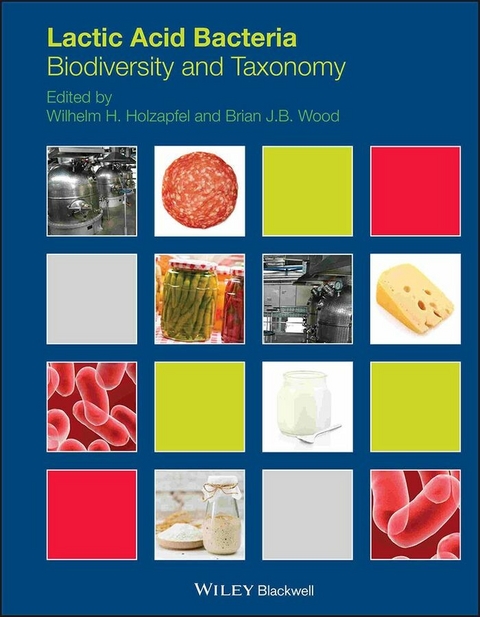
Lactic Acid Bacteria (eBook)
John Wiley & Sons (Verlag)
978-1-118-65528-3 (ISBN)
The lactic acid bacteria (LAB) are a group of related micro-organisms that are enormously important in the food
and beverage industries. Generally regarded as safe for human consumption (and, in the case of probiotics, positively beneficial to human health), the LAB have been used for centuries, and continue to be used worldwide on an industrial scale, in food fermentation processes, including yoghurt, cheeses, fermented meats and vegetables, where they ferment carbohydrates in the foods, producing lactic acid and creating an environment unsuitable for food spoilage organisms and pathogens to survive. The shelf life of the product is thereby extended, but of course these foods are also enjoyed around the world for their organoleptic qualities. They are also important to the brewing and winemaking industries, where they are often undesirable intruders but can in specific cases have desirable benefits. The LAB are also used in producing silage and other agricultural animal feeds. Clinically, they can improve the digestive health of young animals, and also have human medical applications.
This book provides a much-needed and comprehensive account of the current knowledge of the lactic acid bacteria, covering the taxonomy and relevant biochemistry, physiology and molecular biology of these scientifically and commercially important micro-organisms. It is directed to bringing together the current understanding concerning the organisms’ remarkable diversity within a seemingly rather constrained
compass. The genera now identified as proper members of the LAB are treated in dedicated chapters,
and the species properly recognized as members of each genus are listed with detailed descriptions of their principal characteristics. Each genus and species is described using a standardized format, and the relative importance of each species in food, agricultural and medical applications is assessed. In addition, certain other bacterial groups (such as Bifidobacterium) often associated with the LAB are given in-depth coverage. The book will also contribute to a better understanding and appreciation of the role of LAB in the various ecological ecosystems and niches that they occupy. In summary, this volume gathers together information designed to enable the organisms’ fullest industrial, nutritional and medical applications.
Lactic Acid Bacteria: Biodiversity and Taxonomy is an essential reference for research scientists, biochemists and microbiologists working in the food and fermentation industries and in research institutions. Advanced students of food science and technology will also find it an indispensable guide to the subject.
Professor Wilhelm H. Holzapfel, School of Life Sciences, Handong Global University, Pohang, South Korea. Wilhelm Holzapfel is author or co-author of more than 300 scientific papers, more than 60 book chapters, and edited 5 books. He held former and recent academic positions (Professor, Hon. Professor and Extraordinary Professor) in Microbiology at various universities, and (until 2007) was Head (Director and Professor) of the Institute of Hygiene and Toxicology in Karlsruhe/Germany. Since 1996 he has been President of the ICFMH of the IUMS.
Dr Brian J.B. Wood, formerly Reader in Applied Microbiology, Strathclyde Institute for Pharmacy and Biomedical Sciences, University of Strathclyde, Glasgow, Scotland, U.K. Dr Wood has published numerous papers on food fermentations and related topics in which these organisms participate. He has edited six multi-author books, including The Microbiology of Fermented Foods and titles covering LAB in various connections, and he has also supplied chapters and encyclopedia entries for numerous other publications.
Lactic Acid Bacteria Biodiversity and Taxonomy Lactic Acid BacteriaBiodiversity and Taxonomy Edited by Wilhelm H. Holzapfel and Brian J.B. Wood The lactic acid bacteria (LAB) are a group of related microorganisms that are enormously important in the food and beverage industries. Generally regarded as safe for human consumption (and, in the case of probiotics, positively beneficial to human health), the LAB have been used for centuries, and continue to be used worldwide on an industrial scale, in food fermentation processes, including yoghurt, cheeses, fermented meats and vegetables, where they ferment carbohydrates in the foods, producing lactic acid and creating an environment unsuitable for the survival of food spoilage organisms and pathogens. The shelf life of the product is thereby extended, but of course these foods are also enjoyed around the world for their organoleptic qualities. They are also important to the brewing and winemaking industries, where they are often undesirable intruders but can in specific cases have desirable benefits. The LAB are also used in producing silage and other agricultural animal feeds. Clinically, they can improve the digestive health of young animals, and also have human medical applications. This book provides a much-needed and comprehensive account of the current knowledge of the LAB, covering the taxonomy and relevant biochemistry, physiology and molecular biology of these scientifically and commercially important microorganisms. It is directed to bringing together the current understanding concerning the organisms remarkable diversity within a seemingly rather constrained compass. The genera now identified as proper members of the LAB are treated in dedicated chapters, and the species properly recognized as members of each genus are listed with detailed descriptions of their principal characteristics. Each genus and species is described using a standardized format, and the relative importance of each species in food, agricultural and medical applications is assessed. In addition, certain other bacterial groups (such as Bifidobacterium) often associated with the LAB are given in-depth coverage. The book will also contribute to a better understanding and appreciation of the role of LA B in the various ecosystems and ecological niches that they occupy. In summary, this volume gathers together information designed to enable the organisms fullest industrial, nutritional and medical applications. Lactic Acid Bacteria: Biodiversity and Taxonomy is an essential reference for research scientists, biochemists and microbiologists working in the food and fermentation industries and in research institutions. Advanced students of food science and technology will also find it an indispensable guide to the subject. Also available from Wiley Blackwell The Chemistry of Food Jan Velisek ISBN 978-1-118-38384-1 Progress in Food Preservation Edited by Rajeev Bhat, Abd Karim Alias and Gopinadham Paliyath ISBN 978-0-470-65585-6
About the Editors Professor Wilhelm H. Holzapfel, School of Life Sciences, Handong Global University, Pohang, Gyeongbuk, South Korea. Wilhelm Holzapfel is author or co-author of more than 300 scientific papers and over 60 book chapters, and has edited five books. He has held academic positions (Professor, Honorary Professor and Extraordinary Professor) in Microbiology at various universities, and (until 2007) was Head (Director and Professor) of the Institute of Hygiene and Toxicology in Karlsruhe, Germany. Since 1996 he has been President of the ICFMH of the IUMS. Dr Brian J.B. Wood, Formerly Reader in Applied Microbiology, Strathclyde Institute for Pharmacy and Biomedical Sciences, University of Strathclyde, Glasgow, Scotland, UK. Brian Wood has published numerous papers on food fermentations and related topics in which these organisms participate. He has edited six multi-author books, including The Microbiology of Fermented Foods and titles covering LAB in various connections, and he has also supplied chapters and encyclopedia entries for numerous other publications.
"the current book is a very useful benchmark 'comprising well-crafted overviews of current developments' in lactic acid bacterial biodiversity and taxonomy." (Beneficial Microbes 2016)
Chapter 1
Introduction to the LAB
Wilhelm H. Holzapfel1* and Brian J.B. Wood2
1School of Life Sciences, Handong Global University, Pohang, Gyeongbuk, South Korea; Insheimer Strasse 27, D-76865 Rohrbach, Germany
2Strathclyde Institute for Pharmacy and Biomedical Sciences, Strathclyde University, Glasgow, Scotland
*Corresponding author email: wilhelm@woodapple.net
1.1 The scope
Lactic acid bacteria (LAB) have been intimately associated with human culture and well-being throughout history. In our time, the industrialization of food biotransformations and the positive attributes of particular microbes to sensory, quality and safety features of fermented foods have become synonymous with the positive image of LAB. Yet, the economic impact and role of LAB, both beneficial and detrimental, is as diverse as the six families, 36 genera and the increasing number of species (>200 by the end of 2011) within the order Lactobacillales may suggest.
The LAB belong to the Gram-positive bacterial phylum Firmicutes with ‘low’ (≤55 mol %) G+C in the DNA. They are grouped in the third class (Class III, the Bacilli) of the Firmicutes, with the Clostridia (Class I) and the Mollicutes (Class II) as the other two members. Based on comparative sequence analysis of the 16S rRNA gene, the Firmicutes are distinguished from the other Gram-positive phylum, the Actinobacteria, with high mol % G+C (≥55 mol %) in the DNA. The two Gram-positive phyla comprise the following:
Phylum VIII: Firmicutes (Ludwig et al. 2009, modified)
- Class I: ‘Bacilli’
- Order I: Bacillales with 12 families, e.g.:
- Family I: Bacillaceae; Family VII: ‘Sporolactobacillaceae’ (with one genus Sporolactobacillus)
- Order II: ‘Lactobacillales’ with 6 families
- Order I: Bacillales with 12 families, e.g.:
- Class II: ‘Clostridia’
- Class III: ‘Erysipelotrichia’
- ‘Class’ Mollicutes (cell wall-less): the Mycoplasmas
- Coryneform and propionic acid bacteria; Bifidobacterium; Mycobacterium; Rhodococcus; Gardnerella
- Filamentous representatives: Streptomyces and other Actinomycetes.
It is clear that, by phylogenetic definition, Bifidobacterium belongs to the Actinobacteria and not to the true LAB. Still we have included this and ‘related’ genera (see Chapter 29) in this book for historical and practical reasons, one being their beneficial effects on and association with the gut, and another that bifidobacteria physiologically resemble the true LAB to some degree. Similar considerations seemed to justify the inclusion of Bacillus (Chapter 31) and ‘related’ genera (Chapter 32), in addition to the genus Sporolactobacillus (Chapter 30), all of which have some physiological features similar or comparable to the LAB. Bacillus infernus (e.g.) is a strict anaerobe that grows fermentatively on glucose (Boone et al., 1995). Bacillus coagulans is a thermophilic producer of pure lactic acid (Payot et al., 1999), while ‘probiotic’ strains of this species are being marketed under the name ‘Lactobacillus sporogenes’ (De Vecchi & Drago, 2006). Most species of the genus Geobacillus are reported to form catalase (Nazina et al., 2001), yet some strains of Geobacillus stearothermophilus (formerly Bacillus stearothermophilus ) have been found to be catalase negative (Holzapfel, unpublished results). Figure 1.1.
Figure 1.1 ‘Domestication’ of LAB in the human environment. The close relationship between human culture and the direct food environment of humans probably partly supplied the microbial population of food fermentations, and vice versa
The LAB are grouped in Order II, the ‘Lactobacillales’ (Garrity & Holt, 2001; Ludwig et al., 2009) under Class I (Bacilli) of the Firmicutes. With presently six families and 40 genera, the LAB may be considered as ‘a rapidly expanding’ group of bacteria, especially when considering the rate at which the publication of new Lactobacillus and Streptococcus species occurs, with more than 150 (see Chapter 19) and 70 (Chapter 28) species, respectively. This wide taxonomic delineation of the LAB indeed suggests a wide diversity within this group, as is indicated in the division of the six families:
- ‘Aerococcaceae’ (with 7 genera);
- ‘Carnobacteriaceae’ (with 16 genera);
- ‘Enterococcaceae’ (with 7 genera);
- Lactobacillaceae (with 3 genera);
- ‘Leuconostoccaceae’ (with 4 genera);
- Streptococcaceae (with 3 genera).
Table 1.1 summarizes information on the presently recognized families and genera, and a few selected ‘classical’ phenotypic characteristics of these genera. A highly interesting indication of biodiversity is the interpeptide bridge of the cell wall peptidoglycan of the LAB. At least five different peptidoglycan types have been reported, both for the relatively ‘small’ genus Alkalibacterium (with presently eight species) and the genus Weissella (presently 14 species). By contrast, only two peptidoglycan types are known for the genus Enterococcus (representing 43 species), and four types for the genus Lactobacillus (presently >150 species). Consensus on a comprehensive definition of ‘biodiversity’ probably does not exist, as it has to be delineated according to the scope or range under consideration. In terms of their biological diversity, the LAB have to be considered on the basis of taxonomic (genus, species and even strain) diversity, genetic diversity and phenotypic diversity in relation to an ecosystem and adaptation to extreme conditions. Even in earlier geological history, their physiological diversity and adaptation to a wide range of sometimes extreme habitats clearly suggested that the LAB are by no means a homogeneous group. Present-day phylogenetic approaches are valuable but do not necessarily explain the adaptation of particular LAB to specific ecological niches, and even less so the activation of adaptive survival mechanisms including stress factors. Diversity of the LAB is reflected by their association with diverse habitats, including niches with extreme conditions ranging from relatively high temperatures (around 50°C) to low temperatures (0–2°C), and also with examples of growth at high salt concentrations (up to 25% NaCl), low pH (around 3.9) and physiological bile salt concentrations (see Table 1.2). In contrast to other Gram-positive bacteria such as Bacillus or Listeria (relying on a global stress-response regulator such as σB), the LAB respond to stress with several conserved stress proteins, including DnaK, GroEL and Clp, which are also involved in cross-protection against different stress conditions. Moreover, the type of stress will determine whether other, more specific regulators or mechanisms will be utilized for protection against harmful conditions (Franz & Holzapfel, 2011).
Table 1.1 Selected ‘classical’ characteristics as key phenotypic features, and present grouping of the LABe
| Family/Section | Genus (abbreviation) | Section/chapter in this book | Morphology | Motility | CO2 from glucose | Config. of lactate | Growth at pH 9.6 | Growth in 6.5% NaCl | Arginine hydrolysis | Growth at 10°C | Growth at 45°C | Peptidoglycan type in the cell wall | Mol % G+C in the DNA |
| Aerococcaceae/Section II | Abiotrophia (Ab.) | Chapter 6 | Cocci, also coccobacilli to pleomorph | − | − | ND | ND | −/+a | − | ND | 46–46.6 |
| Aerococcus (Ac.) | Chapter 7 | Cocci, ovoid, single, pairs, tetrads | − | − | L(+) | ND | + | −/+ | + | − | L-Lys direct | 35–44.4 |
| Facklamia (F.) | Chapter 8 | Ovoid cocci, pairs, clusters, chains | − | − | ND | ND | + | ND | − | − | L-Lys-D-Asp | 41–42 |
| ‘Minor’ genera: Dolosicoccus (Dc.), Eremococcus (Ere.), Globicatella (Glo.), Ignavigranum (Ig.) | Chapter 9 | Cocci, single, pairs, groups,... |
| Erscheint lt. Verlag | 29.4.2014 |
|---|---|
| Sprache | englisch |
| Themenwelt | Naturwissenschaften ► Biologie ► Mikrobiologie / Immunologie |
| Naturwissenschaften ► Chemie | |
| Technik | |
| Weitere Fachgebiete ► Land- / Forstwirtschaft / Fischerei | |
| Schlagworte | food biotechnology • Food chemistry • Food Science & Technology • lab • lactic acid bacteria • lactic acid bacteria biochemistry • lactic acid bacteria cultures • lactic acid bacteria in animal feed • lactic acid bacteria in brewing and winemaking • lactic acid bacteria in food • lactic acid bacteria in human medical applications • lactic acid bacteria physiology • lactic acid bacteria taxonomy • Lebensmittel / Biotechnologie • Lebensmittelchemie • Lebensmittelforschung u. -technologie • Microbiology, Food Safety & Security • microorganisms helpful in the beverage industry • microorganisms helpful in the food and beverage industries • microorganisms helpful in the food industry • microorganisms that prevent food spoilage • Mikrobiologie u. Nahrungsmittelsicherheit • Milchsäurebakterien • Milchsäurebakterien • molecular biology of lactic acid bacteria • Probiotics |
| ISBN-10 | 1-118-65528-1 / 1118655281 |
| ISBN-13 | 978-1-118-65528-3 / 9781118655283 |
| Informationen gemäß Produktsicherheitsverordnung (GPSR) | |
| Haben Sie eine Frage zum Produkt? |
 EPUB (Adobe DRM)
Größe: 23,3 MB
Kopierschutz: Adobe-DRM
Adobe-DRM ist ein Kopierschutz, der das eBook vor Mißbrauch schützen soll. Dabei wird das eBook bereits beim Download auf Ihre persönliche Adobe-ID autorisiert. Lesen können Sie das eBook dann nur auf den Geräten, welche ebenfalls auf Ihre Adobe-ID registriert sind.
Details zum Adobe-DRM
Dateiformat: EPUB (Electronic Publication)
EPUB ist ein offener Standard für eBooks und eignet sich besonders zur Darstellung von Belletristik und Sachbüchern. Der Fließtext wird dynamisch an die Display- und Schriftgröße angepasst. Auch für mobile Lesegeräte ist EPUB daher gut geeignet.
Systemvoraussetzungen:
PC/Mac: Mit einem PC oder Mac können Sie dieses eBook lesen. Sie benötigen eine
eReader: Dieses eBook kann mit (fast) allen eBook-Readern gelesen werden. Mit dem amazon-Kindle ist es aber nicht kompatibel.
Smartphone/Tablet: Egal ob Apple oder Android, dieses eBook können Sie lesen. Sie benötigen eine
Geräteliste und zusätzliche Hinweise
Zusätzliches Feature: Online Lesen
Dieses eBook können Sie zusätzlich zum Download auch online im Webbrowser lesen.
Buying eBooks from abroad
For tax law reasons we can sell eBooks just within Germany and Switzerland. Regrettably we cannot fulfill eBook-orders from other countries.
 PDF (Adobe DRM)
Kopierschutz: Adobe-DRM
Adobe-DRM ist ein Kopierschutz, der das eBook vor Mißbrauch schützen soll. Dabei wird das eBook bereits beim Download auf Ihre persönliche Adobe-ID autorisiert. Lesen können Sie das eBook dann nur auf den Geräten, welche ebenfalls auf Ihre Adobe-ID registriert sind.
Details zum Adobe-DRM
Dateiformat: PDF (Portable Document Format)
Mit einem festen Seitenlayout eignet sich die PDF besonders für Fachbücher mit Spalten, Tabellen und Abbildungen. Eine PDF kann auf fast allen Geräten angezeigt werden, ist aber für kleine Displays (Smartphone, eReader) nur eingeschränkt geeignet.
Systemvoraussetzungen:
PC/Mac: Mit einem PC oder Mac können Sie dieses eBook lesen. Sie benötigen eine
eReader: Dieses eBook kann mit (fast) allen eBook-Readern gelesen werden. Mit dem amazon-Kindle ist es aber nicht kompatibel.
Smartphone/Tablet: Egal ob Apple oder Android, dieses eBook können Sie lesen. Sie benötigen eine
Geräteliste und zusätzliche Hinweise
Buying eBooks from abroad
For tax law reasons we can sell eBooks just within Germany and Switzerland. Regrettably we cannot fulfill eBook-orders from other countries.
aus dem Bereich