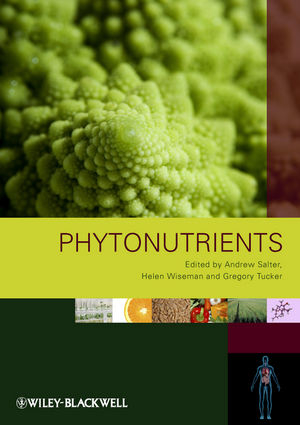
Phytonutrients is divided into three parts. The first deals with the role of plants in the human diet. Part II, representing the major part of the book covers in turn each of the major phytonutrient groups. Chapters include: non-lipid micronutrients, lipids and steroids, carotenoids, phenolics, vitamins C, E, folate/vitamin B12, phytoestrogens, other phytonutrients and minerals, and anti-nutritional factors. The final part of the book covers the methods used to manipulate levels of phytonutrients in the diet, such as fortification, supplementation and the use of genetically modified plants.
Phytonutrients is an essential purchase for nutritionists, food scientists and plant biochemists, particularly those dealing with nutrients from plants, and their use in the human diet.
Andrew Salter is Professor of Nutritional Biochemistry in the School of Biosciences at the University of Nottingham.
Helen Wiseman is Lecturer in Nutritional Sciences in the Diabetes and Nutritional Sciences Division at King's College London.
Gregory Tucker is Professor of Plant Biochemistry in the School of Biosciences at the University of Nottingham.
In many Western diets, the role of plants has been reduced in favour of more animal-based products and this is now being cited more widely as being the cause of increases in the incidence of diseases such as cancer and cardiovascular disease. This important book covers the biochemistry and nutritional importance of a wide range of phytonutrients, including all the major macronutrients as well as the micronutrients and 'non-essential' nutrients. Phytonutrients is divided into three parts. The first deals with the role of plants in the human diet. Part II, representing the major part of the book covers in turn each of the major phytonutrient groups. Chapters include: non-lipid micronutrients, lipids and steroids, carotenoids, phenolics, vitamins C, E, folate/vitamin B12, phytoestrogens, other phytonutrients and minerals, and anti-nutritional factors. The final part of the book covers the methods used to manipulate levels of phytonutrients in the diet, such as fortification, supplementation and the use of genetically modified plants. Phytonutrients is an essential purchase for nutritionists, food scientists and plant biochemists, particularly those dealing with nutrients from plants, and their use in the human diet.
Andrew Salter is Professor of Nutritional Biochemistry in the School of Biosciences at the University of Nottingham. Helen Wiseman is Lecturer in Nutritional Sciences in the Diabetes and Nutritional Sciences Division at King's College London. Gregory Tucker is Professor of Plant Biochemistry in the School of Biosciences at the University of Nottingham.
"A welcome addition to any academic library. Summing
Up: Highly recommended. Upper-division undergraduates through
professionals." (Choice, 1 December 2012)
Selected as an "Outstanding Academic Title from 2012" by
Choice
| Erscheint lt. Verlag | 30.1.2012 |
|---|---|
| Sprache | englisch |
| Themenwelt | Medizin / Pharmazie ► Gesundheitsfachberufe ► Diätassistenz / Ernährungsberatung |
| Technik ► Lebensmitteltechnologie | |
| Weitere Fachgebiete ► Land- / Forstwirtschaft / Fischerei | |
| Schlagworte | animalbased • Animal origin • Array • Benefits • Biowissenschaften • Botanik • Cancer • consumption • dietary requirements • Diseases • Ernährung u. Diätetik • Ernährung u. Diätetik • Foods • Food Science & Technology • Functional Food, Nutraceuticals • Functional Foods & Nutraceuticals • Gesundheits- u. Sozialwesen • growing • Health • Health & Social Care • incidences • key plantbased foods • Lebensmittelforschung u. -technologie • Life Sciences • major source • many • May • Nutrition • Nutrition & Dietetics General • overreliant • plants • plant science • protection • suggests • US • Western |
| ISBN-10 | 1-118-25363-9 / 1118253639 |
| ISBN-13 | 978-1-118-25363-2 / 9781118253632 |
| Informationen gemäß Produktsicherheitsverordnung (GPSR) | |
| Haben Sie eine Frage zum Produkt? |
 PDF (Adobe DRM)
Kopierschutz: Adobe-DRM
Adobe-DRM ist ein Kopierschutz, der das eBook vor Mißbrauch schützen soll. Dabei wird das eBook bereits beim Download auf Ihre persönliche Adobe-ID autorisiert. Lesen können Sie das eBook dann nur auf den Geräten, welche ebenfalls auf Ihre Adobe-ID registriert sind.
Details zum Adobe-DRM
Dateiformat: PDF (Portable Document Format)
Mit einem festen Seitenlayout eignet sich die PDF besonders für Fachbücher mit Spalten, Tabellen und Abbildungen. Eine PDF kann auf fast allen Geräten angezeigt werden, ist aber für kleine Displays (Smartphone, eReader) nur eingeschränkt geeignet.
Systemvoraussetzungen:
PC/Mac: Mit einem PC oder Mac können Sie dieses eBook lesen. Sie benötigen eine
eReader: Dieses eBook kann mit (fast) allen eBook-Readern gelesen werden. Mit dem amazon-Kindle ist es aber nicht kompatibel.
Smartphone/Tablet: Egal ob Apple oder Android, dieses eBook können Sie lesen. Sie benötigen eine
Geräteliste und zusätzliche Hinweise
Buying eBooks from abroad
For tax law reasons we can sell eBooks just within Germany and Switzerland. Regrettably we cannot fulfill eBook-orders from other countries.
aus dem Bereich