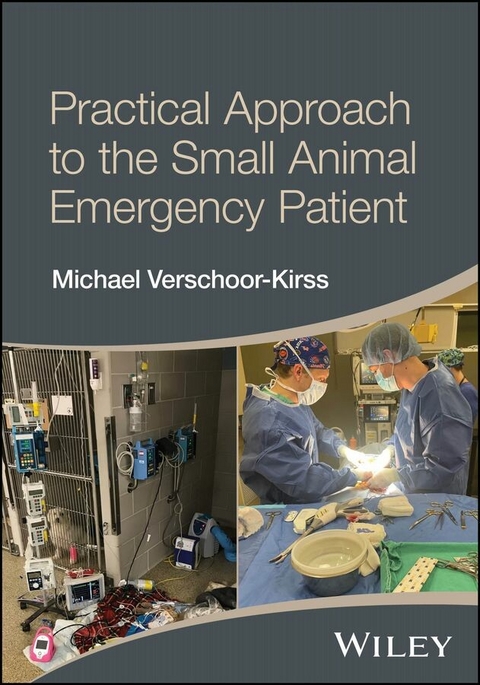
Practical Approach to the Small Animal Emergency Patient (eBook)
289 Seiten
Wiley (Verlag)
978-1-394-33454-4 (ISBN)
A concise, accessible guide to clinical decision making in veterinary emergency medicine focused on the thought process in selecting diagnostic and treatment options
Practical Approach to the Small Animal Emergency Patient helps veterinarians identify the critical questions to identify diagnostic and therapeutic priorities when faced with an emergency situation. The book reviews important decision points for common emergencies and emphasizes how to think, not just what to do.
The first section of the book covers general principles of emergency medicine topics such as triage, sedation and lab work selection, while the latter part of the book applies those principles to common emergency presentations. The intention of this book is not to provide the clinician with an exhaustive review of pathophysiology, but uses current research and decision making tools to provide the clinician with the questions and tools to decide whether a certain intervention is appropriate. Each chapter also includes a section on client communication to help guide new clinicians in speaking with family members about diagnostic testing, treatment approaches, and prognosis.
Written by a board-certified criticalist and practicing veterinarian in emergency medicine, Practical Approach to the Small Animal Emergency Patient includes information on:
- Fluid therapy, covering fluid requirements, fluid selection, patients with heart murmurs, and correcting electrolyte abnormalities
- Sedation and analgesia, covering appropriate use and risks of inadequate or inappropriate sedation
- Diabetic emergencies including diabetic ketoacidosis, hyperglycemic nonketotic syndrome, and hypoglycemia
- Treatment for car accidents, penetrating trauma, and dog bite wounds
- Gastrointestinal distress, covering surgical versus non-surgical causes, the need for imaging, and difference between inpatient and outpatient assessment
Practical Approach to the Small Animal Emergency Patient is an essential guide for clinicians, particularly new graduates and emergency doctors, seeking to gain confidence and improve their decision-making in emergency situations.
Michael Verschoor-Kirss, DVM, DACVECC, is Staff Criticalist at VCA South Shore Animal Hospital in South Weymouth, Massachusetts, USA.
A concise, accessible guide to clinical decision making in veterinary emergency medicine focused on the thought process in selecting diagnostic and treatment options Practical Approach to the Small Animal Emergency Patient helps veterinarians identify the critical questions to identify diagnostic and therapeutic priorities when faced with an emergency situation. The book reviews important decision points for common emergencies and emphasizes how to think, not just what to do. The first section of the book covers general principles of emergency medicine topics such as triage, sedation and lab work selection, while the latter part of the book applies those principles to common emergency presentations. The intention of this book is not to provide the clinician with an exhaustive review of pathophysiology, but uses current research and decision making tools to provide the clinician with the questions and tools to decide whether a certain intervention is appropriate. Each chapter also includes a section on client communication to help guide new clinicians in speaking with family members about diagnostic testing, treatment approaches, and prognosis. Written by a board-certified criticalist and practicing veterinarian in emergency medicine, Practical Approach to the Small Animal Emergency Patient includes information on: Fluid therapy, covering fluid requirements, fluid selection, patients with heart murmurs, and correcting electrolyte abnormalitiesSedation and analgesia, covering appropriate use and risks of inadequate or inappropriate sedationDiabetic emergencies including diabetic ketoacidosis, hyperglycemic nonketotic syndrome, and hypoglycemiaTreatment for car accidents, penetrating trauma, and dog bite woundsGastrointestinal distress, covering surgical versus non-surgical causes, the need for imaging, and difference between inpatient and outpatient assessment Practical Approach to the Small Animal Emergency Patient is an essential guide for clinicians, particularly new graduates and emergency doctors, seeking to gain confidence and improve their decision-making in emergency situations.
| Erscheint lt. Verlag | 23.10.2025 |
|---|---|
| Sprache | englisch |
| Themenwelt | Veterinärmedizin |
| Schlagworte | down dog • veterinary assessment • veterinary diabetes • veterinary diagnostics • Veterinary Diseases • veterinary er • veterinary fluid therapy • Veterinary Monitoring • veterinary sedation • veterinary trauma |
| ISBN-10 | 1-394-33454-0 / 1394334540 |
| ISBN-13 | 978-1-394-33454-4 / 9781394334544 |
| Informationen gemäß Produktsicherheitsverordnung (GPSR) | |
| Haben Sie eine Frage zum Produkt? |
 PDF (Adobe DRM)
Kopierschutz: Adobe-DRM
Adobe-DRM ist ein Kopierschutz, der das eBook vor Mißbrauch schützen soll. Dabei wird das eBook bereits beim Download auf Ihre persönliche Adobe-ID autorisiert. Lesen können Sie das eBook dann nur auf den Geräten, welche ebenfalls auf Ihre Adobe-ID registriert sind.
Details zum Adobe-DRM
Dateiformat: PDF (Portable Document Format)
Mit einem festen Seitenlayout eignet sich die PDF besonders für Fachbücher mit Spalten, Tabellen und Abbildungen. Eine PDF kann auf fast allen Geräten angezeigt werden, ist aber für kleine Displays (Smartphone, eReader) nur eingeschränkt geeignet.
Systemvoraussetzungen:
PC/Mac: Mit einem PC oder Mac können Sie dieses eBook lesen. Sie benötigen eine
eReader: Dieses eBook kann mit (fast) allen eBook-Readern gelesen werden. Mit dem amazon-Kindle ist es aber nicht kompatibel.
Smartphone/Tablet: Egal ob Apple oder Android, dieses eBook können Sie lesen. Sie benötigen eine
Geräteliste und zusätzliche Hinweise
Buying eBooks from abroad
For tax law reasons we can sell eBooks just within Germany and Switzerland. Regrettably we cannot fulfill eBook-orders from other countries.
aus dem Bereich