Insect Biodiversity (eBook)
John Wiley & Sons (Verlag)
978-1-118-94555-1 (ISBN)
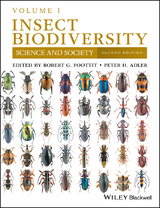
Volume One of the thoroughly revised and updated guide to the study of biodiversity in insects
The second edition of Insect Biodiversity: Science and Society brings together in one comprehensive text contributions from leading scientific experts to assess the influence insects have on humankind and the earth's fragile ecosystems. Revised and updated, this new edition includes information on the number of substantial changes to entomology and the study of biodiversity. It includes current research on insect groups, classification, regional diversity, and a wide range of concepts and developing methodologies. The authors examine why insect biodiversity matters and how the rapid evolution of insects is affecting us all.
This book explores the wide variety of insect species and their evolutionary relationships. Case studies offer assessments on how insect biodiversity can help meet the needs of a rapidly expanding human population, and also examine the consequences that an increased loss of insect species will have on the world. This important text:
- Explores the rapidly increasing influence on systematics of genomics and next-generation sequencing
- Includes developments in the use of DNA barcoding in insect systematics and in the broader study of insect biodiversity, including the detection of cryptic species
- Discusses the advances in information science that influence the increased capability to gather, manipulate, and analyze biodiversity information
- Comprises scholarly contributions from leading scientists in the field
Insect Biodiversity: Science and Society highlights the rapid growth of insect biodiversity research and includes an expanded treatment of the topic that addresses the major insect groups, the zoogeographic regions of biodiversity, and the scope of systematics approaches for handling biodiversity data.
ROBERT G. FOOTTIT is a research scientist specializing in the taxonomy of aphids and related groups, with the Canadian National Collection of Insects and Agriculture and Agri-Food Canada. His research interests include the use of morphological and molecular approaches in the study of aphid species and populations.
PETER H. ADLER is a professor of entomology at Clemson University, where he holds a teaching and research appointment, specializing in the behavior, ecology, genetics, and systematics of insects, particularly butterflies and medically important flies.
Volume One of the thoroughly revised and updated guide to the study of biodiversity in insects The second edition of Insect Biodiversity: Science and Society brings together in one comprehensive text contributions from leading scientific experts to assess the influence insects have on humankind and the earth s fragile ecosystems. Revised and updated, this new edition includes information on the number of substantial changes to entomology and the study of biodiversity. It includes current research on insect groups, classification, regional diversity, and a wide range of concepts and developing methodologies. The authors examine why insect biodiversity matters and how the rapid evolution of insects is affecting us all. This book explores the wide variety of insect species and their evolutionary relationships. Case studies offer assessments on how insect biodiversity can help meet the needs of a rapidly expanding human population, and also examine the consequences that an increased loss of insect species will have on the world. This important text: Explores the rapidly increasing influence on systematics of genomics and next-generation sequencing Includes developments in the use of DNA barcoding in insect systematics and in the broader study of insect biodiversity, including the detection of cryptic species Discusses the advances in information science that influence the increased capability to gather, manipulate, and analyze biodiversity information Comprises scholarly contributions from leading scientists in the field Insect Biodiversity: Science and Society highlights the rapid growth of insect biodiversity research and includes an expanded treatment of the topic that addresses the major insect groups, the zoogeographic regions of biodiversity, and the scope of systematics approaches for handling biodiversity data.
ROBERT G. FOOTTIT is a research scientist specializing in the taxonomy of aphids and related groups, with the Canadian National Collection of Insects and Agriculture and Agri-Food Canada. His research interests include the use of morphological and molecular approaches in the study of aphid species and populations. PETER H. ADLER is a professor of entomology at Clemson University, where he holds a teaching and research appointment, specializing in the behavior, ecology, genetics, and systematics of insects, particularly butterflies and medically important flies.
Cover 1
Title Page 5
Copyright 6
Contents 9
List of Contributors 21
Foreword, Second Edition 25
Preface, First Edition 29
Preface, Second Edition 31
Acknowledgements 33
Chapter 1 Introduction 35
References 39
Chapter 2 The Importance of Insects 43
2.1 Diversity 43
2.2 Ecological Role 44
2.3 Effects on Natural Resources, Agriculture, and Human Health 47
2.4 Insects and Advances in Science 48
2.4.1 Biomechanics 49
2.4.2 Genetics 50
2.4.3 Developmental Biology 50
2.4.4 Evolution 52
2.4.5 Physiology 53
2.4.6 Ecology 54
2.4.7 Paleolimnology and Climate Change 56
2.5 Insects and the Public 57
References 59
Part I Insect Biodiversity: Regional Examples 79
Chapter 3 Insect Biodiversity in the Nearctic Region 81
3.1 Influence of Insect Biodiversity on Society in the Nearctic Region 83
3.2 Insect Conservation 84
3.3 Species Diversity and the State of Knowledge 87
3.3.1 Assembling the Data 87
3.3.2 Synopsis of Biodiversity 88
3.3.3 State of Knowledge 89
3.4 Variations in Biodiversity 90
3.4.1 Regional Variation 91
3.4.2 Habitats 92
3.5 Conclusions and Needs 92
Acknowledgments 94
References 94
Chapter 4 Amazonian Rainforests and Their Richness and Abundance of Terrestrial Arthropods on the Edge of Extinction: Abiotic–Biotic Players in the Critical Zone 99
4.1 The Climatic Setting and Critical Zone Establishment 103
4.2 Characterization of Typical Lowland Rainforest Composition in the Western Basin 105
4.3 Sampling Arthropod Biodiversity in Amazonian Forests 107
4.4 Richness of Various Lineages and Guilds 113
4.5 General Patterns 113
4.6 Morphospecies Richness to Biodiversity 114
4.7 Beetles: Life Attributes Have Led to Contemporary Hyperdiversity 117
4.8 Summary and Guide to Future Research, or “Taking a Small Step into the Biodiversity Vortex” 119
Acknowledgments 120
References 120
Chapter 5 Insect Biodiversity in the Afrotropical Region 127
5.1 What Do We Know about Afrotropical Insects? 129
5.2 An Information-Management Program 129
5.3 The Role of Insects in Ecosystem Processes and as Indicators of Environmental Quality – Dung Beetles as a Case Study 132
5.3.1 Dung Beetles as Indicators of Regional Biodiversity 133
5.3.2 Dung Beetles as Indicators of Habitat Transformation 134
5.4 Africa-Wide Pests and Training Appropriate Taxonomists – Fruit Flies as a Case Study 134
5.4.1 Invasive Species of Concern in Africa 135
5.4.2 African Indigenous Fruit Flies of Economic Importance 136
5.5 Sentinel Groups 137
5.5.1 Neuroptera 137
5.5.2 Dung Beetles (Coleoptera: Scarabaeidae: Scarabaeinae) 138
5.6 Conclusions 139
References 141
Chapter 6 Biodiversity of Australasian Insects 145
6.1 Australasia – The Locale 145
6.2 Some Highlights of Australasian Insect Biodiversity 146
6.2.1 The Lord Howe Island Stick Insect 148
6.2.2 Australasian Birdwing Conservation 149
6.3 Drowning by Numbers? How Many Insect Species are in Australasia? 150
6.3.1 Australia 150
6.3.2 New Zealand (Aotearoa), Chatham Islands, and Subantarctic Islands 151
6.3.3 New Guinea 152
6.3.4 New Caledonia and the West Pacific 152
6.4 Australasian Insect Biodiversity – Overview and Special Elements 152
6.4.1 Australia 152
6.4.2 New Zealand 155
6.4.3 New Caledonia, New Guinea, and Melanesia 155
6.5 Threatening Processes to Australasian Insect Biodiversity 157
6.5.1 Land Clearance and Alteration 157
6.5.2 Introduced Animals 157
6.5.3 Climate Change 160
6.6 Australasian Biodiversity Conservation 161
6.7 Conclusion 163
References 163
Chapter 7 Insect Biodiversity in the Palearctic Region 175
7.1 Preface: Societal Importance of Biodiversity in the Palearctic Region 175
7.2 Introduction 178
7.3 Geographic Position, Climate, and Zonality 178
7.4 General Features of Palearctic Insect Biodiversity 182
7.5 Biodiversity of Some Insect Groups in the Palearctic 187
7.6 Biodiversity of Insect Herbivores 192
7.7 Boundaries and Insect Biodiversity 196
7.8 Local Biodiversity 198
7.9 Insect Biodiversity and Habitats 200
7.10 Insect Biodiversity and the Mountains 203
7.11 Temporal Changes in Insect Biodiversity 205
7.12 Insect Diversity in Major Biogeographical Divisions of the Palearctic 206
7.12.1 Arctic (Circumpolar Tundra) Region 207
7.12.2 Forest Regions 208
7.12.3 Taiga 210
7.12.4 Nemoral European and Stenopean Forests 211
7.12.5 Hesperian and Orthrian Evergreen Forests 213
7.12.6 Steppe (Scythian) Region 214
7.12.7 Desert (Sethian) Region 217
Acknowledgments 221
References 223
Part II Insect Biodiversity: Taxon Examples 237
Chapter 8 Biodiversity of Aquatic Insects 239
8.1 Overview of Taxa 240
8.1.1 Mayflies (Ephemeroptera) 240
8.1.2 Dragonflies and Damselflies (Odonata) 241
8.1.3 Stoneflies (Plecoptera) 241
8.1.4 Cockroaches (Blattodea) 242
8.1.5 Grasshoppers and Crickets (Orthoptera) 242
8.1.6 Earwigs (Dermaptera) 242
8.1.7 Lice (Phthiraptera) 242
8.1.8 Bugs (Hemiptera) 242
8.1.9 Wasps (Hymenoptera) 243
8.1.10 Hellgrammites and Alderflies (Megaloptera) 243
8.1.11 Nerve?winged Insects (Neuroptera) 243
8.1.12 Scorpionflies (Mecoptera) 244
8.1.13 Beetles (Coleoptera) 244
8.1.14 Caddisflies (Trichoptera) 244
8.1.15 Moths (Lepidoptera) 245
8.1.16 Flies (Diptera) 245
8.2 Species Numbers 246
8.3 Societal Benefits and Risks 248
8.3.1 Societal Benefits of Aquatic Insect Diversity in Food Webs 248
8.3.2 Societal Benefits of Aquatic Insect Diversity in Biomonitoring 249
8.3.3 Societal Benefits of Aquatic Insect Diversity in Fishing 251
8.3.4 Societal Benefits of Aquatic Insect Diversity in Control of Noxious Weeds 251
8.3.5 Societal Risks of Aquatic Insects 251
8.4 Biodiversity Concerns for Aquatic Insects 252
8.4.1 Threats to Freshwater Species of Insects 252
8.4.2 Need for Biodiversity Discovery and Description of Aquatic Insects 253
8.4.3 Need to Refine Definitions of Species of Aquatic Insects 253
8.4.4 Need for New Generation of Aquatic Entomologists 253
References 254
Chapter 9 Biodiversity of Diptera 263
9.1 Overview of Taxa 273
9.1.1 Lower Diptera 273
9.1.2 Brachycera 275
9.1.2.1 Lower Brachycera 275
9.1.2.2 Empidoidea 276
9.1.2.3 Lower Cyclorrhapha 276
9.1.2.4 Non-calyptrate Schizophora 277
9.1.2.5 Calyptratae 279
9.2 Societal Importance 280
9.2.1 Diptera as Plant Pests (Agriculture, Silviculture, and Floriculture) 280
9.2.2 Medical and Veterinary Importance 281
9.2.2.1 Disease transmission 281
9.2.2.2 Myiasis 282
9.2.3 Invasive Alien Diptera 283
9.2.4 Diptera as a General Nuisance 283
9.2.5 Diptera in Biological Control 284
9.2.6 Pollination 285
9.2.7 Other Ecological Services (Scavengers and Decomposers) 286
9.3 Diptera of Forensic, Medicolegal, and Medical Importance 287
9.4 Diptera as Model Organisms and Research Tools 287
9.4.1 Physiology and Genetics 287
9.4.2 Technology 288
9.5 Diptera in Conservation 288
9.5.1 Bioindicators 288
9.5.2 Vanishing Species 289
9.6 Diptera as Part of Our Cultural Legacy 290
References 291
Chapter 10 Biodiversity of Heteroptera 313
10.1 Overview of the Heteroptera 314
10.1.1 Euheteroptera 319
10.1.1.1 Infraorder Enicocephalomorpha 319
10.1.1.2 Infraorder Dipsocoromorpha 319
10.1.2 Neoheteroptera 321
10.1.2.1 Infraorder Gerromorpha 321
10.1.3 Panheteroptera 322
10.1.3.1 Infraorder Nepomorpha 322
10.1.3.2 Infraorder Leptopodomorpha 324
10.1.3.3 Infraorder Cimicomorpha 324
10.1.3.4 Infraorder Pentatomomorpha 335
10.2 The Importance of Heteropteran Biodiversity 345
Acknowledgments 347
References 347
Chapter 11 Biodiversity of Coleoptera 371
11.1 Overview of Extant Taxa 378
11.1.1 Suborders Archostemata and Myxophaga 378
11.1.2 Suborder Adephaga 380
11.1.3 Suborder Polyphaga 381
11.1.3.1 Series Staphyliniformia 381
11.1.3.2 Series Scarabaeiformia 383
11.1.3.3 Series Elateriformia 384
11.1.3.4 Series Derodontiformia 385
11.1.3.5 Series Bostrichiformia 386
11.1.3.6 Series Cucujiformia 386
11.2 Overview of Fossil Taxa 391
11.3 Societal Benefits and Risks 391
11.3.1 Beetles of Economic Importance 391
11.3.1.1 Negative Effects of Beetles 391
11.3.1.2 Positive Effects of Beetles 395
11.3.2 Beetles of Cultural Importance 412
11.3.3 Beetles of Medical and Legal Importance 412
11.3.3.1 Medical Entomology 412
11.3.3.2 Forensic Entomology 413
11.3.4 Beetles as Research Tools 414
11.3.4.1 DNA Barcoding of Beetles – A North American Case Study 416
11.4 Threatened Beetles 428
11.5 Conclusions 429
Acknowledgments 429
References 429
Chapter 12 Biodiversity of Hymenoptera 453
12.1 Evolution and Higher Classification 456
12.2 Numbers of Species and Individuals 460
12.3 Morphological and Biological Diversity 462
12.4 Importance to Humans 463
12.4.1 Food and Other Products 463
12.4.2 Stings and Bites 464
12.5 Ecological Importance 465
12.6 Conservation 466
12.7 Fossils 466
12.8 Collecting, Preservation, and Study Techniques 467
12.9 Taxonomic Diversity 470
12.9.1 Symphyta 471
12.9.2 Parasitica 471
12.9.2.1 Stephanoidea 471
12.9.2.2 Megalyroidea 471
12.9.2.3 Trigonaloidea 471
12.9.2.4 Mymarommatoidea 471
12.9.2.5 Evanioidea 472
12.9.2.6 Ichneumonoidea 472
12.9.2.7 Cynipoidea 473
12.9.2.8 Proctotrupoidea 473
12.9.2.9 Platygastroidea 473
12.9.2.10 Diaprioidea 473
12.9.2.11 Ceraphronoidea 474
12.9.2.12 Chalcidoidea 474
12.9.3 Aculeata 477
12.9.3.1 Chrysidoidea 477
12.9.3.2 Vespoidea 478
12.9.3.3 Apoidea 480
12.10 Summary and Conclusions 480
Acknowledgments 480
References 481
Chapter 13 Diversity and Significance of Lepidoptera: A Phylogenetic Perspective 497
13.1 Relevance of Lepidoptera: Science 498
13.2 Relevance of Lepidoptera: Society 499
13.3 Diversity and Diversification: A Clarification of Numbers and Challenges 500
13.4 State of Lepidopteran Systematics and Phylogenetics 501
13.5 General Overview 502
13.5.1 Primitive Lepidoptera 511
13.5.2 Ditrysia 512
13.5.2.1 Tineoidea 512
13.5.2.2 Gracillarioidea 513
13.5.2.3 Yponomeutoidea 514
13.5.3 Apoditrysia 514
13.5.3.1 Gelechioidea 514
13.5.3.2 Pterophoroidea 515
13.5.3.3 Tortricoidea 515
13.5.3.4 Cossoidea 515
13.5.3.5 Zygaenoidea 516
13.5.4 Obtectomera 516
13.5.5 Macroheterocera 519
13.6 Needs and Challenges for Advancing Lepidopteran Studies 522
Acknowledgments 523
References 523
Part III Insect Biodiversity: Tools and Approaches 531
Chapter 14 The Science of Insect Taxonomy: Prospects and Needs 533
14.1 The What and Why of Taxonomy 534
14.1.1 Improving Biology’s “General Reference System” 539
14.1.2 Inter?Generational Ethics 540
14.1.3 Fulfilling Our Intellectual Manifest Destiny 540
14.1.4 Solving Problems 540
14.1.5 Model Organisms 540
14.1.6 Molecular Tools of the Trade 541
14.1.7 Aesthetics 542
14.1.8 Creating the Vocabulary and Syntax of a Language of Biodiversity 542
14.1.9 Mapping the Biosphere 543
14.2 Insect Taxonomy: Missions and “Big Questions” 543
14.3 Insect Taxonomy’s Grand Challenge Questions 544
14.3.1 What Is a Species? 544
14.3.2 What (and How Many) Insect Species Are There? 545
14.3.3 What Is the Phylogeny of Insects? 546
14.3.4 What Are the Histories of Character Transformation in Insects? 546
14.3.5 Where Are Insect Species Distributed? 546
14.3.6 How Have Insect Distributions Changed through Time? 547
14.3.7 How Can Insect Classifications and Names Be Most Predictive and Informative? 547
14.4 Transforming Insect Taxonomy 547
14.5 Insect Taxonomy: Needs and Priorities 548
14.5.1 Education 548
14.5.2 Planetary?Scale Projects and Virtual Species Observatories 549
14.5.3 Cybertaxonomy Infrastructure 549
14.5.4 Web?Based Revisions, Taxon?Knowledge Communities and Taxon?Knowledge Banks 550
14.5.5 Collection Development and Growth 551
14.5.6 Integrative Insect Taxonomy 551
14.6 Accelerating Descriptive Taxonomy 551
14.6.1 (1) Inventories to collections 551
14.6.2 (2) Species descriptions 553
14.6.3 (3) Species tests 553
14.6.4 (4) Species tests to databases 554
14.6.5 (5) Collection data 554
14.6.6 (6) Cladistic analysis 554
14.6.7 (7–10) Phylogenetic classifications, names, and identifications 554
14.6.8 (12–16) Inputs 555
14.7 Beware Sirens of Expediency 555
14.8 Conclusions 556
References 556
Chapter 15 Insect Species – Concepts and Practice 561
15.1 Early Species Concepts – Linnaeus 562
15.2 Biological Species Concepts 563
15.2.1 Agamospecies 565
15.2.2 Allopatric Forms 565
15.3 Phylogenetic Species Concepts 567
15.4 Species Concepts and Speciation – a Digression? 568
15.5 Insect Species – Practical Problems 569
15.5.1 Parthenogenetic Insects 570
15.5.2 Species, Host Races, and Biotypes 570
15.5.3 Specific Mate Recognition and Sibling Species 572
15.6 Conclusions 574
References 574
Chapter 16 Molecular Dimensions of Insect Taxonomy in the Genomics Era 581
16.1 Opportunities in Insect Taxonomy 581
16.1.1 Determination 582
16.1.2 Discovery 583
16.1.3 Delimitation 584
16.1.4 Phylogeny 586
16.2 Genomic Methods 587
16.2.1 Sequencing Technologies 587
16.2.2 Genomic Sampling Strategies 588
16.3 General Challenges and Considerations 590
16.3.1 Data Quantity Versus Quality 590
16.3.2 Phylogenetic Considerations 591
16.3.2.1 Locus Selection 591
16.3.2.2 Missing Data 592
16.3.2.3 Gene Tree/Species Tree Incongruence 592
16.3.3 Computational/Logistical/Bioinformatic Bottlenecks 593
16.3.4 The Role of Morphology in a Post-genomic Era 594
16.4 Conclusions 594
References 595
Chapter 17 DNA Barcodes and Insect Biodiversity 609
17.1 Species Concepts and Recognition 610
17.2 DNA Barcoding Methodology 611
17.3 Basal Hexapod Orders 612
17.4 Archaeognatha (Bristletails) and Zygentoma (Silverfish) 614
17.5 Odonata (Dragonflies) 614
17.6 Ephemeroptera (Mayflies) 614
17.7 Orthoptera (Grasshoppers) 614
17.8 Phasmatodea (Walking Sticks), Embioptera (Webspinners), Grylloblattodea (Icecrawlers), and Mantophasmatodea (Gladiators) 615
17.9 Plecoptera (Stoneflies) and Dermaptera (Earwigs) 615
17.10 Mantodea (Mantids) 615
17.11 Blattodea (Cockroaches) and Isoptera (Termites) 615
17.12 Psocoptera (Booklice) and Phthiraptera (Lice) 615
17.13 Thysanoptera (Thrips) and Hemiptera (True Bugs) 616
17.14 Hymenoptera (Wasps) 616
17.15 Strepsiptera (Twisted-wing Parasites) 616
17.16 Coleoptera (Beetles) 616
17.17 Neuroptera (Lacewings), Megaloptera (Dobsonflies), and Raphidioptera (Snakeflies) 617
17.18 Trichoptera (Caddisflies) 617
17.19 Lepidoptera (Butterflies and Moths) 617
17.20 Diptera (Flies) 618
17.21 Siphonaptera (Fleas) and Mecoptera (Scorpionflies) 618
17.22 Conclusions 618
Acknowledgments 619
References 619
Chapter 18 Insect Biodiversity Informatics 627
18.1 Biodiversity Data 628
18.2 Technical Infrastructure 629
18.3 Standards 631
18.4 Current Status and Impediments to Progress 633
18.5 Prospects 634
Acknowledgments 635
References 635
Chapter 19 Parasitoid Biodiversity and Insect Pest Management 637
19.1 What Is a Parasitoid? 638
19.2 Biodiversity and Success of Insect Parasitoids 639
19.2.1 Hymenoptera (Apocrita) 640
19.2.2 Phoridae 642
19.2.3 Tachinidae 642
19.2.4 Other Groups 644
19.2.5 Where Are Parasitoids Most Diverse? 644
19.2.6 Leaf?mining Parasitoids and Native Landscapes 644
19.2.7 Are Parasitoids More Diverse in Tropical Versus Temperate Climates? 646
19.3 Systematics, Parasitoids, and Pest Management 646
19.3.1 Molecules and Parasitoid Biodiversity 647
19.3.2 Cryptic Species 648
19.3.3 DNA Barcoding and Biodiversity of Parasitoids 650
19.3.4 Can Molecular Markers Be Applied to Understanding Biodiversity? 651
19.4 Summary 651
Acknowledgments 652
References 652
Chapter 20 The Taxonomy of Crop Pests: The Aphids 661
20.1 Historical Background 661
20.2 Economic Importance and Early Taxonomy 662
20.3 Early Aphid Studies – A North American Example 662
20.4 Recognizing Aphid Species 665
20.5 The Focus Becomes Finer 666
20.6 Adventive Aphid Species 667
20.7 Conclusions 668
References 668
Chapter 21 Adventive (Non-Native) Insects and the Consequences for Science and Society of Species that Become Invasive 675
21.1 Terminology 676
21.2 Distributional Status: Native or Adventive? 677
21.3 Global Transport: Pathways and Vectors 679
21.4 Early History of Adventive Insects in North America 682
21.5 Numbers, Taxonomic Composition, and Geographic Origins of Adventive Insects 683
21.6 Impact of Adventive Insects 687
21.6.1 Beneficial 690
21.6.2 Detrimental 691
21.7 Economic Considerations: Agriculture, Forestry, and Horticulture 692
21.7.1 Crop Losses 692
21.7.2 Plant Diseases and Transmission of Pathogens 694
21.8 Implications for Animal and Human Health 695
21.9 Ecological Impacts 697
21.9.1 Ants 699
21.9.2 Bees and Wasps 700
21.9.3 Forest Pests 701
21.10 Biological Control 701
21.11 Biological Invasions and Global Climate Change 704
21.12 Systematics, Biodiversity, and Adventive Species 705
21.13 Concluding Thoughts 705
Acknowledgments 708
References 709
Chapter 22 Biodiversity of Blood-sucking Flies: Implications for Humanity 747
22.1 Numbers and Estimates 748
22.2 Overview of Blood-sucking Flies and Diseases 751
22.2.1 Athericidae 754
22.2.2 Ceratopogonidae 755
22.2.3 Corethrellidae 755
22.2.4 Culicidae 755
22.2.5 Glossinidae 756
22.2.6 Hippoboscidae 757
22.2.7 Muscidae 757
22.2.8 Psychodidae 758
22.2.9 Rhagionidae 758
22.2.10 Simuliidae 758
22.2.11 Tabanidae 759
22.3 Rationale for Biodiversity Studies of Blood-sucking Flies 759
22.4 Biodiversity Exploration 761
22.5 Societal Consequences of Disregarding Biodiversity 763
22.6 Present and Future Concerns 764
22.7 Conclusions 767
Acknowledgments 768
References 768
Chapter 23 Reconciling Ethical and Scientific Issues for Insect Conservation 781
23.1 Valuing Nature 783
23.1.1 Types of Value 783
23.1.2 Sensitive Use of Ecosystem Services 783
23.1.3 Common?Good Approaches 785
23.1.4 Intrinsic Value and Conservation Action 786
23.1.5 Reconciling Values 787
23.2 Insects and Ecosystems 789
23.2.1 Interactions and Multiple Effects 789
23.2.2 Insects and Food Webs 791
23.2.3 Importance of Maintaining Landscape Connectance 791
23.3 Two Challenges 792
23.3.1 The Taxonomic Challenge 792
23.3.2 The Challenge of Complementary Surrogates 793
23.4 Synthesizing Deeper Values and Practical Issues 793
23.5 Summary 794
Acknowledgments 794
References 794
Chapter 24 Taxonomy and Management of Insect Biodiversity 801
24.1 Insect Biodiversity 802
24.2 Biodiversity Loss and Humanity 803
24.3 Biodiversity and Taxonomy 804
24.4 Biodiversity Inventory and Ecology 806
24.5 Backyard Biodiversity and Sustainability 808
24.6 Taxonomic Bottlenecks in Managing Insect Biodiversity 809
24.7 Advancing the Science of Insect Biodiversity 810
References 811
Chapter 25 Insect Biodiversity – Millions and Millions 817
Acknowledgments 823
References 825
Index of Arthropod Taxa Arranged by Order and Family. 827
Index of Arthropod Taxa Arranged Alphabetically. 859
Index of non?Arthropod taxa arranged alphabetically. 883
Subject Index 889
Supplemental Images 902
EULA 910
| Erscheint lt. Verlag | 18.7.2017 |
|---|---|
| Sprache | englisch |
| Themenwelt | Naturwissenschaften ► Biologie ► Zoologie |
| Veterinärmedizin | |
| Schlagworte | Animal Science & Zoology • approached to insect biodiversity • Biodiversität • biodiversity of aquatic insects • biodiversity of Coleoptera • biodiversity of Diptera • biodiversity of heteropteran • biodiversity of hymenoptera • Biowissenschaften • diversity and significance of lepidoptera • Entomologie • Entomology • Evolution • Evolution / Systematik • Guide to insect biodiversity • improving biology's general reference system for insects • insect biodiversity • insect biodiversity in the Afrontropical region • insect biodiversity in the Amazon • insect biodiversity in the Nearatic region • insect biodiversity in the Palearctic region • insect biodiversity of Australasian region • insect biomechanics • insect development biology • Insect Ecology • insect evolution • insect genetics • insect paleolimnology • Insect physiology • insects and climate change • Insekten • Life Sciences • Peter H. Adler • Robert G. Footit • Systematics • the science and taxonomy • tools to insect biodiversity • Zoologie |
| ISBN-10 | 1-118-94555-7 / 1118945557 |
| ISBN-13 | 978-1-118-94555-1 / 9781118945551 |
| Informationen gemäß Produktsicherheitsverordnung (GPSR) | |
| Haben Sie eine Frage zum Produkt? |
 PDF (Adobe DRM)
Kopierschutz: Adobe-DRM
Adobe-DRM ist ein Kopierschutz, der das eBook vor Mißbrauch schützen soll. Dabei wird das eBook bereits beim Download auf Ihre persönliche Adobe-ID autorisiert. Lesen können Sie das eBook dann nur auf den Geräten, welche ebenfalls auf Ihre Adobe-ID registriert sind.
Details zum Adobe-DRM
Dateiformat: PDF (Portable Document Format)
Mit einem festen Seitenlayout eignet sich die PDF besonders für Fachbücher mit Spalten, Tabellen und Abbildungen. Eine PDF kann auf fast allen Geräten angezeigt werden, ist aber für kleine Displays (Smartphone, eReader) nur eingeschränkt geeignet.
Systemvoraussetzungen:
PC/Mac: Mit einem PC oder Mac können Sie dieses eBook lesen. Sie benötigen eine
eReader: Dieses eBook kann mit (fast) allen eBook-Readern gelesen werden. Mit dem amazon-Kindle ist es aber nicht kompatibel.
Smartphone/Tablet: Egal ob Apple oder Android, dieses eBook können Sie lesen. Sie benötigen eine
Geräteliste und zusätzliche Hinweise
Buying eBooks from abroad
For tax law reasons we can sell eBooks just within Germany and Switzerland. Regrettably we cannot fulfill eBook-orders from other countries.
aus dem Bereich