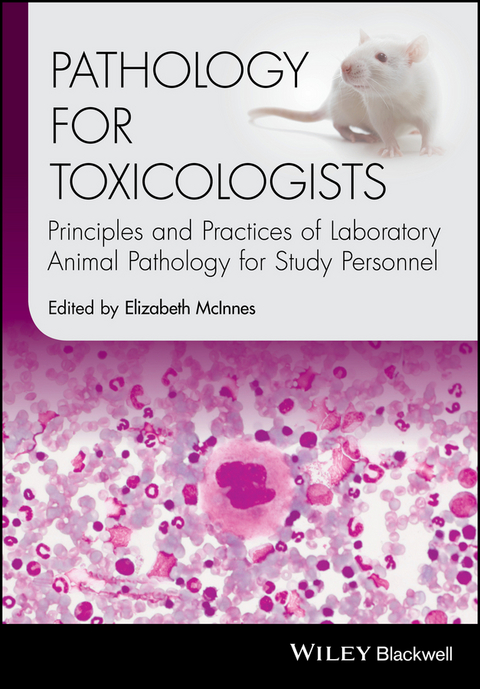
Pathology for Toxicologists (eBook)
John Wiley & Sons (Verlag)
978-1-118-75530-3 (ISBN)
Non-pathologists, such as toxicologists and study personnel, can find it difficult to understand the data they receive from pathologists. Toxicological pathologists write long, detailed and highly technical reports. Study personnel are under daily pressure to decide whether lesions described in pathology reports are treatment-related and thus important to the pharmaceutical company or whether the lesions are background changes and thus of little significance.
Written by experienced toxicological pathologists, Pathology for Toxicologists: Principles and Practices of Laboratory Animal Pathology for Study Personnel serves to bridge the gap in the understanding of pathology data, enabling non-pathologists to more easily comprehend pathology reports, better integrate pathology data into final study reports and ask pathologists relevant questions about the test compound.
This succinct, fully referenced, full colour book is suitable for toxicologists at all stages of their training or career who want to know more about the pathology encountered in laboratory animals used in safety studies. Key features include important chapters on spontaneous and target organ lesions in rats, mice, non-human primates, mini pigs, rabbits and beagle dogs as well as information on general pathology, macroscopic target organ lesions, ancillary pathology techniques, haematology, biochemistry and adversity.
Pathology for Toxicologists: Principles and Practices of Laboratory Animal Pathology for Study Personnel includes:
- Colour diagrams explaining how lesions are caused by either external compounds or spontaneously
- The anatomic variations and background lesions of laboratory animals
- Advice on sampling tissues, necropsy, ancillary pathology techniques and recording data
- A chapter on the haematology and biochemistry of laboratory animals
- Full colour photographs of common macroscopic lesions encountered in laboratory animals
- A comprehensive glossary
About the Editor
Elizabeth McInnes edited the successful 'Background Lesions in Laboratory Animals, A Color Atlas' (2011) and has published widely on various aspects of toxicological pathology. She qualified as a veterinary surgeon in South Africa in 1988 and completed a PhD at Imperial College, London in 1996. She was awarded Fellowships of the Royal College of Pathologists in 1997 and of the International Academy of Toxicologic Pathology in 2011. She currently runs her own toxicological pathology consultancy business.
Non-pathologists, such as toxicologists and study personnel, can find it difficult to understand the data they receive from pathologists. Toxicological pathologists write long, detailed and highly technical reports. Study personnel are under daily pressure to decide whether lesions described in pathology reports are treatment-related and thus important to the pharmaceutical company or whether the lesions are background changes and thus of little significance. Written by experienced toxicological pathologists, Pathology for Toxicologists: Principles and Practices of Laboratory Animal Pathology for Study Personnel serves to bridge the gap in the understanding of pathology data, enabling non-pathologists to more easily comprehend pathology reports, better integrate pathology data into final study reports and ask pathologists relevant questions about the test compound. This succinct, fully referenced, full colour book is suitable for toxicologists at all stages of their training or career who want to know more about the pathology encountered in laboratory animals used in safety studies. Key features include important chapters on spontaneous and target organ lesions in rats, mice, non-human primates, mini pigs, rabbits and beagle dogs as well as information on general pathology, macroscopic target organ lesions, ancillary pathology techniques, haematology, biochemistry and adversity. Pathology for Toxicologists: Principles and Practices of Laboratory Animal Pathology for Study Personnel includes: Colour diagrams explaining how lesions are caused by either external compounds or spontaneously The anatomic variations and background lesions of laboratory animals Advice on sampling tissues, necropsy, ancillary pathology techniques and recording data A chapter on the haematology and biochemistry of laboratory animals Full colour photographs of common macroscopic lesions encountered in laboratory animals A comprehensive glossary
About the Editor Elizabeth McInnes edited the successful "Background Lesions in Laboratory Animals, A Color Atlas" (2011) and has published widely on various aspects of toxicological pathology. She qualified as a veterinary surgeon in South Africa in 1988 and completed a PhD at Imperial College, London in 1996. She was awarded Fellowships of the Royal College of Pathologists in 1997 and of the International Academy of Toxicologic Pathology in 2011. She currently runs her own toxicological pathology consultancy business.
Cover 1
Title Page 5
Copyright 6
Contents 7
List of Contributors 13
Preface 15
Chapter 1 An Introduction to Pathology Techniques 17
1.1 Animal Considerations 18
1.2 Necropsy 18
1.3 Lung Inflation with Fixative 21
1.4 Fixation 21
1.5 Making Glass Slides 22
1.5.1 Trimming 22
1.5.2 Tissue Processing 25
1.5.3 Embedding 25
1.5.4 Microtoming 25
1.5.5 Staining 25
1.5.6 Quality Control 27
1.6 Special Histochemical Stains 28
1.7 Decalcification 29
1.8 Immunohistochemistry 29
1.9 Tissue Crossreactivity Studies 31
1.10 Electron Microscopy 31
1.11 In Situ Hybridisation 32
1.12 Laser Capture Microscopy 32
1.13 Confocal Microscopy 32
1.14 Image Analysis 33
1.15 Digital Imaging 33
1.16 Spermatocyte Analysis 33
1.17 Good Laboratory Practice 33
1.18 Inhalation Studies 34
1.19 Continuous-Infusion Studies 34
1.20 Carcinogenicity 35
1.21 Biologicals 35
1.22 The Pathology Report 36
1.23 Conclusion 36
References 36
Chapter 2 Recording Pathology Data 39
2.1 What is a Pathology Finding? 40
2.2 Standardisation of Pathology Findings 40
2.2.1 Semiquantitative Analysis 40
2.2.2 Nomenclature/Controlled Terminology 42
2.2.3 Ontological Approach 44
2.3 ‘Inconsistencies’ in Pathology Recording 44
2.3.1 Diagnostic Drift 44
2.3.2 Thresholds 44
2.3.3 Lumping versus Splitting 45
2.4 Blind Review 46
2.5 Historical Control Data: Pros and Cons 46
2.6 The Use of Peer Review in Pathology 48
References 48
Chapter 3 General Pathology and the Terminology of Basic Pathology 51
3.1 Cellular Responses to Insults 51
3.2 Inflammation 57
3.3 Circulatory Disturbances 62
3.4 Disorders of Tissue Growth 68
3.5 Tissue Repair and Healing 69
3.6 Neoplasia 70
3.7 Immune System 71
References 73
Chapter 4 Common Spontaneous and Background Lesions in Laboratory Animals 75
4.1 Rats 78
4.2 Mice 79
4.3 Dogs 82
4.4 Minipigs 82
4.5 Non-Human Primates 83
4.6 Rabbits 83
4.7 Experimental Procedures 83
4.8 Causes of Death in Rats and Mice 83
4.9 Conclusion 84
References 85
Chapter 5 Target Organ Pathology 88
5.1 Skin 88
5.2 Eye 92
5.3 Gastrointestinal Tract 94
5.4 Liver 99
5.5 Respiratory System 101
5.6 Urinary System 105
5.7 Lymphoreticular System 110
5.8 Musculoskeletal System 111
5.9 Cardiovascular System 113
5.10 Endocrine System 115
5.11 Reproductive System 118
5.12 Central and Peripheral Nervous System 120
5.13 Ear 122
References 122
Chapter 6 Clinical Pathology 128
6.1 Clinical Pathology in Study Phases and Good Laboratory Practice 128
6.1.1 Preanalytic Phase: Study Plan 129
6.1.2 Analytic Phase: Data Generation 130
6.1.3 Postanalytic Phase: Data Interpretation and Reporting 130
6.1.4 Good Laboratory Practice 130
6.2 What is Measured in Clinical Pathology? 131
6.2.1 Interference by Haemolysis, Lipaemia and Icterus 132
6.3 Haematology 133
6.3.1 Manual and Automated Techniques in Haematology 134
6.3.2 Haematocrit and Red Blood Cell Mass 135
6.3.3 Blood Cells 136
6.3.4 The Standard Haematology Profile 140
6.3.5 Bone Marrow 141
6.4 Coagulation 141
6.4.1 Standard Coagulation Profile 142
6.4.2 Prothrombin Time 143
6.4.3 Activated Partial Thromboplastin Time 143
6.4.4 Fibrinogen 143
6.5 Clinical Chemistry 143
6.5.1 Metabolites 143
6.5.2 Enzymes 145
6.5.3 Electrolytes and Minerals 145
6.5.4 Standard Chemistry Profiles 146
6.6 Urinalysis 147
6.7 Acute-Phase Proteins 147
6.8 The Biomarker Concept 148
6.9 Reference Intervals 149
6.10 Instrumentation, Validation and Quality Control 149
6.11 Data Analysis and Interpretation 150
6.12 Reporting 151
6.13 Food Consumption and Body Weight (Gain) 152
6.14 Organ Weights 152
6.15 Examples of Typical Clinical Pathology Profile Changes in Toxicologic Clinical Pathology 152
6.15.1 Reduced Red Blood Cell Mass due to Chronic Disease 154
6.15.2 Stress Response 155
6.15.3 Reduced Red Blood Cell Mass due to Excessive Blood Sampling 155
6.15.4 Common Artefacts 155
6.16 Microsampling 156
6.17 Conclusion 157
Acknowledgments 157
References 157
Chapter 7 Adversity: A Pathologist’s Perspective 161
7.1 LOAEL, NOEL and NOAEL: Definition 162
7.2 Adversity 163
7.3 Determining Adversity using Pathology Findings: Factors to Consider 165
7.3.1 Severity 165
7.3.2 Functional Effect 166
7.3.3 Primary versus Secondary Effects 167
7.3.4 Physiological Adaptability 168
7.3.5 Reversibility of the Lesion 168
7.3.6 Pharmacological Effect 169
7.4 Communicating NOAEL in Toxicity Studies 169
7.5 Conclusion 170
References 170
Chapter 8 Limitations of Pathology and Animal Models 173
8.1 Limitations of In Vivo Animal Models 173
8.1.1 Traditional Laboratory Species Used as General Toxicology Models 173
8.1.2 The Test Article May Not have Sufficient Pharmacological Activity in Routine Toxicology Species 174
8.1.3 The Model May Not Identify Hazards Related to Causation or Exacerbation of Pathology that is Unique to Humans or Undetectable in Animals 175
8.1.4 The Model May Not Identify Hazards with Low Incidence/Low Severity 175
8.1.5 Potential for Misinterpretation of Reversibility/Recovery for Low?Incidence Findings 176
8.1.6 Potential for Over? or Underestimation of the Relationship to Test Article of Findings that have High Spontaneous Incidence in Laboratory Species, but are Relatively Rare in Humans 176
8.1.7 Exclusive Use of Young, Healthy Animals Kept in Ideal Conditions Gives Limited Predictivity for Aged/Diseased Human Populations 177
8.2 Efficacy/Disease Models as Toxicology Models 178
8.3 Limitations of Efficacy/Disease Models as Toxicology Models 180
8.3.1 Lack of Validation as Safety/Toxicology Models 180
8.3.2 Disease Models Rarely Have All the Elements of the Equivalent Human Disease 181
8.3.3 Limited Sensitivity Produced by Increased Interanimal Variability amongst Diseased Animals and/or Low Animal Numbers 181
8.3.4 Lack of Historical Data 182
8.3.5 Risk Associated with Nonregulated Laboratory Conditions 182
8.4 Limitations of Pathology within In Vivo Toxicology Models 183
8.4.1 Anatomic Pathology Evaluation Will Not Identify Hazards with No Morphological Correlates 183
8.4.2 Limitations of Pathology when Evaluating Moribund Animals or Animals Found Dead on Study 184
8.4.3 Limitations of Anatomic and/or Clinical Pathology End Points within other Types of In Vivo Preclinical Safety Study 184
8.4.4 Limitations of Histopathology Related to Sampling Error 185
8.4.5 Limitations of Quantitative Anatomic Pathology 186
8.4.6 Limitations of Pathology Related to Subjectivity and Pathologist Error 189
8.4.7 Anatomic Pathology Error/Missed Findings 189
8.4.8 Subjectivity and Pathologist Variability 191
8.5 Managing Risk Associated with Subjectivity and the Potential for Pathologist Error 192
8.5.1 Choice of Study Pathologist 192
8.5.2 Peer Review 192
8.5.3 Review of the Anatomic Pathology Data 193
8.5.4 Review of Anatomic Pathology Data Interpretation 193
References 195
Glossary 200
EULA 213
In its first edition, Pathology for Toxicologists edited by Dr Elizabeth McInnes is a much welcomed addition to the basic literature bridging the 2 complementary sciences of pathology and toxicology, specifically within the context of drug, chemical, or device industries. Aimed at the wide spectrum of study personnel supporting investigational and routine toxicity studies, this book provides a broad yet succinct coverage of the bases underlying the generation and interpretation of pathology data and enables a better use, comprehension, and integration of these data into toxicology reports. In its paperback presentation (provided for this review), the book is illustrated and has a good print quality, is concise, portable, and thoroughly referenced. The 6 contributing authors are all adequately qualified and have hands-on experience on the topics they covered; the editor herself contributed with 4 chapters. The book structure is organized into 8 chapters and include an introduction to pathology techniques, recording pathology data, general pathology and the terminology of basic pathology, common spontaneous and background lesions in laboratory animals, target organ pathology, clinical pathology, adversity from the pathologist's perspective, and limitations of pathology and animal models.Each chapter begins with a learning objectives section and ends with a comprehensive list of references; a chapter-by-chapter analysis is included below. The book also includes a glossary (always helpful when dealing with pathology terms and acronyms)
and an index. In short, this book is a bridging reference between toxicology and pathology, broadly covering the bases of laboratory animal pathology generation, interpretation, and communication, and it should prove useful not only for early career as well as for practicing toxicologists. (International Journal of Toxicology 36:5)
| Erscheint lt. Verlag | 24.3.2017 |
|---|---|
| Sprache | englisch |
| Themenwelt | Medizin / Pharmazie ► Gesundheitsfachberufe |
| Studium ► 2. Studienabschnitt (Klinik) ► Pathologie | |
| Studium ► 2. Studienabschnitt (Klinik) ► Pharmakologie / Toxikologie | |
| Naturwissenschaften ► Biologie ► Zoologie | |
| Technik | |
| Veterinärmedizin | |
| Schlagworte | Adversity • Animal Science Methods • Biowissenschaften • Chemie • Chemistry • Clinical Pathology • Histopathology • laboratory animals • Life Sciences • Macroscopic pathology • Methoden der Zoologie • Pathologie • Pathology • Pharmaceutical • Target organ pathology • techniques • toxicological • Toxicology • Toxikologie • Veterinärmedizin • Veterinärmedizin / Pharmakologie, Toxikologie, Therapeutik • Veterinary Medicine • Veterinary Pharmacology, Toxicology & Therapeutics • Zoologie |
| ISBN-10 | 1-118-75530-8 / 1118755308 |
| ISBN-13 | 978-1-118-75530-3 / 9781118755303 |
| Informationen gemäß Produktsicherheitsverordnung (GPSR) | |
| Haben Sie eine Frage zum Produkt? |
 PDF (Adobe DRM)
Kopierschutz: Adobe-DRM
Adobe-DRM ist ein Kopierschutz, der das eBook vor Mißbrauch schützen soll. Dabei wird das eBook bereits beim Download auf Ihre persönliche Adobe-ID autorisiert. Lesen können Sie das eBook dann nur auf den Geräten, welche ebenfalls auf Ihre Adobe-ID registriert sind.
Details zum Adobe-DRM
Dateiformat: PDF (Portable Document Format)
Mit einem festen Seitenlayout eignet sich die PDF besonders für Fachbücher mit Spalten, Tabellen und Abbildungen. Eine PDF kann auf fast allen Geräten angezeigt werden, ist aber für kleine Displays (Smartphone, eReader) nur eingeschränkt geeignet.
Systemvoraussetzungen:
PC/Mac: Mit einem PC oder Mac können Sie dieses eBook lesen. Sie benötigen eine
eReader: Dieses eBook kann mit (fast) allen eBook-Readern gelesen werden. Mit dem amazon-Kindle ist es aber nicht kompatibel.
Smartphone/Tablet: Egal ob Apple oder Android, dieses eBook können Sie lesen. Sie benötigen eine
Geräteliste und zusätzliche Hinweise
Buying eBooks from abroad
For tax law reasons we can sell eBooks just within Germany and Switzerland. Regrettably we cannot fulfill eBook-orders from other countries.
aus dem Bereich