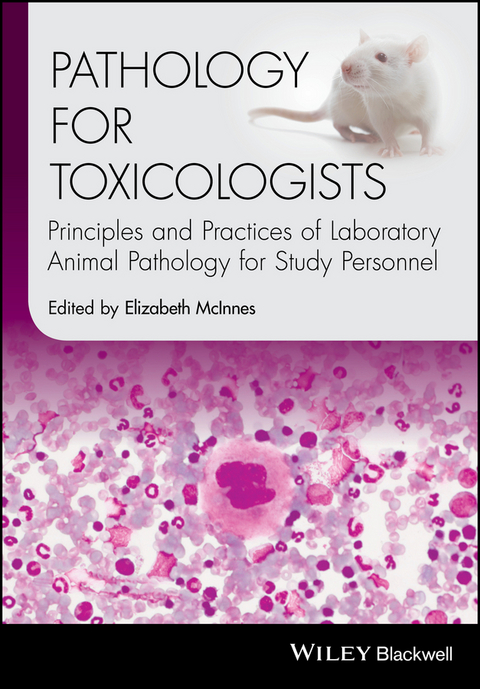
Pathology for Toxicologists (eBook)
John Wiley & Sons (Verlag)
978-1-118-75531-0 (ISBN)
Non-pathologists, such as toxicologists and study personnel, can find it difficult to understand the data they receive from pathologists. Toxicological pathologists write long, detailed and highly technical reports. Study personnel are under daily pressure to decide whether lesions described in pathology reports are treatment-related and thus important to the pharmaceutical company or whether the lesions are background changes and thus of little significance.
Written by experienced toxicological pathologists, Pathology for Toxicologists: Principles and Practices of Laboratory Animal Pathology for Study Personnel serves to bridge the gap in the understanding of pathology data, enabling non-pathologists to more easily comprehend pathology reports, better integrate pathology data into final study reports and ask pathologists relevant questions about the test compound.
This succinct, fully referenced, full colour book is suitable for toxicologists at all stages of their training or career who want to know more about the pathology encountered in laboratory animals used in safety studies. Key features include important chapters on spontaneous and target organ lesions in rats, mice, non-human primates, mini pigs, rabbits and beagle dogs as well as information on general pathology, macroscopic target organ lesions, ancillary pathology techniques, haematology, biochemistry and adversity.
Pathology for Toxicologists: Principles and Practices of Laboratory Animal Pathology for Study Personnel includes:
- Colour diagrams explaining how lesions are caused by either external compounds or spontaneously
- The anatomic variations and background lesions of laboratory animals
- Advice on sampling tissues, necropsy, ancillary pathology techniques and recording data
- A chapter on the haematology and biochemistry of laboratory animals
- Full colour photographs of common macroscopic lesions encountered in laboratory animals
- A comprehensive glossary
About the Editor
Elizabeth McInnes edited the successful 'Background Lesions in Laboratory Animals, A Color Atlas' (2011) and has published widely on various aspects of toxicological pathology. She qualified as a veterinary surgeon in South Africa in 1988 and completed a PhD at Imperial College, London in 1996. She was awarded Fellowships of the Royal College of Pathologists in 1997 and of the International Academy of Toxicologic Pathology in 2011. She currently runs her own toxicological pathology consultancy business.
Non-pathologists, such as toxicologists and study personnel, can find it difficult to understand the data they receive from pathologists. Toxicological pathologists write long, detailed and highly technical reports. Study personnel are under daily pressure to decide whether lesions described in pathology reports are treatment-related and thus important to the pharmaceutical company or whether the lesions are background changes and thus of little significance. Written by experienced toxicological pathologists, Pathology for Toxicologists: Principles and Practices of Laboratory Animal Pathology for Study Personnel serves to bridge the gap in the understanding of pathology data, enabling non-pathologists to more easily comprehend pathology reports, better integrate pathology data into final study reports and ask pathologists relevant questions about the test compound. This succinct, fully referenced, full colour book is suitable for toxicologists at all stages of their training or career who want to know more about the pathology encountered in laboratory animals used in safety studies. Key features include important chapters on spontaneous and target organ lesions in rats, mice, non-human primates, mini pigs, rabbits and beagle dogs as well as information on general pathology, macroscopic target organ lesions, ancillary pathology techniques, haematology, biochemistry and adversity. Pathology for Toxicologists: Principles and Practices of Laboratory Animal Pathology for Study Personnel includes: Colour diagrams explaining how lesions are caused by either external compounds or spontaneously The anatomic variations and background lesions of laboratory animals Advice on sampling tissues, necropsy, ancillary pathology techniques and recording data A chapter on the haematology and biochemistry of laboratory animals Full colour photographs of common macroscopic lesions encountered in laboratory animals A comprehensive glossary
About the Editor Elizabeth McInnes edited the successful "Background Lesions in Laboratory Animals, A Color Atlas" (2011) and has published widely on various aspects of toxicological pathology. She qualified as a veterinary surgeon in South Africa in 1988 and completed a PhD at Imperial College, London in 1996. She was awarded Fellowships of the Royal College of Pathologists in 1997 and of the International Academy of Toxicologic Pathology in 2011. She currently runs her own toxicological pathology consultancy business.
In its first edition, Pathology for Toxicologists edited by Dr Elizabeth McInnes is a much welcomed addition to the basic literature bridging the 2 complementary sciences of pathology and toxicology, specifically within the context of drug, chemical, or device industries. Aimed at the wide spectrum of study personnel supporting investigational and routine toxicity studies, this book provides a broad yet succinct coverage of the bases underlying the generation and interpretation of pathology data and enables a better use, comprehension, and integration of these data into toxicology reports. In its paperback presentation (provided for this review), the book is illustrated and has a good print quality, is concise, portable, and thoroughly referenced. The 6 contributing authors are all adequately qualified and have hands-on experience on the topics they covered; the editor herself contributed with 4 chapters. The book structure is organized into 8 chapters and include an introduction to pathology techniques, recording pathology data, general pathology and the terminology of basic pathology, common spontaneous and background lesions in laboratory animals, target organ pathology, clinical pathology, adversity from the pathologist's perspective, and limitations of pathology and animal models.Each chapter begins with a learning objectives section and ends with a comprehensive list of references; a chapter-by-chapter analysis is included below. The book also includes a glossary (always helpful when dealing with pathology terms and acronyms)
and an index. In short, this book is a bridging reference between toxicology and pathology, broadly covering the bases of laboratory animal pathology generation, interpretation, and communication, and it should prove useful not only for early career as well as for practicing toxicologists. (International Journal of Toxicology 36:5)
Chapter 1
An Introduction to Pathology Techniques
Elizabeth McInnes
Cerberus Sciences, Thebarton, SA, Australia
Learning Objectives
- Understand the role of study personnel in necropsies.
- Understand the various steps involved in producing glass slides from harvested tissues.
- Understand the ancillary techniques used in toxicological pathology.
- Discover what carcinogenicity, inhalation and crossreactivity studies entail.
This book is aimed at all study personnel – including study monitors, study directors and toxicologists – who are exposed to pathology reports, necropsies, peer review, haematology and biochemistry results and adversity on a regular basis. The secret to an informative, relevant and useful pathology report is an open and collegial relationship between the study director and the study pathologist (Keane, 2014). This chapter aims to describe the various stages of the pathological process (e.g. necropsy, fixation of tissues, cutting of slides) in order to demonstrate where crucial errors which can cause problems at a later stage, may arise. In addition, it includes a brief overview of ancillary techniques that pathologists sometimes use (e.g. electron microscopy). Finally, it discusses carcinogenicity studies, digital pathology, biological drugs and crossreactivity studies, and their impact on study personnel. Throughout the chapter, the client is referred to as the ‘sponsor’ of a particular pharmaceutical study.
Pathology is the study of disease, particularly the structural and functional changes in tissues and organs. Toxicological pathology is concerned predominantly with cell and tissue injury in animals treated with introduced chemical compounds or biological drugs. Studies are regulated by international bodies such as the Organisation for Economic Co-operation and Development (OECD), the US Food and Drug Administration (FDA) and the European Medicines Agency (EMA). Animal testing to determine the safety of pharmaceuticals, medical devices and food/colour additives is required by the FDA before it will give approval to begin clinical trials in humans. Pathology data may be quantitative (haematology, chemistry data, organ weights) or qualitative (microscopic diagnoses), and the toxicological pathology report is divided into macroscopic and microscopic findings. Study personnel are ultimately responsible for the study report, including the pathology report and data. Thus, study personnel need to understand what the pathology report means and how it has been generated. This chapter aims to help the study director understand the processes involved in a study, from harvesting tissues from the animal to generating glass slides to producing a pathology report.
1.1 Animal Considerations
The main species of animal used in the pharmaceutical industry are rats, mice, dogs, non-human primates, minipigs and rabbits. Occasionally, farm animals, hamsters, cats and gerbils are also used. There are no absolute reasons for selecting a particular animal species for systemic toxicity, but for acute oral, intravenous, dermal and inhalation studies and studies of medical devices, the mouse or rat is preferred, with the option of the rabbit in the case of dermal and implantation studies. Non-rodent species may also need to be considered for testing, although a number of factors might dictate the number and choice of species. Carcinogenicity studies generally use rats and mice.
All animal studies must be conducted according to the animal welfare laws of the country in which they are based, and in general studies may use protected animals only if there are no other reasonable, practicable choices for achieving a satisfactory result. Laboratory animals may only be used in minimal numbers, where they have the lowest possible degree of neurophysiological sensitivity and where the study causes minimal pain, suffering, distress and lasting harm. Animal suffering must be balanced against the likely benefits for humanity, other animals and the environment. In general, in the planning of all preclinical studies, due consideration must be given to reduction, refinement and replacement (the ‘3 Rs’) (Tannenbaum and Bennett, 2015).
Generally, only healthy purpose-bred young adult animals of known origin and with defined microbiological health status should be used in pathology studies (i.e. health monitoring of sentinel animals must be performed before the study starts). Health monitoring involves testing for the various bacteria, viruses, parasites and protozoa that may infect experimental animals and compromise study results (McInnes et al., 2011). The weight variation within a sex should not exceed 20% of the mean weight, and when female animals are used, they should be non-pregnant and should never have borne young.
Laboratory animals should be given a short acclimatisation period at the start of the study. Control of environmental conditions and diet and proper animal care techniques are necessary throughout the study in order to produce meaningful results. The number of animals needed per dose group depends on the purpose of the study. Group sizes should increase with the duration of treatment, such that at the end of the study sufficient animals are available in every group for a thorough biological evaluation and statistical analysis.
1.2 Necropsy
Necropsies or post mortem examinations (Figure 1.1) on experimental animals are a fundamental part of toxicological pathology (Fiette and Slaoui, 2011). They generally take place at the end of a study, but are also conducted if an animal dies early. The necropsy and pathology data are the single most important aspect of the pathology process, and study personnel get only one chance to retrieve them: once the tissues have been discarded, potentially valuable information is lost forever. At the necropsy, all macroscopic findings and abnormalities visible to the naked eye (e.g. enlarged liver, ulcerated skin, the presence of diarrhoea) are noted and recorded. In addition, tissues are collected for examination under the microscope. The pathologist, necropsy supervisor, prosector, phlebotomist and weighing assistant are all responsible for the recording the macroscopic data (Keane, 2014). Some studies collect all tissues (a full tissue list is indicated in the study plan or protocol), while others harvest only a limited list. A copy of the study plan should be available in the necropsy room to ensure that study personnel collect the correct tissues. Sometimes, all the tissues are collected into formalin, but slides are only cut if the sponsor decides there is a need later on. Harderian glands and draining lymph nodes are examples of tissues that are not always collected: study personnel should check the study plan before beginning the necropsy.
Figure 1.1 Necropsies or post mortem examinations on experimental animals such as this mouse are a fundamental part of toxicological pathology.
Study directors and toxicologists are often required to attend the necropsies of the animals on their studies. Although not directly involved in the necropsy process, it is nevertheless important that study personnel understand the process and are able to provide advice and management, particularly if unusual tissues are to be collected, severe test article-related findings are observed in high-dose animals, or deviations from standard operating procedures (SOP) occur. The study pathologist may be consulted if there is an unusually high rate of unscheduled deaths in the study or it is difficult to characterise macroscopic findings (such as very white teeth noted when treatment causes defects in enamel formation) (Keane, 2014).
Carbon dioxide asphyxiation provides a rapid form of euthanasia for mice (Seymour et al., 2004) and rats, but it can cause severe lung haemorrhage, which may make microscopic examination of the lungs difficult. Barbiturate overdose is an effective form of euthanasia, but it requires the use of pentobarbital sodium (Seymour et al., 2004). Larger animals (e.g. rabbits, non-human primates and dogs) are euthanised by an overdose of sodium pentobarbitone, which may cause congestion of some organs and is highly irritant if injected into the tissues around the vein.
Control and treated animals should always be necropsied by the same team of technicians, and the animal numbers and order of examination should be randomised. The identity of an animal is given in a tattoo, ear notch or microchip and should be recorded on all necropsy storage containers in indelible ink.
Organs should be weighed at necropsy; increases and decreases in organ weight can often be correlated with the microscopic findings observed by the pathologist. To ensure meaningful organ weights are recorded, the organs should be taken from an exsanguinated animal (if possible), and excess moisture and adipose tissue should be removed. Guidelines on the weighing of organs are outlined in various papers (Michael et al., 2007; Sellers et al., 2007).
The macroscopic lesions observed at necropsy may be the only pathological data generated from certain studies and must be presented in the form of an incidence table. Consequently, lesions should be described consistently throughout the necropsy process, and standardised terms should be used. The use of an agreed, standardised macroscopic glossary will help to reduce the incidence of different personnel using different terms to describe the same lesion (Scudamore, 2014). In studies in which histopathology will be performed,...
| Erscheint lt. Verlag | 16.3.2017 |
|---|---|
| Sprache | englisch |
| Themenwelt | Medizin / Pharmazie ► Gesundheitsfachberufe |
| Studium ► 2. Studienabschnitt (Klinik) ► Pathologie | |
| Studium ► 2. Studienabschnitt (Klinik) ► Pharmakologie / Toxikologie | |
| Naturwissenschaften ► Biologie ► Zoologie | |
| Technik | |
| Veterinärmedizin | |
| Schlagworte | Adversity • Animal Science Methods • Biowissenschaften • Chemie • Chemistry • Clinical Pathology • Histopathology • laboratory animals • Life Sciences • Macroscopic pathology • Methoden der Zoologie • Pathology • Pharmaceutical • Target organ pathology • techniques • toxicological • Toxicology • Toxikologie • Veterinärmedizin • Veterinärmedizin / Pharmakologie, Toxikologie, Therapeutik • Veterinary Medicine • Veterinary Pharmacology, Toxicology & Therapeutics |
| ISBN-10 | 1-118-75531-6 / 1118755316 |
| ISBN-13 | 978-1-118-75531-0 / 9781118755310 |
| Informationen gemäß Produktsicherheitsverordnung (GPSR) | |
| Haben Sie eine Frage zum Produkt? |
 EPUB (Adobe DRM)
Kopierschutz: Adobe-DRM
Adobe-DRM ist ein Kopierschutz, der das eBook vor Mißbrauch schützen soll. Dabei wird das eBook bereits beim Download auf Ihre persönliche Adobe-ID autorisiert. Lesen können Sie das eBook dann nur auf den Geräten, welche ebenfalls auf Ihre Adobe-ID registriert sind.
Details zum Adobe-DRM
Dateiformat: EPUB (Electronic Publication)
EPUB ist ein offener Standard für eBooks und eignet sich besonders zur Darstellung von Belletristik und Sachbüchern. Der Fließtext wird dynamisch an die Display- und Schriftgröße angepasst. Auch für mobile Lesegeräte ist EPUB daher gut geeignet.
Systemvoraussetzungen:
PC/Mac: Mit einem PC oder Mac können Sie dieses eBook lesen. Sie benötigen eine
eReader: Dieses eBook kann mit (fast) allen eBook-Readern gelesen werden. Mit dem amazon-Kindle ist es aber nicht kompatibel.
Smartphone/Tablet: Egal ob Apple oder Android, dieses eBook können Sie lesen. Sie benötigen eine
Geräteliste und zusätzliche Hinweise
Buying eBooks from abroad
For tax law reasons we can sell eBooks just within Germany and Switzerland. Regrettably we cannot fulfill eBook-orders from other countries.
aus dem Bereich