


Practical Physiotherapy for Veterinary Nurses (eBook)
John Wiley & Sons (Verlag)
978-1-118-71135-4 (ISBN)
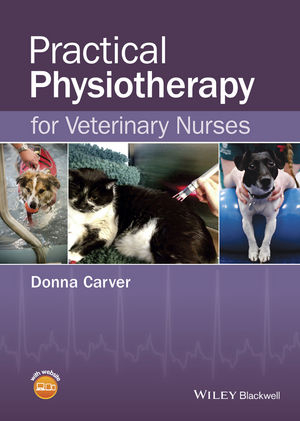
Reflecting a rapidly growing area of interest in veterinary practice, this practical, pocket-sized guide to small animal physiotherapy has been designed for quick reference, providing the ideal guide for busy practice veterinary nurses when they really need it.
- Reflects the need for a text in this rapidly growing area of interest, providing the first on this topic for veterinary nurses
- Designed in a pocket-sized format so that VNs can carry it around for quick reference
- The author has ideal experience for this field, having worked as both a veterinary nurse and an animal physiotherapist
- This book is accompanied by a companion website which contains videos and self-test questions and answers
Donna Carver BSc (Hons) Physiotherapy, Dip AVN (surg), RVN, MCSP
Donna works as part of the Pain and Rehabilitation service at The University of Glasgow, School of Veterinary Medicine, providing physiotherapy and hydrotherapy to small animals. She started her veterinary nursing career in small animal general practice. She has previously worked at the Royal (Dick) School of Veterinary Studies, Edinburgh, as a surgical veterinary nurse, and returning later as an animal physiotherapist/veterinary nurse. Donna is a member of the Chartered Society of Physiotherapy and has given numerous CPD seminars in physiotherapy and rehabilitation.
Reflecting a rapidly growing area of interest in veterinary practice, this practical, pocket-sized guide to small animal physiotherapy has been designed for quick reference, providing the ideal guide for busy practice veterinary nurses when they really need it. Reflects the need for a text in this rapidly growing area of interest, providing the first on this topic for veterinary nurses Designed in a pocket-sized format so that VNs can carry it around for quick reference The author has ideal experience for this field, having worked as both a veterinary nurse and an animal physiotherapist This book is accompanied by a companion website which contains videos and self-test questions and answers
Donna Carver BSc (Hons) Physiotherapy, Dip AVN (surg), RVN, MCSP Donna works as part of the Pain and Rehabilitation service at The University of Glasgow, School of Veterinary Medicine, providing physiotherapy and hydrotherapy to small animals. She started her veterinary nursing career in small animal general practice. She has previously worked at the Royal (Dick) School of Veterinary Studies, Edinburgh, as a surgical veterinary nurse, and returning later as an animal physiotherapist/veterinary nurse. Donna is a member of the Chartered Society of Physiotherapy and has given numerous CPD seminars in physiotherapy and rehabilitation.
Title Page 5
Copyright Page 6
Contents 7
Acknowledgements 9
About the companion website 11
Chapter 1 Musculoskeletal physiotherapy 13
Introduction 13
Gait analysis 14
History taking 17
Physical examination 18
Exercise plans 19
Physiotherapy treatment techniques and modalities 20
Cold therapy 20
Heat therapy 21
Positioning and supports 22
Manual aids 23
Electrotherapy 24
Manual techniques 27
Musculoskeletal presenting conditions 36
The coxofemoral joint 36
Stifle joint 45
Limb amputation 62
Elbow joint 64
Tendon injuries 80
Shoulder instability 82
Biceps tenosynovitis 84
Pain management 87
Multimodal approach 87
Analgesics 91
Physiotherapy musculoskeletal assessment 91
Subjective examination 93
Behaviour of symptoms 94
History of present condition (HPC) 96
Past medical history (PMH) 96
Drug history (DH) 97
Social history (SH) 97
Physical examination 97
Self-assessment questions 98
Chapter 2 Neurology 101
Introduction 101
Key features of upper and lower motor neuron lesions 101
Surgical presenting conditions 103
Intervertebral disc disease (IVDD) 103
Cervical spondylomyelopathy (wobbler syndrome) 127
Spinal column fractures or dislocations 128
Non-surgical presenting conditions 128
Fibrocartilaginous embolism 128
Type III disc disease 129
Medical neurological presenting conditions 137
Acute polyradiculoneuritis 137
Tetanus 140
Myasthenia gravis 141
Discospondylitis 143
Toxoplasmosis and neosporosis 144
Neurological assessment 148
Subjective examination 148
Objective examination 148
Cranial nerves (CN) 152
Physiotherapy assessment for the neurology patient 154
Database 154
Objective examination 156
Self-assessment questions 160
Chapter 3 Respiratory physiotherapy 163
Introduction 163
Chest auscultation and interpretation 164
Breath sounds 164
Added sounds 164
Percussion note technique and interpretation 165
Interpretation of blood gases 166
Acidosis 166
Alkalosis 166
Base excess 166
Respiratory failure 166
Type I (hypoxaemic respiratory failure) 166
Type II (ventilatory failure) 168
Cardiorespiratory monitoring 168
Electrocardiograms 170
Respiratory presenting conditions 172
Chronic obstructive pulmonary disease (COPD) 172
Asthma 173
Bronchitis 173
Emphysema 174
Pneumonia 175
Respiratory physiotherapy treatment techniques 176
Percussion (coupage) 176
Vibrations 177
Shaking 178
Breathing exercises 178
Assisted cough 178
Positioning 179
Respiratory physiotherapy assessment 179
Other relevant conditions 189
Self-assessment questions 193
Chapter 4 Hydrotherapy 197
Introduction 197
The aims of hydrotherapy 197
Maintain or improve joint ROM 197
Improve muscle strengthening 197
Gait re-education 198
Reduce pain 198
Improve stamina 198
Pool chemistry 199
pH 199
Bromine 199
Temperature 200
Properties of water 200
Density 200
Buoyancy 200
Viscosity 201
Hydrostatic pressure 201
Water surface tension 201
Hydrotherapy for specific conditions 201
Fibrocartilage embolism hydrotherapy rehabilitation programme 204
Self-assessment questions 214
Appendices 217
Appendix 1: Glasgow Coma Scale (GCS) 217
Appendix 2: Secretion retention assessmentand management plan 218
Appendix 3: Atelectasis assessmentand management plan 218
Appendix 4: Bronchospasm assessmentand management plan 219
Appendix 5: V/Q mismatch assessmentand management plan 219
Appendix 6: Pain assessmentand management plan 220
Appendix 7: Hypoxaemia assessmentand management plan 220
Abbreviations 221
References 223
Self-assessment answers 225
Chapter 1: Musculoskeletal physiotherapy 225
Chapter 2: Neurology 226
Chapter 3: Respiratory physiotherapy 227
Chapter 4: Hydrotherapy 228
Index 231
EULA 236
"The Practical Physiotherapy for Veterinary Nurses textbook is ideal for veterinary nurses working in small animal practice with an interest in physiotherapy for both medical and surgical patients." (The New Zealand Veterinary Nurse 2016)
"This book has several good points. Recommended rehabilitation is broken down into early phase (0 to 2 weeks), midphase (2 to 6 weeks), and late phase (6 to 12 weeks). It contains a nice review of respiratory therapy from a physical standpoint, a subject rarely tackled in other textbooks. Readers are reminded throughout the book to assess both subjective and objective outcome measures to evaluate the response and progression of therapy in individual patients. Communication and follow-up with the veterinary surgeon is also stressed." (Journal of the American Veterinary Medical Association 2016)
| Erscheint lt. Verlag | 8.9.2015 |
|---|---|
| Sprache | englisch |
| Themenwelt | Medizin / Pharmazie |
| Veterinärmedizin ► Allgemein ► Tiermedizinische Fachangestellte | |
| Schlagworte | Complementary Veterinary Medicine • <p>Physiotherapy, rehabilitation, canine, feline, cat, dog, small animal, veterinary nurses, veterinary technicians, gait analysis, Physical examination, Physiotherapy treatment techniques, Pain management, musculoskeletal assessment, Neurology, Physiotherapy treatment plans, Physiotherapy patient assessment, Cardio respiratory monitoring, electrocardiograms, ECGs, Respiratory physiotherapy, Hydrotherapy.</p> • Pflege • Pflege i. d. Veterinärmedizin • Pflege i. d. Veterinärmedizin • Physiotherapie • Tierarzthelfer • Veterinärmedizin • Veterinärmedizin / ergänzende Heilmethoden • Veterinärmedizin / Hunde u. Katzen • Veterinärmedizin • Veterinärmedizin / ergänzende Heilmethoden • Veterinärmedizin / Hunde u. Katzen • Veterinary Medicine • Veterinary Medicine - Dogs & Cats • Veterinary Nursing & Animal Care |
| ISBN-10 | 1-118-71135-1 / 1118711351 |
| ISBN-13 | 978-1-118-71135-4 / 9781118711354 |
| Informationen gemäß Produktsicherheitsverordnung (GPSR) | |
| Haben Sie eine Frage zum Produkt? |
 PDF (Adobe DRM)
Kopierschutz: Adobe-DRM
Adobe-DRM ist ein Kopierschutz, der das eBook vor Mißbrauch schützen soll. Dabei wird das eBook bereits beim Download auf Ihre persönliche Adobe-ID autorisiert. Lesen können Sie das eBook dann nur auf den Geräten, welche ebenfalls auf Ihre Adobe-ID registriert sind.
Details zum Adobe-DRM
Dateiformat: PDF (Portable Document Format)
Mit einem festen Seitenlayout eignet sich die PDF besonders für Fachbücher mit Spalten, Tabellen und Abbildungen. Eine PDF kann auf fast allen Geräten angezeigt werden, ist aber für kleine Displays (Smartphone, eReader) nur eingeschränkt geeignet.
Systemvoraussetzungen:
PC/Mac: Mit einem PC oder Mac können Sie dieses eBook lesen. Sie benötigen eine
eReader: Dieses eBook kann mit (fast) allen eBook-Readern gelesen werden. Mit dem amazon-Kindle ist es aber nicht kompatibel.
Smartphone/Tablet: Egal ob Apple oder Android, dieses eBook können Sie lesen. Sie benötigen eine
Geräteliste und zusätzliche Hinweise
Buying eBooks from abroad
For tax law reasons we can sell eBooks just within Germany and Switzerland. Regrettably we cannot fulfill eBook-orders from other countries.


