


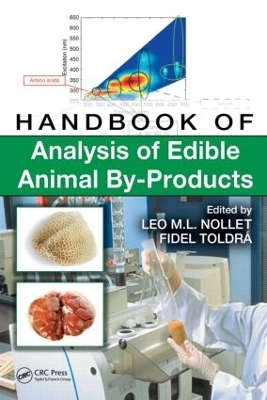
Handbook of Analysis of Edible Animal By-Products
Seiten
2011
Crc Press Inc (Verlag)
978-1-4398-0360-8 (ISBN)
Crc Press Inc (Verlag)
978-1-4398-0360-8 (ISBN)
While muscle foods are the commonly consumed portion of an animal, animal by-products such as the entrails and internal organs are also widely consumed. This title offers an overview of the tools for the analysis of these by-products, looking at the techniques and methodologies for analyzing nutritional and sensory qualities as well as safety.
Considered high-priced delicacies or waste material to be tossed away, the use and value of offal—edible and inedible animal by-products—depend entirely on the culture and country in question. The skin, blood, bones, meat trimmings, fatty tissues, horns, hoofs, feet, skull, and entrails of butchered animals comprise a wide variety of products including human or pet food or processed materials in animal feed, fertilizer, or fuel. Regardless of the final product’s destination, it is still necessary to employ the most up-to-date and effective tools to analyze these products for nutritional and sensory quality as well as safety.
Providing a full overview of the analytical tools currently available, the Handbook of Analysis of Edible Animal By-Products examines the role and use of the main techniques and methodologies used worldwide for the analysis of animal by-products. Divided into four parts, this unique handbook covers the chemistry and biochemistry involved in the fundamentals of the field and considers the technological quality, nutritional quality, and safety required to produce a viable product.
Beginning with an introduction to the chemical and biochemical compounds of animal by-products, the book details the use and detection of food-grade proteins, rendered fats, and cholesterol. It discusses how to determine oxidation in edible by-products, measurement of color in these products, and the analysis of nutritional aspects such as essential amino acids, fatty acids, vitamins, minerals, and trace elements.
The latter portion of the book deals with safety parameters, particularly the analytical tools for the detection of pathogens, toxins, and chemical toxic compounds usually found in muscle foods. Specific chapters highlight the detection of tissues typically found in animal by-products, such as neuronal tissues, non-muscle tissues, and bone fragments.
Considered high-priced delicacies or waste material to be tossed away, the use and value of offal—edible and inedible animal by-products—depend entirely on the culture and country in question. The skin, blood, bones, meat trimmings, fatty tissues, horns, hoofs, feet, skull, and entrails of butchered animals comprise a wide variety of products including human or pet food or processed materials in animal feed, fertilizer, or fuel. Regardless of the final product’s destination, it is still necessary to employ the most up-to-date and effective tools to analyze these products for nutritional and sensory quality as well as safety.
Providing a full overview of the analytical tools currently available, the Handbook of Analysis of Edible Animal By-Products examines the role and use of the main techniques and methodologies used worldwide for the analysis of animal by-products. Divided into four parts, this unique handbook covers the chemistry and biochemistry involved in the fundamentals of the field and considers the technological quality, nutritional quality, and safety required to produce a viable product.
Beginning with an introduction to the chemical and biochemical compounds of animal by-products, the book details the use and detection of food-grade proteins, rendered fats, and cholesterol. It discusses how to determine oxidation in edible by-products, measurement of color in these products, and the analysis of nutritional aspects such as essential amino acids, fatty acids, vitamins, minerals, and trace elements.
The latter portion of the book deals with safety parameters, particularly the analytical tools for the detection of pathogens, toxins, and chemical toxic compounds usually found in muscle foods. Specific chapters highlight the detection of tissues typically found in animal by-products, such as neuronal tissues, non-muscle tissues, and bone fragments.
University College Ghent, Applied Engineering Sciences, Belgium Instituto de Agroquimica y Technologia de Alimentos (CSIC), Valencia, Spain
Preface, Editors, Contributors, Part I Chemistry and Biochemistry, Part II Technological Quality, Part III Nutritional Quality, Part IV Safety
| Erscheint lt. Verlag | 6.4.2011 |
|---|---|
| Zusatzinfo | 103 Tables, black and white; 61 Illustrations, black and white |
| Verlagsort | Bosa Roca |
| Sprache | englisch |
| Maße | 178 x 254 mm |
| Gewicht | 1030 g |
| Themenwelt | Technik ► Lebensmitteltechnologie |
| ISBN-10 | 1-4398-0360-9 / 1439803609 |
| ISBN-13 | 978-1-4398-0360-8 / 9781439803608 |
| Zustand | Neuware |
| Informationen gemäß Produktsicherheitsverordnung (GPSR) | |
| Haben Sie eine Frage zum Produkt? |
Mehr entdecken
aus dem Bereich

aus dem Bereich
Technologie, Chemie, Mikrobiologie, Analytik, Bedeutung, Recht
Buch | Hardcover (2023)
Verlag Eugen Ulmer
CHF 169,00
A Laboratory Manual
Buch | Softcover (2022)
John Wiley & Sons Inc (Verlag)
CHF 103,00
Hygieneanforderungen und Managementsysteme
Buch | Softcover (2025)
DIN Media (Verlag)
CHF 307,55


