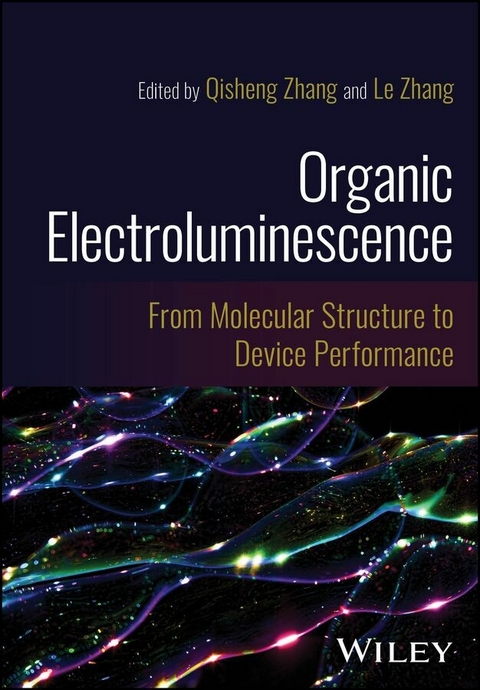
Organic Electroluminescence (eBook)
458 Seiten
Wiley (Verlag)
978-1-119-69412-0 (ISBN)
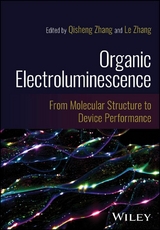
Unique reference on the fundamentals, applications, and latest research in electroluminescence of organic molecules
Organic Electroluminescence provides a comprehensive overview of organic electroluminescent materials from their structure-property relationships to the outlook of improved device performance. Divided into three parts, the first section of the book covers fundamental aspects of OLEDs such as history, structures, properties, and operating and aging mechanisms. The second section provides quantum chemical and experimental insights into correlations between device performance, material characteristics, molecular physical parameters, and molecular structure. The last section is devoted to improving device performance in real world applications using molecular and device simulations.
Featuring contributions from experts from around the world, Organic Electroluminescence discusses sample topics including:
- Fundamental concepts in the fields of display, organic electronics, molecular photochemistry, and quantum chemistry
- Device fabrication, characterization and simulation techniques
- Physical and chemical processes in OLEDs including charge injection and transport, exciton generation and decay, reversible dipole reorientation, and chemical reactions
- Physical and chemical properties of organic semiconductors in solutions and thin-films including photoluminescence quantum yield, excited-state lifetime, and redox potential
- Single-molecule and condensed-matter simulations including vertical transition, nonradiative decay, spin-orbital and spin-phonon coupling, bond dissociation and charge transfer
Organic Electroluminescence delivers advanced information for professionals seeking a thorough reference on the subject and for students learning about OLEDs.
Qisheng Zhang is a Professor in the Department of Polymer Science and Engineering at Zhejiang University in Hangzhou, China. He pursued his PhD at Changchun Institute of Applied Chemistry, China during 2001-2005, and began his research on high efficiency and low cost organic electroluminescent materials since then.
Le Zhang graduated from the department of physical electronics of Tokyo Institute of Technology, Japan with a PhD degree in 2013. Since then, his main research interests are organic semiconducting materials, device physics, charge/exciton dynamics, and advanced characterization methods. He is now the CTO of Zhejiang Hongwu Technology.
Unique reference on the fundamentals, applications, and latest research in electroluminescence of organic molecules Organic Electroluminescence provides a comprehensive overview of organic electroluminescent materials from their structure-property relationships to the outlook of improved device performance. Divided into three parts, the first section of the book covers fundamental aspects of OLEDs such as history, structures, properties, and operating and aging mechanisms. The second section provides quantum chemical and experimental insights into correlations between device performance, material characteristics, molecular physical parameters, and molecular structure. The last section is devoted to improving device performance in real world applications using molecular and device simulations. Featuring contributions from experts from around the world, Organic Electroluminescence discusses sample topics including: Fundamental concepts in the fields of display, organic electronics, molecular photochemistry, and quantum chemistryDevice fabrication, characterization and simulation techniquesPhysical and chemical processes in OLEDs including charge injection and transport, exciton generation and decay, reversible dipole reorientation, and chemical reactionsPhysical and chemical properties of organic semiconductors in solutions and thin-films including photoluminescence quantum yield, excited-state lifetime, and redox potentialSingle-molecule and condensed-matter simulations including vertical transition, nonradiative decay, spin-orbital and spin-phonon coupling, bond dissociation and charge transfer Organic Electroluminescence delivers advanced information for professionals seeking a thorough reference on the subject and for students learning about OLEDs.
| Erscheint lt. Verlag | 25.7.2025 |
|---|---|
| Sprache | englisch |
| Themenwelt | Naturwissenschaften ► Chemie |
| Technik ► Maschinenbau | |
| Schlagworte | oled ai • oled applications • oled development • oled films • oled molecular electronics • oled parameters • oled performance • oled processes • oled simulations • oled structure • oled structure-activity relationships • oled testing methods |
| ISBN-10 | 1-119-69412-4 / 1119694124 |
| ISBN-13 | 978-1-119-69412-0 / 9781119694120 |
| Informationen gemäß Produktsicherheitsverordnung (GPSR) | |
| Haben Sie eine Frage zum Produkt? |
 PDF (Adobe DRM)
Kopierschutz: Adobe-DRM
Adobe-DRM ist ein Kopierschutz, der das eBook vor Mißbrauch schützen soll. Dabei wird das eBook bereits beim Download auf Ihre persönliche Adobe-ID autorisiert. Lesen können Sie das eBook dann nur auf den Geräten, welche ebenfalls auf Ihre Adobe-ID registriert sind.
Details zum Adobe-DRM
Dateiformat: PDF (Portable Document Format)
Mit einem festen Seitenlayout eignet sich die PDF besonders für Fachbücher mit Spalten, Tabellen und Abbildungen. Eine PDF kann auf fast allen Geräten angezeigt werden, ist aber für kleine Displays (Smartphone, eReader) nur eingeschränkt geeignet.
Systemvoraussetzungen:
PC/Mac: Mit einem PC oder Mac können Sie dieses eBook lesen. Sie benötigen eine
eReader: Dieses eBook kann mit (fast) allen eBook-Readern gelesen werden. Mit dem amazon-Kindle ist es aber nicht kompatibel.
Smartphone/Tablet: Egal ob Apple oder Android, dieses eBook können Sie lesen. Sie benötigen eine
Geräteliste und zusätzliche Hinweise
Buying eBooks from abroad
For tax law reasons we can sell eBooks just within Germany and Switzerland. Regrettably we cannot fulfill eBook-orders from other countries.
aus dem Bereich