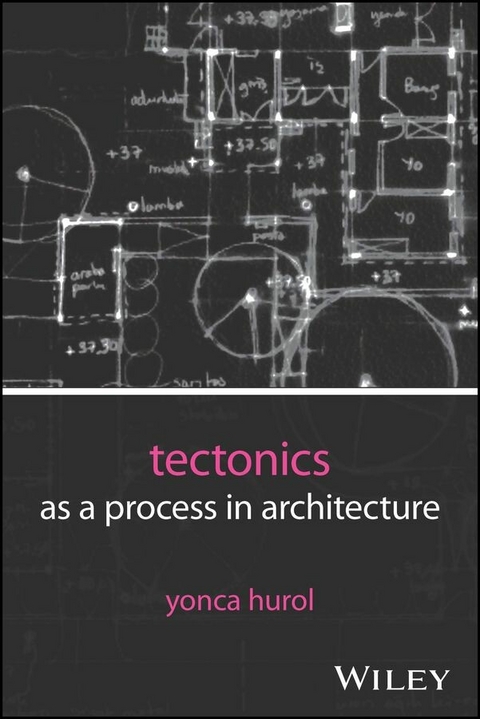
Tectonics as a Process in Architecture (eBook)
510 Seiten
Wiley (Verlag)
978-1-394-32923-6 (ISBN)
Detailed, research-based review of the intersection of building processes and tectonics, with case studies and theoretical reflections
Tectonics as a Process in Architecture explores the dynamic nature of building processes and their impact on architectural tectonics. Detailed case studies and theoretical reflections are included to help readers see how recognizing tectonics as a process can be beneficial.
The book is based on research that was conducted to document all changes during the building processes of a house through close engagement between the researcher and the building; the researcher was also the building's owner, a neighbor to it, its architect, and a construction control. This close connection enabled the capture of numerous changes, some resulting in tectonic affects, while others reflected innovative approaches. These changes were introduced by various actors in the process including contractors, builders, and foremen.
In Tectonics as a Process in Architecture, readers will find:
- Invaluable insights on why tectonics is not merely as an outcome but an inclusive, collaborative process that enhances architectural quality
- Two process maps, one for tectonic affects and one for innovative approaches
- Evolving changes during construction and their potential to foster innovation
- A theory on procedural and inclusive tectonics, primarily focused on details
Due to its multifaceted nature, Tectonics as a Process in Architecture will appeal to academics, students, and professionals interested in the intersection of architectural, engineering, construction and tectonic principles.
Yonca Hurol works in the Department of Architecture at The Cyprus International University. Previously, she taught in the Middle East Technical University, Gazi University and Eastern Mediterranean University. Her fields of research include the tectonics of structural systems, tectonics, ethics in architecture and architectural research. She is the author of two published books on tectonics and architecture and is one of the two editors of Open House International.
Detailed, research-based review of the intersection of building processes and tectonics, with case studies and theoretical reflections Tectonics as a Process in Architecture explores the dynamic nature of building processes and their impact on architectural tectonics. Detailed case studies and theoretical reflections are included to help readers see how recognizing tectonics as a process can be beneficial. The book is based on research that was conducted to document all changes during the building processes of a house through close engagement between the researcher and the building; the researcher was also the building s owner, a neighbor to it, its architect, and a construction control. This close connection enabled the capture of numerous changes, some resulting in tectonic affects, while others reflected innovative approaches. These changes were introduced by various actors in the process including contractors, builders, and foremen. In Tectonics as a Process in Architecture, readers will find: Invaluable insights on why tectonics is not merely as an outcome but an inclusive, collaborative process that enhances architectural qualityTwo process maps, one for tectonic affects and one for innovative approachesEvolving changes during construction and their potential to foster innovationA theory on procedural and inclusive tectonics, primarily focused on details Due to its multifaceted nature, Tectonics as a Process in Architecture will appeal to academics, students, and professionals interested in the intersection of architectural, engineering, construction and tectonic principles.
1
Introduction
Although architecture has been conceptualized as frozen music,1 change exists constantly in all architectural processes. This includes the preparation of preliminary and application projects, the construction process and the phases of use.2 The book claims that changes in the application project, tendering process, and construction process can significantly impact the tectonics of buildings, the tectonic affects they induce and even their architecture.
This is a serious problem in the building sector, as an architectural project can diverge greatly from the completed building. Changes may occur in the plan, details, and even in the selected materials and technology due to availability issues, problems in the project, ambiguity in the application project's handling of certain issues and errors in the project. Depending on the political‐economic context of the building, these changes can also become drastic. A friend of the author shared “People get shocked when they see their completed houses” because the outcome differs significantly from the original project. The same friend, who is having a house built, also mentioned, “The contractor misunderstood the site plan and changed the position of our house on the site. This changed the whole site plan.”3
Caricatures even depict this issue, where a building undergoes substantial changes after the architect meets with the owner and client.4 According to one caricature, the building changes again after the working drawings of the application project are prepared and ultimately undergoes further changes during construction. The final building might have little resemblance to the initial design and the impact of this situation on the building's owner depends on various factors. Change management literature suggests that the most likely source of change within these processes is the client.5
Rework, which is a reactive type of change, usually causes negative results, delays, and increased costs but it is a specific category of change.6 However, change can also be proactive and changes within the building process can lead to positive outcomes for clients and contractors. Some changes may enhance tectonics of a building. Various factors influence whether these changes have a positive or negative tectonic impact. This book advocates for viewing tectonics as a process to encourage beneficial changes.
The scientific literature on rework and changes during the construction process of buildings does not cover the tectonic and aesthetic dimensions of such changes. An example of this kind of literature is about change management in construction. This literature mainly focuses on the technical and economic dimensions of the change orders, the reasons for change, and how to manage changes.7 However, the presence of this literature demonstrates that changes are occurring within building processes worldwide.
The dynamic capabilities approach to office management takes change in the environment seriously and it also emphasizes that an architectural or construction firm cannot complete a project without considering change.8 This approach is also suggested to be used in conjunction with Building Information Management (BIM) and its emerging technologies, which represent the future of architectural and construction activities.9 However, these approaches and methods do not typically address tectonics. There is a need for change to serve various purposes, including improving tectonic qualities and fostering innovation. Since existing tectonics theories fail to address the procedural aspects, there is a need for a new approach to tectonic theory.
Current approaches to office and project management do not acknowledge changes made by the building team on site (by the contractor, sub‐contractor, builder, foremen, and worker) and instead expect the process to be managed solely by professionals. However, majority of tectonics (or architectonics)10 theories also ignore changes that happen during the building process, including the preparation of the application project, the tendering process, and the construction process. The author of this book believes that this is because the creators of tectonics theories do not advocate for such significant changes, whether these changes result in negative outcomes or lead to positive outcomes.
Although most of the theories of architecture and tectonics see architecture as “frozen” as it was the case within Ancient Greek aesthetics, there are a few sources on “tectonic process”11 and “tectonic transformation”12 that address the issues of change. Many sources highlight the problem of building production processes, as architects and engineers have to choose building components off‐the‐shelf and this stops them from working with the building industry, builders and craftsmen. This divide between the design team and the building industry eliminates most potential changes, which should have been welcomed because it is expected to be more economical and faster. This approach also minimizes innovations and improvements in the building's tectonics.13 However, being open to change and innovations is wiser14 from an anthropological point of view if all parties in the building process agree. The most appropriate discipline to study tectonic affects due to changes, which can cause negative or positive changes in the building process, as well as innovations, is architecture and the most appropriate area for this research is tectonics in architecture.
The objective of this book is to provide an in‐depth examination of the changes that occurred during the process of a single building: the Monarga House, which is shown in Figure 1.1. The study demonstrates that numerous changes took place during this process, many of which affected the building's tectonic character. Some of these changes involved innovative approaches and various actors, including contractors, builders, foremen, technicians, carpenters, and workers, as well as the owner and the controller, initiating these changes. This unique, in‐depth examination of the processes of the Monarga House was possible because the roles of the researcher, owner, neighbor, architect, and controller (RONAC) were combined in one person, allowing for a comprehensive view of all changes, even those that were revised multiple times during the building process. The collection of such detailed data provided a fresh perspective on tectonics as a process. What makes the Monarga House a valuable case study is not the characteristics of the house itself, but the ability to observe and record every detail of its process.
Figure 1.1 A photo of the Monarga House in 2024.
Literature Review
This subject necessitates a comprehensive review of the literature on tectonics, including the holistic concept of tectonics, major tectonics theories, and theories on affects and tectonic affects, as well as changes in building processes and innovative attitudes. It is also important to include theories on architecture that emphasize the use of building technologies, along with relevant theories on construction.
On Tectonics and Tectonics Theories
Tectonics (or architectonics) is the artistic or aesthetic utilization of building technology and all other physical aspects of the environment in architecture. Building technology encompasses materials, structural systems, mechanical systems, electrical systems, information technology, and construction details. These issues can manifest unique tectonic characteristics in specific buildings. For example, Alvar Aalto used timber in a tectonic manner in Villa Mairea, incorporating timber columns and suspending the staircase with timber elements. Santiago Calatrava's buildings often have tectonic structural systems. The Pompidou Center in Paris exhibits tectonic mechanical and electrical systems, as these systems were intentionally designed as colorful façade elements. New York's Times Square is defined by building façades covered with screens, which contribute to the square's tectonic quality, especially at night. Tadao Ando designed unique window details without visible mullions, particularly in the Church of Light. In contrast, the more ambiguous concept of “all other physical aspects of the environment” includes elements such as light, topography, climate, and culture. Buildings can be designed in ways that allow light, topography, and climate to influence the tectonics of the building. Tadao Ando again exemplifies the use of light as a tectonic element in the design of the cross‐shaped and hidden windows of the Church of Light. Frank Lloyd Wright's Falling Water is perhaps the best example of the tectonic use of topography, as it carefully integrates the building with the waterfall and surrounding rocks.
Many examples of traditional architecture worldwide approach climatic issues in a tectonic manner, designing building forms to achieve climatic comfort (for example, preventing sun light from entering during summer while allowing it in during winter). Renzo Piano's Jean‐Marie Tjibau Cultural Center reinterprets the form and surface characteristics of traditional huts of the local people in a tectonic way, creating a mixture of cultural and tectonic qualities by using traditional and modern materials and forms together. It can also be argued that historical, traditional, and vernacular buildings...
| Erscheint lt. Verlag | 9.6.2025 |
|---|---|
| Sprache | englisch |
| Themenwelt | Technik ► Bauwesen |
| Schlagworte | architectural quality • Building Process • construction innovation • construction research • construction tectonics • inclusive tectonics • procedural tectonics • Tectonics • tectonics outcome • tectonics research • tectonics theory |
| ISBN-10 | 1-394-32923-7 / 1394329237 |
| ISBN-13 | 978-1-394-32923-6 / 9781394329236 |
| Informationen gemäß Produktsicherheitsverordnung (GPSR) | |
| Haben Sie eine Frage zum Produkt? |
 EPUB (Adobe DRM)
Kopierschutz: Adobe-DRM
Adobe-DRM ist ein Kopierschutz, der das eBook vor Mißbrauch schützen soll. Dabei wird das eBook bereits beim Download auf Ihre persönliche Adobe-ID autorisiert. Lesen können Sie das eBook dann nur auf den Geräten, welche ebenfalls auf Ihre Adobe-ID registriert sind.
Details zum Adobe-DRM
Dateiformat: EPUB (Electronic Publication)
EPUB ist ein offener Standard für eBooks und eignet sich besonders zur Darstellung von Belletristik und Sachbüchern. Der Fließtext wird dynamisch an die Display- und Schriftgröße angepasst. Auch für mobile Lesegeräte ist EPUB daher gut geeignet.
Systemvoraussetzungen:
PC/Mac: Mit einem PC oder Mac können Sie dieses eBook lesen. Sie benötigen eine
eReader: Dieses eBook kann mit (fast) allen eBook-Readern gelesen werden. Mit dem amazon-Kindle ist es aber nicht kompatibel.
Smartphone/Tablet: Egal ob Apple oder Android, dieses eBook können Sie lesen. Sie benötigen eine
Geräteliste und zusätzliche Hinweise
Buying eBooks from abroad
For tax law reasons we can sell eBooks just within Germany and Switzerland. Regrettably we cannot fulfill eBook-orders from other countries.
aus dem Bereich