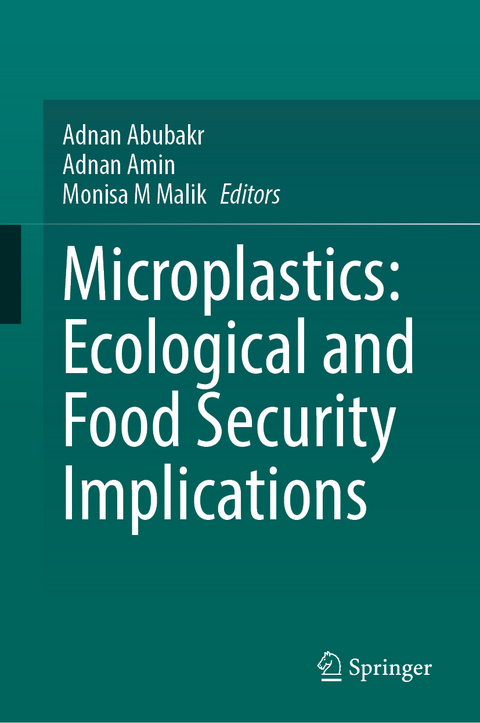
Microplastics: Ecological and Food Security Implications
Springer International Publishing (Verlag)
978-3-031-94479-6 (ISBN)
Microplastics are tiny plastic particles measuring less than 5 millimeters. Though microscopic in size, these pervasive pollutants have a massive impact on aquatic systems worldwide, with disastrous consequences for our environment, wildlife, and ultimately, human well-being. The study of MPs and their effects on aquatic ecology is of utmost importance in determining the far-reaching implications of these particles on the health of our planet and the safety of our food systems. By comprehending the ecological consequences, we can take informed actions to reduce plastic waste, improve waste management practices, and protect the health and integrity of our aquatic ecosystems for future generations.
Microplastics: Ecological and Food Security Implications not only articulates the extent of the problem, but also develops practicable harm mitigation strategies. Expert researchers discuss the disruptions MPs cause in the food web, altering predator-prey dynamics and even the composition of aquatic environments, as accumulation of MPs in sediments impacts nutrient cycling. When MPs find their way into our food systems, they can cause physical effects such as effects such as internal blockages, damage to the digestive system,
Professor (Dr.) Adnan Abubakr
Professor (Dr.) Adnan Abubakr is a distinguished academic and researcher currently serving as Professor of Limnology and Head of the Division of Aquatic Environmental Management, Faculty of Fisheries, Sher-e-Kashmir University of Agricultural Sciences and Technology of Kashmir (SKUAST-K). He holds both M.Sc. and Ph.D. degrees in Limnology from the Department of Limnology, Barkatullah University, Bhopal, with expertise in water and wastewater analysis, including analytical and bacteriological techniques applicable to freshwater and brackish water systems.
Dr. Abubakr specializes in the design and development of artificial wetland systems for wastewater treatment. With over 15 years of extensive experience in teaching, research, and extension in the field of aquatic ecology, he has significantly contributed to the advancement of aquatic environmental sciences. He played a pivotal role in establishing the M.F.Sc. and Ph.D. degree programs in Aquatic Environmental Management within the Division of AEM at SKUAST-K.
A prolific researcher, Dr. Abubakr has published more than 60 research papers in peer-reviewed journals. He has successfully completed two externally funded and three university-funded research projects and has supervised more than 20 postgraduate and doctoral students in their research pursuits.
Dr. Adnan AminDr. Adnan Amin is an Assistant Professor cum Junior Scientist in the Division of Aquatic Environmental Management at the Faculty of Fisheries, Rangil, Ganderbal, Sher-e-Kashmir University of Agricultural Sciences and Technology Kashmir (SKUAST-K). He earned his undergraduate degree from the College of Fishery Science Muthukur, Nellore, under Sri Venkateswara Veterinary University (SVVU), Tirupati, Andhra Pradesh. He completed his Master's at the College of Fisheries, Mangalore, specializing in Aquatic Environment Management, and obtained his Doctorate from the College of Fisheries, Ratnagiri, in the same field.
Dr. Amin's research interests encompass aquatic toxicology, limnology, and the impact of emerging contaminants on aquatic ecosystems. His significant contributions include studies on heavy metal and pesticide toxicity in aquatic organisms and the effects of climate change on aquatic biodiversity. He has published over 35 research papers in national and international peer-reviewed journals, along with five book chapters, ten review papers, and eighteen magazine articles.
In recognition of his academic excellence, Dr. Amin received a merit fellowship during his Master's program. He holds life membership in the Society of Fisheries and Life Science, College of Fisheries, Mangalore. His editorial contributions include co-editing books such as "Xenobiotics in Aquatic Animals: Reproductive and Developmental Impacts," "Food Security, Nutrition and Sustainability Through Aquaculture Technologies," and "Coldwater Fisheries and Aquaculture Management: Technology for
Microplastics: A Rising Global Concern Impacting Food Safety and Human Well-being.- Plastics in the Food Chain: A Scoping Review of Their Environmental, Health, and Food Security Implications.- Microplastics and Climate Change: Unravelling the Interconnected Global Crisis.- The Microplastic Menace: How Contaminated Seafood Puts Food Security at Risk.- Microplastics in Wastewaters and their Potential Effects on Aquatic and Terrestrial Biota.- Microplastic in Freshwater Ecosystems: Implications or Trophic Transfer, Food Security and Human Health Risks.- Microplastics in Aquatic Systems: Sources, Environmental Accumulation, and Impact Mitigation Strategies.- Ecotoxicological Consequences of Microplastics on Aquatic Life.- Microplastics in fish: An emerging environmental challenge.- Impact of Microplastics and Nanomaterials on Fish Health: Oxidative Stress and Antioxidant Défense Mechanisms.- Advanced Techniques for Microplastic Collection, Separation, and Identification in Environmental Samples.- The Lifecycle of Microplastics: Understanding the Aging Process of Microplastics in Marine and Freshwater Habitats.- COVID-19 and Microplastics: Analyzing the Role of Medical Waste in Environmental Pollution.- Navigating the Plastic Crisis: Global Legislation and Policy Responses to Plastic Waste.- Addressing Plastic Pollution: A Strategic Framework for Solving a Global Crisis.
| Erscheinungsdatum | 24.07.2025 |
|---|---|
| Zusatzinfo | XXV, 429 p. 32 illus., 30 illus. in color. |
| Verlagsort | Cham |
| Sprache | englisch |
| Maße | 155 x 235 mm |
| Themenwelt | Technik ► Lebensmitteltechnologie |
| Schlagworte | Aquatic Ecosystems • Biodiversity Loss • ecotoxicology • Environmental impact • Food Chain • microplastic ingestion • Microplastics • Plastic particles • Plastic waste • pollution • waste management • Water pollution |
| ISBN-10 | 3-031-94479-8 / 3031944798 |
| ISBN-13 | 978-3-031-94479-6 / 9783031944796 |
| Zustand | Neuware |
| Informationen gemäß Produktsicherheitsverordnung (GPSR) | |
| Haben Sie eine Frage zum Produkt? |
aus dem Bereich