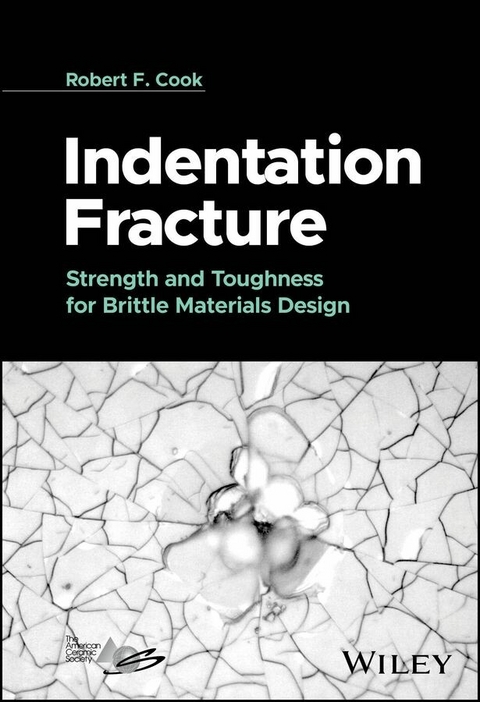
Indentation Fracture (eBook)
403 Seiten
Wiley-American Ceramic Society (Verlag)
978-1-394-20721-3 (ISBN)
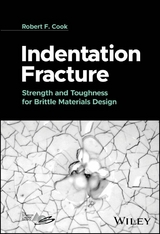
A comprehensive reference with demonstrations of advanced indentation fracture techniques in practical applications to enable better design and more efficient manufacturing
Indentation Fracture describes and illustrates advanced applications of indentation fracture in evaluating strength, toughness, and related properties of brittle materials. The book enables better design, manufacture, performance, and reliability of brittle materials as elements in structural components. Emphasizing the practical applications of indentation fracture techniques, especially those of indentation-strength, the book builds on a development of indentation fracture mechanics to demonstrate clear quantitative comparisons and rankings of material fracture behavior, including the behavior of toughened materials.
The book includes several case studies linking indentation fracture analyses and measurements to other phenomena including fragmentation cracking, edge chipping and dicing damage, scratching and the Mohs scale, and semiconductor grinding damage. Each case study highlights a different aspect of controlled flaw fracture measurements.
The book enables readers to increase the utilization of glasses, ceramics, semiconductors, and similar brittle materials in load-bearing applications by demonstrating experimental indentation techniques to better characterize fracture. A primary focus of the book is demonstration of controlled flaw indentation-strength measurements.
Written by an independent scientist with significant research contributions to the field, Indentation Fracture explores a range of topics including:
- Brittle fracture fundamentals, discussing equilibrium fractures on uniform and localized loading leading to the Griffith and Roesler equations
- Indentation strength variation, covering the effects of contact angle, spherical and flat punch contacts, and contacts in stressed and layered components
- Toughened materials strength observations in alumina, silicon nitride, glass ceramics, ferroelastics, and zirconia
- Strengths of silicon devices determined by wafer backgrinding, covering linear flaws in silicon, including single and multiple scratches, as well as linear, general, controlled, and grinding flaws
Indentation Fracture is an essential reference on the subject for engineers across disciplines, nanotechnologists, geophysicists, and environmental scientists, along with graduate students in materials science and related programs of study.
Robert F. Cook, PhD, is a former NIST Fellow at the National Institute of Standards and Technology (NIST), Gaithersburg, Maryland, USA, and an independent scientist. He was a 2008 recipient of a U.S. Department of Commerce Silver Medal for Scientific/Engineering Achievement and is the author of over 200 peer-reviewed publications, 16 patents, and the book Particle Strengths.
A comprehensive reference with demonstrations of advanced indentation fracture techniques in practical applications to enable better design and more efficient manufacturing Indentation Fracture describes and illustrates advanced applications of indentation fracture in evaluating strength, toughness, and related properties of brittle materials. The book enables better design, manufacture, performance, and reliability of brittle materials as elements in structural components. Emphasizing the practical applications of indentation fracture techniques, especially those of indentation-strength, the book builds on a development of indentation fracture mechanics to demonstrate clear quantitative comparisons and rankings of material fracture behavior, including the behavior of toughened materials. The book includes several case studies linking indentation fracture analyses and measurements to other phenomena including fragmentation cracking, edge chipping and dicing damage, scratching and the Mohs scale, and semiconductor grinding damage. Each case study highlights a different aspect of controlled flaw fracture measurements. The book enables readers to increase the utilization of glasses, ceramics, semiconductors, and similar brittle materials in load-bearing applications by demonstrating experimental indentation techniques to better characterize fracture. A primary focus of the book is demonstration of controlled flaw indentation-strength measurements. Written by an independent scientist with significant research contributions to the field, Indentation Fracture explores a range of topics including: Brittle fracture fundamentals, discussing equilibrium fractures on uniform and localized loading leading to the Griffith and Roesler equationsIndentation strength variation, covering the effects of contact angle, spherical and flat punch contacts, and contacts in stressed and layered componentsToughened materials strength observations in alumina, silicon nitride, glass ceramics, ferroelastics, and zirconiaStrengths of silicon devices determined by wafer backgrinding, covering linear flaws in silicon, including single and multiple scratches, as well as linear, general, controlled, and grinding flaws Indentation Fracture is an essential reference on the subject for engineers across disciplines, nanotechnologists, geophysicists, and environmental scientists, along with graduate students in materials science and related programs of study.
| Erscheint lt. Verlag | 5.2.2025 |
|---|---|
| Sprache | englisch |
| Themenwelt | Naturwissenschaften ► Chemie |
| Technik ► Maschinenbau | |
| Schlagworte | brittle fracture • ceramic strength • Crack propagation • crack velocity • dynamic fragmentation • edge chipping • indentation cracking • indentation strength • lateral cracking • linear contacts • material toughness • toughness variation |
| ISBN-10 | 1-394-20721-2 / 1394207212 |
| ISBN-13 | 978-1-394-20721-3 / 9781394207213 |
| Informationen gemäß Produktsicherheitsverordnung (GPSR) | |
| Haben Sie eine Frage zum Produkt? |
 PDF (Adobe DRM)
Kopierschutz: Adobe-DRM
Adobe-DRM ist ein Kopierschutz, der das eBook vor Mißbrauch schützen soll. Dabei wird das eBook bereits beim Download auf Ihre persönliche Adobe-ID autorisiert. Lesen können Sie das eBook dann nur auf den Geräten, welche ebenfalls auf Ihre Adobe-ID registriert sind.
Details zum Adobe-DRM
Dateiformat: PDF (Portable Document Format)
Mit einem festen Seitenlayout eignet sich die PDF besonders für Fachbücher mit Spalten, Tabellen und Abbildungen. Eine PDF kann auf fast allen Geräten angezeigt werden, ist aber für kleine Displays (Smartphone, eReader) nur eingeschränkt geeignet.
Systemvoraussetzungen:
PC/Mac: Mit einem PC oder Mac können Sie dieses eBook lesen. Sie benötigen eine
eReader: Dieses eBook kann mit (fast) allen eBook-Readern gelesen werden. Mit dem amazon-Kindle ist es aber nicht kompatibel.
Smartphone/Tablet: Egal ob Apple oder Android, dieses eBook können Sie lesen. Sie benötigen eine
Geräteliste und zusätzliche Hinweise
Buying eBooks from abroad
For tax law reasons we can sell eBooks just within Germany and Switzerland. Regrettably we cannot fulfill eBook-orders from other countries.
aus dem Bereich