Molecular Biotechnology (eBook)
2032 Seiten
John Wiley & Sons (Verlag)
978-1-68367-366-8 (ISBN)
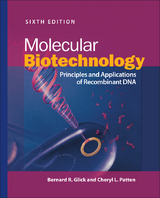
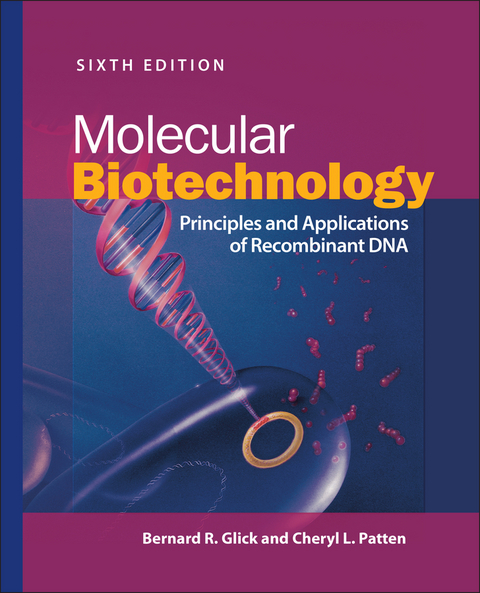
Molecular Biotechnology
Principles and Applications of Recombinant DNA
SIXTH EDITION
An authoritative introduction to the fast-changing world of molecular biotechnology
In continuous publication since 1994 and now in its sixth edition, Molecular Biotechnology: Principles and Applications of Recombinant DNA has been effective in introducing this complex field to students for more than 25 years. This textbook covers essentially every aspect of the field of molecular biotechnology, which is constantly changing and adapting in light of new advances.
This edition includes the latest techniques in DNA sequencing and genetic engineering of microbial, plant, and animal genomes, including human genome editing, as well as updates across many areas, such as:
- Immunological assays for disease diagnosis, more effective bacteriophage therapy, and new ways of dealing with antibiotic-resistant bacteria
- New and developing vaccines for influenza, tuberculosis, and emerging viral threats, including Zika and SARS-CoV-2
- Engineering bacteria to perform plastic degradation and green algae to produce hydrogen, altering amino acid biosynthesis, and creating designer cellulosomes
- Production of humanized monoclonal antibodies in plants, modifying hybrid plants to produce clonal hybrids, and protecting plants from viral and fungal diseases
Molecular Biotechnology features nearly 600 detailed figures and is an ideal textbook for undergraduate and graduate courses in introductory biotechnology, as well as courses dedicated to utilizing this technology, such as medical, agricultural, environmental, and industrial biotechnology applications.
About the Authors
Bernard R. Glick, PhD, is a distinguished professor emeritus at the University of Waterloo, Ontario, Canada, where he was the chair of biology from 2002 to 2008. He has authored more than 400 publications that have garnered over 54,000 citations.
Cheryl L. Patten, PhD, is a professor of microbiology in the Biology Department at the University of New Brunswick, Fredericton, Canada. She teaches courses in introductory biology, microbiology, and biotechnology.
Molecular Biotechnology Molecular Biotechnology Principles and Applications of Recombinant DNA SIXTH EDITION An authoritative introduction to the fast-changing world of molecular biotechnology In continuous publication since 1994 and now in its sixth edition, Molecular Biotechnology: Principles and Applications of Recombinant DNA has been effective in introducing this complex field to students for more than 25 years. This textbook covers essentially every aspect of the field of molecular biotechnology, which is constantly changing and adapting in light of new advances. This edition includes the latest techniques in DNA sequencing and genetic engineering of microbial, plant, and animal genomes, including human genome editing, as well as updates across many areas, such as: Immunological assays for disease diagnosis, more effective bacteriophage therapy, and new ways of dealing with antibiotic-resistant bacteria New and developing vaccines for influenza, tuberculosis, and emerging viral threats, including Zika and SARS-CoV-2 Engineering bacteria to perform plastic degradation and green algae to produce hydrogen, altering amino acid biosynthesis, and creating designer cellulosomes Production of humanized monoclonal antibodies in plants, modifying hybrid plants to produce clonal hybrids, and protecting plants from viral and fungal diseases Molecular Biotechnology features nearly 600 detailed figures and is an ideal textbook for undergraduate and graduate courses in introductory biotechnology, as well as courses dedicated to utilizing this technology, such as medical, agricultural, environmental, and industrial biotechnology applications.
About the Authors Bernard R. Glick, PhD, is a distinguished professor emeritus at the University of Waterloo, Ontario, Canada, where he was the chair of biology from 2002 to 2008. He has authored more than 400 publications that have garnered over 54,000 citations. Cheryl L. Patten, PhD, is a professor of microbiology in the Biology Department at the University of New Brunswick, Fredericton, Canada. She teaches courses in introductory biology, microbiology, and biotechnology.
Preface to the Sixth Edition
1 The Development of Molecular Biotechnology
2 Fundamental Technologies
3 Production of Recombinant Proteins
4 Molecular Diagnostics
5 Protein Therapeutics
6 Nucleic Acids as Therapeutic Agents
7 Vaccines
8 Industrial and Environmental Uses of Recombinant Microorganisms
9 Large-Scale Production of Proteins and Nucleic Acids from Recombinant Microorganisms
10 Genetic Engineering of Plants: Methodology
11 Transgenic Plants
12 Transgenic Animals
13 Molecular Biotechnology and Society
Amino Acids of Proteins and Their Designations
Index
1
The Development of Molecular Biotechnology
Emergence of Molecular Biotechnology
Commercialization of Molecular Biotechnology
Emergence of Molecular Biotechnology
Long before we knew that microorganisms existed or that genes were the units of inheritance, humans looked to the natural world to develop methods to increase food production, preserve food, and heal the sick. Our ancestors discovered that grains could be preserved through fermentation into beer, that storing horse saddles in a warm, damp corner of the stable resulted in the growth of a saddle mold that could heal infected saddle sores, that intentional exposure to a “contagion” could somehow provide protection from an infectious disease on subsequent exposures, and that plants and animals with enhanced production traits could be developed through crossbreeding. Following the discovery of the microscopic world in the 17th century, microorganisms have been employed in the development of numerous useful processes and products. Many of these are found in our households and backyards. Lactic acid bacteria are used to prepare yogurts and probiotics, insecticide‐producing bacteria are sprayed on many of the plants from which the vegetables in our refrigerator are harvested, nitrogen‐fixing bacteria are added in the soil used for cultivation of legumes, the enzymatic stain removers in laundry detergent come from a microorganism, and antibiotics that are derived from common soil microbes are used to treat infectious diseases. These are just a few examples of traditional biotechnologies that have improved our lives. Up to the early 1970s, however, biotechnology was not a well‐recognized scientific discipline, and research in this area was centered in departments of chemical engineering and occasionally in specialized microbiology programs.
In a broad sense, biotechnology is concerned with the manipulation of organisms to develop and manufacture useful products. The term “biotechnology” was first used in 1917 by a Hungarian engineer, Karl Ereky, to describe an integrated process for the large‐scale production of pigs by using sugar beets as the source of food. According to Ereky, biotechnology was “all lines of work by which products are produced from raw materials with the aid of living things.” This fairly precise definition was more or less ignored. For a number of years, biotechnology was used to describe two very different engineering disciplines. On one hand, it referred to industrial fermentation. On the other, it was used for the study of efficiency in the workplace—what is now called ergonomics. This ambiguity ended in 1961 when the Swedish microbiologist Carl Göran Hedén recommended that the title of a scientific journal dedicated to publishing research in the fields of applied microbiology and industrial fermentation be changed from the Journal of Microbiological and Biochemical Engineering and Technology to Biotechnology and Bioengineering. From that time on, biotechnology has been defined as the application of scientific and engineering principles to the processing of material by biological agents to provide goods and services. It is grounded on expertise in microbiology, genetics, biochemistry, immunology, cell biology, and chemical engineering.
Large‐scale production of commodities from natural organisms is often considerably less than optimal. Initial efforts to enhance yields of microbial products focused on creating variants (mutants) using chemical mutagens or radiation to induce changes in the genetic constitution of existing strains. The level of improvement that could be achieved in this way was usually limited biologically. If, for example, a bacterium was mutated to produce high levels of a compound, other metabolic functions often were impaired, thereby causing the bacterium's growth during large‐scale fermentation to be less than desired. Despite this constraint, the traditional “induced mutagenesis and selection” strategies of strain improvement were extremely successful for a number of processes, such as the production of increased levels of antibiotics.
The traditional genetic improvement regimens were tedious, time‐consuming, and costly because of the large numbers of microbial cells that had to be screened and tested. The best result that could be expected with this approach was the improvement of an existing inherited property of a microorganism rather than the expansion of its genetic capabilities. Despite these limitations, by the late 1970s, effective processes for the mass production of a wide range of commercial products from microorganisms had been perfected.
Today we have acquired sufficient knowledge of the biochemistry, genetics, and molecular biology of microbes and other organisms to significantly accelerate the development of useful and improved biological products and processes and to create new products that would not otherwise occur. Distinct from traditional biotechnology, the modern methods require knowledge of and manipulation of genes, the functional units of inheritance, and the discipline that is concerned with the manipulation of genes for the purpose of producing useful goods and services using living organisms is known as molecular biotechnology. The pivotal developments that enabled this technology were the establishment of techniques to isolate genes and to transfer them from one organism to another. The joining of DNA molecules from different sources was first demonstrated in 1971 by biochemist Paul Berg at Stanford University, who inserted genes from the bacterial virus (bacteriophage) lambda into simian virus 40 DNA. This technology is known as recombinant DNA technology, and it was further developed by two scientists working in different fields who met at a scientific conference in 1972. In his laboratory at Stanford University in California, Stanley Cohen had been developing methods to transfer plasmids, small circular DNA molecules that replicate independently of chromosomal DNA, into bacterial cells. Meanwhile, Herbert Boyer at the University of California at San Francisco was working with enzymes that cut DNA at specific nucleotide sequences. Over lunch at a scientific meeting in Hawaii, they reasoned that Boyer's enzyme could be used to splice a specific segment of DNA into a plasmid and then the modified (recombinant) plasmid could be introduced into a host bacterium using Cohen's method.
Recombinant DNA Technology
It was clear to Cohen and Boyer, and others, that recombinant DNA technology had far‐reaching possibilities. As Cohen noted at the time, “It may be possible to introduce in E. coli, genes specifying metabolic or synthetic functions such as photosynthesis or antibiotic production indigenous to other biological classes.” The first commercial product produced using recombinant DNA technology was human insulin, which is used in the treatment of diabetes. The DNA sequence that encodes human insulin was synthesized, a remarkable feat in itself at the time, and was inserted into a plasmid that could be maintained in a nonpathogenic strain of the bacterium Escherichia coli. The bacterial host cells acted as biological factories for the production of the two peptide chains of human insulin that could be purified and combined and used to treat diabetics who were allergic to the commercially available porcine (pig) insulin. Today, this type of genetic engineering is commonplace.
The nature of biotechnology was changed forever by the development of recombinant DNA technology. Genetic engineering provided the means to create, rather than merely isolate, highly productive microbes and other organisms. Not long after the production of the first commercial preparation of recombinant human insulin in 1982, bacteria and then eukaryotic cells were used for the production of other therapeutic proteins, such as interferon, growth hormone, and viral antigens. Recombinant DNA technology also facilitated the biological production of large amounts of useful low‐molecular‐weight compounds and macromolecules that occur naturally in minuscule quantities. Plants and animals became natural bioreactors for producing new or altered gene products that could never have been created either by mutagenesis and selection or by crossbreeding. From its modest beginnings, around 50 years ago, molecular biotechnology has become the standard method for developing living systems with novel functions and capabilities for the synthesis of thousands of important commercial products.
Most new scientific disciplines do not arise solely on their own. They are often formed by the synthesis of knowledge from different areas of research. For molecular biotechnology, the biotechnology component was perfected by industrial microbiologists and chemical engineers, whereas the recombinant DNA technology portion owes much to discoveries in molecular biology, bacterial genetics, and nucleic acid enzymology (Table 1.1). In a broad sense, molecular biotechnology draws on knowledge from a diverse set of fundamental scientific disciplines to create products that are useful in a wide range of applications (Fig. 1.1).
Table 1.1 Selected developments in the history of molecular...
| Erscheint lt. Verlag | 7.2.2022 |
|---|---|
| Reihe/Serie | ASM |
| ASM | ASM Books |
| Sprache | englisch |
| Themenwelt | Medizin / Pharmazie |
| Naturwissenschaften ► Biologie ► Mikrobiologie / Immunologie | |
| Naturwissenschaften ► Chemie | |
| Technik ► Medizintechnik | |
| Technik ► Umwelttechnik / Biotechnologie | |
| Schlagworte | biomedical engineering • Biomedizintechnik • Biotechnologie • Biotechnologie i. d. Biowissenschaften • Biotechnology • Biowissenschaften • Life Sciences • Medical Science • Medizin • Molecular Bioengineering • Molecular Biology • Molekularbiologie • Molekulares Bioengineering |
| ISBN-10 | 1-68367-366-2 / 1683673662 |
| ISBN-13 | 978-1-68367-366-8 / 9781683673668 |
| Informationen gemäß Produktsicherheitsverordnung (GPSR) | |
| Haben Sie eine Frage zum Produkt? |
 EPUB (Adobe DRM)
Kopierschutz: Adobe-DRM
Adobe-DRM ist ein Kopierschutz, der das eBook vor Mißbrauch schützen soll. Dabei wird das eBook bereits beim Download auf Ihre persönliche Adobe-ID autorisiert. Lesen können Sie das eBook dann nur auf den Geräten, welche ebenfalls auf Ihre Adobe-ID registriert sind.
Details zum Adobe-DRM
Dateiformat: EPUB (Electronic Publication)
EPUB ist ein offener Standard für eBooks und eignet sich besonders zur Darstellung von Belletristik und Sachbüchern. Der Fließtext wird dynamisch an die Display- und Schriftgröße angepasst. Auch für mobile Lesegeräte ist EPUB daher gut geeignet.
Systemvoraussetzungen:
PC/Mac: Mit einem PC oder Mac können Sie dieses eBook lesen. Sie benötigen eine
eReader: Dieses eBook kann mit (fast) allen eBook-Readern gelesen werden. Mit dem amazon-Kindle ist es aber nicht kompatibel.
Smartphone/Tablet: Egal ob Apple oder Android, dieses eBook können Sie lesen. Sie benötigen eine
Geräteliste und zusätzliche Hinweise
Buying eBooks from abroad
For tax law reasons we can sell eBooks just within Germany and Switzerland. Regrettably we cannot fulfill eBook-orders from other countries.
aus dem Bereich