The Practice of Engineering Dynamics (eBook)
John Wiley & Sons (Verlag)
978-1-119-05368-2 (ISBN)
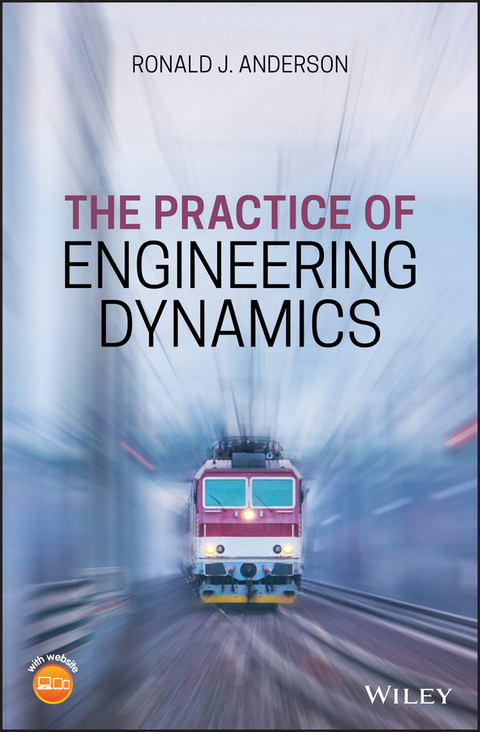
| The Practice of Engineering Dynamics is a textbook that takes a systematic approach to understanding dynamic analysis of mechanical systems. It comprehensively covers dynamic analysis of systems from equilibrium states to non-linear simulations and presents frequency analysis of experimental data. It divides the practice of engineering dynamics into three parts: Part 1 - Modelling: Deriving Equations of Motion; Part 2 - Simulation: Using the Equations of Motion; and Part 3- Experimental Frequency Domain Analysis. This approach fulfils the need to be able to derive the equations governing the motion of a system, to then use the equations to provide useful design information, and finally to be able to analyze experimental data measured on dynamic systems. The Practice of Engineering Dynamics includes end of chapter exercises and is accompanied by a website hosting a solutions manual.
|
DR. RONALD J. ANDERSON is a Professor in the Department of Mechanical and Materials Engineering, Queen's University at Kingston, Canada. He received his B.Sc.(Eng) from the University of Alberta in 1973, his M.Sc.(Eng) from Queen's University in 1974, and his Ph.D. from Queen's University in 1977. His doctoral research was in the field of road vehicle dynamics. From 1977 to 1979, he was a Defence Scientist with the Defence Research Establishment Atlantic where he was engaged in research on the dynamics of novel ships. From 1979 to 1981 he was Senior Dynamicist with the Urban Transportation Development Corporation where he worked on rail vehicle dynamics, particularly suspension design for steerable rail vehicles. He joined Queen's University in 1981 and, while conducting research into vehicle dynamics and multibody dynamics, has been teaching undergraduate courses on dynamics and vibrations and postgraduate courses on advanced dynamics and engineering analysis. Dr. Anderson has been the recipient of several departmental and faculty-wide teaching awards. He has also served the University in the academic administrative roles of Head of Department, Associate Dean (Research), and Dean of Graduate Studies.
The Practice of Engineering Dynamics is a textbook that takes a systematic approach to understanding dynamic analysis of mechanical systems. It comprehensively covers dynamic analysis of systems from equilibrium states to non-linear simulations and presents frequency analysis of experimental data. It divides the practice of engineering dynamics into three parts: Part 1 - Modelling: Deriving Equations of Motion; Part 2 - Simulation: Using the Equations of Motion; and Part 3- Experimental Frequency Domain Analysis. This approach fulfils the need to be able to derive the equations governing the motion of a system, to then use the equations to provide useful design information, and finally to be able to analyze experimental data measured on dynamic systems. The Practice of Engineering Dynamics includes end of chapter exercises and is accompanied by a website hosting a solutions manual.
DR. RONALD J. ANDERSON is a Professor in the Department of Mechanical and Materials Engineering, Queen's University at Kingston, Canada. He received his B.Sc.(Eng) from the University of Alberta in 1973, his M.Sc.(Eng) from Queen's University in 1974, and his Ph.D. from Queen's University in 1977. His doctoral research was in the field of road vehicle dynamics. From 1977 to 1979, he was a Defence Scientist with the Defence Research Establishment Atlantic where he was engaged in research on the dynamics of novel ships. From 1979 to 1981 he was Senior Dynamicist with the Urban Transportation Development Corporation where he worked on rail vehicle dynamics, particularly suspension design for steerable rail vehicles. He joined Queen's University in 1981 and, while conducting research into vehicle dynamics and multibody dynamics, has been teaching undergraduate courses on dynamics and vibrations and postgraduate courses on advanced dynamics and engineering analysis. Dr. Anderson has been the recipient of several departmental and faculty-wide teaching awards. He has also served the University in the academic administrative roles of Head of Department, Associate Dean (Research), and Dean of Graduate Studies.
| Erscheint lt. Verlag | 9.6.2020 |
|---|---|
| Sprache | englisch |
| Themenwelt | Technik ► Maschinenbau |
| Schlagworte | Applied Mathematics in Engineering • Chaos • Chaos / Fractal / Dynamical Systems • Chaos, Fraktale u. dynamische Systeme • Dynamic Analysis • Engineering Dynamics • Equations of motion • Equilibrium • experimental data • Experimental Frequency Domain Analysis • Festkörpermechanik • Frequency analysis • Maschinenbau • Mathematics • Mathematik • Mathematik in den Ingenieurwissenschaften • mechanical engineering • Mechanical Systems • Modelling • Simulation • solid mechanics • Systematic • Textbook |
| ISBN-10 | 1-119-05368-4 / 1119053684 |
| ISBN-13 | 978-1-119-05368-2 / 9781119053682 |
| Informationen gemäß Produktsicherheitsverordnung (GPSR) | |
| Haben Sie eine Frage zum Produkt? |
 PDF (Adobe DRM)
Kopierschutz: Adobe-DRM
Adobe-DRM ist ein Kopierschutz, der das eBook vor Mißbrauch schützen soll. Dabei wird das eBook bereits beim Download auf Ihre persönliche Adobe-ID autorisiert. Lesen können Sie das eBook dann nur auf den Geräten, welche ebenfalls auf Ihre Adobe-ID registriert sind.
Details zum Adobe-DRM
Dateiformat: PDF (Portable Document Format)
Mit einem festen Seitenlayout eignet sich die PDF besonders für Fachbücher mit Spalten, Tabellen und Abbildungen. Eine PDF kann auf fast allen Geräten angezeigt werden, ist aber für kleine Displays (Smartphone, eReader) nur eingeschränkt geeignet.
Systemvoraussetzungen:
PC/Mac: Mit einem PC oder Mac können Sie dieses eBook lesen. Sie benötigen eine
eReader: Dieses eBook kann mit (fast) allen eBook-Readern gelesen werden. Mit dem amazon-Kindle ist es aber nicht kompatibel.
Smartphone/Tablet: Egal ob Apple oder Android, dieses eBook können Sie lesen. Sie benötigen eine
Geräteliste und zusätzliche Hinweise
Buying eBooks from abroad
For tax law reasons we can sell eBooks just within Germany and Switzerland. Regrettably we cannot fulfill eBook-orders from other countries.
aus dem Bereich