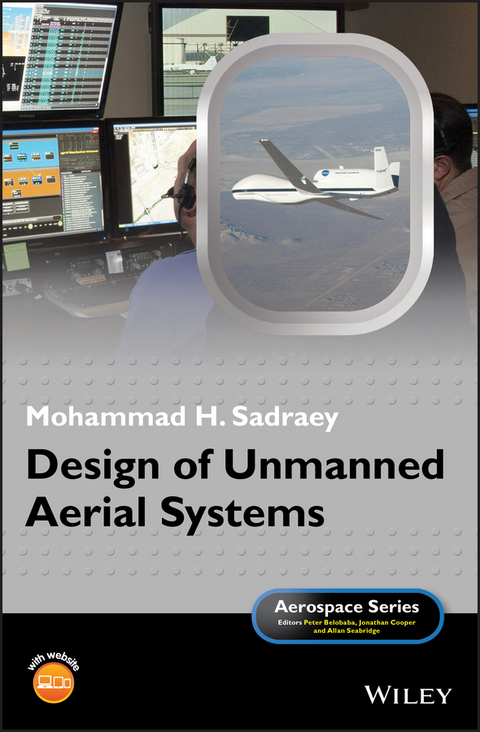
Design of Unmanned Aerial Systems (eBook)
John Wiley & Sons (Verlag)
978-1-119-50869-4 (ISBN)
Provides a comprehensive introduction to the design and analysis of unmanned aircraft systems with a systems perspective
Written for students and engineers who are new to the field of unmanned aerial vehicle design, this book teaches the many UAV design techniques being used today and demonstrates how to apply aeronautical science concepts to their design.
Design of Unmanned Aerial Systems covers the design of UAVs in three sections-vehicle design, autopilot design, and ground systems design-in a way that allows readers to fully comprehend the science behind the subject so that they can then demonstrate creativity in the application of these concepts on their own. It teaches students and engineers all about: UAV classifications, design groups, design requirements, mission planning, conceptual design, detail design, and design procedures. It provides them with in-depth knowledge of ground stations, power systems, propulsion systems, automatic flight control systems, guidance systems, navigation systems, and launch and recovery systems. Students will also learn about payloads, manufacturing considerations, design challenges, flight software, microcontroller, and design examples. In addition, the book places major emphasis on the automatic flight control systems and autopilots.
- Provides design steps and procedures for each major component
- Presents several fully solved, step-by-step examples at component level
- Includes numerous UAV figures/images to emphasize the application of the concepts
- Describes real stories that stress the significance of safety in UAV design
- Offers various UAV configurations, geometries, and weight data to demonstrate the real-world applications and examples
- Covers a variety of design techniques/processes such that the designer has freedom and flexibility to satisfy the design requirements in several ways
- Features many end-of-chapter problems for readers to practice
Design of Unmanned Aerial Systems is an excellent text for courses in the design of unmanned aerial vehicles at both the upper division undergraduate and beginning graduate levels.
Mohammad H. Sadraey, PhD, is Associate Professor (Aeronautical Engineering) at Southern New Hampshire University. He has authored five books, including Aircraft Design: A Systems Engineering Approach and Aircraft Performance Analysis. He is a member of the American Institute of Aeronautics and Astronautics, the American Society for Engineering Education, and Sigma Gamma Tau Honor Society. Dr. Sadraey is also the guest editor of the Journal of Aerospace special issue on 'Aircraft design.'
Provides a comprehensive introduction to the design and analysis of unmanned aircraft systems with a systems perspective Written for students and engineers who are new to the field of unmanned aerial vehicle design, this book teaches the many UAV design techniques being used today and demonstrates how to apply aeronautical science concepts to their design. Design of Unmanned Aerial Systems covers the design of UAVs in three sections vehicle design, autopilot design, and ground systems design in a way that allows readers to fully comprehend the science behind the subject so that they can then demonstrate creativity in the application of these concepts on their own. It teaches students and engineers all about: UAV classifications, design groups, design requirements, mission planning, conceptual design, detail design, and design procedures. It provides them with in-depth knowledge of ground stations, power systems, propulsion systems, automatic flight control systems, guidance systems, navigation systems, and launch and recovery systems. Students will also learn about payloads, manufacturing considerations, design challenges, flight software, microcontroller, and design examples. In addition, the book places major emphasis on the automatic flight control systems and autopilots. Provides design steps and procedures for each major component Presents several fully solved, step-by-step examples at component level Includes numerous UAV figures/images to emphasize the application of the concepts Describes real stories that stress the significance of safety in UAV design Offers various UAV configurations, geometries, and weight data to demonstrate the real-world applications and examples Covers a variety of design techniques/processes such that the designer has freedom and flexibility to satisfy the design requirements in several ways Features many end-of-chapter problems for readers to practice Design of Unmanned Aerial Systems is an excellent text for courses in the design of unmanned aerial vehicles at both the upper division undergraduate and beginning graduate levels.
Mohammad H. Sadraey, PhD, is Associate Professor (Aeronautical Engineering) at Southern New Hampshire University. He has authored five books, including Aircraft Design: A Systems Engineering Approach and Aircraft Performance Analysis. He is a member of the American Institute of Aeronautics and Astronautics, the American Society for Engineering Education, and Sigma Gamma Tau Honor Society. Dr. Sadraey is also the guest editor of the Journal of Aerospace special issue on "Aircraft design."
| Erscheint lt. Verlag | 20.2.2020 |
|---|---|
| Reihe/Serie | Aerospace Series |
| Aerospace Series (PEP) | Aerospace Series (PEP) |
| Mitarbeit |
Herausgeber (Serie): Peter Belobaba, Jonathan Cooper, Allan Seabridge |
| Sprache | englisch |
| Themenwelt | Technik ► Elektrotechnik / Energietechnik |
| Technik ► Maschinenbau | |
| Schlagworte | Aeronautic & Aerospace Engineering • Aerospace Engineering • aircraft design • Automatic Flight Control • Autopilot • Communication Systems • Control Systems Technology • drone • Electrical & Electronics Engineering • Elektrotechnik u. Elektronik • Ground station • Ground stations • Guidance Systems • launch and recovery</p> • <p>UAV • Luft- u. Raumfahrttechnik • Maschinenbau • Maschinenbau - Entwurf • mechanical engineering • Mechanical Engineering - Design • payloads • Regelungstechnik • unmanned aircraft • unmanned vehicle design |
| ISBN-10 | 1-119-50869-X / 111950869X |
| ISBN-13 | 978-1-119-50869-4 / 9781119508694 |
| Informationen gemäß Produktsicherheitsverordnung (GPSR) | |
| Haben Sie eine Frage zum Produkt? |
 PDF (Adobe DRM)
Kopierschutz: Adobe-DRM
Adobe-DRM ist ein Kopierschutz, der das eBook vor Mißbrauch schützen soll. Dabei wird das eBook bereits beim Download auf Ihre persönliche Adobe-ID autorisiert. Lesen können Sie das eBook dann nur auf den Geräten, welche ebenfalls auf Ihre Adobe-ID registriert sind.
Details zum Adobe-DRM
Dateiformat: PDF (Portable Document Format)
Mit einem festen Seitenlayout eignet sich die PDF besonders für Fachbücher mit Spalten, Tabellen und Abbildungen. Eine PDF kann auf fast allen Geräten angezeigt werden, ist aber für kleine Displays (Smartphone, eReader) nur eingeschränkt geeignet.
Systemvoraussetzungen:
PC/Mac: Mit einem PC oder Mac können Sie dieses eBook lesen. Sie benötigen eine
eReader: Dieses eBook kann mit (fast) allen eBook-Readern gelesen werden. Mit dem amazon-Kindle ist es aber nicht kompatibel.
Smartphone/Tablet: Egal ob Apple oder Android, dieses eBook können Sie lesen. Sie benötigen eine
Geräteliste und zusätzliche Hinweise
Buying eBooks from abroad
For tax law reasons we can sell eBooks just within Germany and Switzerland. Regrettably we cannot fulfill eBook-orders from other countries.
aus dem Bereich