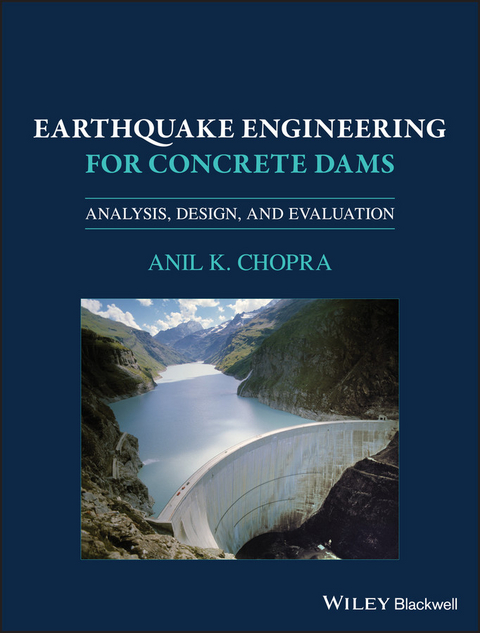
Earthquake Engineering for Concrete Dams (eBook)
John Wiley & Sons (Verlag)
978-1-119-05604-1 (ISBN)
A comprehensive guide to modern-day methods for earthquake engineering of concrete dams
Earthquake analysis and design of concrete dams has progressed from static force methods based on seismic coefficients to modern procedures that are based on the dynamics of dam-water-foundation systems. Earthquake Engineering for Concrete Dams offers a comprehensive, integrated view of this progress over the last fifty years. The book offers an understanding of the limitations of the various methods of dynamic analysis used in practice and develops modern methods that overcome these limitations.
This important book:
- Develops procedures for dynamic analysis of two-dimensional and three-dimensional models of concrete dams
- Identifies system parameters that influence their response
- Demonstrates the effects of dam-water-foundation interaction on earthquake response
- Identifies factors that must be included in earthquake analysis of concrete dams
- Examines design earthquakes as defined by various regulatory bodies and organizations
- Presents modern methods for establishing design spectra and selecting ground motions
- Illustrates application of dynamic analysis procedures to the design of new dams and safety evaluation of existing dams.
Written for graduate students, researchers, and professional engineers, Earthquake Engineering for Concrete Dams offers a comprehensive view of the current procedures and methods for seismic analysis, design, and safety evaluation of concrete dams.
ANIL K. CHOPRA is the Horace, Dorothy, and Katherine Johnson Professor Emeritus of Structural Engineering in the Department of Civil and Environmental Engineering, University of California at Berkeley. He served on the Berkeley faculty from 1969 to 2016.
A comprehensive guide to modern-day methods for earthquake engineering of concrete dams Earthquake analysis and design of concrete dams has progressed from static force methods based on seismic coefficients to modern procedures that are based on the dynamics of dam water foundation systems. Earthquake Engineering for Concrete Dams offers a comprehensive, integrated view of this progress over the last fifty years. The book offers an understanding of the limitations of the various methods of dynamic analysis used in practice and develops modern methods that overcome these limitations. This important book: Develops procedures for dynamic analysis of two-dimensional and three-dimensional models of concrete dams Identifies system parameters that influence their response Demonstrates the effects of dam water foundation interaction on earthquake response Identifies factors that must be included in earthquake analysis of concrete dams Examines design earthquakes as defined by various regulatory bodies and organizations Presents modern methods for establishing design spectra and selecting ground motions Illustrates application of dynamic analysis procedures to the design of new dams and safety evaluation of existing dams. Written for graduate students, researchers, and professional engineers, Earthquake Engineering for Concrete Dams offers a comprehensive view of the current procedures and methods for seismic analysis, design, and safety evaluation of concrete dams.
ANIL K. CHOPRA is the Horace, Dorothy, and Katherine Johnson Professor Emeritus of Structural Engineering in the Department of Civil and Environmental Engineering, University of California at Berkeley. He served on the Berkeley faculty from 1969 to 2016.
| Erscheint lt. Verlag | 23.1.2020 |
|---|---|
| Sprache | englisch |
| Themenwelt | Technik ► Bauwesen |
| Technik ► Maschinenbau | |
| Schlagworte | and seismic design of concrete dams </p> • Bauingenieur- u. Bauwesen • Betonbau • Civil Engineering & Construction • dam–water–foundation interaction • Dynamic Analysis • Earthquake • earthquakes and dams • Erdbebensicherheit • <p>Concrete dams • safety evaluation of existing dams • seismic demands and structural capacity • Staumauer • Structures • Tragwerke |
| ISBN-10 | 1-119-05604-7 / 1119056047 |
| ISBN-13 | 978-1-119-05604-1 / 9781119056041 |
| Informationen gemäß Produktsicherheitsverordnung (GPSR) | |
| Haben Sie eine Frage zum Produkt? |
 PDF (Adobe DRM)
Kopierschutz: Adobe-DRM
Adobe-DRM ist ein Kopierschutz, der das eBook vor Mißbrauch schützen soll. Dabei wird das eBook bereits beim Download auf Ihre persönliche Adobe-ID autorisiert. Lesen können Sie das eBook dann nur auf den Geräten, welche ebenfalls auf Ihre Adobe-ID registriert sind.
Details zum Adobe-DRM
Dateiformat: PDF (Portable Document Format)
Mit einem festen Seitenlayout eignet sich die PDF besonders für Fachbücher mit Spalten, Tabellen und Abbildungen. Eine PDF kann auf fast allen Geräten angezeigt werden, ist aber für kleine Displays (Smartphone, eReader) nur eingeschränkt geeignet.
Systemvoraussetzungen:
PC/Mac: Mit einem PC oder Mac können Sie dieses eBook lesen. Sie benötigen eine
eReader: Dieses eBook kann mit (fast) allen eBook-Readern gelesen werden. Mit dem amazon-Kindle ist es aber nicht kompatibel.
Smartphone/Tablet: Egal ob Apple oder Android, dieses eBook können Sie lesen. Sie benötigen eine
Geräteliste und zusätzliche Hinweise
Buying eBooks from abroad
For tax law reasons we can sell eBooks just within Germany and Switzerland. Regrettably we cannot fulfill eBook-orders from other countries.
aus dem Bereich