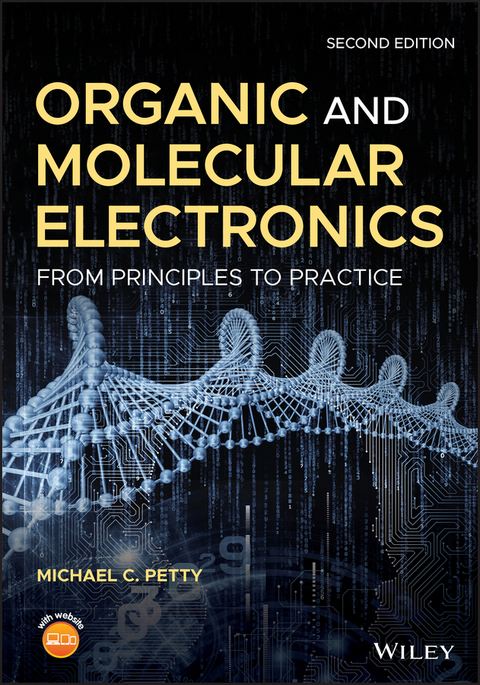
Organic and Molecular Electronics (eBook)
John Wiley & Sons (Verlag)
978-1-118-87927-6 (ISBN)
An introduction to the interdisciplinary subject of molecular electronics, revised and updated
The revised second edition of Organic and Molecular Electronics offers a guide to the fabrication and application of a wide range of electronic devices based around organic materials and low-cost technologies. Since the publication of the first edition, organic electronics has greatly progressed, as evidenced by the myriad companies that have been established to explore the new possibilities.
The text contains an introduction into the physics and chemistry of organic materials, and includes a discussion of the means to process the materials into a form (in most cases, a thin film) where they can be exploited in electronic and optoelectronic devices. The text covers the areas of application and potential application that range from chemical and biochemical sensors to plastic light emitting displays. The updated second edition reflects the recent progress in both organic and molecular electronics and:
- Offers an accessible resource for a wide range of readers
- Contains a comprehensive text that covers topics including electrical conductivity, optical phenomena, electroactive organic compounds, tools for molecular electronics and much more
- Includes illustrative examples based on the most recent research
- Presents problems at the end of each chapter to help reinforce key points
Written mainly for engineering students, Organic and Molecular Electronics: From Principles to Practice provides an updated introduction to the interdisciplinary subjects of organic electronics and molecular electronics with detailed examples of applications.
MICHAEL C. PETTY, Emeritus Professor of Engineering, University of Durham, UK. Professor Petty has published extensively in the areas of organic electronics and molecular electronics and has lectured worldwide in these subjects. He was formerly President of the International Society for Molecular Electronics and BioComputing, and was a previous Chairman of the School of Engineering at Durham University.
An introduction to the interdisciplinary subject of molecular electronics, revised and updated The revised second edition of Organic and Molecular Electronics offers a guide to the fabrication and application of a wide range of electronic devices based around organic materials and low-cost technologies. Since the publication of the first edition, organic electronics has greatly progressed, as evidenced by the myriad companies that have been established to explore the new possibilities. The text contains an introduction into the physics and chemistry of organic materials, and includes a discussion of the means to process the materials into a form (in most cases, a thin film) where they can be exploited in electronic and optoelectronic devices. The text covers the areas of application and potential application that range from chemical and biochemical sensors to plastic light emitting displays. The updated second edition reflects the recent progress in both organic and molecular electronics and: Offers an accessible resource for a wide range of readers Contains a comprehensive text that covers topics including electrical conductivity, optical phenomena, electroactive organic compounds, tools for molecular electronics and much more Includes illustrative examples based on the most recent research Presents problems at the end of each chapter to help reinforce key points Written mainly for engineering students, Organic and Molecular Electronics: From Principles to Practice provides an updated introduction to the interdisciplinary subjects of organic electronics and molecular electronics with detailed examples of applications.
MICHAEL C. PETTY, Emeritus Professor of Engineering, University of Durham, UK. Professor Petty has published extensively in the areas of organic electronics and molecular electronics and has lectured worldwide in these subjects. He was formerly President of the International Society for Molecular Electronics and BioComputing, and was a previous Chairman of the School of Engineering at Durham University.
| Erscheint lt. Verlag | 12.10.2018 |
|---|---|
| Sprache | englisch |
| Themenwelt | Naturwissenschaften ► Chemie |
| Technik ► Elektrotechnik / Energietechnik | |
| Technik ► Maschinenbau | |
| Schlagworte | applications of organic and molecular electronics • beyond Moore’s laws • Carbon Based Materials • Electrical & Electronics Engineering • electronic devices based around organic materials and low-cost technologies • Electronic materials • Elektronische Materialien • Elektrotechnik u. Elektronik • evolution of microelectronics • guide to organic and molecular electronics • Halbleiterphysik • Materials Science • Materialwissenschaften • Moore’s laws • new possibilities of organic and molecular electronics • Organic electronics • organic materials and electronics • Organische Elektronik • Physics • Physik • Practices of organic and molecular electronics • Principles of Organic and Molecular Electronics • progress in organic and molecular electronics • recent research on organic and molecular electronics • resource to organic and molecular electronics • scope of organic and molecular electronics • Semiconductor physics • solutions to organic and molecular electronics • text on organic and molecular electronics • the physics and chemistry of organic materials |
| ISBN-10 | 1-118-87927-9 / 1118879279 |
| ISBN-13 | 978-1-118-87927-6 / 9781118879276 |
| Informationen gemäß Produktsicherheitsverordnung (GPSR) | |
| Haben Sie eine Frage zum Produkt? |
 PDF (Adobe DRM)
Kopierschutz: Adobe-DRM
Adobe-DRM ist ein Kopierschutz, der das eBook vor Mißbrauch schützen soll. Dabei wird das eBook bereits beim Download auf Ihre persönliche Adobe-ID autorisiert. Lesen können Sie das eBook dann nur auf den Geräten, welche ebenfalls auf Ihre Adobe-ID registriert sind.
Details zum Adobe-DRM
Dateiformat: PDF (Portable Document Format)
Mit einem festen Seitenlayout eignet sich die PDF besonders für Fachbücher mit Spalten, Tabellen und Abbildungen. Eine PDF kann auf fast allen Geräten angezeigt werden, ist aber für kleine Displays (Smartphone, eReader) nur eingeschränkt geeignet.
Systemvoraussetzungen:
PC/Mac: Mit einem PC oder Mac können Sie dieses eBook lesen. Sie benötigen eine
eReader: Dieses eBook kann mit (fast) allen eBook-Readern gelesen werden. Mit dem amazon-Kindle ist es aber nicht kompatibel.
Smartphone/Tablet: Egal ob Apple oder Android, dieses eBook können Sie lesen. Sie benötigen eine
Geräteliste und zusätzliche Hinweise
Buying eBooks from abroad
For tax law reasons we can sell eBooks just within Germany and Switzerland. Regrettably we cannot fulfill eBook-orders from other countries.
aus dem Bereich