


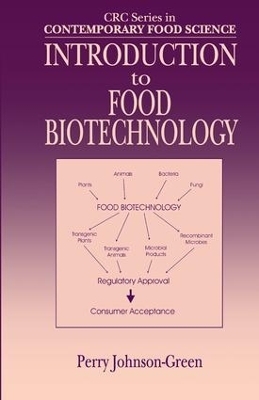
Introduction to Food Biotechnology
Seiten
2002
Crc Press Inc (Verlag)
978-0-8493-1152-9 (ISBN)
Crc Press Inc (Verlag)
978-0-8493-1152-9 (ISBN)
Describes, explains, and discusses biotechnology within the context of human nutrition, food production, and food processing. Suitable for undergraduate students in Food Science and Nutrition who do not have a background in molecular biology, this book provides explanations of various technically difficult aspects of biotechnology.
Universities throughout the US and the rest of the world offer Food Biotechnology courses. However, until now, professors lacked a single, comprehensive text to present to their students. Introduction to Food Biotechnology describes, explains, and discusses biotechnology within the context of human nutrition, food production, and food processing. Written for undergraduate students in Food Science and Nutrition who do not have a background in molecular biology, it provides clear explanations of the broad range of topics that comprise the field of food biotechnology.
Students will gain an understanding of the methods and rationales behind the genetic modification of plants and animals, as well as an appreciation of the associated risks to the environment and to public health. Introduction to Food Biotechnology examines cell culture, transgenic organisms, regulatory policy, safety issues, and consumer concerns. It covers microbial biotechnology in depth, emphasizing applications to the food industry and methods of large-scale cultivation of microbes and other cells. It also explores the potential of biotechnology to affect food security, risks, and other ethical problems.
Biotechnology can be used as a tool within many disciplines, including food science, nutrition, dietetics, and agriculture. Using numerous examples, Introduction to Food Biotechnology lays a solid foundation in all areas of food biotechnology and provides a comprehensive review of the biological and chemical concepts that are important in each discipline. The book develops an understanding of the potential contributions of food biotechnology to the food industry, and towards improved food safety and public health.
Universities throughout the US and the rest of the world offer Food Biotechnology courses. However, until now, professors lacked a single, comprehensive text to present to their students. Introduction to Food Biotechnology describes, explains, and discusses biotechnology within the context of human nutrition, food production, and food processing. Written for undergraduate students in Food Science and Nutrition who do not have a background in molecular biology, it provides clear explanations of the broad range of topics that comprise the field of food biotechnology.
Students will gain an understanding of the methods and rationales behind the genetic modification of plants and animals, as well as an appreciation of the associated risks to the environment and to public health. Introduction to Food Biotechnology examines cell culture, transgenic organisms, regulatory policy, safety issues, and consumer concerns. It covers microbial biotechnology in depth, emphasizing applications to the food industry and methods of large-scale cultivation of microbes and other cells. It also explores the potential of biotechnology to affect food security, risks, and other ethical problems.
Biotechnology can be used as a tool within many disciplines, including food science, nutrition, dietetics, and agriculture. Using numerous examples, Introduction to Food Biotechnology lays a solid foundation in all areas of food biotechnology and provides a comprehensive review of the biological and chemical concepts that are important in each discipline. The book develops an understanding of the potential contributions of food biotechnology to the food industry, and towards improved food safety and public health.
Perry Johnson-Green
The Scope of Food Biotechnology. Biotechnology: Using Cells and Cellular Components. Gene Cloning and Production of Recombinant Proteins. Plant Biotechnology. Animal Biotechnology. Diagnostic Systems. Cell Culture and Food. Industrial Cell Culture. Ethics, Safety, and Regulation.
| Erscheint lt. Verlag | 29.4.2002 |
|---|---|
| Reihe/Serie | Contemporary Food Science |
| Zusatzinfo | 60 Halftones, black and white; 109 Illustrations, black and white |
| Verlagsort | Bosa Roca |
| Sprache | englisch |
| Maße | 156 x 234 mm |
| Gewicht | 564 g |
| Themenwelt | Technik ► Lebensmitteltechnologie |
| ISBN-10 | 0-8493-1152-7 / 0849311527 |
| ISBN-13 | 978-0-8493-1152-9 / 9780849311529 |
| Zustand | Neuware |
| Informationen gemäß Produktsicherheitsverordnung (GPSR) | |
| Haben Sie eine Frage zum Produkt? |
Mehr entdecken
aus dem Bereich


aus dem Bereich
Technologie, Chemie, Mikrobiologie, Analytik, Bedeutung, Recht
Buch | Hardcover (2023)
Verlag Eugen Ulmer
CHF 169,00
A Laboratory Manual
Buch | Softcover (2022)
John Wiley & Sons Inc (Verlag)
CHF 103,00


