Anticancer Therapeutics (eBook)
John Wiley & Sons (Verlag)
978-1-118-69621-7 (ISBN)
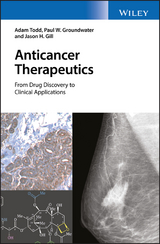
An integrated presentation of the basic science and clinical applications of anticancer agents
Aimed at both undergraduate and postgraduate readers, this unique text provides readers with a fully-integrated presentation of all aspects of the science of anticancer drugs, including their chemistry, pharmacology, and clinical applications.
After heart disease, cancer is the number one killer worldwide, and the tumor microenvironment is forever changing, creating an ever-greater demand for safer, more effective anticancer agents. In response to that demand, the $100 billion cancer drug market continues to grow, with our increased understanding of cancer leading to new drugs being used clinically almost every year.
Anticancer Therapeutics is divided into three sections. Section 1 is an introduction to cancer and therapeutics, and covers the etiology and cellular and molecular basis of cancer. In Section 2, the authors focus on the anticancer agents - their discovery, synthesis, mode of action, mechanisms of resistance, and adverse reactions. Section 3 focuses on specific cancers, explaining how and why the various agents discussed in Section 2 are used, both individually and in combination, to treat different cancers.
- Integrates aspects of basic science, including chemistry and pharmacology and clinical medicine in relation to cancer therapeutics
- Written by an author team comprising specialists in medicinal chemistry, pharmacology, and oncology
- Features full-color images throughout illustrating how drugs bind to cellular targets and exert their pharmacological effect
- Divided into three sections, covering the etiology and cellular and molecular basis of cancer, anticancer agents, and drug applications for different cancers.
Providing the reader with an integrated understanding of all aspects of the science of anticancer agents, this is an ideal textbook for undergraduates studying medicine, nursing, medicinal chemistry, pharmacy, pharmacology and other allied heath / life sciences. It is also a valuable bench reference for pharmacists, medics, and pharmaceutical researchers working in both academia and industry.
Adam Todd, PhD is Senior Lecturer in Pharmaceutical Public Health in the School of Pharmacy, Faculty of Medical Sciences, at Newcastle University, UK. He is registered pharmacist, and specializes in oncology and palliative care.
Paul W. Groundwater, PhD is Professor of Medicinal Chemistry in the Faculty of Pharmacy at The University of Sydney, Sydney, Australia.
Jason H. Gill, PhD is a Reader in Molecular Therapeutics in the School of Pharmacy, Faculty of Medical Sciences, at Newcastle University, UK.
An integrated presentation of the basic science and clinical applications of anticancer agents Aimed at both undergraduate and postgraduate readers, this unique text provides readers with a fully-integrated presentation of all aspects of the science of anticancer drugs, including their chemistry, pharmacology, and clinical applications. After heart disease, cancer is the number one killer worldwide, and the tumor microenvironment is forever changing, creating an ever-greater demand for safer, more effective anticancer agents. In response to that demand, the $100 billion cancer drug market continues to grow, with our increased understanding of cancer leading to new drugs being used clinically almost every year. Anticancer Therapeutics is divided into three sections. Section 1 is an introduction to cancer and therapeutics, and covers the etiology and cellular and molecular basis of cancer. In Section 2, the authors focus on the anticancer agents their discovery, synthesis, mode of action, mechanisms of resistance, and adverse reactions. Section 3 focuses on specific cancers, explaining how and why the various agents discussed in Section 2 are used, both individually and in combination, to treat different cancers. Integrates aspects of basic science, including chemistry and pharmacology and clinical medicine in relation to cancer therapeutics Written by an author team comprising specialists in medicinal chemistry, pharmacology, and oncology Features full-color images throughout illustrating how drugs bind to cellular targets and exert their pharmacological effect Divided into three sections, covering the etiology and cellular and molecular basis of cancer, anticancer agents, and drug applications for different cancers. Providing the reader with an integrated understanding of all aspects of the science of anticancer agents, this is an ideal textbook for undergraduates studying medicine, nursing, medicinal chemistry, pharmacy, pharmacology and other allied heath / life sciences. It is also a valuable bench reference for pharmacists, medics, and pharmaceutical researchers working in both academia and industry.
Adam Todd, PhD is Senior Lecturer in Pharmaceutical Public Health in the School of Pharmacy, Faculty of Medical Sciences, at Newcastle University, UK. He is registered pharmacist, and specializes in oncology and palliative care. Paul W. Groundwater, PhD is Professor of Medicinal Chemistry in the Faculty of Pharmacy at The University of Sydney, Sydney, Australia. Jason H. Gill, PhD is a Reader in Molecular Therapeutics in the School of Pharmacy, Faculty of Medical Sciences, at Newcastle University, UK.
Preface
Section1: Introduction
1.1 The global burden of cancer
1.2 Cancer Staging and Classification
1.3 Cellular and molecular basis of cancer
Section 2: The Anticancer Agents
2.1 Agents which act directly on DNA
2.2 Antimetabolites
2.3 Antimicrotubule agents
2.4 Anti-hormonal agents
2.5 Kinase inhibitors
Section 3: The Cancers
3.1 Breast Cancer
3.2 Colorectal Cancer
3.3 Leukaemia
3.4 Lung Cancer
3.5 Oesophageal Cancer
3.6 Ovarian Cancer
3.7 Pancreatic Cancer
3.8 Prostate Cancer
3.9 Skin Cancers
3.10 Testicular Cancer
Index
| Erscheint lt. Verlag | 8.12.2017 |
|---|---|
| Sprache | englisch |
| Themenwelt | Medizin / Pharmazie ► Medizinische Fachgebiete |
| Naturwissenschaften ► Biologie | |
| Naturwissenschaften ► Chemie ► Technische Chemie | |
| Technik | |
| Schlagworte | Anticancer agents • anticancer drugs medicinal chemistry • anticancer pharmacology • anticancer pharmacology textbook • anticancer therapeutics basic science • anticancer therapeutics chemistry • anticancer therapeutics clinical medicine • anticancer therapeutics medicinal chemistry • Biowissenschaften • brain cancer drugs • cancer drug bench reference • cancer drug chemistry • cancer drug clinical applications • cancer drug discover • cancer drug pharmacochemistry • cancer drug pharmacokinetics • cancer drug pharmacopeia • cancer drugs • Cancer Therapeutics • cancer therapeutics clinical studies • cancer therapeutics discovery • cancer therapeutics safety • Cell & Molecular Biology • Chemie • Chemistry • endocrine cancer drugs • exocrine cancer drugs • leukemia drugs • Life Sciences • lung cancer drugs • lymphatic cancer drugs • Medical Science • Medizin • Medizinische Chemie • neuroblastoma drugs • ovarian cancer drugs • pancreatic cancer drugs • Pharmaceutical & Medicinal Chemistry • pharmacist guide to cancer drugs • Pharmacology & Pharmaceutical Medicine • Pharmakologie • Pharmakologie u. Pharmazeutische Medizin • Pharmazeutische Chemie • Pharmazeutische u. Medizinische Chemie • skin cancer drugs • small tumor drugs • testicular cancer drugs • Zell- u. Molekularbiologie |
| ISBN-10 | 1-118-69621-2 / 1118696212 |
| ISBN-13 | 978-1-118-69621-7 / 9781118696217 |
| Informationen gemäß Produktsicherheitsverordnung (GPSR) | |
| Haben Sie eine Frage zum Produkt? |
 PDF (Adobe DRM)
Kopierschutz: Adobe-DRM
Adobe-DRM ist ein Kopierschutz, der das eBook vor Mißbrauch schützen soll. Dabei wird das eBook bereits beim Download auf Ihre persönliche Adobe-ID autorisiert. Lesen können Sie das eBook dann nur auf den Geräten, welche ebenfalls auf Ihre Adobe-ID registriert sind.
Details zum Adobe-DRM
Dateiformat: PDF (Portable Document Format)
Mit einem festen Seitenlayout eignet sich die PDF besonders für Fachbücher mit Spalten, Tabellen und Abbildungen. Eine PDF kann auf fast allen Geräten angezeigt werden, ist aber für kleine Displays (Smartphone, eReader) nur eingeschränkt geeignet.
Systemvoraussetzungen:
PC/Mac: Mit einem PC oder Mac können Sie dieses eBook lesen. Sie benötigen eine
eReader: Dieses eBook kann mit (fast) allen eBook-Readern gelesen werden. Mit dem amazon-Kindle ist es aber nicht kompatibel.
Smartphone/Tablet: Egal ob Apple oder Android, dieses eBook können Sie lesen. Sie benötigen eine
Geräteliste und zusätzliche Hinweise
Buying eBooks from abroad
For tax law reasons we can sell eBooks just within Germany and Switzerland. Regrettably we cannot fulfill eBook-orders from other countries.
aus dem Bereich