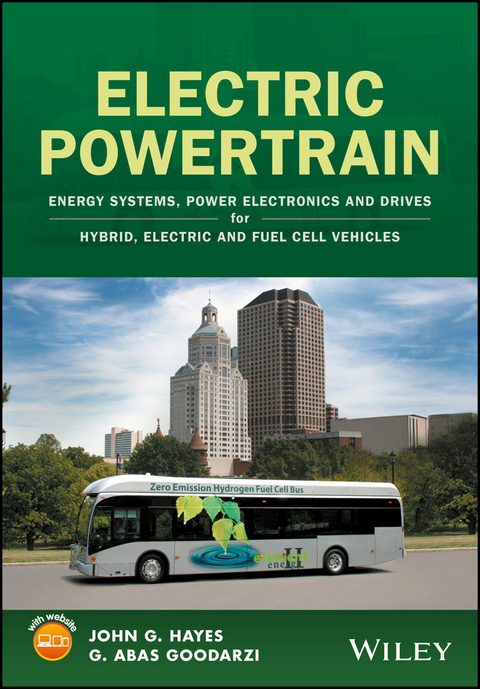
Electric Powertrain (eBook)
John Wiley & Sons (Verlag)
978-1-119-06366-7 (ISBN)
Empowers engineering professionals and students with the knowledge and skills required to engineer electric vehicle powertrain architectures, energy storage systems, power electronics converters and electric drives.
The modern electric powertrain is relatively new for the automotive industry, and engineers are challenged with designing affordable, efficient and high-performance electric powertrains as the industry undergoes a technological evolution. Co-authored by two electric vehicle (EV) engineers with decades of experience designing and putting into production all of the powertrain technologies presented, this book provides readers with the hands-on knowledge, skills and expertise they need to rise to that challenge.
This four-part practical guide provides a comprehensive review of battery, hybrid and fuel cell EV systems and the associated energy sources, power electronics, machines, and drives. The first part of the book begins with a historical overview of electromobility and the related environmental impacts motivating the development of the electric powertrain. Vehicular requirements for electromechanical propulsion are then presented. Battery electric vehicles (BEV), fuel cell electric vehicles (FCEV), and conventional and hybrid electric vehicles (HEV) are then described, contrasted and compared for vehicle propulsion. The second part of the book features in-depth analysis of the electric powertrain traction machines, with a particular focus on the induction machine and the surface- and interior-permanent magnet ac machines. The brushed dc machine is also considered due to its ease of operation and understanding, and its historical place, especially as the traction machine on NASA's Mars rovers. The third part of the book features the theory and applications for the propulsion, charging, accessory, and auxiliary power electronics converters. Chapters are presented on isolated and non-isolated dc-dc converters, traction inverters, and battery charging. The fourth part presents the introductory and applied electromagnetism required as a foundation throughout the book.
• Introduces and holistically integrates the key EV powertrain technologies.
• Provides a comprehensive overview of existing and emerging automotive solutions.
• Provides experience-based expertise for vehicular and powertrain system and sub-system level study, design, and optimization.
• Presents many examples of powertrain technologies from leading manufacturers.
• Discusses the dc traction machines of the Mars rovers, the ultimate EVs from NASA.
• Investigates the environmental motivating factors and impacts of electromobility.
• Presents a structured university teaching stream from introductory undergraduate to postgraduate.
• Includes real-world problems and assignments of use to design engineers, researchers, and students alike.
• Features a companion website with numerous references, problems, solutions, and practical assignments.
• Includes introductory material throughout the book for the general scientific reader.
• Contains essential reading for government regulators and policy makers.
Electric Powertrain: Energy Systems, Power Electronics and Drives for Hybrid, Electric and Fuel Cell Vehicles is an important professional resource for practitioners and researchers in the battery, hybrid, and fuel cell EV transportation industry. The book is a structured holistic textbook for the teaching of the fundamental theories and applications of energy sources, power electronics, and electric machines and drives to engineering undergraduate and postgraduate students.
Textbook Structure and Suggested Teaching Curriculum
This is primarily an engineering textbook covering the automotive
John G. Hayes, PhD, MSEE, MBA, lectures at University College Cork, Ireland, and specialises in automotive, industrial and renewable energy systems and related power electronics, machines and electromagnetism. He previously worked in Southern California for ten years at General Motors' Hughes Aircraft subsidiary developing EV propulsion and inductive charging systems for the General Motors EV1, the first modern production EV. John's recent focus has been on the development of integrated and holistic EV teaching materials for the engineering student and the automotive professional.
G. Abas Goodarzi, PhD, P.E., is the Chief Executive Officer and President of US Hybrid Corporation, Torrance, California, which he founded in 1999. He is also the President of US FuelCell, a company formed with the acquisition by US Hybrid of the United Technologies PEM fuel cell transportation division. He served as Senior Scientist at General Motors' Hughes Aircraft subsidiary, and as Technical Director for the General Motors EV1. He has designed various EV, HEV, and FCEV powertrain systems for light, medium, and heavy-duty, on-road, off-road, and special-purpose vehicles.
The why, what and how of the electric vehicle powertrain Empowers engineering professionals and students with the knowledge and skills required to engineer electric vehicle powertrain architectures, energy storage systems, power electronics converters and electric drives. The modern electric powertrain is relatively new for the automotive industry, and engineers are challenged with designing affordable, efficient and high-performance electric powertrains as the industry undergoes a technological evolution. Co-authored by two electric vehicle (EV) engineers with decades of experience designing and putting into production all of the powertrain technologies presented, this book provides readers with the hands-on knowledge, skills and expertise they need to rise to that challenge. This four-part practical guide provides a comprehensive review of battery, hybrid and fuel cell EV systems and the associated energy sources, power electronics, machines, and drives. Introduces and holistically integrates the key EV powertrain technologies. Provides a comprehensive overview of existing and emerging automotive solutions. Provides experience-based expertise for vehicular and powertrain system and sub-system level study, design, and optimization. Presents many examples of powertrain technologies from leading manufacturers. Discusses the dc traction machines of the Mars rovers, the ultimate EVs from NASA. Investigates the environmental motivating factors and impacts of electromobility. Presents a structured university teaching stream from introductory undergraduate to postgraduate. Includes real-world problems and assignments of use to design engineers, researchers, and students alike. Features a companion website with numerous references, problems, solutions, and practical assignments. Includes introductory material throughout the book for the general scientific reader. Contains essential reading for government regulators and policy makers. Electric Powertrain: Energy Systems, Power Electronics and Drives for Hybrid, Electric and Fuel Cell Vehicles is an important professional resource for practitioners and researchers in the battery, hybrid, and fuel cell EV transportation industry. The resource is a structured, holistic textbook for the teaching of the fundamental theories and applications of energy sources, power electronics, and electric machines and drives to engineering undergraduate and postgraduate students.
John G. Hayes, PhD, MSEE, MBA, lectures at University College Cork, Ireland, and specialises in automotive, industrial and renewable energy systems and related power electronics, machines and electromagnetism. He previously worked in Southern California for ten years at General Motors' Hughes Aircraft subsidiary developing EV propulsion and inductive charging systems for the General Motors EV1, the first modern production EV. John's recent focus has been on the development of integrated and holistic EV teaching materials for the engineering student and the automotive professional. G. Abas Goodarzi, PhD, P.E., is the Chief Executive Officer and President of US Hybrid Corporation, Torrance, California, which he founded in 1999. He is also the President of US FuelCell, a company formed with the acquisition by US Hybrid of the United Technologies PEM fuel cell transportation division. He served as Senior Scientist at General Motors' Hughes Aircraft subsidiary, and as Technical Director for the General Motors EV1. He has designed various EV, HEV, and FCEV powertrain systems for light, medium, and heavy-duty, on-road, off-road, and special-purpose vehicles.
Hayes and Goodarzi have focused their considerable talent and experience to teaching the inner workings of the electric car. Readers, whether engineers, students, or the interested public will find this book a treasure trove of knowledge on modern automotive technology. In conclusion, what a great book! --John M Miller, J-N-J Miller Design Services PLLC, Longview, Texas, USA
I highly recommend 'Electric Powertrain: Energy Systems, Power Electronics and Drives for Hybrid, Electric and Fuel Cell Vehicles' by Dr John G. Hayes and Dr G. Abas Goodarzi. I use this book as my core teaching text on my module Transportation Power and Systems 3, which I teach to third year BEng and MEng Mechanical Engineering undergraduates in Queen's University Belfast. This book captures the fundamentals and in-depth aspects of the key elements of the course I teach including drive cycles, power trains for hybrids, vehicle dynamics, batteries and machines. The worked examples are excellent. The text book is very well laid out with superb well thought-out practical problems at the end of each chapter. This book is very relevant to those who wish to expand their knowledge of hybrid vehicles. It seamlessly integrates the electrical, civil and mechanical disciplines in this growing and multidisciplinary area. This is especially important considering the sustainable direction of land-based transport will take over the next decade as we strive to combat global warming and reduce greenhouse gas emissions. --Dr Aoife Foley, School of Mechanical and Aerospace Engineering, Queen's University Belfast, United Kingdom
Hayes and Goodarzi have focused their considerable talent and experience to teaching the inner workings of the electric car. Readers, whether engineers, students, or the interested public will find this book a treasure trove of knowledge on modern automotive technology. In conclusion, what a great book!
-- John M Miller, J-N-J Miller Design Services PLLC, Longview, Texas, USA
I highly recommend Electric Powertrain: Energy Systems, Power Electronics and Drives for Hybrid, Electric and Fuel Cell Vehicles by Dr John G. Hayes and Dr G. Abas Goodarzi. I use this book as my core teaching text on my module Transportation Power and Systems 3, which I teach to third year BEng and MEng Mechanical Engineering undergraduates in Queen s University Belfast. This book captures the fundamentals and in-depth aspects of the key elements of the course I teach including drive cycles, power trains for hybrids, vehicle dynamics, batteries and machines. The worked examples are excellent. The text book is very well laid out with superb well thought-out practical problems at the end of each chapter. This book is very relevant to those who wish to expand their knowledge of hybrid vehicles. It seamlessly integrates the electrical, civil and mechanical disciplines in this growing and multidisciplinary area. This is especially important considering the sustainable direction of land-based transport will take over the next decade as we strive to combat global warming and reduce greenhouse gas emissions. Dr Aoife Foley, School of Mechanical and Aerospace Engineering, Queen s University Belfast, United Kingdom
| Erscheint lt. Verlag | 13.11.2017 |
|---|---|
| Sprache | englisch |
| Themenwelt | Technik ► Elektrotechnik / Energietechnik |
| Technik ► Fahrzeugbau / Schiffbau | |
| Schlagworte | automotive electric powertrain designs • automotive engineering • battery charging • Boost Converter • boost power-factor correction • Brake specific fuel consumption • Brushed dc motor • Buck Converter • carbon emissions • Electrical & Electronics Engineering • electric drives • Electric Machines • electric powertrain energy systems • electric powertrains • electric powertrain structural mechanics • electric powertrain technologies • Electric Propulsion • Electric Vehicle • electric vehicle batteries • electric vehicle on-vehicle energy-storage systems • electric vehicle powertrain electronics • electric vehicle powertrain modeling • electric vehicle powertrains • electric vehicle powertrain spec sheets • electric vehicle powertrain subsystems • electromagnetism • electromechanical energy conversion • Electro Mobility • Elektrotechnik u. Elektronik • ev powertrains • Fahrzeugtechnik • ferromagnetism • forward converter • Fuel cells • fuel cell vehicle powertrain modeling • fuel cell vehicle principles • full-bridge converter • hybrid-electric vehicle powertrain modeling • hybrid electric vehicles principles • hybrid vehicle powertrains • Induction Motors • inductive charging • interior-permanent-magnet motors • Isolated DC-DC Converters • Leistungselektronik • Li-ion battery • li-ion battery-electric vehicle • Maschinenbau • mechanical engineering • Non-isolated dc-dc converters • permanent-magnet motors • Power Electronics • power-factor correction • powertrain drives for all-electric vehicles • powertrain drives for fuel cell vehicles • powertrain drives for hybrid electric vehicles • Resonant Converters • series hybrid-electric vehicle • series-parallel hybrid-electric vehicle • surface-permanent-magnet motors • three-phase inverters • traction drives • Vehicle Dynamics • Wireless charging |
| ISBN-10 | 1-119-06366-3 / 1119063663 |
| ISBN-13 | 978-1-119-06366-7 / 9781119063667 |
| Informationen gemäß Produktsicherheitsverordnung (GPSR) | |
| Haben Sie eine Frage zum Produkt? |
 PDF (Adobe DRM)
Kopierschutz: Adobe-DRM
Adobe-DRM ist ein Kopierschutz, der das eBook vor Mißbrauch schützen soll. Dabei wird das eBook bereits beim Download auf Ihre persönliche Adobe-ID autorisiert. Lesen können Sie das eBook dann nur auf den Geräten, welche ebenfalls auf Ihre Adobe-ID registriert sind.
Details zum Adobe-DRM
Dateiformat: PDF (Portable Document Format)
Mit einem festen Seitenlayout eignet sich die PDF besonders für Fachbücher mit Spalten, Tabellen und Abbildungen. Eine PDF kann auf fast allen Geräten angezeigt werden, ist aber für kleine Displays (Smartphone, eReader) nur eingeschränkt geeignet.
Systemvoraussetzungen:
PC/Mac: Mit einem PC oder Mac können Sie dieses eBook lesen. Sie benötigen eine
eReader: Dieses eBook kann mit (fast) allen eBook-Readern gelesen werden. Mit dem amazon-Kindle ist es aber nicht kompatibel.
Smartphone/Tablet: Egal ob Apple oder Android, dieses eBook können Sie lesen. Sie benötigen eine
Geräteliste und zusätzliche Hinweise
Buying eBooks from abroad
For tax law reasons we can sell eBooks just within Germany and Switzerland. Regrettably we cannot fulfill eBook-orders from other countries.
aus dem Bereich