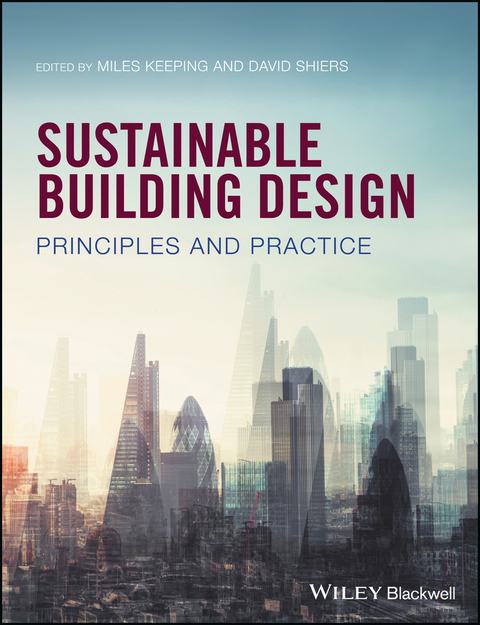
Sustainable Building Design (eBook)
John Wiley & Sons (Verlag)
978-1-119-06378-0 (ISBN)
An inside view of how one of the world's leading architecture and engineering practice does business
Sustainable Built Environments: Principles and Practice offers detailed, environmentally sound design solutions to a wide range of building engineering challenges. The text uses case examples and project data provided by engineers and designers at Arup Associates. It covers a broad range of relevant issues, with focused commentaries and explanations presented in an accessible format for use by students, busy practitioners and informed clients.
Whilst this book stresses the importance of a unified approach to design, the text is divided into six principal chapters, each addressing an important aspect of sustainable architecture and engineering. These chapters (Master Planning, Transport, Energy, The Building Envelope, Environmental Services, and Materials) may be read on their own or in sequence as part of a narrative. Throughout the book, photographs, architectural and engineering drawings and diagrams, examples, and other data illustrate the case studies. Numerous web links are provided to additional information. This inspirational book:
- Focuses on the work of Arup Associates, the award winning architectural and engineering practice
- Uses real-life examples of functioning buildings and structures to provide information and guidance on the development of sustainable solutions
- Is packed with informative illustrations
Sustainable Built Environments: Principles and Practice is a unique text that will inform and inspire architects and engineers, as well as students of those disciplines, around the globe.
Miles Keeping is a Chartered Surveyor and Chartered Environmentalist working in professional practice. He co-founded the Hillbreak consultancy in 2015 and is Visiting Professor in Sustainable Real Estate at Oxford Brookes University.
David Shiers trained as an Architect and is currently Reader in Sustainable Architecture in the School of the Built Environment at Oxford Brookes University.
An inside view of how one of the world's leading architecture and engineering practice does business Sustainable Built Environments: Principles and Practice offers detailed, environmentally sound design solutions to a wide range of building engineering challenges. The text uses case examples and project data provided by engineers and designers at Arup Associates. It covers a broad range of relevant issues, with focused commentaries and explanations presented in an accessible format for use by students, busy practitioners and informed clients. Whilst this book stresses the importance of a unified approach to design, the text is divided into six principal chapters, each addressing an important aspect of sustainable architecture and engineering. These chapters (Master Planning, Transport, Energy, The Building Envelope, Environmental Services, and Materials) may be read on their own or in sequence as part of a narrative. Throughout the book, photographs, architectural and engineering drawings and diagrams, examples, and other data illustrate the case studies. Numerous web links are provided to additional information. This inspirational book: Focuses on the work of Arup Associates, the award winning architectural and engineering practice Uses real-life examples of functioning buildings and structures to provide information and guidance on the development of sustainable solutions Is packed with informative illustrations Sustainable Built Environments: Principles and Practice is a unique text that will inform and inspire architects and engineers, as well as students of those disciplines, around the globe.
Miles Keeping is a Chartered Surveyor and Chartered Environmentalist working in professional practice. He co-founded the Hillbreak consultancy in 2015 and is Visiting Professor in Sustainable Real Estate at Oxford Brookes University. David Shiers trained as an Architect and is currently Reader in Sustainable Architecture in the School of the Built Environment at Oxford Brookes University.
Cover 1
Title Page 5
Copyright 6
Contents 7
List of Contributors 11
Foreword by Dave King: Architect and Founder of Shed-KM 13
Acknowledgements 15
Chapter 1 Introduction 17
Environmental Assessment 18
EPCs and DECs 21
Materials and Components 22
Life Cycle Assessment (LCA) 23
Environmental Legislation 23
Corporate Social Responsibility – CSR/ESG 25
‘Green Value’ 26
The Design Process 28
Bibliography 38
Chapter 2 Master Planning 39
Regeneration – Master Planning in the Existing City 41
Urban Renewal in History 43
A ‘New Urbanism’ 47
New Settlements and Large-Scale Urban Growth 50
Bicester Eco-town 55
Preston Beach, Western Australia 56
The Business Park 61
Bibliography 62
Chapter 3 Transport 63
Alternative Fuelled Vehicles 66
Alternative Fuels 67
Ebbsfleet International 72
Stratford International 72
Bibliography 81
Chapter 4 Energy 85
Renewable Energy Options 86
Photovoltaic Panels 86
Combined Heat and Power (CHP) 89
Ground Source 91
Biomass Boilers 91
Wind Turbines 93
Wave and Hydropower 93
Anaerobic Digestion 93
Conclusion 94
Bibliography 94
Chapter 5 The Building Envelope 99
Pitched Roofs 101
Flat Roofs 101
Ground Floor Construction 102
Ground Floor and Upper Level Plans 114
Structural Design Strategy 118
Enabling Works 124
Substructure Design 125
Stability Core Design 126
Steel Superstructure Design 127
The Façade Design 129
Projecting Windows 130
Spandrel Panels 133
Product Design: The Wave-Form Ceiling at Ropemaker 137
Completion 140
Bibliography 140
Chapter 6 Environmental Services 141
Sustainable Drainage Systems (SUDS) 146
Environmental Services Case Examples 146
Chiller Units 156
Equipment Room ‘Free Cooling’ 157
‘No Gas’ Supply 157
Mixed Mode Ventilation 157
Bibliography 159
Chapter 7 Materials 161
Hazardous and Deleterious Materials 165
Conclusions 174
Appendix A The Arup Story 175
Appendix B Arup Guidance Note on GLA Requirements for Renewables 185
Appendix C Arup Team Members 191
Index 193
EULA 197
| Erscheint lt. Verlag | 13.10.2017 |
|---|---|
| Sprache | englisch |
| Themenwelt | Technik ► Architektur |
| Technik ► Bauwesen | |
| Schlagworte | Architecture • Architektur • Arup Associates • Bauentwurf • Bauingenieur- u. Bauwesen • Building Design • Civil Engineering & Construction • Construction: Sustainability • developing green buildings • energy efficiency • Energy-efficient Buildings • energy efficient structures • environmental impact of property • Green Building • green building construction • Green Building Materials • Green Built Environment • Green Design • green property • Massivbau • Nachhaltiges Bauen • principles of sustainable built environments • Structural & Building Engineering • sustainability • Sustainable Architecture • sustainable building materials • sustainable built environments • sustainable built environments practice • Sustainable Built Environments: Principles and Practice • Sustainable construction • Sustainable design • Sustainable Project Management • sustainable property • sustainable property development • Tief- u. Hochbau / Massivbau • Urbanism |
| ISBN-10 | 1-119-06378-7 / 1119063787 |
| ISBN-13 | 978-1-119-06378-0 / 9781119063780 |
| Informationen gemäß Produktsicherheitsverordnung (GPSR) | |
| Haben Sie eine Frage zum Produkt? |
 PDF (Adobe DRM)
Kopierschutz: Adobe-DRM
Adobe-DRM ist ein Kopierschutz, der das eBook vor Mißbrauch schützen soll. Dabei wird das eBook bereits beim Download auf Ihre persönliche Adobe-ID autorisiert. Lesen können Sie das eBook dann nur auf den Geräten, welche ebenfalls auf Ihre Adobe-ID registriert sind.
Details zum Adobe-DRM
Dateiformat: PDF (Portable Document Format)
Mit einem festen Seitenlayout eignet sich die PDF besonders für Fachbücher mit Spalten, Tabellen und Abbildungen. Eine PDF kann auf fast allen Geräten angezeigt werden, ist aber für kleine Displays (Smartphone, eReader) nur eingeschränkt geeignet.
Systemvoraussetzungen:
PC/Mac: Mit einem PC oder Mac können Sie dieses eBook lesen. Sie benötigen eine
eReader: Dieses eBook kann mit (fast) allen eBook-Readern gelesen werden. Mit dem amazon-Kindle ist es aber nicht kompatibel.
Smartphone/Tablet: Egal ob Apple oder Android, dieses eBook können Sie lesen. Sie benötigen eine
Geräteliste und zusätzliche Hinweise
Buying eBooks from abroad
For tax law reasons we can sell eBooks just within Germany and Switzerland. Regrettably we cannot fulfill eBook-orders from other countries.
aus dem Bereich