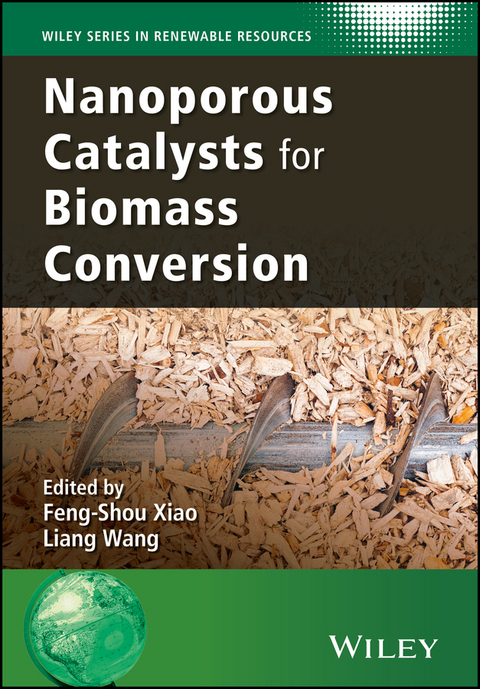
Nanoporous Catalysts for Biomass Conversion (eBook)
John Wiley & Sons (Verlag)
978-1-119-12809-0 (ISBN)
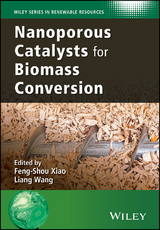
A comprehensive introduction to the design, synthesis, characterization, and catalytic properties of nanoporous catalysts for the biomass conversion
With the specter of peak oil demand looming on the horizon, and mounting concerns over the environmental impact of greenhouse gas emissions, biomass has taken on a prominent role as a sustainable alternative fuel source. One critical aspect of the biomass challenge is the development of novel catalytic materials for effective and controllable biomass conversion. Edited by two scientists recognized internationally for their pioneering work in the field, this book focuses on nanoporous catalysts, the most promising class of catalytic materials for the conversion of biomass into fuel and other products.
Although various catalysts have been used in the conversion of biomass-derived feedstocks, nanoporous catalysts exhibit high catalytic activities and/or unique product selectivities due to their large surface area, open nanopores, and highly dispersed active sites. This book covers an array of nanoporous catalysts currently in use for biomass conversion, including resins, metal oxides, carbons, mesoporous silicates, polydivinylbenzene, and zeolites. The authors summarize the design, synthesis, characterization and catalytic properties of these nanoporous catalysts for biomass conversions, discussing the features of these catalysts and considering future opportunities for developing more efficient catalysts. Topics covered include:
- Resins for biomass conversion
- Supported metal oxides/sulfides for biomass oxidation and hydrogenation
- Nanoporous metal oxides
- Ordered mesoporous silica-based catalysts
- Sulfonated carbon catalysts
- Porous polydivinylbenzene
- Aluminosilicate zeolites for bio-oil upgrading
- Rice straw Hydrogenation for sugar conversion
- Lignin depolymerization
Timely, authoritative, and comprehensive, Nanoporous Catalysts for Biomass Conversion is a valuable working resource for academic researchers, industrial scientists and graduate students working in the fields of biomass conversion, catalysis, materials science, green and sustainable chemistry, and chemical/process engineering.
Edited by
Feng-Shou Xiao, Zhejiang University, Hangzhou, China
Liang Wang, Zhejiang University, Hangzhou, China
Series Editor
Christian Stevens, Faculty of Bioscience Engineering, Ghent University, Belgium
A comprehensive introduction to the design, synthesis, characterization, and catalytic properties of nanoporous catalysts for the biomass conversion With the specter of peak oil demand looming on the horizon, and mounting concerns over the environmental impact of greenhouse gas emissions, biomass has taken on a prominent role as a sustainable alternative fuel source. One critical aspect of the biomass challenge is the development of novel catalytic materials for effective and controllable biomass conversion. Edited by two scientists recognized internationally for their pioneering work in the field, this book focuses on nanoporous catalysts, the most promising class of catalytic materials for the conversion of biomass into fuel and other products. Although various catalysts have been used in the conversion of biomass-derived feedstocks, nanoporous catalysts exhibit high catalytic activities and/or unique product selectivities due to their large surface area, open nanopores, and highly dispersed active sites. This book covers an array of nanoporous catalysts currently in use for biomass conversion, including resins, metal oxides, carbons, mesoporous silicates, polydivinylbenzene, and zeolites. The authors summarize the design, synthesis, characterization and catalytic properties of these nanoporous catalysts for biomass conversions, discussing the features of these catalysts and considering future opportunities for developing more efficient catalysts. Topics covered include: Resins for biomass conversion Supported metal oxides/sulfides for biomass oxidation and hydrogenation Nanoporous metal oxides Ordered mesoporous silica-based catalysts Sulfonated carbon catalysts Porous polydivinylbenzene Aluminosilicate zeolites for bio-oil upgrading Rice straw Hydrogenation for sugar conversion Lignin depolymerization Timely, authoritative, and comprehensive, Nanoporous Catalysts for Biomass Conversion is a valuable working resource for academic researchers, industrial scientists and graduate students working in the fields of biomass conversion, catalysis, materials science, green and sustainable chemistry, and chemical/process engineering.
Edited by Feng-Shou Xiao, Zhejiang University, Hangzhou, China Liang Wang, Zhejiang University, Hangzhou, China Series Editor Christian Stevens, Faculty of Bioscience Engineering, Ghent University, Belgium
| Erscheint lt. Verlag | 5.9.2017 |
|---|---|
| Reihe/Serie | Wiley Series in Renewable Resource | Wiley Series in Renewable Resources |
| Mitarbeit |
Herausgeber (Serie): Christian V. Stevens |
| Sprache | englisch |
| Themenwelt | Naturwissenschaften ► Chemie ► Technische Chemie |
| Technik ► Elektrotechnik / Energietechnik | |
| Schlagworte | activated carbon for biomass conversion • Alternative energy sources • biomass conversion into fuels • biomass fuels • catalysis • catalysts for biomass conversion • catalytic depolymerization of lignin to fuels and chemicals • Chemie • Chemistry • direct synthesis from bio-syngas • Katalyse • lignin depolymerization for biomass conversion • Materials Science • Materialwissenschaften • mesoporous silica-based catalysts for biomass conversion • mixed oxide catalysts in supercritical ethanol • Nachhaltige u. Grüne Chemie • Nachhaltige u. Grüne Chemie • nanoporous carbon for biomass conversion • nanoporous carbon for cellulose conversion • nitrogen materials and their hybrids for biomass conversion • ordered mesoporous carbon-based catalysts for biomass conversion • Poröse Materialien • Poröse Materialien • porous copper based catalysts for biomass conversion • Porous Materials • porous polydivinylbenzene based solid catalysts for biomass transformation reactions • rice straw and for bio-gasoline • Sustainable Chemistry & Green Chemistry • zeolite catalysts to convert glycerol |
| ISBN-10 | 1-119-12809-9 / 1119128099 |
| ISBN-13 | 978-1-119-12809-0 / 9781119128090 |
| Informationen gemäß Produktsicherheitsverordnung (GPSR) | |
| Haben Sie eine Frage zum Produkt? |
 PDF (Adobe DRM)
Kopierschutz: Adobe-DRM
Adobe-DRM ist ein Kopierschutz, der das eBook vor Mißbrauch schützen soll. Dabei wird das eBook bereits beim Download auf Ihre persönliche Adobe-ID autorisiert. Lesen können Sie das eBook dann nur auf den Geräten, welche ebenfalls auf Ihre Adobe-ID registriert sind.
Details zum Adobe-DRM
Dateiformat: PDF (Portable Document Format)
Mit einem festen Seitenlayout eignet sich die PDF besonders für Fachbücher mit Spalten, Tabellen und Abbildungen. Eine PDF kann auf fast allen Geräten angezeigt werden, ist aber für kleine Displays (Smartphone, eReader) nur eingeschränkt geeignet.
Systemvoraussetzungen:
PC/Mac: Mit einem PC oder Mac können Sie dieses eBook lesen. Sie benötigen eine
eReader: Dieses eBook kann mit (fast) allen eBook-Readern gelesen werden. Mit dem amazon-Kindle ist es aber nicht kompatibel.
Smartphone/Tablet: Egal ob Apple oder Android, dieses eBook können Sie lesen. Sie benötigen eine
Geräteliste und zusätzliche Hinweise
Buying eBooks from abroad
For tax law reasons we can sell eBooks just within Germany and Switzerland. Regrettably we cannot fulfill eBook-orders from other countries.
aus dem Bereich