Continuous Manufacturing of Pharmaceuticals (eBook)
John Wiley & Sons (Verlag)
978-1-119-00133-1 (ISBN)
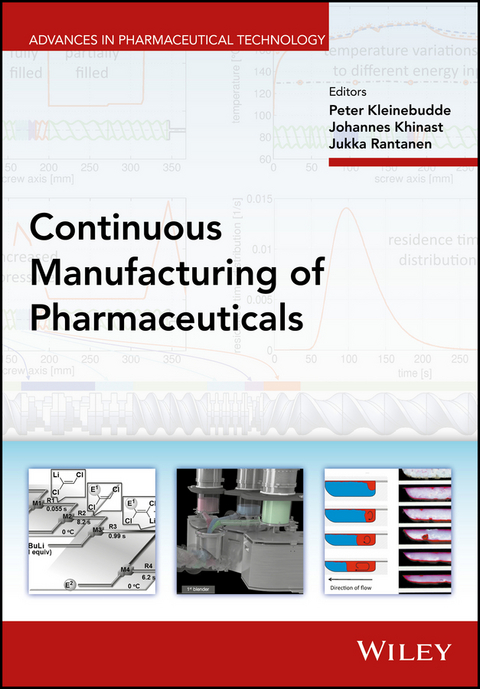
A comprehensive look at existing technologies and processes for continuous manufacturing of pharmaceuticals
As rising costs outpace new drug development, the pharmaceutical industry has come under intense pressure to improve the efficiency of its manufacturing processes. Continuous process manufacturing provides a proven solution. Among its many benefits are: minimized waste, energy consumption, and raw material use; the accelerated introduction of new drugs; the use of smaller production facilities with lower building and capital costs; the ability to monitor drug quality on a continuous basis; and enhanced process reliability and flexibility. Continuous Manufacturing of Pharmaceuticals prepares professionals to take advantage of that exciting new approach to improving drug manufacturing efficiency.
This book covers key aspects of the continuous manufacturing of pharmaceuticals. The first part provides an overview of key chemical engineering principles and the current regulatory environment. The second covers existing technologies for manufacturing both small-molecule-based products and protein/peptide products. The following section is devoted to process analytical tools for continuously operating manufacturing environments. The final two sections treat the integration of several individual parts of processing into fully operating continuous process systems and summarize state-of-art approaches for innovative new manufacturing principles.
- Brings together the essential know-how for anyone working in drug manufacturing, as well as chemical, food, and pharmaceutical scientists working on continuous processing
- Covers chemical engineering principles, regulatory aspects, primary and secondary manufacturing, process analytical technology and quality-by-design
- Contains contributions from researchers in leading pharmaceutical companies, the FDA, and academic institutions
- Offers an extremely well-informed look at the most promising future approaches to continuous manufacturing of innovative pharmaceutical products
Timely, comprehensive, and authoritative, Continuous Manufacturing of Pharmaceuticals is an important professional resource for researchers in industry and academe working in the fields of pharmaceuticals development and manufacturing.
Editors
Peter Kleinebudde is Professor for Pharmaceutical Technology at Heinrich-Heine-University Duesseldorf, Germany, and Vice-Dean of the Faculty of Mathematics and Natural Sciences. His main research area is development, production and characterization of solid dosage forms.
Johannes Khinast is Professor of Chemical and Pharmaceutical Engineering and Head of the Institute of Process and Particle Engineering at the Graz University of Technology, Austria.
Jukka Rantanen is Professor of Pharmaceutical Technology and Engineering at the Department of Pharmacy, University of Copenhagen, Denmark.
A comprehensive look at existing technologies and processes for continuous manufacturing of pharmaceuticals As rising costs outpace new drug development, the pharmaceutical industry has come under intense pressure to improve the efficiency of its manufacturing processes. Continuous process manufacturing provides a proven solution. Among its many benefits are: minimized waste, energy consumption, and raw material use; the accelerated introduction of new drugs; the use of smaller production facilities with lower building and capital costs; the ability to monitor drug quality on a continuous basis; and enhanced process reliability and flexibility. Continuous Manufacturing of Pharmaceuticals prepares professionals to take advantage of that exciting new approach to improving drug manufacturing efficiency. This book covers key aspects of the continuous manufacturing of pharmaceuticals. The first part provides an overview of key chemical engineering principles and the current regulatory environment. The second covers existing technologies for manufacturing both small-molecule-based products and protein/peptide products. The following section is devoted to process analytical tools for continuously operating manufacturing environments. The final two sections treat the integration of several individual parts of processing into fully operating continuous process systems and summarize state-of-art approaches for innovative new manufacturing principles. Brings together the essential know-how for anyone working in drug manufacturing, as well as chemical, food, and pharmaceutical scientists working on continuous processing Covers chemical engineering principles, regulatory aspects, primary and secondary manufacturing, process analytical technology and quality-by-design Contains contributions from researchers in leading pharmaceutical companies, the FDA, and academic institutions Offers an extremely well-informed look at the most promising future approaches to continuous manufacturing of innovative pharmaceutical products Timely, comprehensive, and authoritative, Continuous Manufacturing of Pharmaceuticals is an important professional resource for researchers in industry and academe working in the fields of pharmaceuticals development and manufacturing.
Editors Peter Kleinebudde is Professor for Pharmaceutical Technology at Heinrich-Heine-University Duesseldorf, Germany, and Vice-Dean of the Faculty of Mathematics and Natural Sciences. His main research area is development, production and characterization of solid dosage forms. Johannes Khinast is Professor of Chemical and Pharmaceutical Engineering and Head of the Institute of Process and Particle Engineering at the Graz University of Technology, Austria. Jukka Rantanen is Professor of Pharmaceutical Technology and Engineering at the Department of Pharmacy, University of Copenhagen, Denmark.
| Erscheint lt. Verlag | 14.7.2017 |
|---|---|
| Reihe/Serie | Advances in Pharmaceutical Technology |
| Advances in Pharmaceutical Technology | Advances in Pharmaceutical Technology |
| Sprache | englisch |
| Themenwelt | Naturwissenschaften ► Chemie ► Technische Chemie |
| Technik | |
| Schlagworte | Arzneimittel • Arzneimittelproduktion • Biochemie • biochemistry • Biowissenschaften • chemical engineering • Chemie • Chemische Verfahrenstechnik • Chemistry • Grundoperationen d. Pharmazeutischen Verfahrenstechnik • Life Sciences • pharmaceuticals manufacturing continuous technologies industry drugs process design management examples case studies green • Pharmaceutical Unit Operations (Pharmaceutical Engineering) • Process Engineering • Prozesssteuerung |
| ISBN-10 | 1-119-00133-1 / 1119001331 |
| ISBN-13 | 978-1-119-00133-1 / 9781119001331 |
| Informationen gemäß Produktsicherheitsverordnung (GPSR) | |
| Haben Sie eine Frage zum Produkt? |
 PDF (Adobe DRM)
Kopierschutz: Adobe-DRM
Adobe-DRM ist ein Kopierschutz, der das eBook vor Mißbrauch schützen soll. Dabei wird das eBook bereits beim Download auf Ihre persönliche Adobe-ID autorisiert. Lesen können Sie das eBook dann nur auf den Geräten, welche ebenfalls auf Ihre Adobe-ID registriert sind.
Details zum Adobe-DRM
Dateiformat: PDF (Portable Document Format)
Mit einem festen Seitenlayout eignet sich die PDF besonders für Fachbücher mit Spalten, Tabellen und Abbildungen. Eine PDF kann auf fast allen Geräten angezeigt werden, ist aber für kleine Displays (Smartphone, eReader) nur eingeschränkt geeignet.
Systemvoraussetzungen:
PC/Mac: Mit einem PC oder Mac können Sie dieses eBook lesen. Sie benötigen eine
eReader: Dieses eBook kann mit (fast) allen eBook-Readern gelesen werden. Mit dem amazon-Kindle ist es aber nicht kompatibel.
Smartphone/Tablet: Egal ob Apple oder Android, dieses eBook können Sie lesen. Sie benötigen eine
Geräteliste und zusätzliche Hinweise
Buying eBooks from abroad
For tax law reasons we can sell eBooks just within Germany and Switzerland. Regrettably we cannot fulfill eBook-orders from other countries.
aus dem Bereich