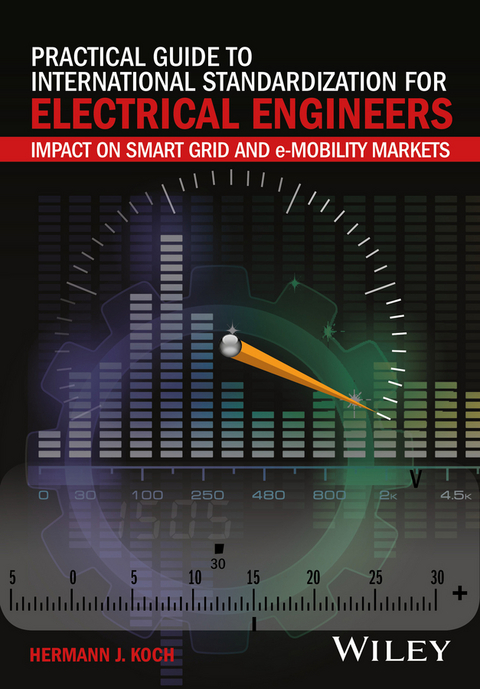
Practical Guide to International Standardization for Electrical Engineers (eBook)
Practical Guide to International Standardization for Electrical Engineering provides a comprehensive guide to the purpose of standards organizations, their relationship to product development and how to use the standardization process for cost-effective new product launch. It covers major standardization organizations in the field of Electrical Engineering offering a general overview of the varying structures of national standardization organizations, their goals and targets.
Key questions for standardization are answered giving the reader guidance on how to use national and international standards in the electrical business. When shall the company start to enter standardization? How to evaluate the standardization in relationship to the market success? What are the interactions of innovations and market access? What is the cost of standardization? What are the gains for our experts in standardization?
Key features:
- Provides guidance on how to use national and international standards in the electrical business.
- Global active standardization bodies featured include IEEE, IEC and CIGRE as well as regional organizations like CENELEC for Europe, SAC for China, DKE for Germany, and ANSI for USA.
- Case studies demonstrate how standardization affects the business and how it may block or open markets.
- Explains the multiple connections and influences between the different standardization organizations on international, regional or national levels and regulatory impact to the standardization processes.
- Two detailed focused case studies, one on Smart Grid and one on Electro-Mobility, show the influence and the work of international standardization. The case studies explain how innovative technical developments are promoted by standards and what are the roles of standardization organizations are.
A valuable reference for electrical engineers, designers, developers, test engineers, sales engineers, marketing engineers and users of electrical equipment as well as authorities and business planners to use and work with standards.
Hermann Koch, Siemens AG, Germany
Hermann Koch currently works in the field of high voltage switchgear and high voltage transmission lines with Siemens in Germany. He became Principal Expert after overseeing the installation of the first second generation GIL (gas insulated transmission lines) in Geneva, Switzerland in 2001. He is IEEE Fellow and Chairman of IEEE PES Substations Committee Working Group of the Gas-insulated Substations (GIS) book. In IEC he is Secretary of SC 17C High Voltage Switchgear Assemblies. In CIGRE he is member of the Strategic Advisory Group of SC B3 Substations. He has published 150 technical papers and holds 31 patents in the field of gas insulated technology.
Practical Guide to International Standardization for Electrical Engineering provides a comprehensive guide to the purpose of standards organizations, their relationship to product development and how to use the standardization process for cost-effective new product launch. It covers major standardization organizations in the field of Electrical Engineering offering a general overview of the varying structures of national standardization organizations, their goals and targets. Key questions for standardization are answered giving the reader guidance on how to use national and international standards in the electrical business. When shall the company start to enter standardization? How to evaluate the standardization in relationship to the market success? What are the interactions of innovations and market access? What is the cost of standardization? What are the gains for our experts in standardization? Key features: Provides guidance on how to use national and international standards in the electrical business. Global active standardization bodies featured include IEEE, IEC and CIGRE as well as regional organizations like CENELEC for Europe, SAC for China, DKE for Germany, and ANSI for USA. Case studies demonstrate how standardization affects the business and how it may block or open markets. Explains the multiple connections and influences between the different standardization organizations on international, regional or national levels and regulatory impact to the standardization processes. Two detailed focused case studies, one on Smart Grid and one on Electro-Mobility, show the influence and the work of international standardization. The case studies explain how innovative technical developments are promoted by standards and what are the roles of standardization organizations are. A valuable reference for electrical engineers, designers, developers, test engineers, sales engineers, marketing engineers and users of electrical equipment as well as authorities and business planners to use and work with standards.
Hermann Koch, Siemens AG, Germany Hermann Koch currently works in the field of high voltage switchgear and high voltage transmission lines with Siemens in Germany. He became Principal Expert after overseeing the installation of the first second generation GIL (gas insulated transmission lines) in Geneva, Switzerland in 2001. He is IEEE Fellow and Chairman of IEEE PES Substations Committee Working Group of the Gas-insulated Substations (GIS) book. In IEC he is Secretary of SC 17C High Voltage Switchgear Assemblies. In CIGRE he is member of the Strategic Advisory Group of SC B3 Substations. He has published 150 technical papers and holds 31 patents in the field of gas insulated technology.
Foreword
Mark Waldron xi
Bernhard Thies xiii
Markus Reigl xv
Damir Novosel xvii
Preface xix
Acknowledgements xxi
Abbreviations xxiii
Glossaryxxxi
1 Why Standards? 1
1.1 General Introduction 1
1.2 War on Standards 2
1.3 Main Players 3
1.3.1 Europe 3
1.3.2 America 5
1.3.3 Asia and Oceania 22
1.3.4 Africa 27
1.4 The Public View of Standardization 27
1.5 Right Timing 29
1.5.1 General 29
1.5.2 Innovation Process 29
1.5.3 Market Access 30
1.5.4 Regulatory Processes 31
1.6 Benefits of Standards 31
2 Framework for Standards 37
2.1 General 37
2.2 World Trade Organization 37
2.2.1 General 37
2.2.2 United Nations Economic Commission for Europe (UN ECE) 38
2.2.3 United Nations Economic Commission for Africa (UN ECA) 39
2.2.4 United Nations Economic Commission for Latin America and the Caribbean (UN ECLAC) 40
2.2.5 United Nation Economic and Social Commission for Asia and the Pacific (UN ESCAP) 41
2.3 European Union 42
2.3.1 General 42
2.3.2 European Commission 44
2.4 Regional 45
2.4.1 United States 45
2.4.2 China 47
2.4.3 Europe 50
3 Standardization Processes 53
3.1 General 53
3.2 Principles 53
3.3 Legal Relevance 57
3.4 Benefits of Standardization 57
4 Development of Standards 59
4.1 General 59
4.1.1 Basic Process 59
4.1.2 Organizations 61
4.2 International Electrotechnical Commission (IEC) 62
4.2.1 General 62
4.2.2 Mission and Objectives 62
4.2.3 Organization 63
4.2.4 Members 70
4.2.5 Types of Documents 73
4.2.6 Dresden Agreement 75
4.2.7 Steps in Standards 77
4.3 International Organization for Standardization (ISO) 79
4.3.1 General 79
4.3.2 ISO/IEC Joint Technical Committee (JTC 1) 81
4.3.3 ISO Strategy 81
4.4 International Telecommunication Union (ITU) 83
4.4.1 General 83
4.4.2 Organization 83
4.5 CENELEC 84
4.5.1 General 84
4.5.2 Goals 85
4.5.3 Organization 86
Abbreviations
- AA
- DIN Arbeitsausschuss (committee)
- AAL
- Ambient Assisted Living
- ABNT
- Associação Brasileira de Normas Técnicas
- AC
- alternating current
- AC
- IEC Advisory Committee
- AC ART
- IEC Advisory Committee on Applications of Robot Technology
- AC EA
- IEC Advisory Committee on Environmental Aspects
- AC EC
- IEC Advisory Committee on Electromagnetic Compatibility
- AC EE
- IEC Advisory Committee on Energy Efficiency
- AC OS
- IEC Advisory Committee on Safety
- AC SEC
- IEC Advisory Committee on Security
- AC TAD
- IEC Advisory Committee on Electricity Transmission and Distribution
- ADETEF
- Cross‐Ministry of Finance, Economy and Sustainable Development (France)
- AEA
- National Electrotechnical Association of Argentina
- AENOR
- Asociación Española de Normalización y Certificación (Spanish Association for Standardization and Certification)
- AFNOR
- Association Française de Normalisation (French Association for Standardization)
- AG
- CENELEC/CEN – Assemblage General (General Assembly)
- AHG
- ad hoc group
- AK
- DIN Arbeitskreis (task force)
- AMD
- amendment
- AMN
- American Mercosur Nations
- ANAB
- American National Standards Institute – American Society for Quality National Accreditation Board (United States)
- Annex 7
- EU European annexes on normative references to international publications
- ANS
- American National Standard (United States)
- ANSI
- American National Standards Institute
- ASA
- American Standards Association (United States)
- ASD
- ANSI Accredited Standards Developer (United States)
- ASIL
- Automotive Safety Integrity Level of ISO 26262
- ASME
- American Society of Mechanical Engineers
- ASTM
- American Society for Testing and Materials
- BDI
- Bundesverband der Deutschen Industrie (German Association of Industry)
- BIS
- Bureau of Indian Standards
- BNQ
- Bureau de Normalisation du Québec (Canada)
- BS
- British Standard
- BSI
- British Standards Institution
- BSR
- ANSI Board of Standards Reviewer (United States)
- BT
- CENELEC Technical Office (Bureau Technique)
- BTTF
- CENELEC Technical Board Task Force
- BTWG
- CENELEC Technical Board Working Group
- CA
- CENELEC/CEN – Committee Administrative (Administration)
- CAB
- IEC – Conformity Assessment Board
- CACC
- CEN – Committee Administrative Consulting Committee
- CAE
- Audit and Evaluation Committee (France, AFNOR)
- CANENA
- Council of Harmonization of Electrical Standardization of the Nations of America
- CAS
- China Association for Standardization (China)
- CB‐Scheme
- IEC – B219Certification Bodies Scheme
- CC
- IEC – Compilation of Comments of Committee Draft
- CCC
- China Compulsory Certification (China)
- CCMC
- CEN‐CENELEC Management Center
- CCPN
- Standardization Coordination and Steering Committee (France, AFNOR)
- CD
- IEC Committee Draft
- CDV
- IEC Committee Draft for Vote
- CE
- European Conformity
- CEA
- (Electrical Committee of Argentina) Comite Electrotecnico Argentino
- CEI
- Italian Electrotechnical Committee
- CEM
- Mexican Electrotechnical Committee
- CEN
- European Committee for Standardization (English); Comité Européen de Normalisation (French); Europäisches Komitee für Normung (German)
- CEN/BT
- CEN Technical Board
- CENELEC
- European Committee for Electrotechnical Standardization
- CIF
- ANSI Consumer Interest Forum (United States)
- CIGRE
- International Council on Large Electric Systems
- CIM
- Common Information Model
- CIRED
- International Conference on Electricity Distribution
- CMC
- CENELEC/CEN – Management Centre
- CMF
- ANSI Company Member Forum (United States)
- CNAS
- China National Accreditation for Conformity Assessment
- CNE
- National Commission of Energy (Chile)
- CNIS
- China National Institute of Standardization (China)
- CO
- IEC Central Office
- COBEI
- Brazilian Committee for Standardization in Electricity, Electronic, Illumination and Telecommunication
- COPANT
- PanAmerican Standards Commission
- COR
- corrigendum
- CQC
- China Quality Certification Centre (China)
- CSA
- Canadian Standardization Association
- CSEE
- Chinese Society of Electrical Engineering
- CSIC
- China Standards Information Centre (China)
- CSP
- China Standards Press (China)
- CWA
- CEN‐CENELEC Working Group Agreement
- DAR
- Deutscher Akkreditierungsrat (Germany)
- DC
- direct current
- DER
- distributed energy resources
- DGBMT
- Deutsche Gesellschaft für Biomedizinische Technik im VDE
- DIN
- Deutsches Institut for Normung e. V.
- DKE
- Deutsche Kommission Elektrotechnik Elektronik Informationstechnik im DIN und VDE
- DLMS
- Device Language Messaging Specification
- doc
- CENELEC date of conformity
- DoC
- Department of Commerce (United States)
- DoE
- Department of Energy (United States)
- dop
- CENELEC date of publication
- dor
- CENELEC date of recognition
- dow
- CENELEC date of withdrawal
- Draft prEN
- CENELEC draft preliminary European norm
- ECISS
- European Committee for Iron and Steel Standardization
- EEG
- Germany – Erneuerbare Energien Gesetz (Renewable Energy Law)
- EFTA
- European Free Trade Association
- EISA
- Energy Independence and Security Act (United States)
- EMC
- electromagnetic compatibility
- EMI
- electromagnetic interferences
- EN
- EN:B82 European standard
- FR
- European normative
- ENEC
- European Mark for Electric Product Quality and Safety
- ENTSO‐E
- European Network of Transmission System Operators (Europe)
- EPO
- European Patent Offices
- EPRI
- Electric Power Research Institute (United States)
- ESO
- European Standards Organization
- ESS
- European Standardization System
- Essential Requirement
- EU Requirement of European Union Directive on matters of safety, health or other matters covered by the New Approach Directive
- ETG
- Die Energietechnische Gesellschaft im VDE
- ETSI
- European Telecommunications Standards Institute
- ETSI TC IST
- Intelligent Transport Systems and Car to Car Communication
- Euro NCAP
- Test Procedures for Safe Cars (Europe)
- FCC
- Federal Communication Commission (United States)
- FDA
- Federal Food and Drug Administration (United States)
- FDIS
- IEC Final Draft International Standard
- FDN
- National Standardization Body (Venezuela)
- FNN
- Forum Netztechnik / Netzbetrieb im VDE
- FprEN
- CENELEC Final Draft Project European Norm
- GATT
- General Agreement on Tariffs and Trade
- GB
- National Standard (China)
- GMA
- Die VDI/VDE‐Gesellschaft Mess‐ und Automatisierungstechnik
- GMF
- ANSI Governmental Member Forum (United States)
- GMM
- Die VDE/VDI‐Fachgesellschaft Mikroelektronik, Mikrosystem‐ und Feinwerktechnik
- GOST
- Federal Agency on Technical Regulation and Metrology
- GWAC
- Gridwise Architecture Council (United States)
- HBES
- Home and Building Electronic Systems
- HD
- CENELEC – harmonized document
- HV
- high voltage (>1 kV)
- HVDC
- high‐voltage direct current
- IAF
- International Accreditation Form
- IBNORCA
- Instituto Boliviano de Normalización y Calidad
- ICAP
- IEEE – Conformity Assessment Program
- ICONTEC
- Instituto Colombiano de Normas Técnicas (Colombia)
- ICONTEC
- Institute of Technical Standardization in Columbia
- ICT
- Information and Communication Technology
- IEC
- International Electrotechnical Commission
- IEC APC
- IEC Activities Promotion Committee (Japan)
- IEC EE
- IEC System of Conformity Assessment Schemes for Electrotechnical Equipment and Components
- IEC EX
- IEC System for Certification to Standards Relating to Equipment for Use in Explosive Atmospheres
- IEC...
| Erscheint lt. Verlag | 2.5.2017 |
|---|---|
| Sprache | englisch |
| Themenwelt | Naturwissenschaften ► Physik / Astronomie |
| Technik ► Elektrotechnik / Energietechnik | |
| Schlagworte | BIS • CENELEC • Cigre • csa • Electrical & Electronics Engineering • Elektrotechnik • Elektrotechnik u. Elektronik • Energie • Energietechnik • Energy • GOST • IEC • IEEE • JSA • Perspektiven in Ingenieurberufen • Power engineering • Power Technology • Power Technology & Power Engineering • Professional Development for Engineers • SAC • Standardization • Standards |
| ISBN-13 | 9781119067443 / 9781119067443 |
| Informationen gemäß Produktsicherheitsverordnung (GPSR) | |
| Haben Sie eine Frage zum Produkt? |
 EPUB (Adobe DRM)
Kopierschutz: Adobe-DRM
Adobe-DRM ist ein Kopierschutz, der das eBook vor Mißbrauch schützen soll. Dabei wird das eBook bereits beim Download auf Ihre persönliche Adobe-ID autorisiert. Lesen können Sie das eBook dann nur auf den Geräten, welche ebenfalls auf Ihre Adobe-ID registriert sind.
Details zum Adobe-DRM
Dateiformat: EPUB (Electronic Publication)
EPUB ist ein offener Standard für eBooks und eignet sich besonders zur Darstellung von Belletristik und Sachbüchern. Der Fließtext wird dynamisch an die Display- und Schriftgröße angepasst. Auch für mobile Lesegeräte ist EPUB daher gut geeignet.
Systemvoraussetzungen:
PC/Mac: Mit einem PC oder Mac können Sie dieses eBook lesen. Sie benötigen eine
eReader: Dieses eBook kann mit (fast) allen eBook-Readern gelesen werden. Mit dem amazon-Kindle ist es aber nicht kompatibel.
Smartphone/Tablet: Egal ob Apple oder Android, dieses eBook können Sie lesen. Sie benötigen eine
Geräteliste und zusätzliche Hinweise
Buying eBooks from abroad
For tax law reasons we can sell eBooks just within Germany and Switzerland. Regrettably we cannot fulfill eBook-orders from other countries.
aus dem Bereich