Recent Advances in Polyphenol Research, Volume 5 (eBook)
John Wiley & Sons (Verlag)
978-1-118-88329-7 (ISBN)
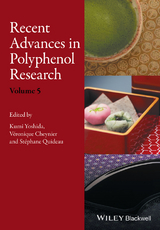
Sponsored by the scholarly society Groupe Polyphénols, this publication, which is the fifth volume in this highly regarded Recent Advances in Polyphenol Research series, is edited by Kumi Yoshida, Véronique Cheynier and Stéphane Quideau. They have once again, like their predecessors, put together an impressive collection of cutting-edge chapters written by expert scientists, internationally respected in their respective field of polyphenol sciences. This Volume 5 highlights some of the latest information and opinion on the following major research topics about polyphenols:
• Chemistry, physicochemistry & materials science
• Biosynthesis, genetic & metabolic engineering
• Plant & ecosystem, lignocellulosic biomass
• Food, nutrition & health
• Natural medicine & Kampo
• Tannins & their functions
Chemists, biochemists, plant scientists, pharmacognosists and pharmacologists, biologists, ecologists, food scientists and nutritionists will all find this book an invaluable resource. Libraries in all universities and research institutions where these disciplines are studied and taught should have copies on their bookshelves.
Kumi Yoshida and Veronique Cheynier are the authors of Recent Advances in Polyphenol Research, Volume 5, published by Wiley.
Plant polyphenols are secondary metabolites that constitute one of the most common and widespread groups of natural products. They express a large and diverse panel of biological activities including beneficial effects on both plants and humans. Many polyphenols, from their structurally simplest representatives to their oligo/polymeric versions (also referred to as vegetable tannins), are notably known as phytoestrogens, plant pigments, potent antioxidants, and protein interacting agents.Sponsored by the scholarly society Groupe Polyph nols, this publication, which is the fifth volume in this highly regarded Recent Advances in Polyphenol Research series, is edited by Kumi Yoshida, V ronique Cheynier and St phane Quideau. They have once again, like their predecessors, put together an impressive collection of cutting-edge chapters written by expert scientists, internationally respected in their respective field of polyphenol sciences. This Volume 5 highlights some of the latest information and opinion on the following major research topics about polyphenols: Chemistry, physicochemistry & materials science Biosynthesis, genetic & metabolic engineering Plant & ecosystem, lignocellulosic biomass Food, nutrition & health Natural medicine & Kampo Tannins & their functionsChemists, biochemists, plant scientists, pharmacognosists and pharmacologists, biologists, ecologists, food scientists and nutritionists will all find this book an invaluable resource. Libraries in all universities and research institutions where these disciplines are studied and taught should have copies on their bookshelves.
Kumi Yoshida and Veronique Cheynier are the authors of Recent Advances in Polyphenol Research, Volume 5, published by Wiley.
Title Page 5
Copyright Page 6
Contents 9
Contributors 17
Preface 21
Chapter 1 The Physical Chemistry of Polyphenols: Insights into the Activity of Polyphenols in Humans at the Molecular Level 25
1.1 Introduction 25
1.2 Molecular complexation of polyphenols 28
1.2.1 Polyphenol–protein binding 28
1.2.1.1 Interactions in the digestive tract 29
1.2.1.2 Interactions beyond intestinal absorption 30
1.2.2 Interactions with membranes 33
1.3 Polyphenols as electron donors 35
1.3.1 The physicochemical bases of polyphenol-to-ROS electron transfer 36
1.3.1.1 Thermodynamics descriptors 36
1.3.1.2 Kinetics of hydrogen atom transfer 38
1.3.1.3 Kinetics and mechanisms 39
1.3.2 ROS scavenging by polyphenols in the gastrointestinal tract 44
1.4 Polyphenols as ligands for metal ions 45
1.4.1 Interactions of polyphenols with iron and copper ions 46
1.4.2 A preliminary theoretical study of iron–polyphenol binding 49
1.4.2.1 Charge states, spin states, and geometries 49
1.4.2.2 Oxidation of the bideprotonated catechol 50
1.5 Conclusions 51
References 52
Chapter 2 Polyphenols in Bryophytes: Structures, Biological Activities, and Bio- and Total Syntheses 60
2.1 Introduction 60
2.2 Distribution of cyclic and acyclic bis-bibenzyls in Marchantiophyta (liverworts) 61
2.3 Biosynthesis of bis-bibenzyls 63
2.4 The structures of bis-bibenzyls and their total synthesis 74
2.5 Biological activity of bis-bibenzyls 82
2.6 Conclusions 84
Acknowledgments 85
References 85
Chapter 3 Oxidation Mechanism of Polyphenols and Chemistry of Black Tea 91
3.1 Introduction 91
3.2 Catechin oxidation and production of theaflavins 95
3.3 Theasinensins 97
3.4 Coupled oxidation mechanism 99
3.5 Bicyclo[3.2.1]octane intermediates 101
3.6 Structures of catechin oxidation products 102
3.7 Oligomeric oxidation products 106
3.8 Conclusions 107
Acknowledgments 109
References 109
Chapter 4 A Proteomic-Based Quantitative Analysis of the Relationship Between Monolignol Biosynthetic Protein Abundance and Lignin Content Using Transgenic Populus trichocarpa 113
4.1 Introduction 114
4.2 Results 118
4.2.1 Production of transgenic trees downregulated for genes in monolignol biosynthesis 118
4.2.2 Absolute quantification of protein abundance 119
4.2.3 Variation in protein abundance in wild-type and transgenic plants 120
4.2.4 Variation in lignin content 120
4.2.5 Relationship of lignin content and protein abundance 122
4.3 Discussion 125
4.4 Materials and methods 126
4.4.1 Production of transgenic trees 126
4.4.2 Proteomic analysis 127
4.4.3 Lignin quantification 128
4.4.4 Statistical analysis 128
References 128
Chapter 5 Monolignol Biosynthesis and Regulation in Grasses 132
5.1 Introduction 132
5.2 Unique cell walls in grasses 133
5.3 Lignin deposition in grasses 134
5.4 Monolignol biosynthesis in grasses 135
5.4.1 Proposed pathway for monolignol biosynthesis 135
5.4.2 Monolignol biosynthetic genes in grasses 136
5.4.3 Functional genomics of monolignol biosynthesis in grass species 138
5.5 Regulation of monolignol biosynthesis in grasses 138
5.5.1 Lignin regulation in secondary cell wall biosynthesis 138
5.5.2 Repressor genes of monolignol biosynthesis in grasses 141
5.5.3 Regulation of monolignol biosynthesis under stress 142
5.6 Remarks 143
Acknowledgments 143
References 144
Chapter 6 Creation of Flower Color Mutants Using Ion Beams and a Comprehensive Analysis of Anthocyanin Composition and Genetic Background 151
6.1 Introduction 151
6.2 Induction of flower color mutants by ion beams 153
6.3 Mutagenic effects and the molecular nature of the mutations 155
6.4 Comprehensive analyses of flower color, pigments, and associated genes in fragrant cyclamen 155
6.5 Mutagenesis and screening 157
6.5.1 Yellow mutants 158
6.5.2 Red–purple mutants 159
6.5.3 White mutants 159
6.5.4 Deeper color mutants 160
6.6 Genetic background and the obtained mutants 160
6.7 Carnations with peculiar glittering colors 161
6.8 Conclusions 163
Acknowledgments 164
References 164
Chapter 7 Flavonols Regulate Plant Growth and Development through Regulation of Auxin Transport and Cellular Redox Status 167
7.1 Introduction 167
7.2 The flavonoids and their biosynthetic pathway 168
7.3 Flavonoids affect root elongation and gravitropism through alteration of auxin transport 170
7.4 Mechanisms by which flavonols regulate IAA transport 173
7.5 Lateral root formation 175
7.6 Cotyledon, trichome, and root hair development 176
7.7 Inflorescence architecture 178
7.8 Fertility and pollen development 178
7.9 Flavonols modulate ROS signaling in guard cells to regulate stomatal aperture 179
7.10 Transcriptional machinery that controls synthesis of flavonoids 181
7.11 Hormonal controls of flavonoid synthesis 184
7.12 Flavonoid synthesis is regulated by light 185
7.13 Conclusions 186
Acknowledgments 186
References 187
Chapter 8 Structure of Polyacylated Anthocyanins and Their UV Protective Effect 195
8.1 Introduction 195
8.2 Occurrence and structure of polyacylated anthocyanins in blue flowers 197
8.2.1 Searching for polyacylated anthocyanins 199
8.2.2 Isolation and structural determination of polyacylated anthocyanins 200
8.2.2.1 Structural determination of phacelianin and tecophilin 201
8.3 Molecular associations of polyacylated anthocyanins in blue flower petals 202
8.3.1 Intermolecular associations of anthocyanins 203
8.3.2 Intramolecular associations of anthocyanins 204
8.3.3 Coexistence of inter- and intramolecular associations involved in the blue coloration 206
8.4 UV protection of polyacylated anthocyanins from solar radiation 207
8.4.1 E,Z-isomerization of cinnamoyl derivative residues in polyacylated anthocyanins 208
8.4.2 UV protective effect of polyacylated anthocyanins 210
8.5 Conclusions 211
References 212
Chapter 9 The Involvement of Anthocyanin-Rich Foods in Retinal Damage 217
9.1 Introduction 217
9.2 Anthocyanin-rich foods for eye health 219
9.3 Experimental models to mimic eye diseases and the effect of anthocyanin?rich foods 220
9.3.1 3-(4-Morpholinyl) sydnonimine hydrochloride (SIN-1)-induced and N-methyl-d-aspartate receptor (NMDA)-induced retinal ganglion cell damage models to mimic glaucoma in vitro and in vivo 220
9.3.2 Vascular endothelial growth factor (VEGF)-induced angiogenesis models that mimic diabetic retinopathy in vitro and in vivo 222
9.3.3 Light-induced retinal damage models to mimic AMD in vitro and in vivo 223
9.4 Conclusions 225
References 227
Chapter 10 Prevention and Treatment of Diabetes Using Polyphenols via Activation of AMP-Activated Protein Kinase and Stimulation of Glucagon-like Peptide-1 Secretion 230
10.1 Introduction 230
10.2 Activation of AMPK and metabolic change 231
10.2.1 Activation of AMPK 231
10.2.2 Dietary factors that exert diabetes-preventing and -suppressing effects through the activation of AMPK 232
10.2.2.1 Blueberry (bilberry) 233
10.2.2.2 Black soybean 234
10.3 GLP-1 action and diabetes prevention/suppression 236
10.3.1 GLP-1 action 236
10.3.2 Dietary factors that promote GLP-1 secretion 237
10.3.2.1 Curcumin 238
10.3.2.2 Edible young leaves of sweet potato (culinary sweet potato leaves) 241
10.3.2.3 Delphinidin 3-rutinoside (D3R) 242
10.4 Future issues and prospects 244
References 246
Chapter 11 Beneficial Vascular Responses to Proanthocyanidins: Critical Assessment of Plant-Based Test Materials and Insight into the Signaling Pathways 250
11.1 Introduction 251
11.2 Appraisal of test materials 252
11.2.1 Analytical challenges of proanthocyanidin composition 253
11.2.2 Chemical data on proanthocyanidin-containing materials 254
11.3 Endothelial dysfunction 257
11.4 In vitro test systems 258
11.5 Vasorelaxant mechanisms 259
11.5.1 Endothelium-dependent vasorelaxation 259
11.5.2 eNOS-NO-cGMP signaling pathway 259
11.5.2.1 Key role of the NO-cGMP signaling pathway 260
11.5.2.2 Activation of eNOS via the phosphatidylinositol-3-kinase (PI3K)/Akt pathway 266
11.5.2.3 Role of reactive oxygen species and redox-sensitive kinases 267
11.5.3 Eicosanoid-mediated vasorelaxation 269
11.5.4 Endothelium-derived hyperpolarizing signaling cascade 269
11.5.4.1 Modulation of K+ channel functions 271
11.5.4.2 Ca2+ signaling events and modulation of Ca2+ channel functions 272
11.6 Bioavailability and metabolic transformation: the missing link in the evidence to action in the body 273
11.7 Conclusions 274
References 275
Chapter 12 Polyphenols for Brain and Cognitive Health 283
12.1 Introduction 283
12.2 Studies of total polyphenols and cognition 284
12.2.1 Tea 286
12.2.2 Cocoa 289
12.2.3 Wine and grapes 291
12.2.4 Soy 293
12.3 Pine bark 296
12.4 Discussion and conclusions 307
References 307
Chapter 13 Curcumin and Cancer Metastasis 313
13.1 Introduction 314
13.1.1 Antimetastatic mechanisms 315
13.1.2 Curcumin, a polyphenol from Curcuma longa 316
13.2 Effects of curcumin on intra-hepatic metastasis of liver cancer 317
13.2.1 Effect of curcumin on the growth of the implanted HCC and intrahepatic metastasis 317
13.2.2 Effect of curcumin on tumor invasion and expression of invasion-related molecules 317
13.2.3 Effect of curcumin on tumor cell adhesion to fibronectin, laminin, and poly-l-lysine substrates 319
13.2.4 Effect of curcumin on the expression of some integrin subunits 319
13.2.5 Effect of curcumin on the haptotactic migration 319
13.2.6 Effect of curcumin on the formation of actin stress fibers 321
13.3 Effects of curcumin on lymp node metastasis of lung cancer 322
13.3.1 Comparison of metastatic properties of Lewis lung carcinoma (LLC) and its metastatic variant cell line 322
13.3.2 Effect of curcumin on the growth of the inoculated tumor and lymph node metastasis of orthotopically implanted LLC cells 323
13.3.3 Combined effect of curcumin and CDDP (cis-diamine-dichloroplatinum) in the lung cancer model 323
13.3.4 Effect of curcumin on the growth and invasion of LLC cells in vitro 324
13.3.5 Anti-AP-1 transcriptional activity of curcumin in LLC cells 325
13.3.6 Effect of curcumin on the expression of mRNAs for u-PA and u-PAR in LLC 325
13.4 Effects of curcumin on tumor angiogenesis 327
13.4.1 Curcumin inhibits the formation of capillary-like tubes in rat lymphatic endothelial cells (TR-LE) 327
13.4.2 Inhibition of IKK is independent of the inhibitory effect of curcumin 328
13.4.3 Involvement of Akt’s inhibition in curcumin’s activities 328
13.4.4 Involvement of MMP-2 in lymphangiogenesis 330
13.5 Conclusions 331
References 331
Chapter 14 Phytochemical and Pharmacological Overview of Cistanche Species 337
14.1 Introduction 337
14.2 Chemical constituents of Cistanche species 338
14.2.1 Phenylethanoid glycosides (PhGs) 339
14.2.2 Benzyl glycosides 339
14.2.3 Iridoids 339
14.2.4 Monoterpenoids 339
14.2.5 Lignans 345
14.2.6 Polysaccharides 346
14.2.7 Other types of compounds 346
14.3 Bioactivities of the extracts and pure compounds from Cistanche species 346
14.3.1 Antioxidation 347
14.3.2 Neuroprotection 348
14.3.2.1 Anti-Parkinson’s disease (PD) 348
14.3.2.2 Cognitive improvement 352
14.3.2.3 Sedation 355
14.3.3 Vasorelaxation 355
14.3.4 Antifatigue and longevity promotion 355
14.3.5 Anti-inflammation and immunoregulation 356
14.3.6 Antitumor 357
14.3.7 Defecation promotion 357
14.3.8 Hepatoprotection 357
14.3.9 Antimyocardial ischemia 357
14.3.10 Radiation resistance 358
14.3.11 Tissue repairing 358
14.4 Conclusions 358
References 358
Index 366
Supplemental Images 375
EULA 399
| Erscheint lt. Verlag | 29.11.2016 |
|---|---|
| Reihe/Serie | Recent Advances in Polyphenol Research |
| Recent Advances in Polyphenol Research | Recent Advances in Polyphenol Research |
| Sprache | englisch |
| Themenwelt | Naturwissenschaften ► Biologie ► Biochemie |
| Naturwissenschaften ► Biologie ► Botanik | |
| Technik ► Umwelttechnik / Biotechnologie | |
| Schlagworte | Activities • Biochemie • biochemistry • biological • Biowissenschaften • Botanik / Biochemie • Common • Condensed tannins • Constitute • Effects • Food Science & Technology • Functional Food, Nutraceuticals • Functional Foods & Nutraceuticals • groups • humans • including beneficial • Large • Lebensmittelforschung u. -technologie • Life Sciences • Metabolites • NATURAL • Oligo • Panel • plant biochemistry • plant polyphenols • plants • polymeric • Products • Representatives • Secondary • structurally |
| ISBN-10 | 1-118-88329-2 / 1118883292 |
| ISBN-13 | 978-1-118-88329-7 / 9781118883297 |
| Informationen gemäß Produktsicherheitsverordnung (GPSR) | |
| Haben Sie eine Frage zum Produkt? |
 PDF (Adobe DRM)
Kopierschutz: Adobe-DRM
Adobe-DRM ist ein Kopierschutz, der das eBook vor Mißbrauch schützen soll. Dabei wird das eBook bereits beim Download auf Ihre persönliche Adobe-ID autorisiert. Lesen können Sie das eBook dann nur auf den Geräten, welche ebenfalls auf Ihre Adobe-ID registriert sind.
Details zum Adobe-DRM
Dateiformat: PDF (Portable Document Format)
Mit einem festen Seitenlayout eignet sich die PDF besonders für Fachbücher mit Spalten, Tabellen und Abbildungen. Eine PDF kann auf fast allen Geräten angezeigt werden, ist aber für kleine Displays (Smartphone, eReader) nur eingeschränkt geeignet.
Systemvoraussetzungen:
PC/Mac: Mit einem PC oder Mac können Sie dieses eBook lesen. Sie benötigen eine
eReader: Dieses eBook kann mit (fast) allen eBook-Readern gelesen werden. Mit dem amazon-Kindle ist es aber nicht kompatibel.
Smartphone/Tablet: Egal ob Apple oder Android, dieses eBook können Sie lesen. Sie benötigen eine
Geräteliste und zusätzliche Hinweise
Buying eBooks from abroad
For tax law reasons we can sell eBooks just within Germany and Switzerland. Regrettably we cannot fulfill eBook-orders from other countries.
aus dem Bereich