Introduction to Chemicals from Biomass (eBook)
John Wiley & Sons (Verlag)
978-1-118-71446-1 (ISBN)
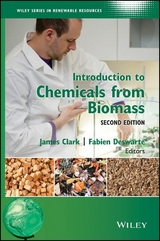
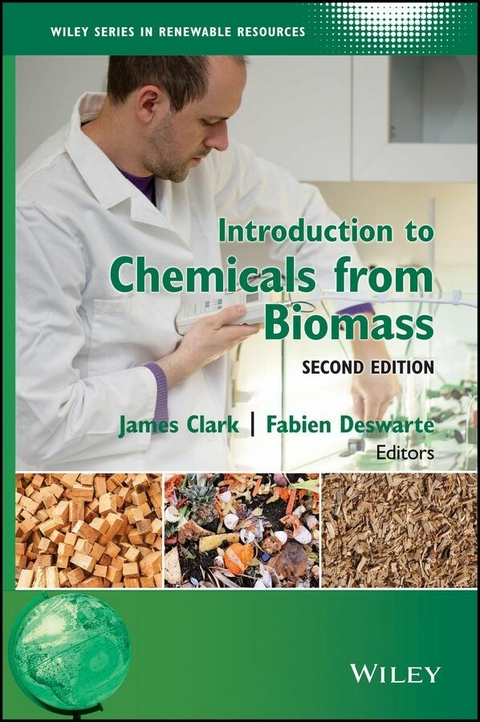
Introduction to Chemicals from Biomass, Second Edition presents an overview of the use of biorenewable resources in the 21st century for the manufacture of chemical products, materials and energy. The book demonstrates that biomass is essentially a rich mixture of chemicals and materials and, as such, has a tremendous potential as feedstock for making a wide range of chemicals and materials with applications in industries from pharmaceuticals to furniture.
Completely revised and updated to reflect recent developments, this new edition begins with an introduction to the biorefinery concept, followed by chapters addressing the various types of available biomass feedstocks, including waste, and the different pre-treatment and processing technologies being developed to turn these feedstocks into platform chemicals, polymers, materials and energy. The book concludes with a discussion on the policies and strategies being put in place for delivering the so-called Bioeconomy.
Introduction to Chemicals from Biomass is a valuable resource for academics, industrial scientists and policy-makers working in the areas of industrial biotechnology, biorenewables, chemical engineering, fine and bulk chemical production, agriculture technologies, plant science, and energy and power generation.
We need to reduce our dependence on fossil resources and increasingly derive all the chemicals we take for granted and use in our daily life from biomass - and we must make sure that we do this using green chemistry and sustainable technologies!
For more information on the Wiley Series in Renewable Resources, visit www.wiley.com/go/rrs
Topics covered include:
• The biorefinery concept
• Biomass feedstocks
• Pre-treatment technologies
• Platform molecules from renewable resources
• Polymers from bio-based monomers
• Biomaterials
• Bio-based energy production
Praise for the 1st edition:
'Drawing on the expertise of the authors the book involves a degree of plant biology and chemical engineering, which illustrates the multidisciplinary nature of the topic beautifully' - Chemistry World
Editors James Clark, Green Chemistry Centre of Excellence, University of York, UK Fabien Deswarte, Biorenewables Development Centre, York Science Park, UK
Series Editor Christian Stevens, Faculty of Bioscience Engineering, Ghent University, Ghent, Belgium
Introduction to Chemicals from Biomass, Second Edition presents an overview of the use of biorenewable resources in the 21st century for the manufacture of chemical products, materials and energy. The book demonstrates that biomass is essentially a rich mixture of chemicals and materials and, as such, has a tremendous potential as feedstock for making a wide range of chemicals and materials with applications in industries from pharmaceuticals to furniture. Completely revised and updated to reflect recent developments, this new edition begins with an introduction to the biorefinery concept, followed by chapters addressing the various types of available biomass feedstocks, including waste, and the different pre-treatment and processing technologies being developed to turn these feedstocks into platform chemicals, polymers, materials and energy. The book concludes with a discussion on the policies and strategies being put in place for delivering the so-called Bioeconomy. Introduction to Chemicals from Biomass is a valuable resource for academics, industrial scientists and policy-makers working in the areas of industrial biotechnology, biorenewables, chemical engineering, fine and bulk chemical production, agriculture technologies, plant science, and energy and power generation. We need to reduce our dependence on fossil resources and increasingly derive all the chemicals we take for granted and use in our daily life from biomass and we must make sure that we do this using green chemistry and sustainable technologies! For more information on the Wiley Series in Renewable Resources, visit www.wiley.com/go/rrs Topics covered include: The biorefinery concept Biomass feedstocks Pre-treatment technologies Platform molecules from renewable resources Polymers from bio-based monomers Biomaterials Bio-based energy production Praise for the 1st edition: Drawing on the expertise of the authors the book involves a degree of plant biology and chemical engineering, which illustrates the multidisciplinary nature of the topic beautifully - Chemistry World
Editors James Clark, Green Chemistry Centre of Excellence, University of York, UK Fabien Deswarte, Biorenewables Development Centre, York Science Park, UK Series Editor Christian Stevens, Faculty of Bioscience Engineering, Ghent University, Ghent, Belgium
| Erscheint lt. Verlag | 22.12.2014 |
|---|---|
| Reihe/Serie | Wiley Series in Renewable Resource | Wiley Series in Renewable Resources |
| Sprache | englisch |
| Themenwelt | Naturwissenschaften ► Chemie ► Technische Chemie |
| Technik ► Elektrotechnik / Energietechnik | |
| Schlagworte | Biorefinery, Biorenewables, Biomass, Waste, Biowaste, Chemicals, Eenergy, Platform Molecules, Biomaterials, Green Chemistry • Biotechnologie i. d. Biowissenschaften • Biotechnology • Biowissenschaften • Chemie • Chemistry • Industrial Chemistry • Life Sciences • Nachhaltige u. Grüne Chemie • Nachhaltige u. Grüne Chemie • Sustainable Chemistry & Green Chemistry • Technische u. Industrielle Chemie |
| ISBN-10 | 1-118-71446-6 / 1118714466 |
| ISBN-13 | 978-1-118-71446-1 / 9781118714461 |
| Informationen gemäß Produktsicherheitsverordnung (GPSR) | |
| Haben Sie eine Frage zum Produkt? |
 PDF (Adobe DRM)
Kopierschutz: Adobe-DRM
Adobe-DRM ist ein Kopierschutz, der das eBook vor Mißbrauch schützen soll. Dabei wird das eBook bereits beim Download auf Ihre persönliche Adobe-ID autorisiert. Lesen können Sie das eBook dann nur auf den Geräten, welche ebenfalls auf Ihre Adobe-ID registriert sind.
Details zum Adobe-DRM
Dateiformat: PDF (Portable Document Format)
Mit einem festen Seitenlayout eignet sich die PDF besonders für Fachbücher mit Spalten, Tabellen und Abbildungen. Eine PDF kann auf fast allen Geräten angezeigt werden, ist aber für kleine Displays (Smartphone, eReader) nur eingeschränkt geeignet.
Systemvoraussetzungen:
PC/Mac: Mit einem PC oder Mac können Sie dieses eBook lesen. Sie benötigen eine
eReader: Dieses eBook kann mit (fast) allen eBook-Readern gelesen werden. Mit dem amazon-Kindle ist es aber nicht kompatibel.
Smartphone/Tablet: Egal ob Apple oder Android, dieses eBook können Sie lesen. Sie benötigen eine
Geräteliste und zusätzliche Hinweise
Buying eBooks from abroad
For tax law reasons we can sell eBooks just within Germany and Switzerland. Regrettably we cannot fulfill eBook-orders from other countries.
aus dem Bereich